What is the rainbow effect on polarized lenses?
The Glare-Cutting Secret Your Screens Are Revealing
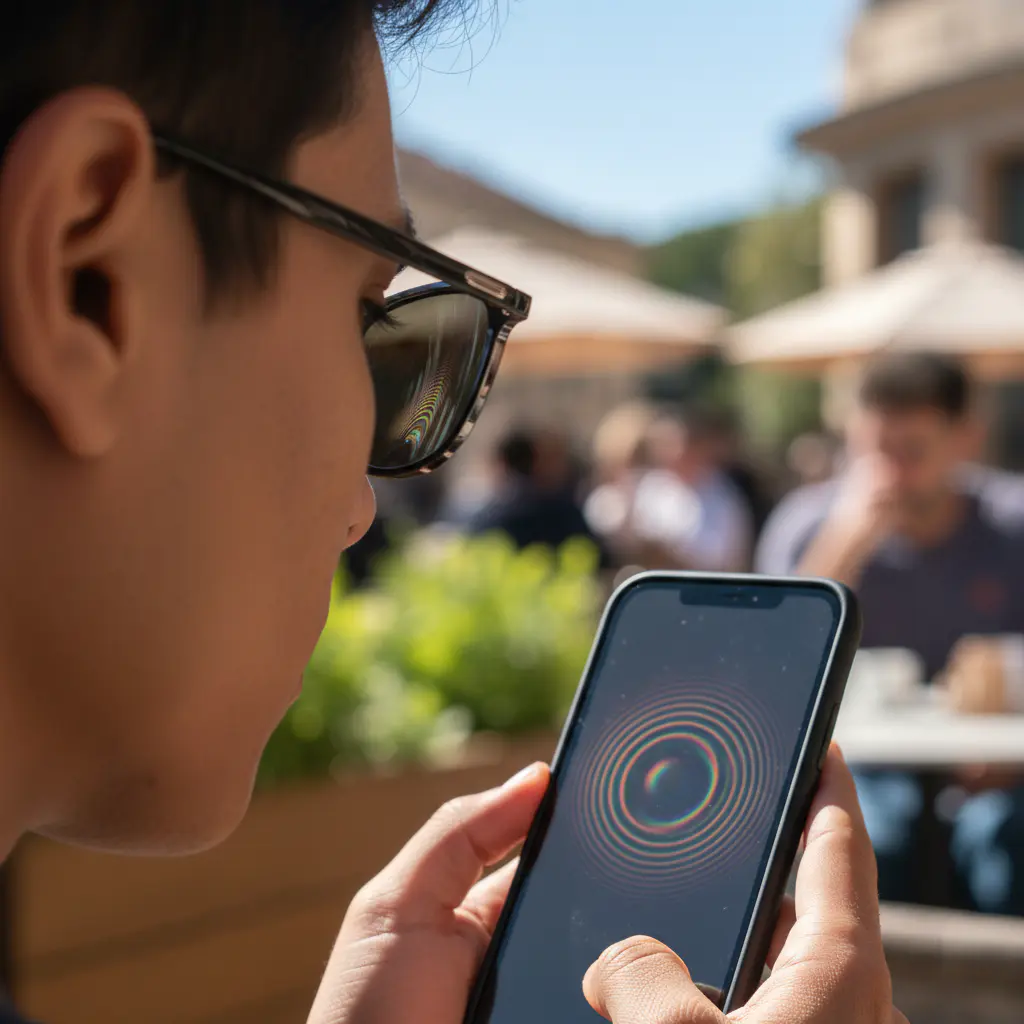
If you’ve ever put on a pair of polarized sunglasses and looked at your phone, you’ve probably seen it: a strange, shimmering rainbow pattern or a dark, unreadable screen. Your first thought might be that your new glasses are defective. But in reality, you’ve just witnessed proof that your lenses are working exactly as designed. This phenomenon, often called the "rainbow effect" or moiré pattern, isn't a flaw—it's a fascinating intersection of physics and modern technology.
This article will explain the science behind why your high-performance polarized lenses interact with digital screens, what the patterns mean, and how to easily manage them. Understanding this effect will not only give you confidence in your eyewear but also help you make smarter choices for different activities.
What Are Polarized Lenses and How Do They Work?
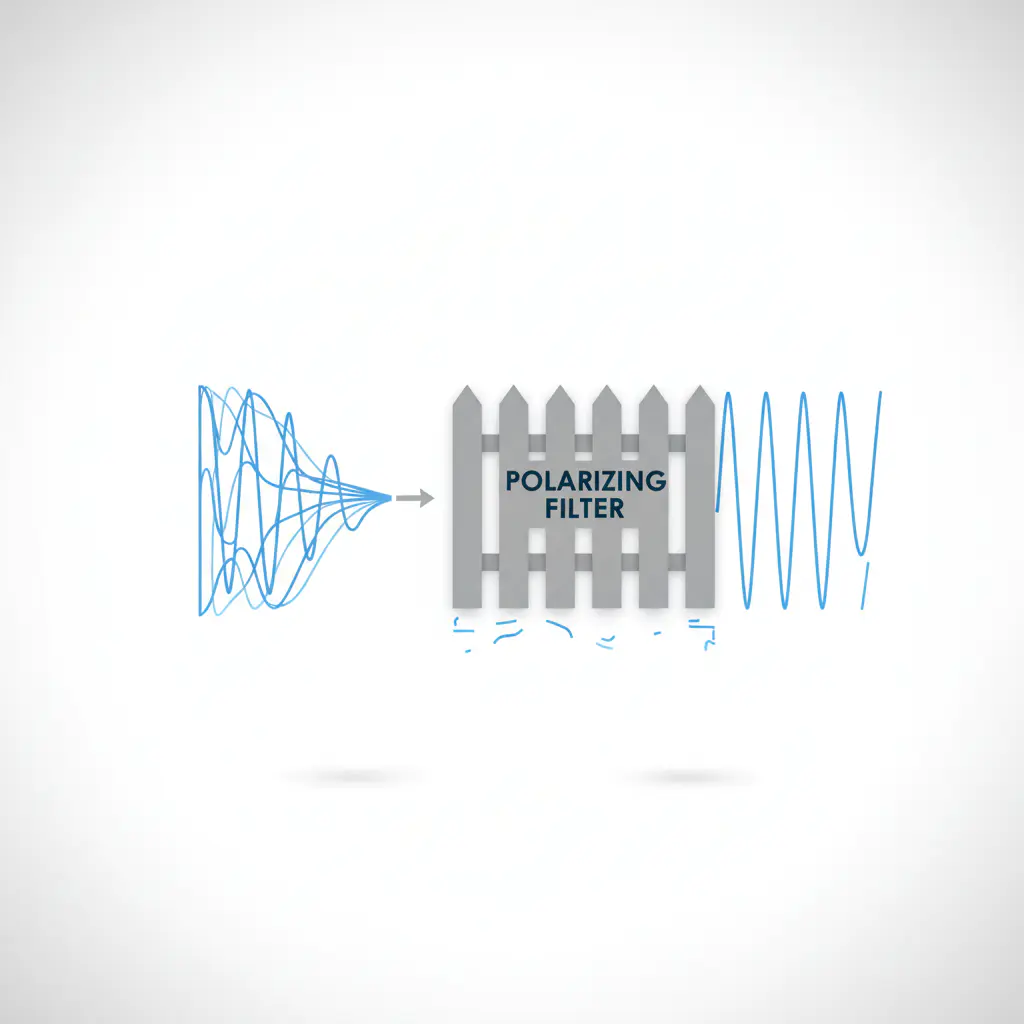
Before we can understand the rainbow effect, we first need to understand glare. The bright, harsh light that reflects off flat surfaces like water, asphalt, or the hood of a car is called glare. This light is horizontally polarized, meaning its waves vibrate from side to side. This concentration of horizontal light overwhelms our eyes, causing us to squint and experience eye strain.
Polarized lenses are engineered with a special chemical filter that is vertically laminated. This filter acts like a microscopic picket fence, blocking the horizontal light waves of glare while allowing vertical light to pass through. As explained by sources like Harvard Health, this selective filtering dramatically enhances visual comfort and clarity.
Key benefits of polarization include:
- Reduced Eye Strain: By eliminating glare, your eyes can relax.
- Improved Contrast and Clarity: Objects appear sharper and more defined, especially outdoors.
- Enhanced Safety: For activities like driving and fishing, cutting through surface glare is critical for safety and performance.
The Science Behind the Screen Interference
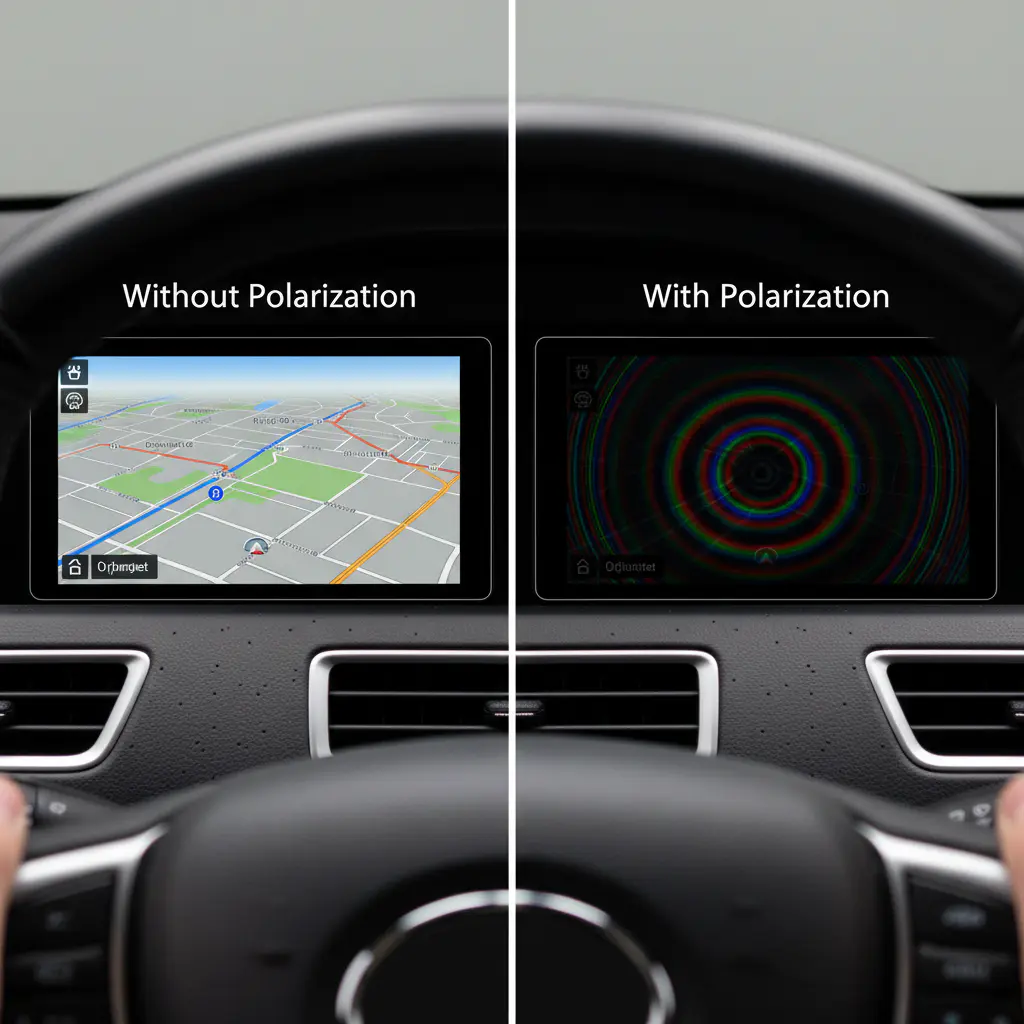
The rainbow effect occurs when one polarized filter looks at another. It just so happens that most of the digital screens we use every day—including smartphones, laptops, car dashboards, and tablets—rely on LCD (Liquid Crystal Display) or LED technology, which uses a polarizing filter to control which pixels are lit.
When you look at your phone (which has a polarizer) through your sunglasses (which also have a polarizer), you are essentially crossing two filters. This interaction can cause a few things to happen:
- Screen Blackout: If the two polarizing filters are perfectly opposite (one vertical, one horizontal), they will cancel each other out, and the screen will appear black. This is the same principle used in optical lab tests to verify polarization.
- Rainbows and Moiré Patterns: The vibrant rainbow patterns are often due to stress-induced birefringence in plastics or tempered glass. When materials like a screen protector or a car’s side window are manufactured, stress points are created in the material. These stress points bend light waves at slightly different angles. When viewed through a polarized lens, these angled light paths are separated into a spectrum of colors, much like a prism.
From an optical lab perspective, this effect is a reliable field test for confirming that a lens is truly polarized. An inconsistent or weak pattern might signal a manufacturing flaw, but a distinct, uniform color shift on an LCD screen indicates a high-quality polarizing film.
Is the Rainbow Effect a Defect? No, It’s a Sign of Quality
To be clear: the rainbow effect is not a defect. It is the expected result of a fundamental physical principle. It’s a feature, not a bug, that confirms your lenses are performing their primary function of filtering polarized light. A common mistake is to misinterpret this effect as a scratch or delamination, leading to unnecessary returns or concerns about quality.
However, it's important to know when to use polarized lenses. While they are superior for general outdoor use and driving, there are specific situations where they are not recommended. For instance, the Federal Aviation Administration (FAA) explicitly advises pilots against wearing polarized lenses because they can interfere with reading critical LCD cockpit displays.
Practical Tips for Using Polarized Lenses in a Digital World
Living with polarized lenses doesn't mean giving up your digital devices. In most cases, managing the screen interference is simple.
- Just Tilt Your Head: The easiest solution is to slightly tilt your head or your device by about 10 to 15 degrees. This small adjustment changes the angle at which the two polarizers intersect, immediately restoring visibility to the screen.
- Choose the Right Tool for the Job: If your profession requires constant, critical viewing of LCD screens (like a pilot or heavy equipment operator), non-polarized sunglasses with 100% UV protection are a better choice for that specific task.
- Understand the Difference: Remember that polarization and UV protection are two different things. Polarization cuts glare, while a UV coating blocks harmful ultraviolet rays. As experts at MD Anderson Cancer Center warn, never assume a dark lens provides UV protection. Wearing dark, uncertified lenses can be more dangerous than wearing nothing, as it causes your pupils to dilate and let more UV radiation in. Always ensure your glasses block 100% of UVA and UVB rays.
Frequently Asked Questions (FAQ)
Q1: Why do I see rainbow patterns in my car’s windows but not the windshield? Your side and rear windows are typically tempered, which creates stress patterns during the manufacturing process. Your windshield is made of laminated glass, which does not have these stress patterns and won’t produce the effect.
Q2: Can I get polarized lenses that don’t create this effect on screens? No, because the effect is caused by the fundamental physics of how polarization works. Any lens that effectively cuts glare will interact with the polarized light from an LCD screen.
Q3: Is the rainbow effect harmful to my eyes? No, the effect is not harmful. It is simply an optical interference pattern that has no negative impact on your vision or eye health.
Your Vision, Uncompromised
That rainbow you see on your phone screen is a reassuring sign that your polarized lenses are armed and ready to defend your eyes against harsh glare. By understanding the simple science behind it, you can appreciate the technology at work and use the simple head-tilt trick to navigate our digital world with ease. So, embrace the rainbow—it’s the signature of a lens that’s performing perfectly.
Disclaimer: This article is for informational purposes only and does not constitute professional medical advice. Always consult with a qualified eye care professional for any concerns about your vision or eye health.
References
- Harvard Health Publishing. "Polarized sunglasses: Protecting your eyes from harmful glare." https://www.health.harvard.edu/staying-healthy/polarized-sunglasses-protecting-your-eyes-from-harmful-glare
- Federal Aviation Administration (FAA). "Sunglasses for Pilots: Beyond the Image." https://www.faa.gov/pilots/safety/pilotsafetybrochures/media/sunglasses.pdf
- MD Anderson Cancer Center. "9 things to know about sunglasses, eye protection and cancer." https://www.mdanderson.org/cancerwise/9-things-to-know-about-sunglasses--eye-protection-and-cancer.h00-159699123.html
- Science News Explores. "Explainer: Polarized vs. UV-blocking sunglasses." https://www.snexplores.org/article/polarized-uv-blocking-sunglasses