The Science of Photochromics: Why Temperature Affects Tint Darkness
The Ultimate Guide to Photochromic Lenses
Photochromic lenses, often called "transition lenses," offer the convenience of glasses and sunglasses in a single frame. They automatically darken in the sun and clear up indoors. But many users notice a quirk: the lenses don't seem to get as dark on a sweltering summer day as they do on a bright, cold winter afternoon. This isn't a defect; it's a fascinating look into the chemistry that powers them.
This article breaks down the science behind photochromic technology, explains the critical role temperature plays in their performance, and helps you understand how to get the most out of your adaptive lenses.
TL;DR: Why Heat Lightens Your Lenses
- Darkening is a Chemical Reaction: Photochromic lenses are filled with trillions of molecules that change shape when exposed to UV radiation. This new shape absorbs light, making the lens dark.
- Heat Reverses the Reaction: Heat provides thermal energy that encourages these molecules to change back to their original, clear state.
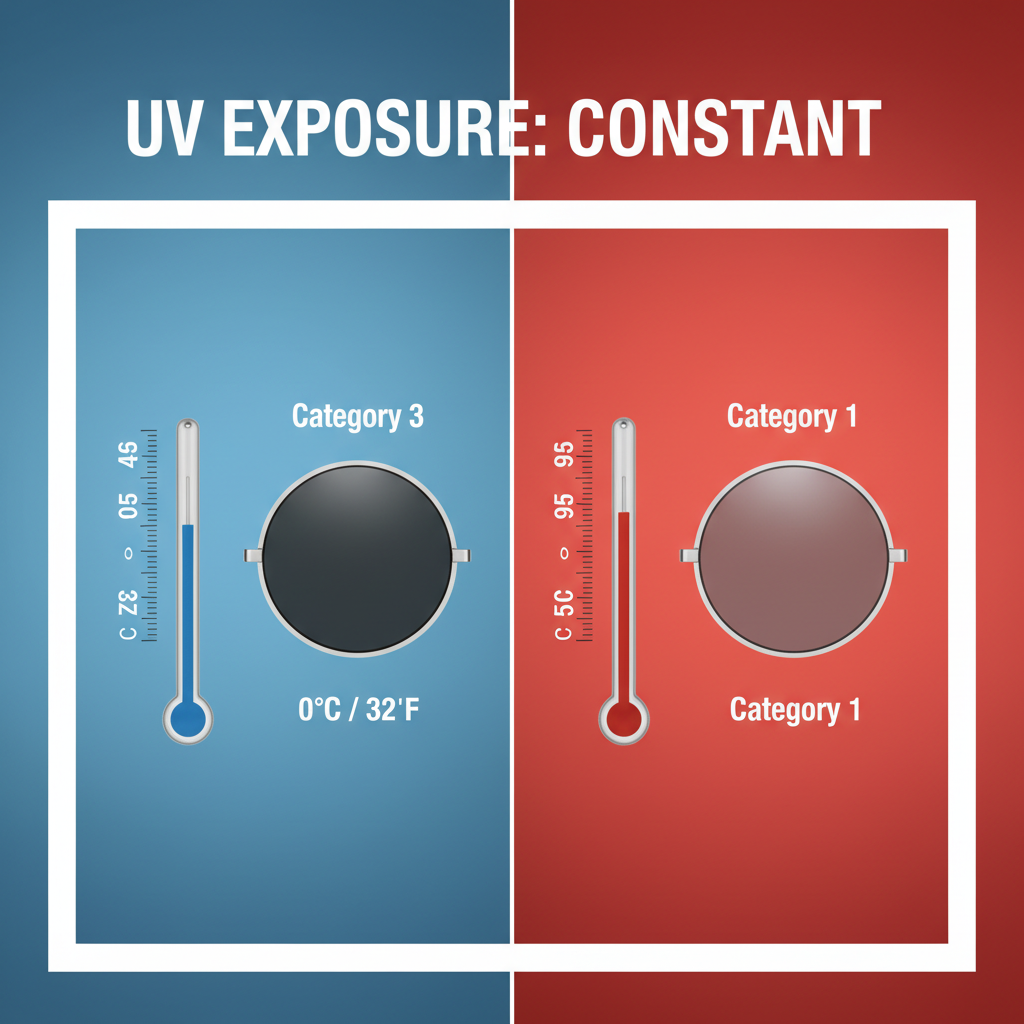
- A Constant Battle: On a hot, sunny day, UV light is trying to darken the lenses while the heat is simultaneously trying to lighten them. The heat wins some of this battle, resulting in a lighter tint.
- Cold Boosts Performance: In cold weather, the "dark" molecules are more stable, allowing the lenses to get darker and fade back to clear more slowly.
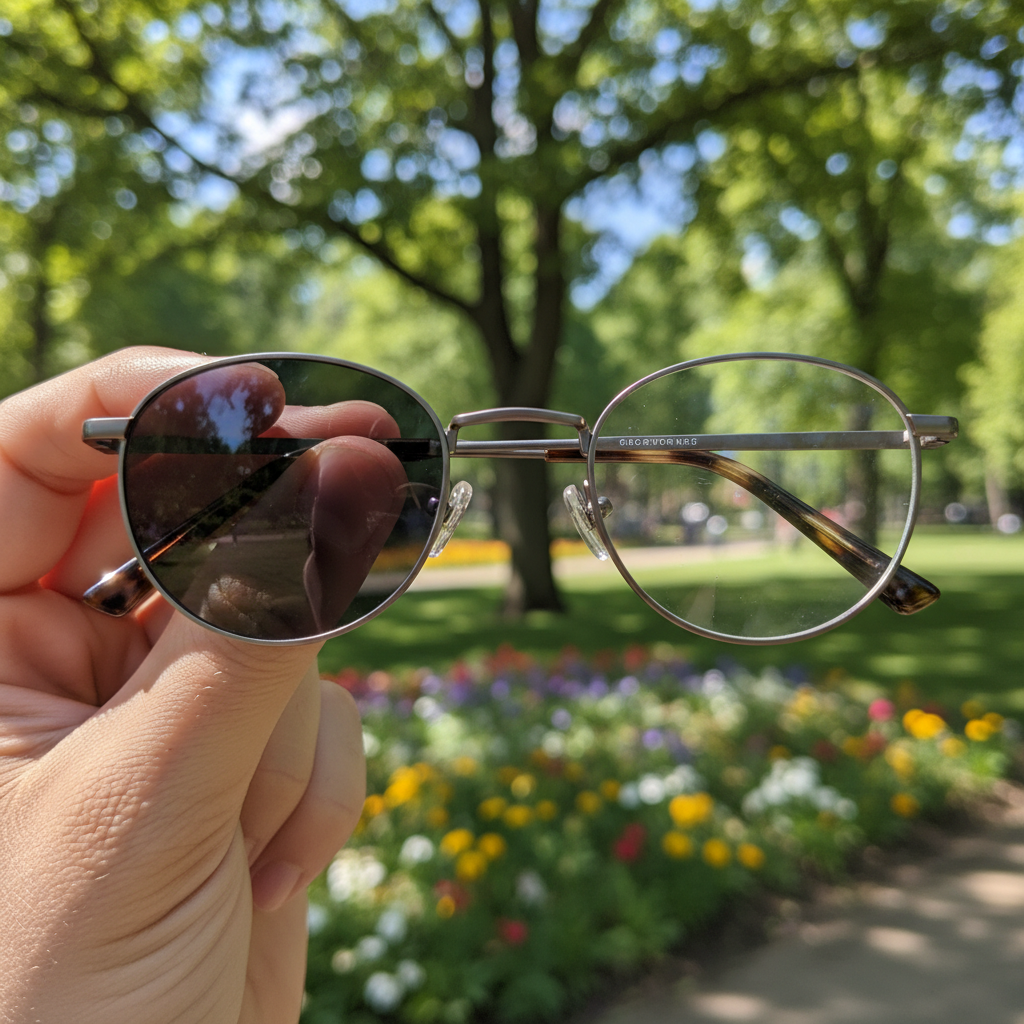
How Do Photochromic Lenses Actually Work?
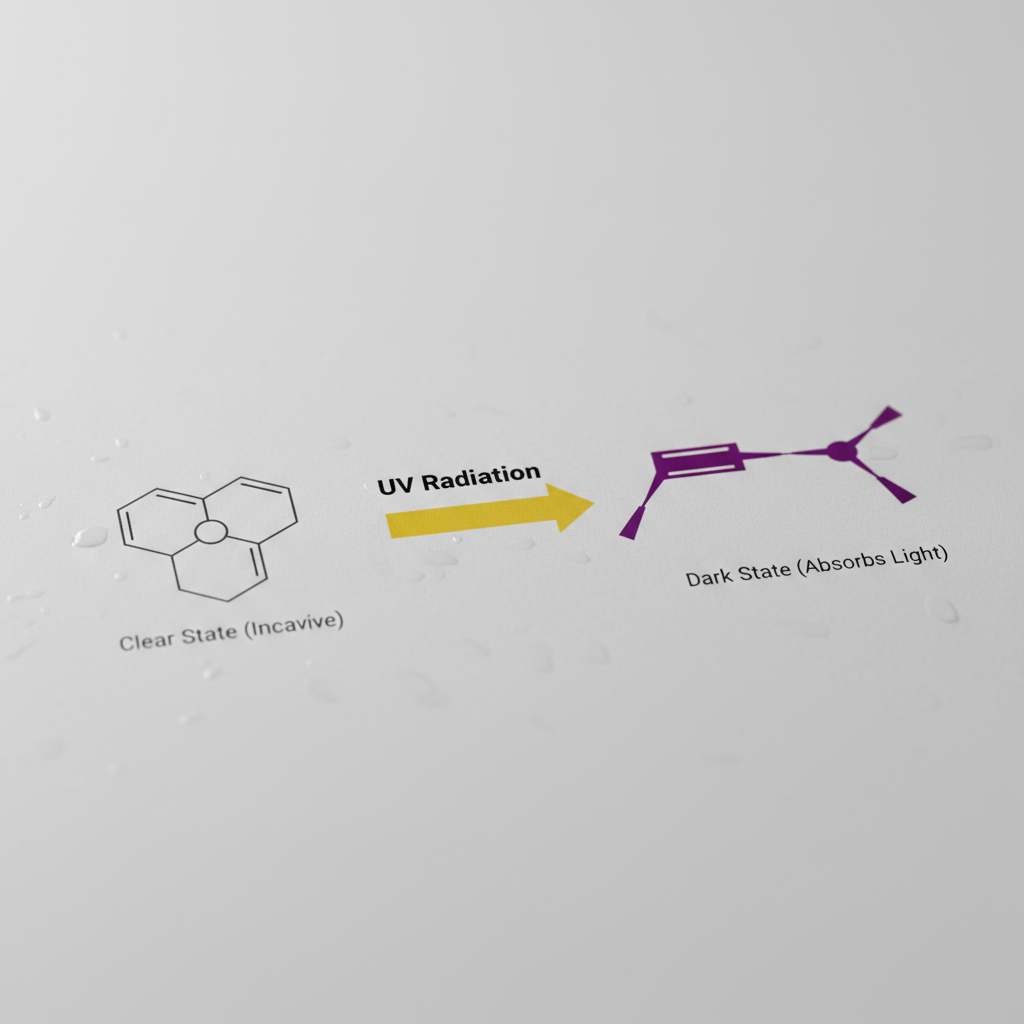
The magic behind photochromic lenses lies in a specialized chemical process. The lens material is embedded with trillions of light-sensitive molecules, typically from the naphthopyran family. These molecules are transparent to visible light in their natural state, which is why your lenses are perfectly clear indoors.
When you step outside and expose the lenses to ultraviolet (UV) radiation from the sun, these molecules undergo a remarkable transformation. The UV energy causes them to temporarily change their chemical structure. In this altered state, the molecules become highly efficient at absorbing visible light.
Think of it like countless tiny umbrellas opening up inside the lens. As they open, they block light from passing through, and the lens appears to darken. The more UV radiation there is, the more molecules change shape, and the darker the lenses become. When the UV source is removed (like when you go indoors), the molecules gradually revert to their original shape, and the lens becomes clear again.
The Critical Role of Temperature: A Thermal Tug-of-War
The efficiency and speed of this reversible chemical reaction are highly dependent on temperature. This thermal sensitivity is the key to understanding why your lenses perform differently in various climates.
Methodology Note: The relationship between temperature and tint is a fundamental principle of thermodynamics. The observations below are based on the known chemical properties of photochromic dyes and have been confirmed through decades of practical experience by opticians. As a general rule of thumb, practitioners note that for every 10°C (18°F) increase in ambient temperature, the maximum darkness of the tint can decrease by an estimated 15-20%.
Performance in the Cold
In cold conditions, the photochromic reaction is at its most efficient. The low temperature stabilizes the darkened form of the molecules, slowing down the natural process of them reverting to their clear state. This allows a greater number of molecules to remain in their light-absorbing form at any given moment.
- Result: Lenses get significantly darker in the cold.
- User Experience: You'll notice your glasses reach a true sunglass-level tint on a bright, chilly day. However, this stability also means the reverse reaction is sluggish. When you come inside from the cold, the lenses can take several minutes to fade back to completely clear. This is normal behavior, not a product flaw.
Performance in the Heat
Heat introduces thermal energy into the lenses, which directly impacts the photochromic molecules. This energy accelerates the reverse reaction, pushing the molecules to change from their "dark" state back to their "clear" state.
On a hot, sunny day, the molecules are caught in a thermal tug-of-war. UV radiation is constantly trying to darken them, while the ambient heat is working to clear them. Because the heat-driven clearing reaction is so active, the lenses can never reach their maximum potential darkness. They strike a balance, or a "steady state," that is noticeably lighter than what you would see in winter.
- Result: Lenses achieve a medium or light tint in high heat.
- User Experience: This is most obvious in a hot car. Even with sunlight streaming through the windows, your lenses may barely tint. This is due to two factors: the windshield already blocks most of the UV rays needed for activation, and the high interior temperature of the car prevents the few molecules that do activate from staying dark.
Managing Expectations: The Right Tool for the Right Job
Understanding the science of photochromics helps to position them correctly in your eyewear collection. They are a tool for convenience in variable light, not a universal replacement for dedicated sunglasses.
Photochromic lenses are ideal for:
- Everyday Convenience: Perfect for people who are in and out of buildings frequently and don't want to carry two pairs of glasses.
- Variable Weather: Excellent for spring and fall days where the sun can be intermittently bright and overcast.
- Constant UV Protection: They provide 100% UV blocking at all times, whether they are clear or dark, protecting your eyes from harmful radiation.
You should use dedicated sunglasses for:
- Intense, Prolonged Sun: For activities like a day at the beach, skiing, or hiking in direct sun, a pair of high-quality polarized sunglasses will offer superior darkness, glare reduction, and comfort.
- Driving: Since car windshields block the UV needed to activate photochromic lenses, a pair of prescription sunglasses for the car is a safer and more effective choice.
- Extreme Heat: If you live in a very hot climate, you will likely be happier with the consistent, deep tint of traditional sunglasses for your brightest days.
By treating photochromic lenses as a powerful tool for everyday visual comfort and UV safety, you can better appreciate their benefits while understanding their environmental limitations.
Frequently Asked Questions (FAQ)
Do photochromic lenses wear out? Yes, over time, the photochromic molecules will lose their ability to change shape. Most lenses have a lifespan of about 2 to 3 years before you might notice they no longer get as dark or don't clear up as fully.
Why don't my photochromic lenses get dark in my car? Most car windshields have a built-in UV filter to protect the car's interior. This filter blocks the very rays that photochromic lenses need to activate, so they will not darken while you are driving.
Are my lenses defective if they are slow to clear up in the winter? No, this is a normal and expected effect of the cold. The low temperature makes the "dark" molecules more stable, so it takes them longer to revert to their clear state once you are indoors.
Do photochromic lenses block UV rays even when they are clear? Yes. The UV-blocking capability is built into the lens material itself and is independent of the tint. Your eyes are protected from 100% of UVA and UVB rays whether the lenses are light or dark.
This article is for informational purposes only and does not constitute professional medical advice. Always consult with a qualified eye care professional for any questions regarding your vision or eye health.