Why Do Clear Frames Turn Yellow? Materials and UV Degradation
That Fading Feeling: Why Your Crystal Frames Aren't So Clear Anymore
It’s a familiar story for lovers of minimalist eyewear. You buy a pair of stunning, perfectly transparent frames, admiring how they blend modern style with a barely-there look. But a few months later, you notice a disappointing change: a creeping, uneven yellow tint has appeared, turning your once-pristine accessory into something that looks aged and discolored. What causes this frustrating transformation, and is there any way to stop it?
TL;DR: The yellowing of clear frames is caused by a combination of UV radiation from the sun breaking down the frame's material and chemical reactions with your skin's natural oils and cosmetics. While high-quality materials can resist it longer, the process is largely irreversible once it begins. The best strategy is prevention through proper cleaning and storage, as most "reversal" hacks can do more harm than good.
The Science of Fading: A Material Breakdown
The discoloration you see is not just a surface stain; it's a sign of the frame material itself undergoing chemical changes. Two main culprits are responsible for degrading the clarity of your glasses: UV light and your own skin.
Primary Cause: UV Degradation (Photo-oxidation)
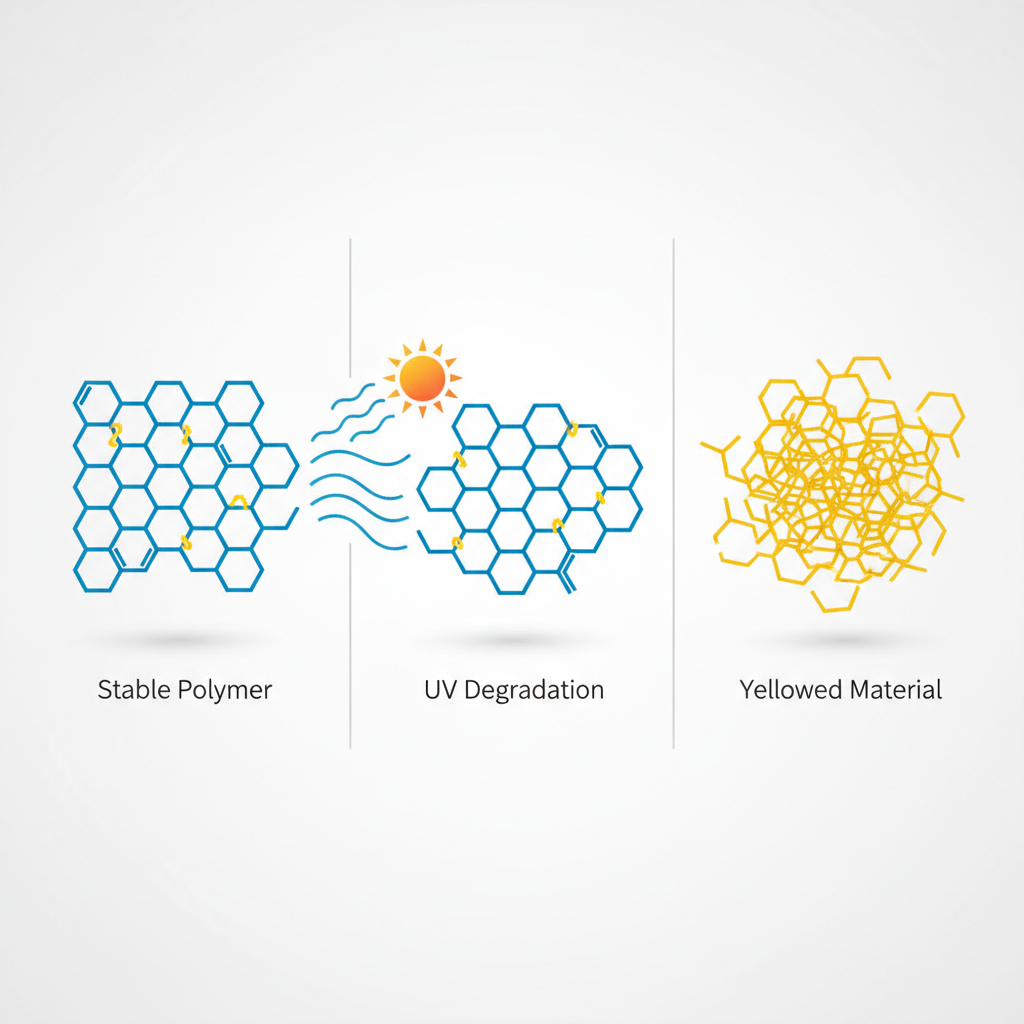
The single biggest factor in frame yellowing is exposure to ultraviolet (UV) radiation from sunlight. The polymers—long chains of molecules that make up the plastic of your frames—are vulnerable to this high-energy light. This process is called photo-oxidation.
- Broken Bonds: UV rays have enough energy to break the chemical bonds within the polymer chains. This degradation alters the material's structure and, as a consequence, how it absorbs and reflects light.
- The Glycation Effect: It’s not just about oxidation. Research from the National Eye Institute (NEI) on how UV light affects eye health reveals a similar process happens in plastics. In the low-oxygen environment of a dense plastic, UV light can trigger a process called glycation, where protein or polymer molecules begin to clump together. According to one study, this specific chemical reaction is what causes materials to harden and yellow from the inside out (NEI, 2011).
- Irreversible Change: This damage is cumulative and, for the most part, permanent. The yellowing occurs deep within the material, not just on the surface, which is why it can't simply be wiped away.
The Material Matters
Not all clear plastics are created equal. The specific material used to make your frames plays a significant role in how quickly they will yellow.
- Cellulose Acetate (Zyl): This is a very common, plant-based plastic beloved for its rich color possibilities and comfortable feel. However, standard acetate is susceptible to yellowing from both UV exposure and the gradual leaching of plasticizers (chemicals that keep it flexible). In practice, frames made with higher-grade cellulose acetate that has been properly cured during manufacturing show significantly slower yellowing.
- Polycarbonate: Often used for safety and sports glasses due to its impact resistance, polycarbonate has better inherent UV resistance than basic acetate. While more durable, it can still yellow over time with prolonged sun exposure.
- TR-90 and Performance Nylons: These materials are known for their flexibility, light weight, and chemical stability. They are generally much more resistant to yellowing caused by skin oils and cosmetics, though no material is entirely immune to long-term UV degradation.
The Skin Factor: A Chemical Reaction
If you notice the yellowing is concentrated on the parts of the frame that touch your face—the nose pads, the temple tips behind your ears—then UV light is only part of the story. Your skin is the other major contributor.
Your skin naturally produces oils (sebum), sweat, and has a specific pH level. When these substances, along with any cosmetics, lotions, or hair products you use, transfer to your frames, they can be absorbed by the porous plastic. The combination of these chemicals and body heat can accelerate the breakdown of the polymer, leading to localized staining.
Expert Heuristic: A reliable way to diagnose the cause of yellowing is to observe its location. If the discoloration is only on the surface touching your skin, it is most likely caused by oils and can be managed with better cleaning. If the entire frame has yellowed uniformly, including parts that are never touched, it is almost certainly UV damage and indicates a change in the core material.
Prevention: Your Guide to Keeping Frames Crystal Clear
Since reversing yellowing is nearly impossible, prevention is the most effective strategy. By adopting a few simple habits, you can dramatically extend the life and clarity of your frames.

1. Master Your Cleaning Routine
Regularly removing skin oils and residue is the #1 way to prevent chemical-related yellowing.
- Do: Clean your frames daily. Use a drop of gentle, lotion-free dish soap and lukewarm water. Lather it between your fingers and gently rub down the entire frame, including the nose pads, hinges, and temple tips. Rinse thoroughly and dry with a clean, soft microfiber cloth.
- Don't: Never use alcohol-based cleaners, acetone, hand sanitizer, window cleaner, or other harsh household chemicals. These substances are too aggressive for modern frame materials and lens coatings. They can strip away any protective layers on the frame and make the plastic more porous and prone to damage.
2. Practice Smart Storage
UV and heat are your frame's enemies. Where you keep your glasses when you're not wearing them matters.
- Always Use the Case: Your glasses case is a vault. It protects against scratches, crushing, and, most importantly, UV exposure.
- Avoid Heat Traps: Never leave your glasses on the dashboard of your car. The combination of intense, direct sunlight and high heat is the fastest way to accelerate yellowing and can even warp the frame material.
3. Choose Quality Materials
When purchasing new frames, ask about the material. High-quality acetate or advanced polymers like TR-90 often have UV inhibitors mixed directly into the material. This provides much more robust and long-lasting protection compared to a simple surface coating that can wear off.
The Big Question: Can You Fix Yellowed Frames?
A quick search online reveals dozens of DIY "hacks" for whitening yellowed plastic, but when it comes to your eyewear, extreme caution is necessary.
The Hard Truth About Reversal
For yellowing caused by UV degradation, the damage is woven into the chemical structure of the plastic and cannot be reversed. The methods that work for whitening other types of plastic are often far too abrasive or chemically harsh for eyeglass frames and can cause irreparable damage.
Warning: Avoid These "Fixes"
- Baking Soda / Toothpaste: These are mild abrasives that will scratch the surface of your frames and ruin the finish, making them look cloudy.
- Hydrogen Peroxide / Bleach: These chemicals are extremely harsh and can weaken the plastic, making it brittle. They will destroy any protective coatings on both the frame and your lenses.
Temporary Cosmetic Fixes
If the yellowing is minor and appears to be mostly from surface stains (as identified by the heuristic above), there is one gentle method you can try, but it comes with caveats.
- The Vinegar Polish (Use With Caution): For surface-level stains from skin oils, you can try a tiny amount of diluted white vinegar on a microfiber cloth. Gently polish the affected areas. This may help reduce some surface discoloration but it will not stop the underlying chemical change. This is a temporary cosmetic treatment, not a cure. Be extremely careful to avoid contact with the lenses, as the acidity can damage coatings.
- Professional Buffing: For acetate frames, an optician can sometimes use a professional polishing wheel to buff away a micro-thin layer of the plastic. This can sometimes improve the appearance of surface-level yellowing, but it will not fix deep UV damage and may alter the frame's original finish (e.g., turning a glossy finish into a matte one). It's a last resort for expensive frames.
Frequently Asked Questions
Q1: How long does it take for clear frames to turn yellow? It varies greatly depending on the quality of the material, your personal skin chemistry, and your daily UV exposure. Low-quality frames in a high-UV environment might show yellowing in as little as 6-12 months. High-quality, well-cared-for frames might maintain their clarity for several years.
Q2: Is a yellowed frame just a cosmetic problem? Primarily, yes. However, it can also be a sign that the plastic is becoming more brittle. If you notice the yellowing is accompanied by a loss of flexibility or small cracks, it’s a sign the frame is nearing the end of its life.
Q3: Do more expensive clear frames still turn yellow? Yes, any plastic frame can eventually yellow with enough UV exposure. However, premium brands often use higher-grade materials with more effective, built-in UV inhibitors, meaning they will resist yellowing for much longer than their budget counterparts.
Q4: Can I buy clear frames that will never turn yellow? "Never" is a strong word, but some materials are exceptionally resistant. Look for frames made from performance materials like TR-90 or Ultem, which are known for their chemical and UV stability. However, the most popular and stylish clear frames are often acetate, which will always require careful handling to preserve its clarity.
Disclaimer: This article is for informational purposes only and does not constitute professional optical or medical advice. Consult with a qualified optician for issues related to your eyewear.
References
- National Eye Institute (NEI). (2011). New research sheds light on how UV rays may contribute to cataract. Retrieved from https://www.nei.nih.gov/about/news-and-events/news/new-research-sheds-light-how-uv-rays-may-contribute-cataract