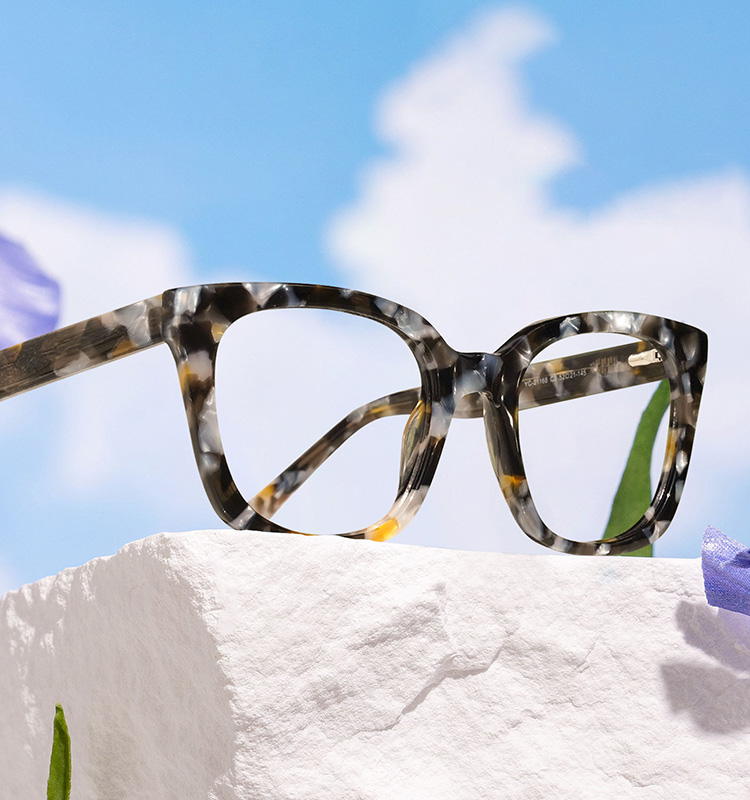



Glasses and Face Shape: How to Slim, Lift, and Balance Your Features
People usually pick frames by checking face shape charts to find matches. That method only covers part of the picture. It tells you what shapes to avoid but leaves out how to actively alter your features. Glasses serve as visual tools that instantly shift how others perceive your facial proportions. Here's how to actively create specific visual effects to modify your appearance.
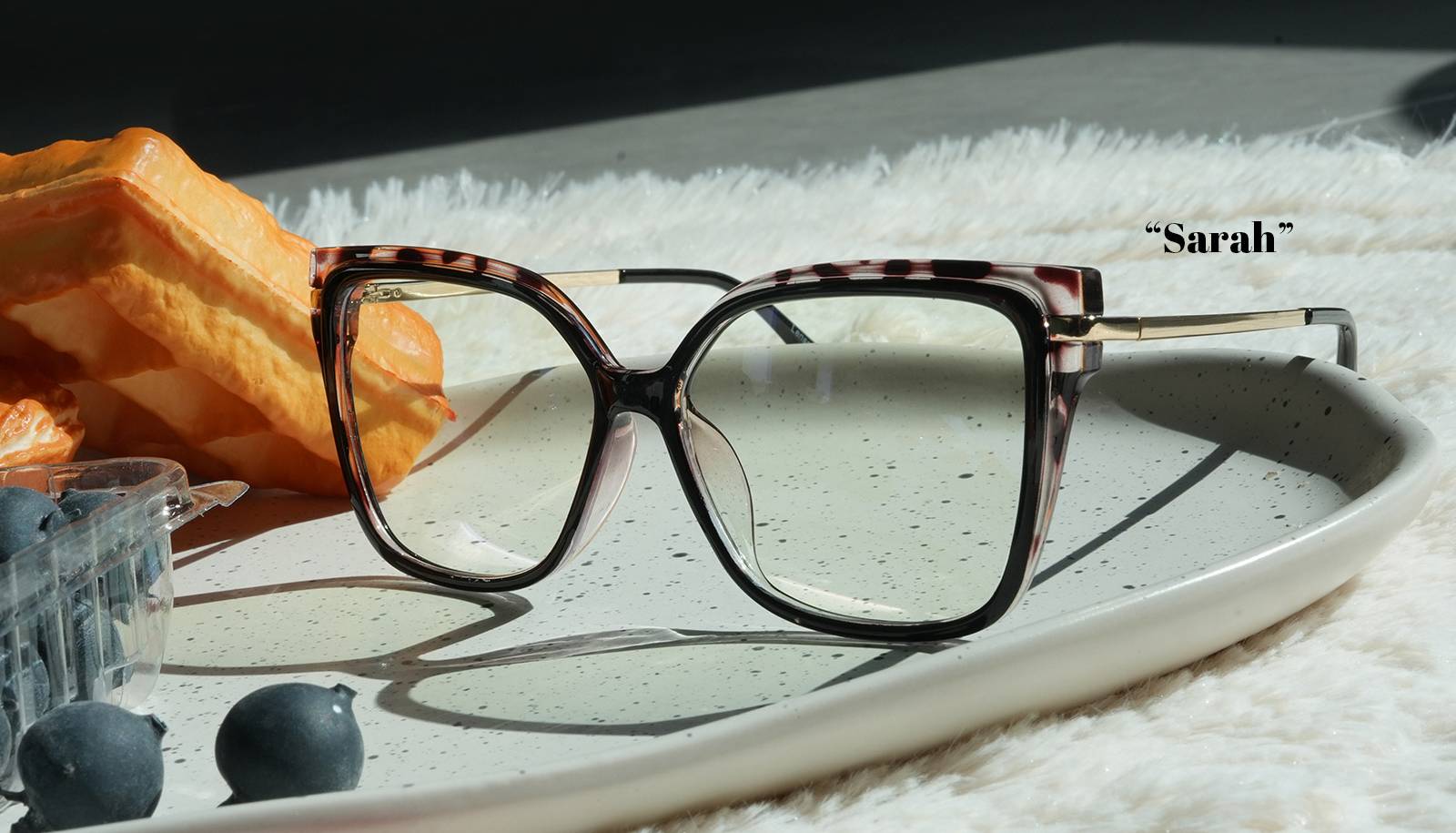
How Glasses Create Visual Effects on Your Face
Reference Line Effect
A pair of glasses places several lines across your face: the top edge of the frame, the bottom edge, the bridge, and the temple arms. Your brain reads these as landmarks when it processes a face. Shift those lines, and you shift how someone perceives your width, length, and proportions. A thick top bar creates a strong horizontal boundary. A thin wire frame barely registers.
Visual Weight Redistribution
The color and thickness of a frame create visual weight. A dark, thick frame concentrates attention at the eye area. A thin metal or rimless frame carries almost no visual weight, so attention moves to skin and expression instead. This lets you decide which part of your face gets emphasized and which area recedes.
Proportion Division Effect
Glasses divide your face into two zones: everything above the frame (forehead) and everything below (nose, mouth, chin). A frame positioned higher creates a larger lower zone, making the face read as longer. A frame with more vertical height compresses the upper zone and pushes the face toward a rounder, wider reading.
Mechanism | Function | Visual Result |
Reference Lines | Adds new boundaries | Shifts perceived proportions |
Visual Weight | Focuses attention | Highlights or hides specific zones |
Proportion Division | Splits the face vertically | Alters perceived facial length |
Choosing a frame is deciding what reference lines go on your face, where the visual weight lands, and how your proportions get divided.
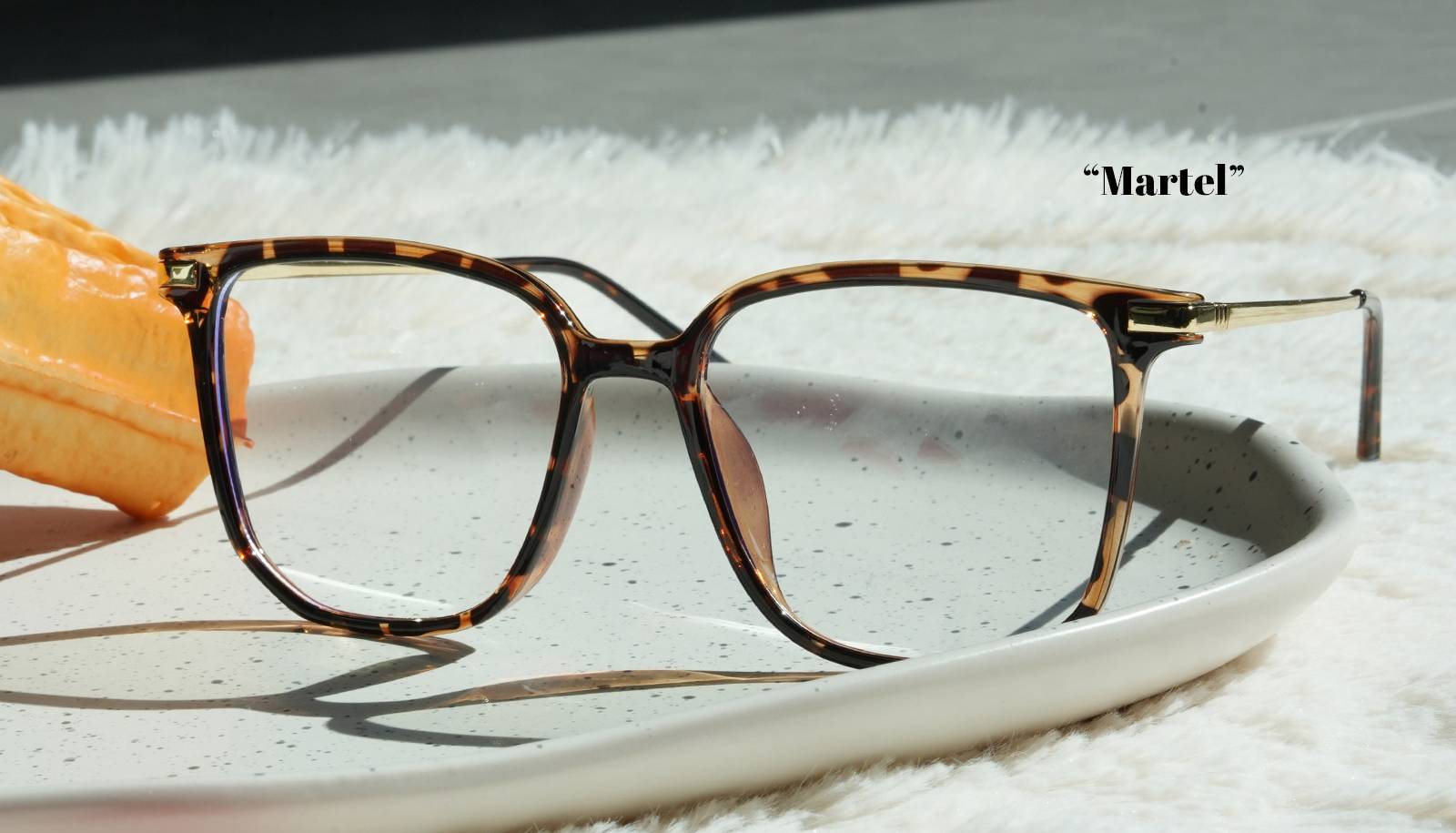
Five Features You Can Change With the Right Frames
1. Make Your Nose Look Smaller
The key number is bridge width, the middle number in a frame's size label(such as 18 mm or 20 mm). A smaller bridge number brings the two lenses closer together, tightening the nose zone visually. A larger number spreads the lenses apart and opens up that area.
Choose:
● Bridge width of 16-18 mm (roughly 5/8-11/16 inch) rather than 20-22 mm
● Frames with a keyhole or double-bar bridge: the horizontal detail compresses the visual height of the nose area
● Full-rim frames, which give the nose a clear visual boundary
Skip:
● Rimless or semi-rimless frames: with no structure at the nose, nothing contains the area
● Bridges with a high rounded arch, which draw the eye upward and enlarge the nose zone
2. Make Your Face Look Thinner
Two levers matter: frame height and frame color.
Choose:
● Frame height of 36-42 mm (roughly 1.4-1.65 inches): taller frames add vertical emphasis, softening the perception of horizontal width
● Upswept or cat-eye styles: they pull the eye upward and reduce how wide the face reads
● Dark frames (black, deep brown, dark gray): darker colors tighten and define, making the frame look compact against the face
Skip:
● Frames wider than your face: they trace your full facial width and put it on display
● Round frames: circular curves reinforce the roundness of a wider face
3. Balance a Wide Forehead
The upper edge of your frame is the key variable. A flat, straight top bar runs parallel to a wide forehead and doubles the emphasis. An arched or curved top breaks that line.
Choose:
● Browline frames: the thicker upper portion fills the space between brow and hairline, reducing the open feeling of a large forehead
● Frames with a curved or slightly upswept top edge
● Frame widths slightly narrower than your forehead: the forehead reads as less expansive by comparison
Skip:
● Large rectangular frames with a completely flat top: they reinforce the horizontal line of a wide forehead rather than softening it
4. Make Your Face Look Longer
This applies most to round or short faces. Angular frames with clear vertical presence add definition and length.
Frame Shape | Visual Effect |
Rectangle / square | Adds angular definition, lengthens face |
Geometric (hexagon, octagon) | Sharp angles reduce roundness |
Round / oval | Reinforces circular face proportions |
Oversized | Can overwhelm a shorter face, making it appear smaller |
Choose:
● Frames with straight lines and clear angles
● Medium frame height: tall enough for vertical presence, not so tall it compresses the face
● Dark or high-contrast colors against your skin tone: stronger definition adds vertical structure
Skip:
● Round frames, which amplify rather than counteract circular proportions
5. Balance Asymmetrical Features
A completely symmetrical face is rare. Most people have some natural variation between sides. The goal is keeping the viewer's attention toward the center of your face, where asymmetry is least visible.
Choose:
● Frames with a bridge detail (double bar, center rivet, keyhole cutout): draws the eye inward toward the middle
● Clean, symmetrical frame shapes: a complex or uneven frame adds visual noise that makes natural facial variation more noticeable
● Frames that fully cover the eye area: a small frame leaves more face exposed
Frames That Make You Look Younger
The visual signals the brain uses to read age are: facial drooping, skin contrast, and sharpness of facial lines. Glasses can work with or against all three.
Frames that push the age reading down:
Upswept styles. As people age, the outer corners of the eyes and cheeks tend to drop slightly. A cat-eye or upswept frame reverses that direction visually. The upward angle redirects attention and creates a lifted appearance. This is why cat-eye frames are so widely recommended for mature faces as the upward line counters the downward drift.
Colored or dark frames. Skin contrast naturally decreases with age (hair lightens, brows fade, skin tone evens out). A frame with strong color like deep tortoiseshell, navy, burgundy, solid black, reintroduces contrast at the eye level, which makes the face read as more alert and defined. Clear or skin-tone-matching frames tend to disappear, which leaves the lower contrast of a mature face fully visible.
Appropriate size. A frame too small leaves the eye corners and under-eye area exposed. A frame too large can overpower a mature face. The target: a frame that covers the eye fully without extending below the cheekbones.
Frame features that add years:
● Downward-curving lower edges: they visually echo sagging
● Rimless or very thin frames: they reduce contrast and definition
● Dated silhouettes: outdated silhouettes can age an appearance just as noticeably as other visible signs of aging
Test These Effects Before You Buy
The principles above give you a strong starting point — but testing them on your own face is the most reliable step before buying.
Try a Cardboard Cutout
Cut out a shape from thick cardboard using the product dimensions. Hold it up to a mirror. This low-cost method quickly confirms the size and proportion. It provides immediate feedback on reference lines and vertical spacing.
Try Phone Camera
Take a front-facing photo without filters using your phone camera. Try tracing different frame shapes around your eye area with your finger to get a rough sense of how different silhouettes would sit on your face. A photo can give you a more objective view of your face than you typically get from a mirror.
Try Virtual Try-On
Virtual try-on tools provide a realistic preview of how different frame shapes and colors complement your features. They do not show physical fit or exact lens tints. Combine the cardboard cutout method for proportions and the virtual tool for color checks. Always check the 45-degree angle during virtual tests. People view your profile frequently, making the side angle highly relevant. Checking the side angle also helps you see how the bridge sits relative to your nose in profile.
Explore these effects yourself by using the Lensmart Virtual Try-On tool. It's a practical way to see these visual principles in action before you commit to a new pair. If the physical item differs from the screen, Lensmart's return policy gives you a safety net if the frames look different in person. Check the current terms on the website for details.
Find Your Perfect Pair at Lensmart
Selecting frames requires active design choices rather than passive chart matching. Apply the rules of reference lines and visual weight to shift focus exactly where you want it. Start with the single facial feature you want to adjust and find the corresponding frame logic. Test your choices using the Lensmart virtual try-on tool in the All Eyeglasses section to find your perfect match.
FAQ
Q1: Do glasses make your nose look bigger or smaller?
The result relies entirely on bridge width and frame shape. Small bridge numbers around 0.63 to 0.71 inch (16 to 18 mm) make the nose look smaller. Large bridge numbers above 0.79 inch (20 mm) enlarge the bridge area. Frames with double bridges compress the perceived height. Rimless designs leave the area entirely open, making the nose highly visible.
Q2: Can the color of glasses frames change how your skin looks?
Yes, frame color highly impacts skin appearance. Dark frames create high contrast, making the face look vibrant. Gold metal brightens warm yellow skin tones. Silver suits cool pink tones. Clear frames have minimal impact and do not add contrast to pale or mature skin, which may leave the face looking less defined. High contrast always creates a more defined look.
Q3: How do glasses affect the appearance of eyes that are close-set or wide-set?
Bridge width dictates eye distance perception. Close-set eyes require larger bridge numbers around 0.71 to 0.79 inch (18 to 20 mm). The extra space makes the eyes appear further apart. Wide-set eyes require smaller bridge numbers around 0.55 to 0.63 inch (14 to 16 mm). The reduced space visually narrows the gap between the eyes.
Q4: Is there a frame style that works for literally every face shape?
Oval frames serve as the most universally flattering option. The soft curves avoid clashes with sharp facial angles while maintaining enough definition to stand out. A thin metallic oval frame offers a safe baseline choice for any wearer. It provides structural balance without overpowering natural features.