


Vision Therapy for Amblyopia: Does It Work for Adults?
The Old Rule No Longer Applies
For decades, the message to adults with amblyopia, or "lazy eye," has been dishearteningly consistent: if you didn't fix it in childhood, you missed your chance. The conventional wisdom held that the brain's visual pathways become rigid after a "critical period" in early development, making treatment in adolescence and adulthood a futile effort. Many adults were simply told to accept their limited depth perception and the visual strain that comes with relying on one dominant eye.
Today, that narrative is changing. Guided by a deeper understanding of neuroplasticity—the brain's remarkable ability to reorganize and form new connections throughout life—vision science now offers evidence-based hope. Modern vision therapy, grounded in forcing both eyes to work together, has shown that motivated adults can achieve meaningful improvements in visual function. This journey doesn't promise a perfect "cure," but it can lead to enhanced visual acuity, better reading speed, and for some, the life-changing return of depth perception.
This article explores the principles behind modern vision therapy for adults. We will dismantle the "critical period" myth, explain the mechanisms of new therapeutic approaches, and set realistic expectations for the journey. Crucially, we will establish why this entire process is built upon a non-negotiable foundation: a pair of precisely crafted and perfectly fitted prescription lenses.
Understanding Adult Amblyopia: A Brain-Wiring Issue
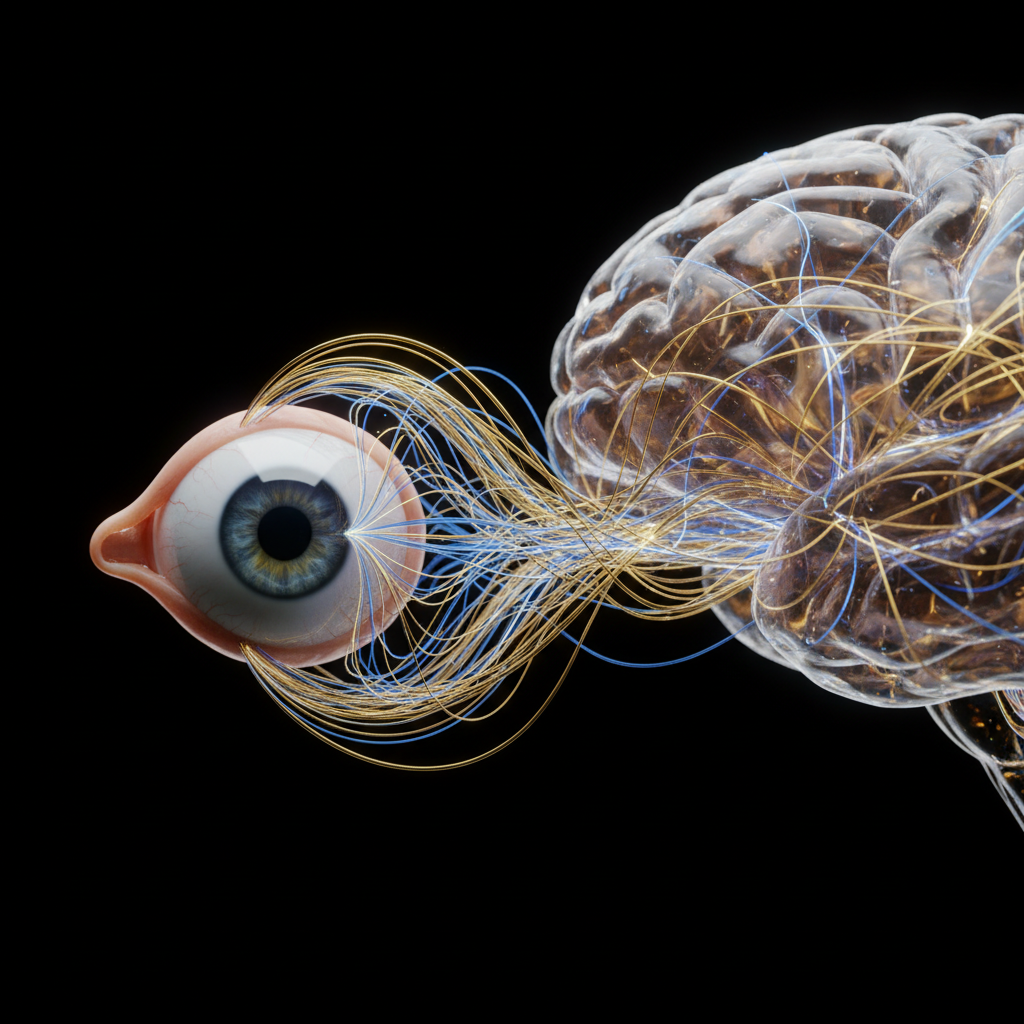
Before exploring the solution, it's essential to understand the problem. Amblyopia is not a disease of the eye itself. An amblyopic eye might be perfectly healthy, but the brain has learned to ignore or suppress the information it sends. This developmental issue typically occurs when there's a significant difference in prescription between the two eyes (anisometropia), a misalignment of the eyes (strabismus), or another factor that prevents the brain from fusing two clear images into one.
The brain, in its quest for efficiency, simply picks the better signal and sidelines the other. Over time, the neural pathways for the weaker eye become underdeveloped. This is why adults with amblyopia often experience:
- Poor Depth Perception: Difficulty judging distances, catching a ball, or navigating stairs.
- Reading Challenges: Losing your place, skipping lines, and experiencing eye strain or headaches after short periods of reading.
- Visual Crowding: Trouble distinguishing letters or objects that are close together.
- General Eye Strain: The dominant eye works overtime, leading to fatigue and discomfort.
The Myth of the "Fixed" Brain
The old belief in a rigid "critical period" for vision stemmed from Nobel prize-winning research in the 1960s. While foundational, this research has been expanded upon significantly. We now know that while the brain is most malleable in childhood, it retains a significant capacity for change, or neuroplasticity, well into adulthood.
Research has borne this out. A key study on amblyopia treatment, known as the ATS 20 study, found that even adolescents and teenagers (ages 13-17) could achieve measurable improvement in the visual acuity of their amblyopic eye through treatment like patching. Subsequent research into active vision therapy has shown that even older adults can stimulate their visual cortex to rewire itself. The key is no longer just about blocking the good eye, but actively training the two eyes to work as a team.
The Unseen Saboteur: Why "Good Enough" Glasses Derail Therapy
The single most critical factor before beginning any form of vision therapy is ensuring the amblyopic eye is sending the clearest possible signal to the brain. Without this, any therapeutic effort is like trying to teach a student in a language they can't understand. Therapy is built entirely on this optical foundation.
This is where many well-intentioned efforts fail. An outdated prescription or poorly fitted glasses can completely undermine the process. Here are the critical factors:
- Precise Refractive Correction: The prescription for sphere, cylinder, and axis must be perfectly dialed in. Even a small uncorrected astigmatism can degrade the image quality enough to prevent the brain from engaging with it.
- Accurate Pupillary Distance (PD): The PD is the distance between the centers of your pupils. It dictates where the optical center of the lens should be placed. If this measurement is off by even a millimeter or two, it can induce unwanted prism, causing eye strain and essentially telling the brain that using both eyes is uncomfortable.
- Correct Vertex Distance: This is the distance from the back of the lens to the front of your eye. It's particularly important for higher prescriptions, as changes in this distance can alter the effective power of the lens. An ill-fitting frame that slides down your nose can be enough to compromise the signal.
In our experience, one of the most common mistakes is to begin therapy with a subpar optical correction. The brain needs every possible incentive to start paying attention to the amblyopic eye. Providing it with a sharp, clear, and comfortable image is the non-negotiable first step. Without it, the brain will continue to favor the dominant eye, and the therapy will struggle to gain traction.
How Modern Vision Therapy Rewires the Brain
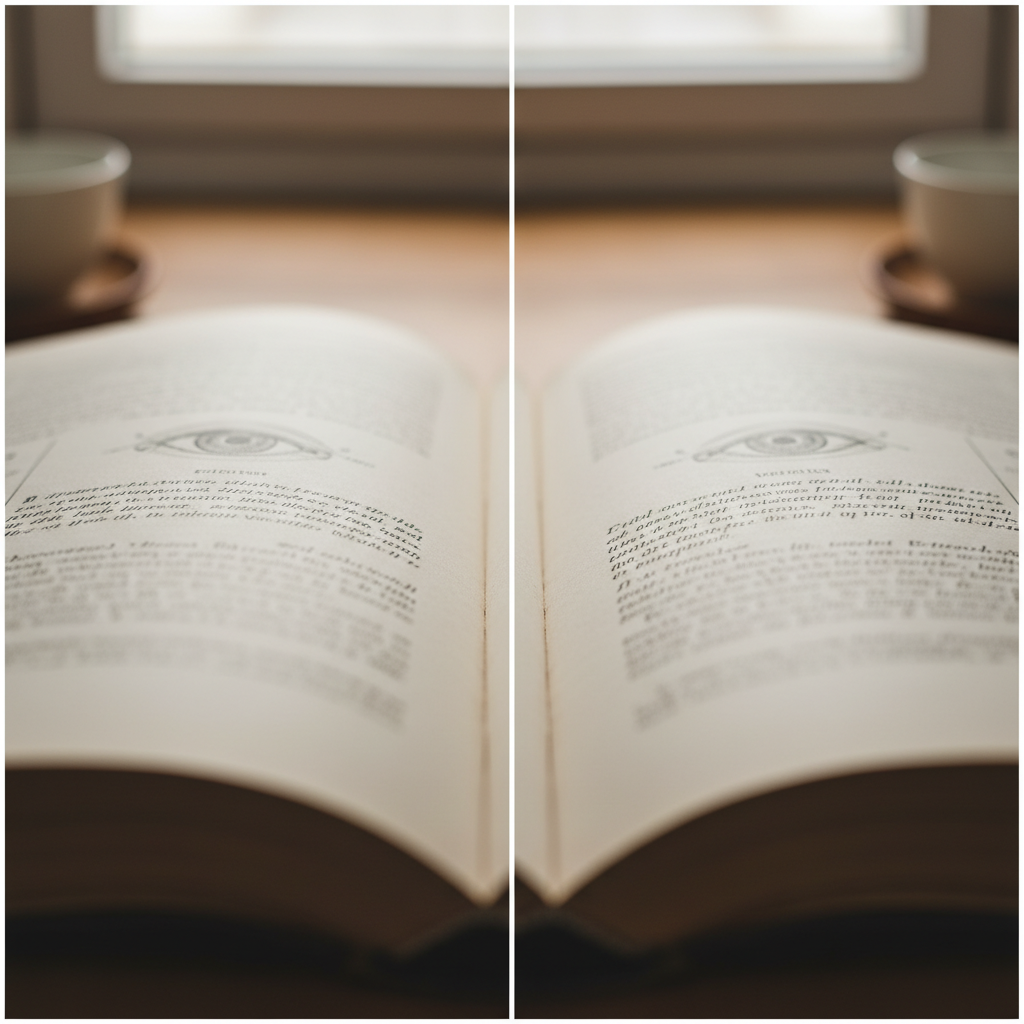
While patching the dominant eye is a concept most people are familiar with, modern therapy for adults often prioritizes binocular treatments. The goal is not just to make the lazy eye stronger in isolation, but to teach it how to function as part of a cohesive team with the dominant eye.
From Suppression to Integration: Dichoptic Training
The cornerstone of many modern therapy programs is dichoptic training. This clever technique presents different parts of an image to each eye simultaneously, forcing the brain to fuse them together to make sense of what it's seeing.
Imagine a video game where the amblyopic eye sees the target, and the dominant eye sees the spaceship you're controlling. To play the game successfully, the brain must pay attention to both inputs. Often, this is accomplished using red/blue or red/green glasses. The contrast of the image shown to the dominant eye is gradually increased as the amblyopic eye gets stronger, encouraging a smooth transition from suppression to binocular teamwork.
Sharpening the Signal: Perceptual Learning
Another key component is perceptual learning. This involves performing specific, repetitive visual tasks designed to improve the brain's ability to process visual information. Patients might work with computer programs that require them to identify the orientation of faint, low-contrast patterns (known as Gabor patches).
This process is like taking the visual processing centers of the brain to the gym. It improves not just the ability to read letters on an eye chart but also enhances contrast sensitivity—the ability to distinguish subtle differences in shading. According to one study on perceptual learning in adults with amblyopia, participants showed an average improvement in visual acuity of 2.6 logMAR lines and a 75.5% improvement in contrast sensitivity after just 30 minutes of training.
These exercises, often done on a computer or through virtual reality (VR) headsets, provide the structured stimulation needed to drive neuroplastic change.

A Realistic Guide to the Adult Amblyopia Journey
Embarking on vision therapy as an adult requires commitment and a clear understanding of the potential outcomes. It is not a passive process; it demands active, consistent engagement.
Consistency is Everything
The most critical factor for success is daily engagement. The brain needs consistent and repetitive stimulation to build and strengthen new neural pathways. A typical therapy plan involves prescribed computer-based exercises for 30-60 minutes a day, five to seven days a week, for a minimum of 3 to 6 months. Many adults find the novelty wears off after a few weeks, which is why having a supportive partner or a system for accountability is incredibly helpful. This is a marathon, not a sprint.
The Typical Path of Improvement
Improvement is rarely linear and often appears in a specific order.
- Contrast Sensitivity and Reading Speed: One of the first changes patients often notice is that text appears sharper and "pops" more from the page. Reading becomes faster and more comfortable as the brain gets better at processing the signal from the amblyopic eye.
- Visual Acuity: Improvement on the standard eye chart (Snellen acuity) follows. This is a more concrete measure of progress that can be tracked over time.
- Stereopsis (3D Vision): The final and most challenging frontier is stereopsis. Gaining true 3D vision is not guaranteed for every adult, as it requires the highest level of brain-eye coordination. However, for those who do achieve it, the payoff is immense, transforming how they interact with the world.
Your Professional Partners
While home-based exercises are central to the process, this journey should be guided by a professional. An optometrist or vision therapist who specializes in binocular vision can perform the necessary diagnostic tests, design a tailored therapy program, and monitor your progress. They are your essential partners in ensuring your efforts are effective and safe.
The journey begins not with complex exercises, but with a simple, foundational step: ensuring your vision is perfectly corrected. An updated, comprehensive eye exam and a pair of meticulously crafted glasses are the launchpad for everything that follows. With that in place, you can work with a professional to explore a therapeutic path that was once considered impossible, opening the door to a richer visual life.
Disclaimer: This article is for informational purposes only and does not constitute professional medical advice. The information provided is not a substitute for a comprehensive eye exam or a consultation with a qualified optometrist or vision therapist. Always seek the advice of your eye care professional with any questions you may have regarding a medical condition.
References
- Scheiman, Mitchell et al. “A randomized clinical trial of treatment for amblyopia in children 13 to 17 years of age.” Archives of ophthalmology (Chicago, Ill. : 1960) vol. 123,4 (2005): 437-45. doi:10.1001/archopht.123.4.437
- Polat, U et al. “Training the brain to overcome the effects of childhood amblyopia in adults.” Scientific reports vol. 2 (2012): 232. doi:10.1038/srep00232
- Cleveland Clinic. "How to Read Your Eye Prescription." Accessed via https://health.clevelandclinic.org/how-to-read-your-eye-prescription
- Li, Jiali et al. “Perceptual learning improves visual performance in fellow eyes of patients with untreated anisometropic amblyopia.” Scientific reports vol. 6 27077. 2 Jun. 2016, doi:10.1038/srep27077