



Sunglasses for the Modern Urban Commuter
TL;DR: Your Quick Guide to Commuter Sunglasses
Your daily commute is more than just a trip; it's a dynamic environment that demands the right gear. For your eyes, this means choosing sunglasses that offer robust protection, optical clarity, and a secure fit. Prioritize lenses with certified UV400 protection to block 100% of harmful rays and ensure they are made from impact-resistant materials like polycarbonate. For drivers, non-polarized or gradient lenses prevent blackout on digital screens, while cyclists benefit from the wind-blocking and debris protection of wraparound styles. A proper fit is non-negotiable—the frames should be snug without pinching and provide ample coverage to prevent light leakage.
The Non-Negotiables: Core Protection for the Urban Environment
Navigating the concrete jungle, whether by car, bike, or on foot, exposes your eyes to a unique set of hazards. Beyond the obvious glare, there are invisible threats and physical risks that standard fashion eyewear might not address. Investing in sunglasses with the right protective features is the first and most critical step.
Beyond the Label: Understanding True UV Protection
The most crucial feature of any pair of sunglasses is their ability to block ultraviolet (UV) radiation. This invisible light is a known risk factor for several serious eye conditions. According to research on cancer prevention from MD Anderson, up to 90% of cancers on the eyelid are linked to sun exposure. Furthermore, long-term UV exposure is a primary cause of cataracts, a clouding of the eye's lens that can lead to blindness. Research published by the National Eye Institute explains that UV light triggers a process called glycation within the lens, causing it to harden and yellow over time.
Expert Warning: The "Darkness Myth" A common and dangerous misconception is that darker lenses offer more protection. This is incorrect. The darkness of a lens has no bearing on its UV-blocking capability. In fact, wearing dark sunglasses without certified UV protection is more harmful than wearing no sunglasses at all. The dark tint causes your pupils to dilate, opening them up to let more light in. If the lenses aren't blocking UV rays, this dilation allows a higher dose of damaging radiation to enter your eye.
Always look for a label that explicitly states "UV400" or "100% UV Protection." This ensures the lenses block all light rays with wavelengths up to 400 nanometers, which covers all of the harmful UVA and UVB spectrum. Some older standards only protect up to 380nm, but as a technical report in PubMed highlights, the 380-400nm range contains significant energy, making the UV400 standard a medical necessity.
Impact Resistance: Your First Line of Defense
The urban commute can kick up debris at a moment's notice—a pebble from a truck tire, a low-hanging branch on a bike path, or an accidental knock. Your sunglasses should act as a shield. The U.S. Food and Drug Administration (FDA) mandates that all sunglass lenses pass a "drop ball test" to certify their basic impact resistance.
For the variable risks of a commute, it's wise to choose lenses made from materials known for their superior durability:
- Polycarbonate: This material is lightweight, has built-in UV protection, and is exceptionally impact-resistant—up to 10 times more than standard plastic. It's the same material used in safety glasses and is an excellent choice for cyclists.
- Trivex: Slightly lighter than polycarbonate and offering better optical clarity, Trivex is another top-tier choice for safety and performance.
Lens Technology Tailored to Your Commute
Once you've ensured your sunglasses have the foundational layers of protection, the next step is to select lens features that match your specific commuting style. The right technology can reduce eye strain, improve reaction time, and make your journey significantly more comfortable.
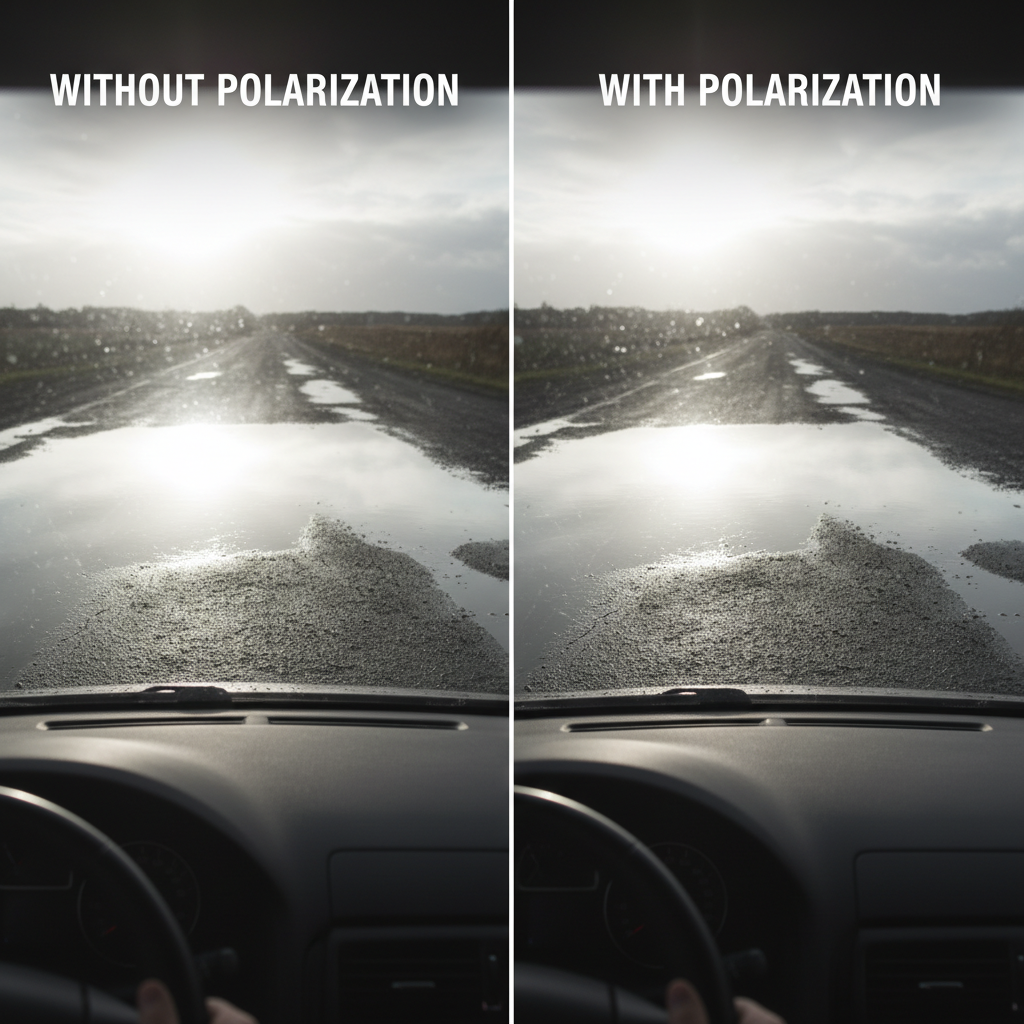
To Polarize or Not? A Commuter's Dilemma
Polarized lenses are designed with a special chemical filter that blocks horizontal light waves, which are the primary component of glare. This is the blinding light that reflects off flat surfaces like a wet road, a car's hood, or standing water. While incredibly effective, they aren't the perfect solution for every commuter.
This decision often comes down to your primary mode of transport and the technology you interact with. The Federal Aviation Administration (FAA) advises against polarized lenses for pilots because they can cause blackout effects on modern LCD cockpit displays—a problem that can also affect drivers and cyclists using GPS units or smartphones for navigation.
Here’s a breakdown to help you decide:
| Commuter Type | Polarized Lenses (Pros/Cons) | Non-Polarized/Gradient Lenses (Pros/Cons) |
|---|---|---|
| Driver | Pro: Dramatically cuts glare from wet roads, dashboards, and other vehicles, reducing eye fatigue. | Pro: Ensures clear visibility of all LCD/LED screens, including your car's infotainment system, GPS, and smartphone. |
| Con: Can interfere with or black out digital displays. May make it harder to see your phone for navigation. | Con: Offers less comfort and protection against intense, direct road glare. | |
| Cyclist/Walker | Pro: Reduces blinding glare from pavement, building windows, and cars for a more comfortable journey. | Pro: Allows for better visibility of slick surfaces like oil slicks or icy patches, which polarization can sometimes obscure. |
| Con: Can make it difficult to spot potentially hazardous patches of ice or oil on the road. | Con: Less effective at managing overall eye strain in very bright, high-glare environments. |
Choosing the Right Tint for Urban Light
Lens color, or tint, is not just a style choice; it's a tool for managing light and enhancing contrast.
- Gray/Green: These are neutral tints that reduce overall brightness without distorting color perception. The American Optometric Association (AOA) often recommends gray lenses for driving to ensure accurate recognition of traffic signals.
- Brown/Amber: These tints enhance contrast and depth perception, making them excellent for the variable light of an urban commute, especially on overcast days or during early morning and late afternoon sun.
- Gradient Lenses: These lenses are darker at the top and gradually lighten towards the bottom. They are a practical choice for drivers, as they shield your eyes from overhead sun while providing a clearer, lighter view of your dashboard.
Frame Construction: Marrying Function with Fit
The most technologically advanced lenses are useless if the frames don't fit properly. A poor fit can lead to discomfort, slipping, and—most importantly—a failure to protect your eyes from all angles.
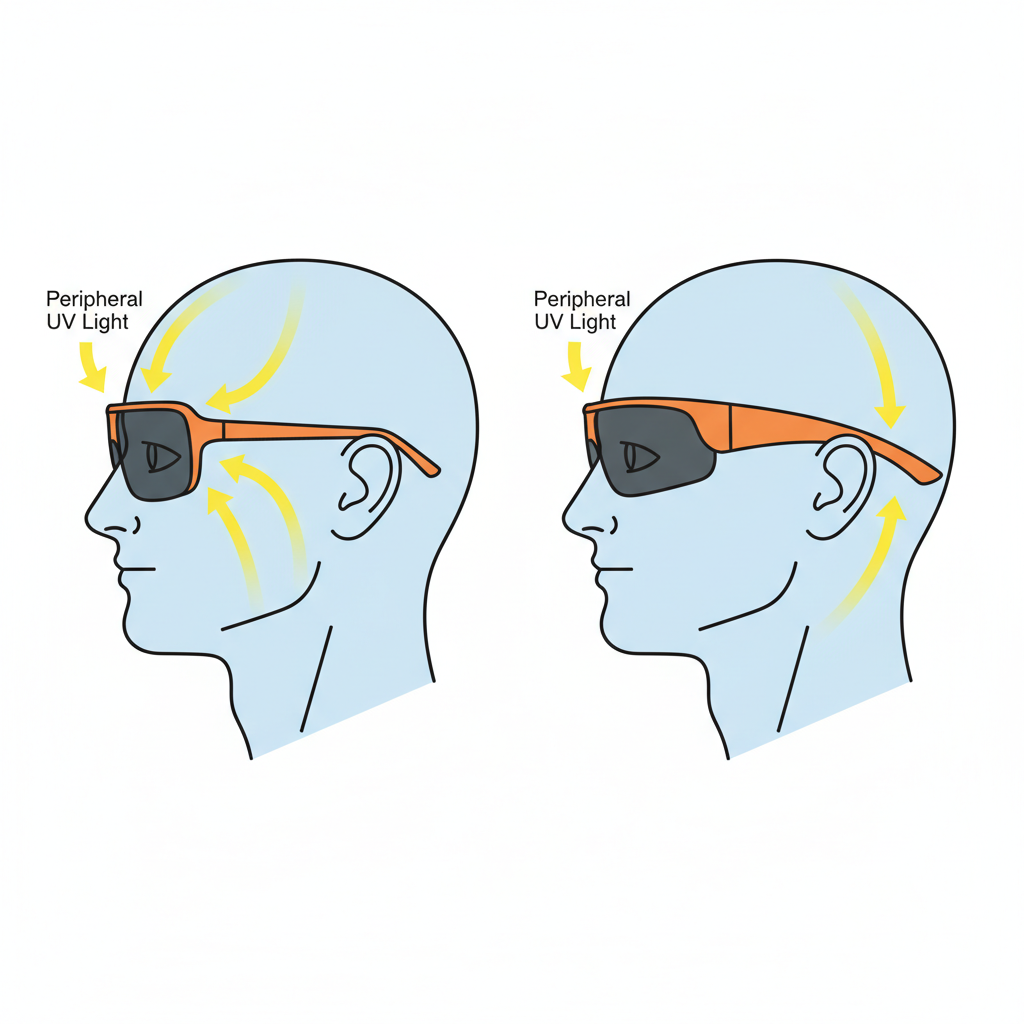
Coverage is Key: Frame Shape and Peripheral Vision
Sunlight doesn't just come from the front. It reflects off buildings, pavement, and other vehicles, entering your eyes from the sides, top, and bottom. A phenomenon known as the Coroneo Effect describes how peripheral light can focus on the edge of your cornea, contributing to conditions like pterygium ("surfer's eye").
A study on ocular dosimetry published in PMC used 3D models to confirm that standard, medium-sized frames offer the least protection due to significant peripheral light leakage. For optimal safety, especially for cyclists and walkers who spend more time exposed, consider these styles recommended by the American Academy of Ophthalmology (AAO):
- Wraparound Frames: These curve to follow the contour of your face, providing the most complete barrier against sun, wind, and debris. They are the top choice for cyclists. If you have a strong prescription, a specialized guide to wraparound high prescription sunglasses can help you find a pair that works.
- Oversized or "Goggle-Style" Frames: Larger frames that sit closer to the face can also effectively block stray light and offer excellent protection.
The Perfect Fit: A Practical Checklist
Use these simple heuristics to find a frame that feels like it was made for you:
- Frame Width: The hinges of the frame should align with the widest part of your face without extending much further.
- Temples (Arms): The arms should rest gently over and behind your ears. If they pinch or feel too tight, the frame is too narrow. If they are too loose, the glasses will slip.
- Nose Bridge: The weight of the glasses should be evenly distributed across the bridge of your nose without pinching or leaving red marks. Adjustable nose pads can provide a customized fit.
- Brow Line: There should be a small, consistent gap of 3-4mm between the top of the frame and your brow. This prevents the lenses from fogging up and smudging from contact with your skin.
- Vertex Distance: For prescription wearers, the lenses should sit about 10-12mm from your eyes. This is crucial for minimizing distortion in prescription sunglasses.
Frequently Asked Questions (FAQ)
Q: How often should I replace my sunglasses? A: The UV-protective coatings on some lenses can degrade over time with exposure to intense sunlight. Research from SPIE (the international society for optics and photonics) has shown that lenses can lose efficacy after extended exposure. A good rule of thumb is to consider replacing your primary pair every 2-3 years, especially if you spend a lot of time outdoors.
Q: Are more expensive sunglasses automatically better? A: Not necessarily. Price is often tied to brand name, frame materials, and design rather than protection. A budget-friendly pair of sunglasses can be perfectly safe and effective as long as it is certified UV400 and made from impact-resistant material. A PubMed study on sunglasses standards found that while unregulated vendors carry risks, price itself is not a reliable indicator of UV protection.
Q: Can I wear my sports sunglasses for my commute? A: Absolutely. Most high-quality sports sunglasses already incorporate features like impact resistance, full UV protection, and wraparound designs, making them ideal for commuting. Just be mindful of the lens technology—if you're a driver, ensure the polarization doesn't interfere with your car's digital displays.
Disclaimer: This article is for informational purposes only and does not constitute medical advice. Please consult with a qualified eye care professional to determine your specific vision needs and to receive a comprehensive eye examination. They can provide personalized recommendations for eyewear and address any health concerns you may have.
References
- MD Anderson Cancer Center: 9 things to know about sunglasses, eye protection and cancer
- National Eye Institute (NEI): New research sheds light on how UV rays may contribute to cataract
- PubMed: Solar ultraviolet protection by sunglasses: a technical report
- FDA Guidance: Impact-Resistant Lenses
- Federal Aviation Administration (FAA): Sunglasses for Pilots
- American Optometric Association (AOA): UV Protection
- PMC: Ocular UV Dosimetry
- American Academy of Ophthalmology (AAO): How to Choose the Best Sunglasses