

Why 100% UV Protection is Crucial for Kids' Eyes
It is a common sight at the beach: parents diligently applying sunscreen to their children’s skin, ensuring every inch is covered to prevent burns. Yet, often, those same children are running around with unprotected eyes or wearing cheap "toy" sunglasses picked up at a gas station. As an industry expert who has analyzed optical standards and safety regulations for years, I can tell you that this discrepancy in protection is one of the most overlooked aspects of pediatric health.
A child’s eyes are not just smaller versions of adult eyes; they are biologically distinct and significantly more vulnerable to radiation. The decisions you make about their eyewear today can dictate their visual health decades down the line.
This article serves as a definitive guide for parents who want to move beyond the "fashion accessory" mindset. We will explore the biological reasons why 100% UV protection is non-negotiable, decode the confusing labels like "UV400" versus "Polarized," and provide a technical checklist to ensure the glasses you buy are actually safe.
The Biological Vulnerability: Why Kids Are At Higher Risk
Many parents assume that vision damage is an "old person's problem," associated with cataracts or macular degeneration in seniors. However, the foundation for these conditions is often laid in childhood. The primary reason lies in the physiology of the developing eye.
The "Clear Lens" Factor
In adults, the crystalline lens of the eye naturally yellows and thickens with age, providing a minor degree of natural filtration against UV rays. Children, however, possess pristine, crystal-clear lenses.
According to a study on Ocular UV Dosimetry, this clarity allows for significantly higher transmission of high-energy radiation. The research indicates that 2–5% of UV radiation reaches the retina in children, compared to only about 1% in adults. While these percentages seem small, the cumulative effect is massive. The retinal tissues in a child are being bombarded with up to five times the UV dose of an adult in the same environment.
The Cumulative Damage Clock
Damage from ultraviolet radiation is cumulative, much like sun damage to the skin. The Mayo Clinic emphasizes that children should start wearing sunglasses as early as 6 months old. This isn't just a precaution; it is a necessity because it is estimated that a significant portion of lifetime UV exposure occurs before age 18.
By the time a child reaches adulthood without protection, the cellular structure of the eye may have already undergone changes that increase the risk of:
- Photokeratitis: Essentially a sunburn of the cornea, common after days at the beach or ski slopes.
- Pterygium: A growth of pink, fleshy tissue on the white of the eye (conjunctiva) that can encroach on the cornea and impair vision.
- Long-term Pathologies: Early cataracts and macular degeneration later in life.
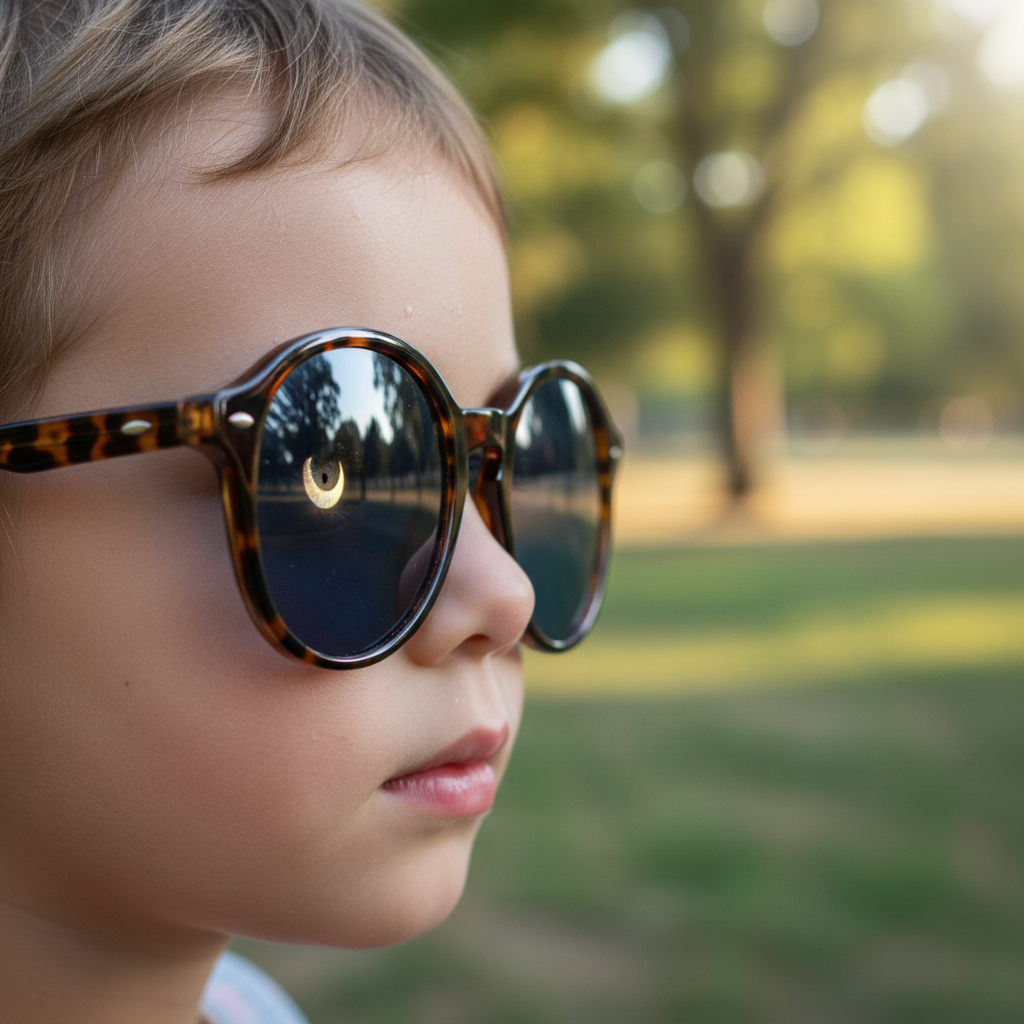
Decoding the Labels: UV400, Polarized, and The "Darkness Fallacy"
One of the most dangerous misconceptions in eyewear is the belief that darker lenses offer better protection. This is not only false; it can be actively harmful.
The Darkness Fallacy
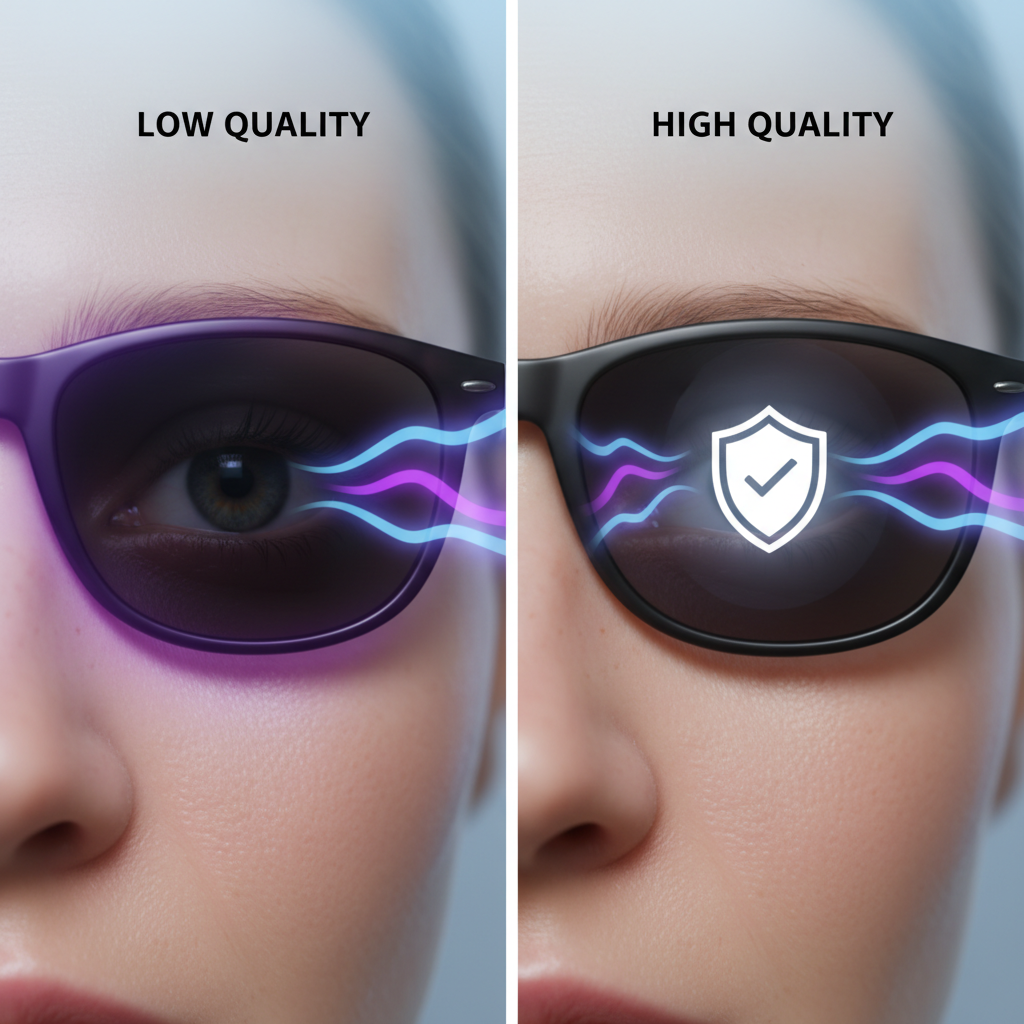
When you put dark glasses on a child, their pupils naturally dilate (open wider) to let in more light. If those dark lenses do not have UV filters, you have essentially created a trap. The wide-open pupil allows massive amounts of invisible UVA and UVB radiation to flood the eye—far more than if the child were wearing no glasses at all and squinting in the bright light.
Expert Warning: Never buy "costume" or "toy" sunglasses unless they explicitly state 100% UV Protection or UV400. A dark lens without a certification mark is a safety hazard.
UV400 vs. Polarized: Understanding the Difference
Parents often confuse "Polarized" with "UV Protection." They are two completely different technologies.
- UV Protection (The Sunscreen): This is a chemical treatment (or inherent material property) that absorbs ultraviolet radiation (100–400nm). It is invisible. A clear lens can have 100% UV protection.
- Polarization (The Glare Filter): This is a filter that blocks horizontal light waves (glare) bouncing off flat surfaces like water, roads, or snow. It acts like a picket fence, letting vertical light through but blocking horizontal "noise."
According to Science News Explores, while polarization improves visual comfort and contrast, it does not block UV rays on its own. You need both.
Comparison: Which Lens Feature Do You Need?
| Feature | Primary Function | Essential for Eye Health? | Best Use Case |
|---|---|---|---|
| UV400 / 100% UV Block | Absorbs harmful UVA/UVB radiation up to 400nm. | YES (Mandatory) | All outdoor activities. |
| Polarized | Reduces blinding glare from reflective surfaces. | No (Comfort only) | Water sports, fishing, snow sports, high-glare environments. |
| Mirror Coating | Reflects excess light; reduces brightness. | No (Cosmetic/Comfort) | Very bright conditions (skiing, high altitude). |
| Tint (Grey/Brown) | Dims visible light; improves contrast. | No | General comfort; Brown is good for contrast, Grey for true color. |
Why "UV400" specifically?
You might see labels saying "Meets ANSI Z80.3" or "Blocks UV." Look specifically for UV400. Standard regulatory requirements in some regions only mandate blocking up to 380nm. However, a technical report on Solar UV Protection argues that the 380–400nm band contains significant high-energy radiation. Lenses certified as UV400 cover this critical gap, ensuring the "near-UV" spectrum doesn't reach the eye.
The Fit Factor: Why "Wraparound" Matters
Even the best lenses in the world fail if the frame doesn't fit the child's face. This is due to a phenomenon known as the Coroneo Effect.
Peripheral Light Leakage
Light doesn't just come from the front; it reflects off the ground, water, and sand, entering the eye from the sides, top, and bottom. Research cited by PMC: Photoprotection of the Eye explains that peripheral light can be focused by the cornea onto the nasal side of the eye (the limbus), which is a common site for pterygium formation.
A study on Ocular UV Dosimetry & Frame Geometry found that "middle-sized" sunglasses often offer the least protection because they sit far from the face, allowing light to leak in. The safest designs are:
- Wraparound Styles: These curve around the face, minimizing the gap at the temples.
- Oversized Frames: Large lenses (like aviators or large squares) cover the entire orbital bone, blocking light from above and below.
- Close Fit: The frame should sit close to the face without touching the eyelashes.
Pro Tip: Do the "Finger Test." If you can easily fit your pinky finger into the gap between the frame and your child's temple while they are wearing the glasses, the gap is likely too big.
Material Science: Safety Beyond Radiation
Kids are active. They run, trip, fall, and get hit by balls. The material of the sunglass lens is just as important as its tint.
The Danger of Glass and Standard Plastic
In the past, glass lenses were common for their scratch resistance. For children, glass is a liability; if a child falls, glass can shatter into sharp shards near the eye. Even standard plastic (CR-39) can break under high impact.
The Solution: Polycarbonate and Trivex
The FDA Guidance on Impact Resistance mandates that all eyewear sold in the U.S. must pass a "drop ball test." However, for active children, you want materials that exceed the minimum.
- Polycarbonate: This is the gold standard for kids' eyewear. It is up to 10 times more impact-resistant than plastic or glass. It is virtually shatterproof and naturally blocks UV radiation without needing a coating.
- Trivex: Similar to polycarbonate but with slightly better optical clarity (less chromatic aberration) and lighter weight.
According to the American Optometric Association (AOA), polycarbonate or Trivex should be the default choice for anyone under 18 or anyone involved in sports.
Addressing Parental Concerns: Myopia and "Screen Time"
A growing concern among parents is whether wearing sunglasses will hinder a child's eye development or interfere with "natural" light needed to prevent myopia (nearsightedness).
The Myopia Paradox
Research has established that time spent outdoors is protective against myopia. A study in PMC: Myopia Prevention & Outdoor Light investigated whether sunglasses negate this benefit.
The findings were reassuring: even with sunglasses that reduce light intensity by 80%, the lux levels outdoors on a sunny day (often >10,000 lux) remain well above the threshold (>1,000 lux) needed to stimulate retinal dopamine, which helps prevent the eye from growing too long (myopia).
The Takeaway: You do not have to choose between preventing myopia and preventing UV damage. Your child can—and should—play outside with sunglasses. They will still get plenty of "good" light to regulate eye growth, without the "bad" UV radiation damaging their cells.
A Parent's Buying Checklist
To simplify the shopping process, use this checklist when evaluating sunglasses for your child. If a pair doesn't meet these criteria, put it back on the rack.
- Certification: Look for a sticker or tag that says "100% UV Protection" or "UV400." Do not settle for "Blocks UV" (vague) or "Cosmetic Lens."
- Material: Confirm the lenses are Polycarbonate or Impact Resistant.
- Coverage: Choose a wraparound style or a large frame that covers the eyebrows and cheekbones.
- Tint: Gray is best for true color recognition (important for recognizing traffic signals). Amber/Brown is great for contrast in sports. Avoid blue or purple tints for driving/biking as they can distort colors.
- Durability: Look for flexible frames (like TPEE or rubberized plastic) that can bend without snapping. Spring hinges are a bonus for longevity.
- Verification: If you are unsure about an old pair, take them to a local optical shop. Most have a photometer and can test the UV blocking capability for free.
Wrapping Up
Protecting your child's eyes is an investment in their future quality of life. The damage caused by UV radiation is silent, painless, and cumulative, but it is also entirely preventable. By prioritizing function over fashion—choosing UV400 ratings, impact-resistant materials, and full-coverage fits—you ensure that your child's vision remains sharp and healthy for decades to come.
Treat sunglasses not as a toy, but as essential safety gear, just like a bike helmet or a seatbelt.
Frequently Asked Questions (FAQ)
Q: At what age should my child start wearing sunglasses? A: Ideally, as early as 6 months old. Before that, infants should be kept out of direct sunlight or protected with wide-brimmed hats and stroller canopies. The Mayo Clinic advises that sun damage is cumulative, so starting early provides the best lifetime protection.
Q: Do kids need sunglasses on cloudy days? A: Yes. According to the American Academy of Ophthalmology (AAO), clouds do not block UV rays effectively. UV radiation can penetrate thin cloud cover, and in some cases, broken clouds can actually reflect and increase UV intensity.
Q: Are cheap sunglasses from the dollar store safe? A: It is a gamble. A study on Public Awareness of UV Harm highlighted that nearly half of consumers don't trust cheap glasses, and for good reason. While some cheap pairs do offer UV protection, many suffer from poor optical quality (distortion), lack impact resistance, or have thin coatings that scratch off easily. It is safer to buy from a reputable optical retailer where certification is guaranteed.
Q: My child refuses to keep them on. What should I do? A: Start with a comfortable strap or band to keep them in place. Model the behavior—if you wear yours, they are more likely to wear theirs. specialized "baby" sunglasses often have soft, elastic neoprene straps that are more comfortable for toddlers than rigid temple arms.
Disclaimer: This article is for informational purposes only and does not constitute medical advice. If you have specific concerns about your child’s vision or eye health, please consult a qualified pediatrician or optometrist.