



New Floaters After Eye Surgery: Is It a Cause for Concern?
Is It Normal to See New Floaters After Eye Surgery?
Seeing new specks, strings, or "cobwebs" drift across your field of vision after eye surgery can be alarming. For many, it raises an immediate, anxious question: Is this a normal part of healing, or is it a sign of a serious complication? While any new symptom should be monitored, not all floaters are a cause for panic.
This article will help you understand the difference between benign post-surgical floaters and the critical warning signs of a retinal emergency. Knowing how to distinguish between them can protect your vision and provide peace of mind during your recovery.
TL;DR: When to Worry
- Likely Benign: A few slow-moving, string-like or dot-like floaters that have been present before or appear gradually without other symptoms.
- Potentially Urgent: A sudden, dramatic increase in floaters, especially if they look like a "swarm of gnats," are accompanied by flashes of light, or if you notice a dark curtain or shadow in your peripheral vision. If you experience these, contact your surgeon or seek emergency care immediately.
What Are Floaters, and Why Do They Appear After Surgery?
Floaters are tiny clumps of cells or protein within the vitreous humor, the clear, gel-like substance that fills the inside of your eye. What you perceive as a "floater" is actually the shadow these clumps cast on your retina, the light-sensitive tissue at the back of your eye. They are most noticeable when you look at a bright, plain background, like a blue sky or a white wall.
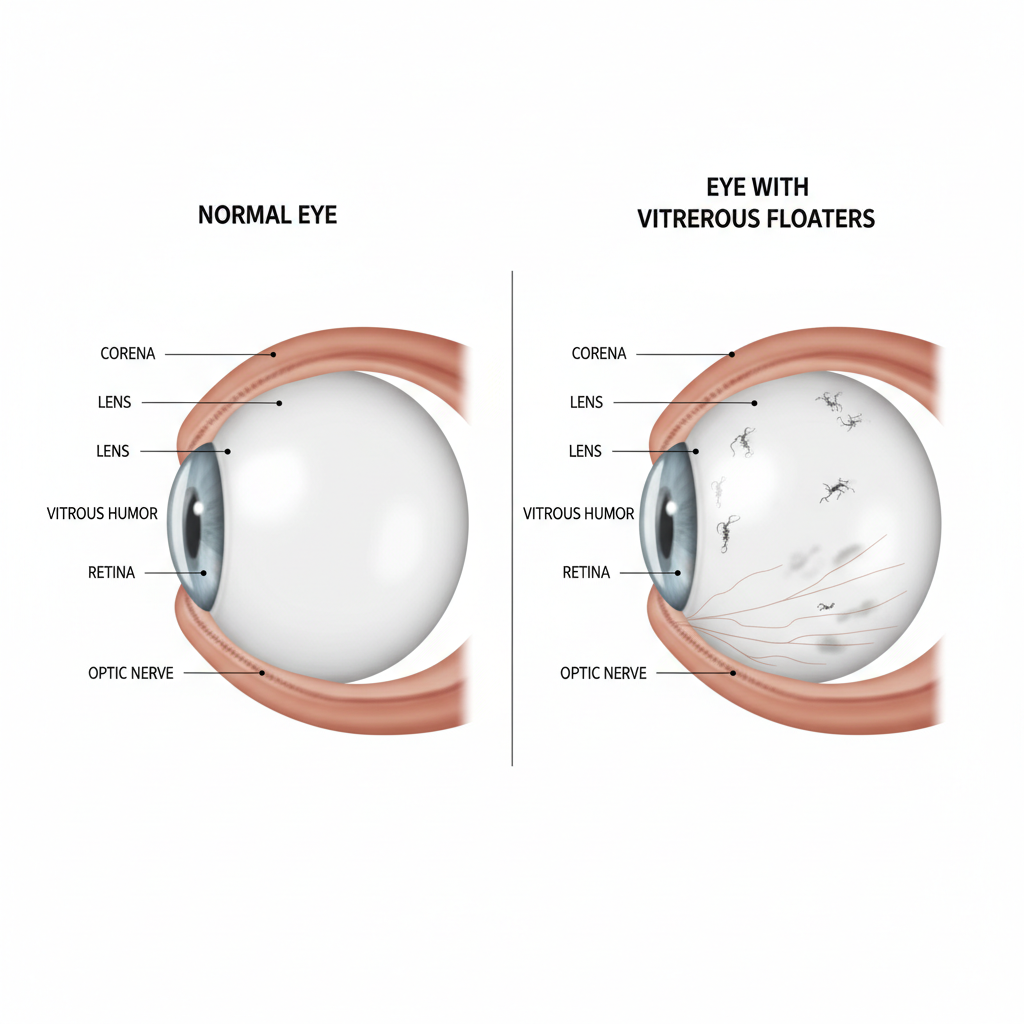
As we age, the vitreous gel naturally liquefies and shrinks. This process can cause it to pull away from the retina, an event known as a Posterior Vitreous Detachment (PVD). A PVD is a very common and usually harmless cause of new floaters.
Eye surgeries, including cataract surgery and LASIK, involve changes in eye pressure and can cause inflammation. This can accelerate the process of PVD or simply "stir up" pre-existing floaters, making them more visible than they were before the procedure.
Recognizing Benign Post-Operative Floaters
In most cases, the appearance of new floaters after surgery is not a sign of a dangerous complication. These benign floaters often have specific characteristics that can help you identify them.
Characteristics of Non-Urgent Floaters:
- Appearance: They look like isolated strands, threads, cobwebs, or single dots.
- Movement: They drift slowly and seem to lag behind your eye movements. If you try to look directly at one, it will likely dart away.
- Consistency: You can often "look past" them to see what is behind them. They might be annoying, but they don't typically obscure your vision in a significant way.
- Onset: You may have had similar floaters before, and the new ones appear gradually or are simply more noticeable after surgery.
From a clinical perspective, these isolated, slow-moving strands are classic signs of a standard PVD, which is not an emergency. It's the eye's natural aging process, which the surgery may have simply made more apparent.
Urgent Warning Signs: When to Call Your Doctor Immediately
While most floaters are harmless, some are warning signs of a retinal tear or detachment—a true medical emergency that can lead to permanent vision loss if not treated promptly. The key difference between benign floaters and an emergency is the suddenness and the presence of associated symptoms.
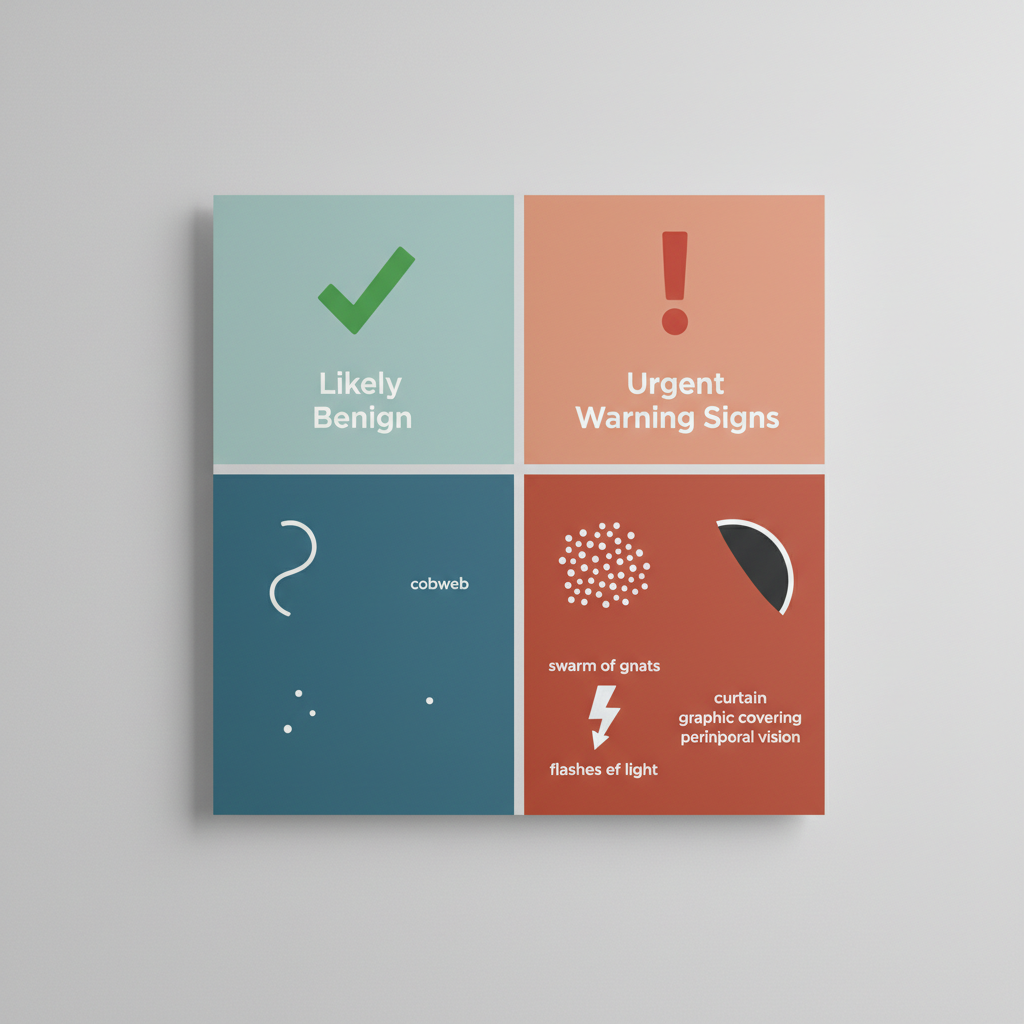
Contact your ophthalmologist or go to an emergency room immediately if you experience any of the following:
- A Sudden Shower of New Floaters: A dramatic, abrupt increase in the number of floaters, often described as a "swarm of gnats," "pepper," or "hundreds of black dots." This can indicate bleeding inside the eye from a torn retinal blood vessel.
- Flashes of Light (Photopsia): Seeing flashes of light, like a camera flash or lightning streak, in your peripheral vision. This is a sign that the vitreous gel is physically tugging on your retina.
- A Curtain or Shadow: A dark, gray, or blurry shadow that appears in your peripheral vision and seems to be expanding. This is a classic sign of a retinal detachment, where the retina is peeling away from the back of the eye.
- Sudden, Significant Decrease in Vision: An abrupt blurring or loss of central or peripheral vision that is not improving.
Genuinely concerning floaters are almost always accompanied by one or more of these other symptoms. Do not wait to see if they will go away on their own.
High-Risk Factors You Shouldn't Ignore
Certain individuals have a higher baseline risk for retinal tears and detachments. If you fall into one of these categories, you should be especially vigilant about new symptoms after eye surgery.
- High Myopia (Nearsightedness): Being very nearsighted is a significant risk factor. As noted by experts at the Advanced Eye Care Center, a highly myopic eye is longer than a normal eye, which causes the retina to be stretched thin and become more susceptible to tearing.
- Previous Retinal Issues: If you have had a retinal tear or detachment in one eye, your risk is significantly higher in the other eye.
- Family History: A family history of retinal detachment increases your personal risk.
- Previous Eye Trauma: A significant injury to the eye can predispose it to future retinal problems.
Practitioners emphasize that symptoms in these high-risk patients should never be dismissed. What might be a benign PVD in an average patient could be a sign of a tear in a highly myopic individual.
The Bottom Line: When in Doubt, Get it Checked Out
Navigating post-operative symptoms can be stressful, but understanding your own eyes is the best defense. The crucial takeaway is to learn the difference between a few harmless, drifting "cobwebs" and the emergency signs of a "swarm" of new floaters, especially when paired with flashes of light or a dark curtain in your vision.
While this guide can help you assess the situation, it is not a substitute for professional medical advice. If you have any doubt about the nature of your symptoms, it is always safest to contact your eye doctor. A timely examination can be the difference between a simple procedure and irreversible vision loss.
Disclaimer: This article is for informational purposes only and does not constitute professional medical advice. Always consult with a qualified healthcare provider for any questions about your health or before making any decisions related to your treatment. If you believe you are experiencing a medical emergency, call your doctor or 911 immediately.
References
- American Academy of Ophthalmology (AAO). "Myopia (Nearsightedness)." https://www.aao.org/eye-health/diseases/myopia-nearsightedness
- Advanced Eye Care Center. "The Link Between High Myopia and Serious Eye Diseases." https://www.advancedeyecarecenter.org/services/myopia-management/the-link-between-high-myopia-and-serious-eye-diseases/
- National Eye Institute (NEI). "Floaters." https://www.nei.nih.gov/learn-about-eye-health/eye-conditions-and-diseases/floaters
- Johns Hopkins Medicine. "Low Vision: What You Need to Know as You Age." https://www.hopkinsmedicine.org/health/wellness-and-prevention/low-vision-what-you-need-to-know-as-you-age