


The Soap Residue Risk: Why Moisturizing Soap Ruins Your Lenses
The Unseen Saboteur: How Your Hand Soap Could Be Ruining Your Vision
It’s one of the most common and frustrating experiences for a contact lens wearer. You’ve meticulously cleaned your lenses, washed your hands, and carefully inserted them, only to find your vision is cloudy, hazy, or smeared just minutes later. You might blame the lenses, the solution, or even your own eyes. But the real culprit is often the very product you used to ensure cleanliness: your hand soap.
Many modern hand soaps are formulated with moisturizers, oils, lotions, and perfumes. While these ingredients are great for keeping your skin soft, they are a disaster for the delicate surface of a contact lens. They leave behind an invisible, stubborn film on your fingertips that transfers directly to your lenses upon handling, creating a greasy barrier between the lens and your tear film. This guide will break down the science behind this common problem, help you identify which soaps to avoid, and provide a clinically-backed protocol for handwashing that ensures crystal-clear vision all day long.
TL;DR: The Soap Residue Quick Guide
The Problem: Soaps containing oils, lotions, emollients, or specific antibacterials (like triclosan) leave a microscopic, oily film on your fingers.
The Transfer: This invisible residue instantly sticks to the surface of your contact lens when you touch it.
The Result: A uniform, greasy haze that causes blurry vision. This cloudiness often worsens throughout the day as your tears interact with the film and can cause irritation.
The Solution: Before handling lenses, wash your hands with a plain, basic soap that is free of lotions, oils, and fragrances. Rinse your hands thoroughly until they achieve a "squeaky clean" feeling, signifying all residue is gone.
The Invisible Contaminant: How Soap Film Binds to Your Lenses
To understand why some soaps are so problematic, we need to look at the chemistry of both the soap and the contact lens. Your soft contact lenses are made of hydrophilic polymers, meaning they are designed to attract and hold water. This property is what keeps them soft, moist, and comfortable on your eye.
Most moisturizing soaps, on the other hand, contain hydrophobic (water-fearing) ingredients. These include:
Emollients and Oils: Lanolin, petrolatum, mineral oil, shea butter, and coconut oil are designed to lock moisture into your skin by creating a protective, oily barrier.
Creamy Additives: Ingredients that give liquid soaps a pearlescent or milky appearance are often lotion-based.
When this hydrophobic film transfers from your finger to your water-loving lens, it creates an immediate conflict. The oily layer repels your natural tear film, preventing it from spreading evenly across the lens surface. Instead of a clear, smooth optical surface, you get a smeared, greasy one, resulting in a consistent, uniform haze. This is distinctly different from the small, discrete opaque spots you might see from protein deposits.
Unfortunately, your standard multipurpose contact lens solution is not formulated to strip away these stubborn, man-made residues. While these solutions are excellent at removing biological materials like proteins and lipids from your eye, they can’t effectively break down the waxy, oily film left by a moisturizing soap. No amount of rubbing or rinsing in solution will fix a lens that has been compromised at the point of insertion.

The "Lens-Safe" Soap Checklist: What to Use and What to Avoid
Choosing the right soap is the single most important step in preventing residue buildup. The goal is to find a product that cleans effectively without leaving anything behind.
Ingredients and Soap Types to AVOID
Moisturizing Agents: Scrutinize labels for words like "moisturizing," "softening," "lotion," or "creamy." Avoid any soap that lists oils (coconut, jojoba, mineral), butters (shea, cocoa), or lanolin and petrolatum high in the ingredient list.
Fragrances and Dyes: While not always oily, perfumes and dyes can be an additional source of irritation for sensitive eyes. The simpler, the better.
Problematic Antibacterials: Some antibacterial soaps, particularly those containing triclosan or chloroxylenol (PCMX), are known to leave a stubborn film that is very difficult to rinse away.
Liquid Soaps: Be extra cautious with liquid soaps. Practitioners often note that the film is worse with liquids compared to bar soaps, as they frequently contain higher concentrations of emollients to achieve their texture and feel.
What to LOOK FOR in a Hand Soap
Key Descriptors: Look for soaps labeled as "basic," "plain," "simple," or "free and clear." Hypoallergenic options are often a safe bet.
Formulation: A basic bar soap is frequently the most reliable choice. Simple castile soaps or basic glycerin bars are excellent options as they have minimal additives.
The Goal: The ideal soap should contain nothing more than the essential ingredients needed for cleaning.
The Definitive Handwashing Protocol for Contact Lens Wearers
Proper technique is just as important as soap selection. Adhering to a strict, repeatable process is the best way to protect your lenses and your eyes. This protocol is aligned with hygiene recommendations from health authorities like the Centers for Disease Control and Prevention (CDC).
Step 1: Select Your SoapChoose a plain, non-moisturizing soap based on the checklist above.
Step 2: Lather and ScrubWet your hands with water, lather up the soap, and scrub all surfaces of your hands for at least 20 seconds. Pay special attention to your fingertips and the areas under your nails, as this is where residue can hide.
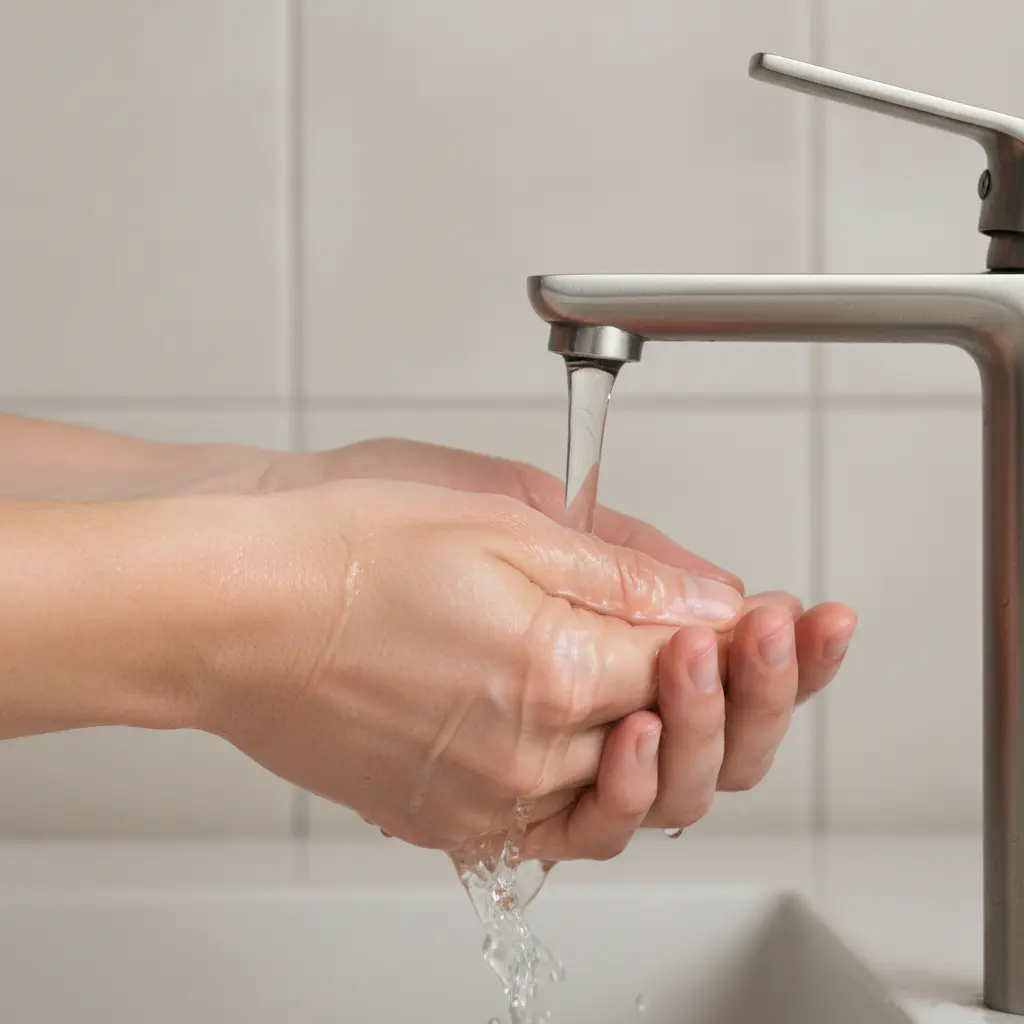
Step 3: The "Squeaky Clean" RinseThis is the most critical step. Rinse your hands under a steady stream of water. Continue rinsing until your hands no longer feel slippery or silky. The heuristic used by eye care professionals is the "squeaky clean" test: your skin should offer slight resistance and even make a slight squeaking sound when you rub your fingers together. This feeling indicates that all soap and oily residues have been washed away.
Step 4: Hard Water Precaution (If Applicable)If you live in an area with hard water, the minerals in your tap water can react with soap to form a scaly film (soap scum). For maximum safety, consider a final, quick rinse with distilled or filtered water to wash away any mineral deposits.
Step 5: Dry with a Lint-Free TowelThoroughly dry your hands with a clean towel that does not shed fibers. A lint-free or microfiber towel is ideal. Avoid fuzzy bath towels or paper towels that can disintegrate, as small fibers can stick to your fingers and transfer to your lenses, causing significant irritation. It is only after this entire process is complete that your hands are ready to handle your contact lenses.
Troubleshooting: Is It Soap, Proteins, or Something Else?
If you're experiencing cloudy vision, it's important to identify the root cause. Use this table to help differentiate between common issues.
| Symptom | Likely Cause: Soap Residue | Likely Cause: Protein Deposits | Likely Cause: Dry Eye or Poor Fit |
|---|---|---|---|
| Appearance of Blur | A uniform, consistent, greasy haze or film over the entire lens. | Small, discrete white or translucent spots that appear stuck to the lens. | Vision may fluctuate, clearing temporarily after a blink. No visible deposits. |
| Time of Onset | Almost immediately or within minutes after inserting the lens. | Builds up gradually throughout the day or over several days of wear. | Worsens with prolonged screen use, in windy or air-conditioned rooms, or late in the day. |
| Physical Sensation | Primarily blurry vision; may be accompanied by mild, general irritation. | A gritty, sandy, or foreign body sensation, as if an eyelash is in the eye. | A feeling of burning, stinging, dryness, or general discomfort. |
| Effect of Blinking | Vision remains blurry or clears only for a split second. | Blinking does not remove the spots or the gritty feeling. | Vision may improve for a few seconds immediately after a blink. |
If your symptoms align with protein deposits or dry eye, it may be time to review your lens cleaning solution, your replacement schedule, or consult your eye doctor about different lens materials or rewetting drops. For more information on protecting your eyes, it's also important to remember that contact lens wearers still need UV-blocking sunglasses for complete protection.
Frequently Asked Questions
1. Can I just rinse my lenses in solution to get the soap film off?Unfortunately, this is rarely effective. The hydrophobic film left by moisturizing soaps binds tightly to the lens surface and is resistant to standard solutions. Prevention by using the correct handwashing protocol is far more effective than trying to rescue a contaminated lens.
2. Is hand sanitizer a safe alternative to soap before handling lenses?Absolutely not. Hand sanitizers are typically over 60% alcohol, which can severely damage the delicate polymer structure of a soft contact lens. Furthermore, they almost always contain moisturizers like aloe or glycerin to counteract the drying effect of the alcohol, which will cause the same residue problem as lotion soaps. According to the FDA, you should never use tap water or any non-sterile liquid on your lenses, and this includes sanitizers.
3. I’ve used the same soap for years without issue. Why is this happening now?Soap manufacturers frequently update their formulas, sometimes adding new moisturizing agents or changing concentrations. It's possible the product you've trusted has changed. It's also possible that a new lens material or a change in your own tear chemistry is making the issue more apparent.
4. What should I do if my vision is still cloudy after switching to a plain soap?If you have ruled out soap residue by following the protocol in this guide, the cloudiness may be due to other factors. These can include heavy protein or lipid deposits, a reaction to your care solution, developing dry eye syndrome, or an underlying eye health issue. In this case, it is essential to schedule an appointment with your optometrist or ophthalmologist for a proper diagnosis.
Your journey to consistently clear and comfortable contact lens wear begins at the sink. By understanding the hidden risks of moisturizing soaps and adopting a meticulous, residue-free handwashing routine, you can eliminate one of the most common causes of frustratingly foggy vision. Make the switch to a simple, plain soap and embrace the "squeaky clean" rinse—your eyes will thank you for it.
Disclaimer: This article is for informational purposes only and does not constitute professional medical advice. Always consult with a qualified eye care professional for any issues concerning your eye health or contact lens wear. They can provide a comprehensive examination, diagnosis, and personalized recommendations.