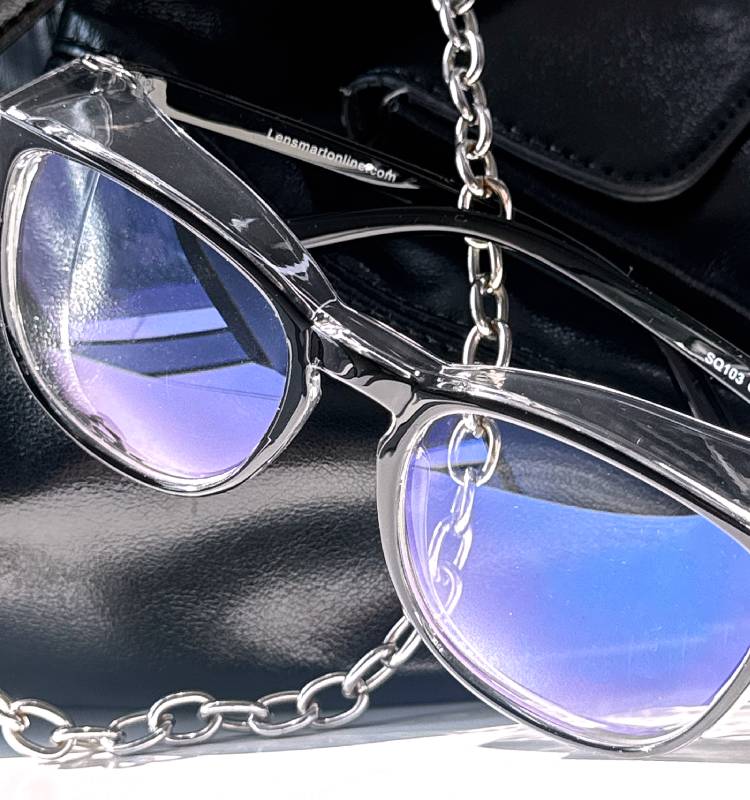



Moisture Chamber Glasses: Relief for Severe Post-Op Dry Eye
The Unseen Barrier: Why Standard Treatments Fail for Severe Dry Eye
For many, the term "dry eye" conjures images of mild, temporary discomfort easily remedied with a few over-the-counter lubricating drops. But for individuals recovering from ocular surgery like LASIK, or those with chronic conditions such as Sjögren's syndrome, the reality is far more debilitating. This is severe, persistent Dry Eye Disease (DED), a condition where standard interventions often provide little to no relief.
The core of the problem lies in a compromised ocular surface system. Surgical procedures, particularly those involving corneal incisions like LASIK, can sever superficial corneal nerves. These nerves are crucial for signaling the brain to produce tears and initiate a blink reflex. When they are damaged, this feedback loop is broken, leading to a significant reduction in both tear production and blink rate. According to the American Academy of Ophthalmology, a normal blink rate of 15 times per minute can plummet to just 5-7 times when staring at a screen, a common activity post-surgery. This creates a vicious cycle: reduced blinking leads to faster tear evaporation, which further irritates the already compromised surface.
Furthermore, many patients experience "regimen fatigue." The constant need to apply artificial tears—often every hour—becomes a burden, and as noted in clinical observations, compliance can drop significantly, especially during the critical 2-4 week post-operative period when corneal nerve regeneration peaks and symptoms are at their worst. Standard drops only offer fleeting moisture, doing little to address the underlying cause of evaporative dry eye, which is the eye's inability to maintain a stable tear film in a hostile environment.
The Science of the Seal: How a Humid Microclimate Restores Comfort
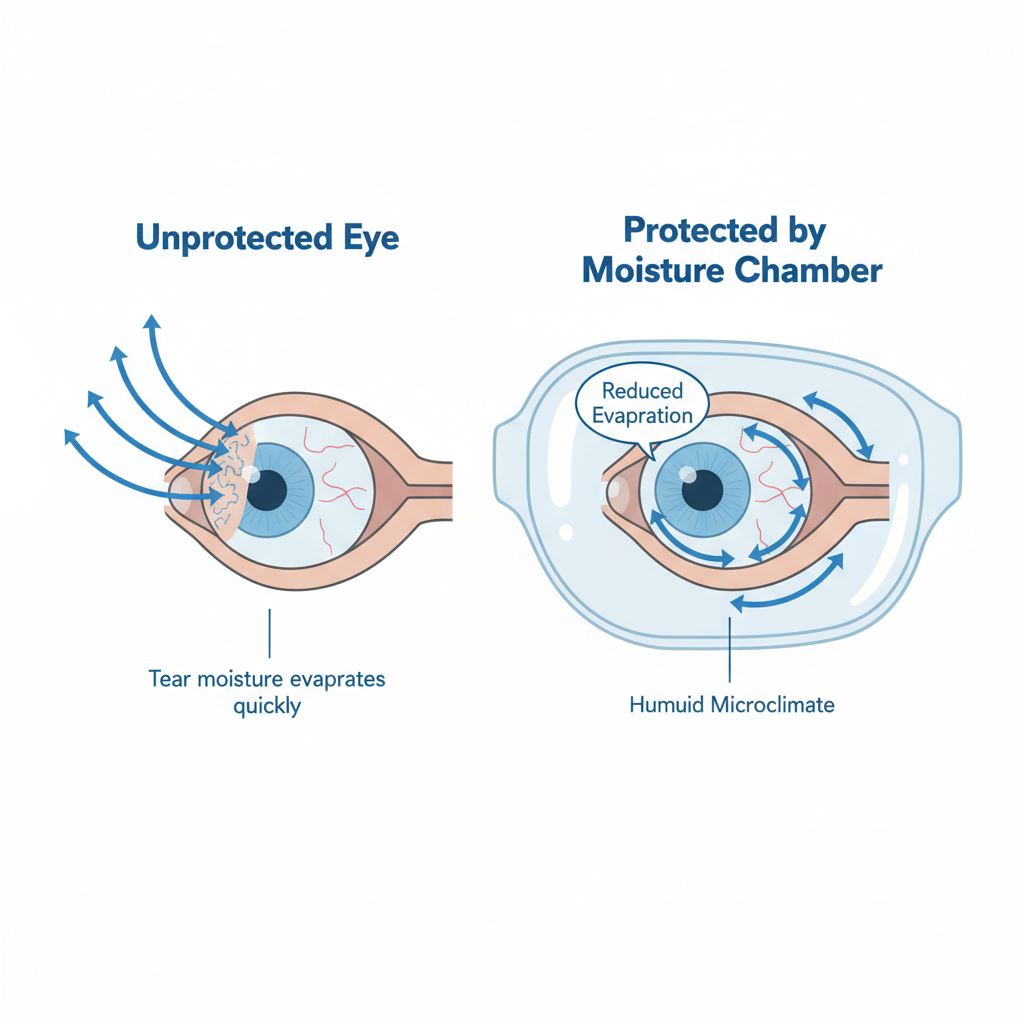
Moisture chamber glasses work on a simple yet powerful principle: if you can't produce more tears, you must preserve the ones you have. Unlike regular glasses, they are engineered with a soft, flexible gasket, typically made of medical-grade silicone, that rests gently against the skin to create a complete seal around the orbital bone (the eye socket).
This seal effectively creates an isolated, humid micro-environment for each eye. By stopping air movement across the ocular surface, the glasses drastically reduce the evaporation of the natural tear film. The moisture from your tears is trapped within the chamber, raising the relative humidity inside to a level that provides constant hydration to the cornea. Think of it as a personal terrarium for each eye, shielding it from drying elements like wind, dust, air conditioning, and low-humidity environments.
This passive hydration system provides continuous relief that eye drops cannot match. It stabilizes the tear film, reduces the friction between the eyelid and the cornea, and allows the inflamed ocular surface to heal. For post-surgical patients, this protective barrier is invaluable, shielding the sensitive, regenerating tissues from environmental irritants that could otherwise cause pain and delay recovery.
A Clinical Guide to Selecting and Fitting Moisture Chamber Glasses
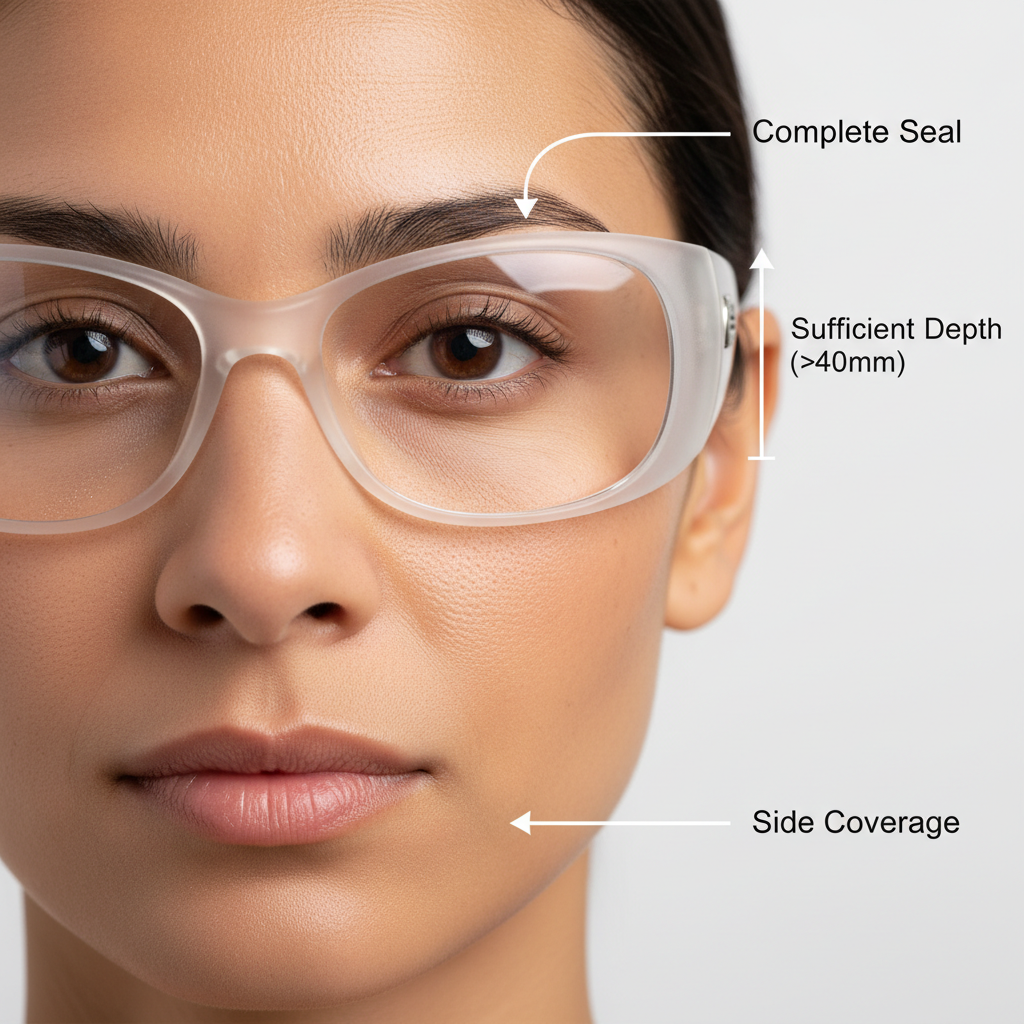
Choosing moisture chamber glasses is more akin to selecting a medical device than fashion eyewear. Proper fit is not just about comfort; it is the primary determinant of the glasses' therapeutic effectiveness. An incomplete seal renders the moisture chamber useless.
Expert Insight: Fitting Heuristics Based on clinical practice, successful fitting hinges on two key geometric parameters. These are not rigid rules but practical guidelines for achieving an effective orbital seal.
- Frame Depth: Look for a frame with a vertical depth of at least 40mm. Frames that are too shallow often fail to create a complete seal along the inferior (bottom) orbital rim, allowing moisture to escape.
- Side Shield Coverage: The side shields or gasket should extend at least 10mm posterior to the lateral (outer) edge of the eye socket. This prevents air from leaking in from the sides, a common failure point in poorly designed frames.
Here are the critical factors to consider during selection:
-
The Seal is Everything: The silicone or foam gasket should make gentle, consistent contact with the skin all the way around the eye. There should be no gaps. When you first put them on, you may feel a slight suction effect. This is a sign of a good seal.
-
Material Matters: The gasket material should be hypoallergenic to prevent skin irritation during long-term wear. Medical-grade silicone is often the preferred choice due to its inert, soft, and durable properties.
-
Lens Considerations: While the frame does the heavy lifting, the lenses are still important. Opt for lenses with an anti-fog coating, especially on the inner surface. Polycarbonate lenses offer superior impact resistance, which is an added safety benefit.
-
Prescription Compatibility: If you require vision correction, you have two options: have custom prescription lenses fitted into the moisture chamber frames or select a "fit-over" model designed to be worn over your existing eyeglasses.
Practical Use: Tips for Maximizing Relief and Avoiding Common Pitfalls
Getting the most out of moisture chamber glasses involves a short adaptation period and a few key habits. Understanding these can mean the difference between frustration and profound relief.
Troubleshooting Initial Fogging
The most common complaint from new users is lens fogging. This is a normal consequence of a functioning seal and is easily managed.
- Reason: When you first put the glasses on, the air inside the chamber is cooler than your skin. The moisture from your eyes condenses on the colder lens surface.
- Solution: Put the glasses on and allow 15-20 minutes for the air inside the chamber to warm up to your body temperature. As the temperature equalizes, the fogging will resolve on its own. For immediate clarity, apply a doctor-recommended anti-fog solution to the inner surface of the lenses before putting the glasses on.
Maintaining the Seal and Hygiene
A clean gasket is essential for both hygiene and function.
- Avoid Skincare Products: Do not allow lotions, creams, or facial oils to come into contact with the silicone seal. These products can degrade the material and compromise the seal's integrity.
- Cleaning Routine: Clean the gasket daily with a gentle, non-abrasive soap and water. Dry it thoroughly before wearing. This prevents the buildup of oils and bacteria that could lead to skin or eye irritation.
When to Wear Them
Moisture chamber glasses can be worn as needed to prevent symptom flare-ups.
- During Screen Use: Long hours in front of a computer are a primary trigger for evaporative dry eye. Wearing the glasses during work can dramatically increase comfort and reduce end-of-day eye fatigue.
- In Hostile Environments: Always wear them outdoors in windy, dusty, or low-humidity conditions. They are also indispensable during air travel, which is notoriously dehydrating.
- For Sleep: Some individuals find that wearing specialized moisture goggles or chambers at night prevents morning dryness and discomfort.
Frequently Asked Questions
1. Are moisture chamber glasses the same as safety goggles? No. While they may look similar, their function is different. Safety goggles are designed primarily for impact protection and may have vents that prevent a proper moisture seal. Moisture chamber glasses are specifically engineered to be non-vented to trap humidity.
2. Can they cure my severe dry eye? Moisture chamber glasses do not cure the underlying cause of Dry Eye Disease. They are a powerful therapeutic tool for managing symptoms, reducing discomfort, protecting the ocular surface, and improving your quality of life by allowing your eyes to heal.
3. Will I have to wear them forever? It depends on the cause of your dry eye. For post-surgical patients, they may only be needed for a few weeks or months during the most intense phase of recovery. For those with chronic conditions, they may become a long-term part of their daily symptom management strategy.
4. Is it normal for them to feel strange at first? Yes. The sensation of a sealed chamber around your eyes can feel unusual initially. You may also notice a slight change in your peripheral vision. Most users adapt to this within a few days of consistent wear.
For those who have struggled with severe, unresponsive dry eye, moisture chamber glasses represent a significant step forward in symptom management. By creating a protective, hydrating environment, they offer a level of sustained relief that topical treatments alone often cannot provide, allowing patients to reclaim comfort and function in their daily lives.
This article is for informational purposes only and does not constitute professional medical advice. Always consult with a qualified eye care professional for diagnosis and treatment of any medical condition, especially if you have pre-existing conditions or are recovering from surgery.
References
- American Academy of Ophthalmology (AAO): "Digital Devices and Your Eyes" - https://www.aao.org/eye-health/tips-prevention/digital-devices-your-eyes
- U.S. Food and Drug Administration (FDA): "LASIK - What are the risks and how can I find the right doctor for me?" - https://www.fda.gov/medical-devices/lasik/what-are-risks-and-how-can-i-find-right-doctor-me
- Patient-Reported Outcomes With LASIK (PROWL) Studies - https://www.aao.org/eyenet/article/postoperative-symptoms-satisfaction-with-lasik-sur