

High Prescription Health: Nutrients to Support Retinal Vitality
Why a Strong Prescription Demands a Deeper Look at Your Diet
Living with a high prescription goes beyond the quest for the perfect, stylish frames. While your lenses masterfully correct your vision, the underlying structure of your eye, particularly if you have high myopia (nearsightedness typically greater than -6.00D), is under unique physical strain. This isn't just about blurry distance; it's about physics. High myopia often involves axial elongation, meaning the eyeball is slightly stretched. This stretching can thin the retina, the vital light-sensitive tissue at the back of your eye.
This physical tension is why a proactive approach to eye health is so crucial. According to clinical research, high myopia is linked to an increased risk for more serious conditions down the line, such as myopic maculopathy and retinal detachment. One of the key protective elements within your retina is the macular pigment, a dense layer of specific antioxidants that acts as your eye’s internal defense system. In practice, optometrists often observe that individuals with prescriptions over -6.00D may have a lower macular pigment optical density (MPOD), suggesting a reduced level of natural protection.
This is where nutrition transitions from general wellness to a targeted medical necessity. By focusing on specific nutrients, you can help fortify these internal structures, supporting your eye health from the inside out. Think of it as a nutritional insurance policy that complements the corrective power of your glasses.
The Retinal Shield: Fortifying Your Macula with Lutein and Zeaxanthin
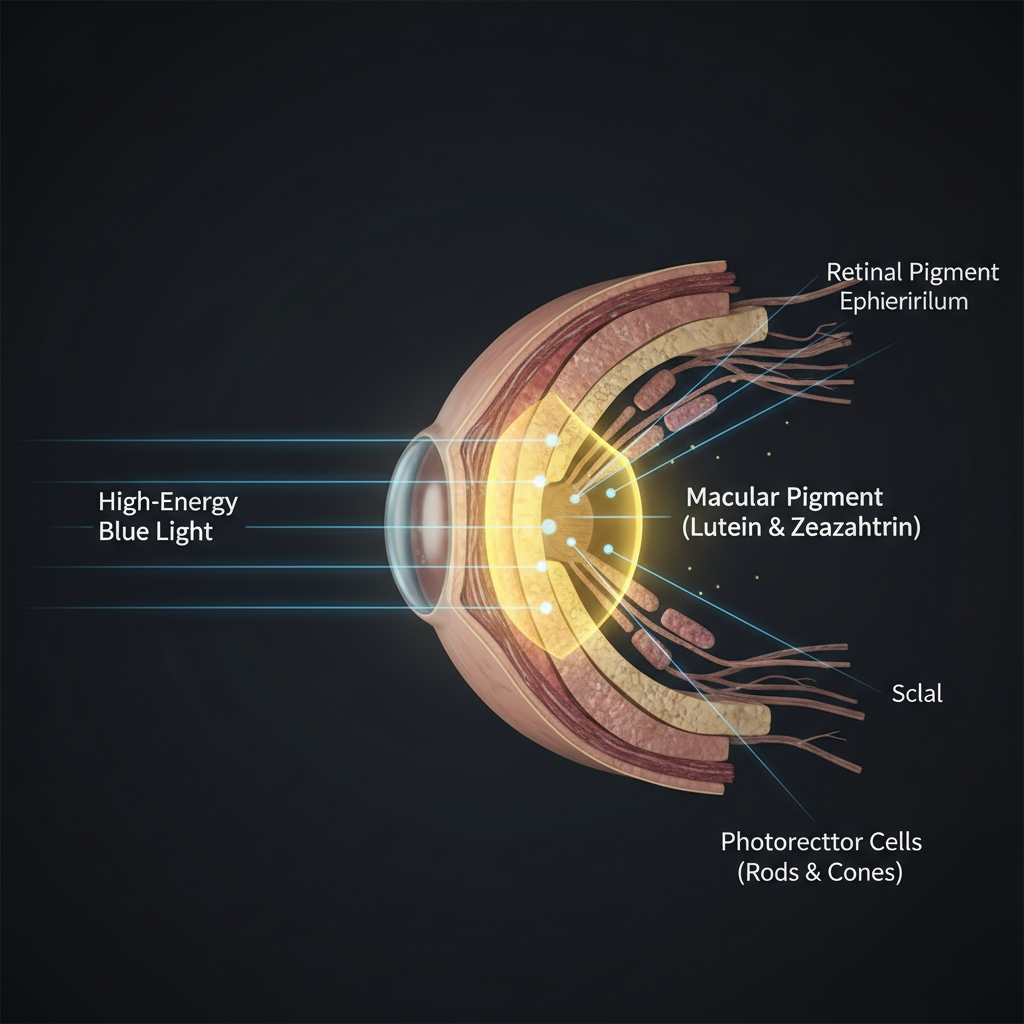
The first line of nutritional defense for a high-prescription eye is a duo of powerful antioxidants: lutein and zeaxanthin. These two carotenoids are the exclusive building blocks of your macular pigment. Their job is twofold and critically important.
First, they act as your eye’s internal blue light filter. They absorb high-energy blue and violet light before it can reach the sensitive photoreceptor cells in the retina. Research into the mechanisms of light damage highlights that chronic exposure to this short-wavelength light can generate reactive oxygen species (ROS), a primary driver of cellular aging and damage in the retina. By filtering it out, lutein and zeaxanthin effectively shield your macula from this constant stress.
Second, they are potent antioxidants, neutralizing the free radicals that are an unavoidable byproduct of the retina’s intense metabolic activity. Your eyes convert light into neural signals, a process that consumes a massive amount of oxygen and energy, making the retina highly susceptible to oxidative stress. Lutein and zeaxanthin are positioned perfectly to quench these damaging molecules on-site.
Your Grocery Guide to a Stronger Macula
While supplements are an option, obtaining these nutrients from whole foods is an excellent strategy. Here’s where to find them:
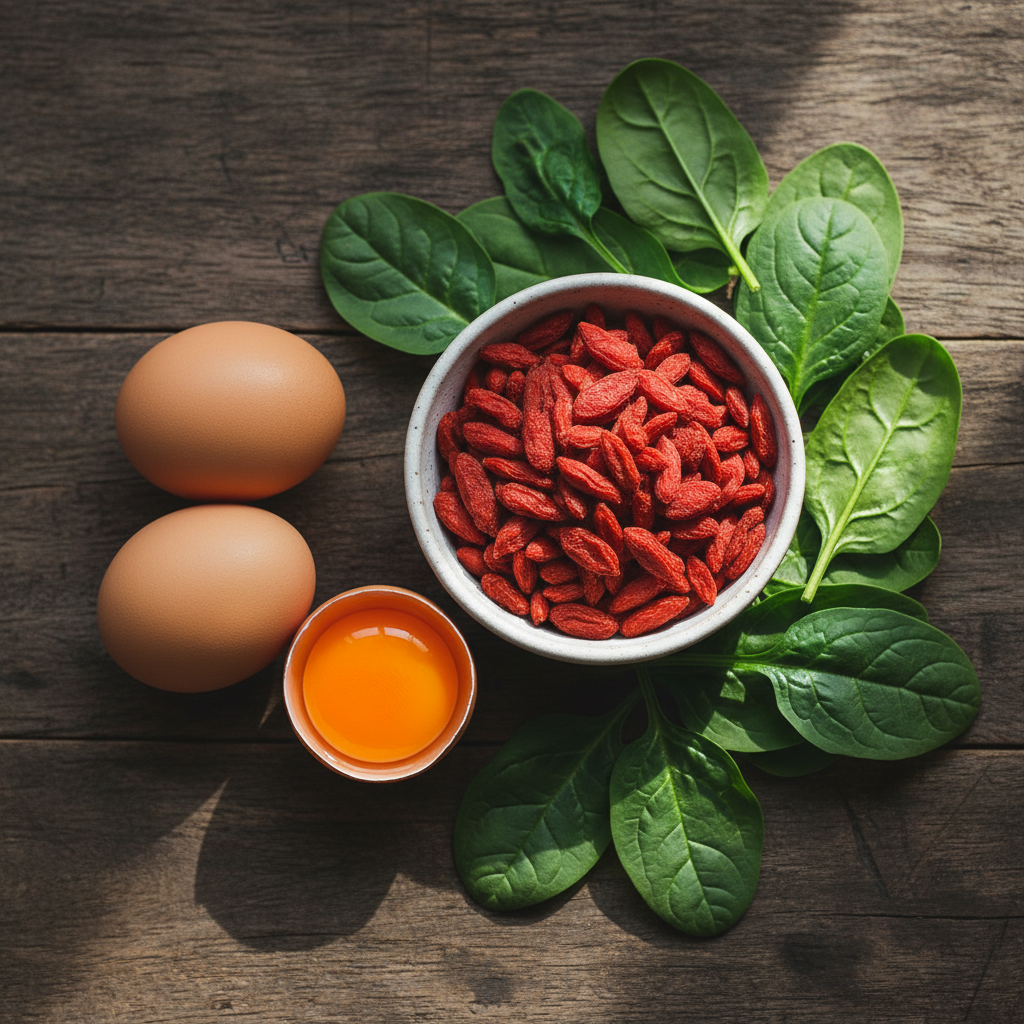
- The Ultimate Source: Egg Yolks: Dark, leafy greens are famous for lutein, but according to research on bioavailability, the lutein and zeaxanthin found in egg yolks are absorbed far more efficiently by the body. This is because they are embedded in a fat matrix, which aids their transport into your system. A study published in The Journal of Nutrition confirmed that the bioavailability of lutein from eggs was significantly higher than from spinach.
- Leafy Greens: Kale and spinach remain nutritional powerhouses and are fantastic sources of lutein and zeaxanthin.
- A Unique Powerhouse: Goji Berries: These small red berries are one of the richest known food sources of zeaxanthin. A study published in the journal Optometry and Vision Science found that a daily intake of goji berries for 90 days significantly increased MPOD and protected against the formation of soft drusen, an early indicator of age-related macular degeneration (AMD).
Expert Tip: Lutein and zeaxanthin are fat-soluble. To maximize absorption, always consume these foods with a source of healthy fat. Drizzle your spinach salad with olive oil, or enjoy your eggs with a side of avocado.
For those with high prescriptions or who struggle to get enough through diet alone, a high-quality supplement can be a reliable alternative. Meta-analyses of randomized controlled trials suggest that daily supplementation with 10-20 mg of lutein can significantly increase MPOD.
Beyond the Macula: A Supporting Cast of Nutrients
While lutein and zeaxanthin are the stars for macula protection, a full cast of nutrients is required to support the entire ocular system, from the focusing lens to the tear film.
Astaxanthin for Accommodative Strain
If you experience eye fatigue after hours of screen use, astaxanthin may be a game-changer. This potent antioxidant, derived from microalgae, has been clinically shown to improve the eye’s accommodative ability—its power to shift focus between near and far objects. A randomized controlled trial found that astaxanthin supplementation significantly improved the accommodative response, helping to relieve symptoms of digital eye strain. For those with strong prescriptions whose glasses can sometimes create peripheral distortions, reducing accommodative fatigue is key to comfortable all-day wear.
Omega-3 Fatty Acids for Tear Film Health
Dry, gritty eyes are a common complaint, and a healthy tear film is essential for both comfort and clear vision. A large meta-analysis of 17 clinical trials involving over 3,000 patients concluded that supplementation with omega-3 fatty acids (found in fatty fish like salmon, as well as walnuts and flaxseed) significantly improves signs and symptoms of dry eye disease. They work by reducing inflammation at the ocular surface and improving the function of the meibomian glands, which produce the oily layer of the tear film that prevents evaporation.
Vitamin C for Lens Clarity
Your eye’s natural lens is also susceptible to age-related changes, namely cataracts. This clouding of the lens is driven by long-term oxidative stress. The Beaver Dam Eye Study, a long-term epidemiological study, found that individuals who used vitamin C supplements for 10 years or more had a 60% lower risk of nuclear cataracts. This highlights that consistent, long-term intake of antioxidants provides a powerful protective effect.
The Mineral Duo: Zinc and Copper
Zinc is a vital mineral for retinal health. It plays a key role in the landmark AREDS2 study formulation for slowing the progression of AMD and acts as a transport molecule for vitamin A. However, it’s crucial to approach zinc supplementation with care. High doses of zinc taken alone can interfere with copper absorption, potentially leading to a copper deficiency. Always choose a supplement formulated with a balanced amount of copper to prevent this unintended consequence.
A Holistic Approach to Lifelong Vision
Ultimately, individual nutrients work best as part of a broader, healthy dietary pattern. Research overwhelmingly supports a Mediterranean-style diet—rich in fruits, vegetables, whole grains, fish, and healthy fats—as a blueprint for eye health. One study found that high adherence to this diet was associated with a 40% lower risk of developing advanced AMD.
It’s also critical to manage systemic health. Uncontrolled blood sugar, for example, is a primary cause of retinal damage (diabetic retinopathy). According to the CDC, maintaining healthy blood sugar, blood pressure, and cholesterol levels is fundamental to protecting the delicate blood vessels in your eyes.
Your prescription glasses are an essential tool for clear sight, but they are one part of a larger ecosystem. By adopting a nutrient-dense diet tailored to the specific needs of your eyes, you are making a powerful investment in their long-term health and vitality. Combining the precision of your lenses with the protective power of nutrition allows you to not only see the world clearly today but also to preserve that vision for years to come.
Disclaimer: This article is for informational purposes only and does not constitute professional medical advice. The information contained herein is not intended to diagnose, treat, cure, or prevent any disease. Always consult with a qualified healthcare professional or your eye doctor before starting any new supplement regimen, especially if you have pre-existing health conditions or are taking medication.
References
- Advanced Eye Care Center. (n.d.). The Link Between High Myopia and Serious Eye Diseases.
- Roberts, J. E. (2011). Mechanisms of Ocular Light Damage. Journal of Photochemistry and Photobiology B: Biology.
- Chung, H. Y., et al. (2001). Lutein from Egg Yolks Is More Bioavailable than from Spinach. The Journal of Nutrition.
- Bu, Y., et al. (2011). Goji Berry Effects on Macular Characteristics and Plasma Antioxidant and Zeaxanthin Levels. Optometry and Vision Science.
- Ma, L., et al. (2019). Lutein and Zeaxanthin Intake and Its Effects on Macular Pigment Optical Density and Visual Function in Chinese Adults. Nutrients.
- Iwasaki, T., & Tawara, A. (2006). Effects of Astaxanthin on Accommodation, Convergence, and Their Asthenopia. Journal of the Eye.
- Gianni, T., et al. (2019). Omega-3 Fatty Acid Supplementation for Dry Eye Disease. Cochrane Database of Systematic Reviews.
- Mares-Perlman, J. A., et al. (2000). Vitamin Supplement Use and Incident Cataracts in a Population-Based Study. Archives of Ophthalmology.
- Age-Related Eye Disease Study 2 (AREDS2) Research Group. (2013). Lutein + Zeaxanthin and Omega-3 Fatty Acids for Age-Related Macular Degeneration. JAMA.
- Merle, B. M. J., et al. (2015). Mediterranean Diet and Incidence of Advanced Age-Related Macular Degeneration. Ophthalmology.