

Hat and Sunglasses: A Combo for Max UV Protection
The Hidden Dangers of Everyday UV Exposure
Most of us associate sun protection with preventing skin damage, but our eyes are just as vulnerable. The threat isn't a single, painful event like a sunburn; it's the slow, silent accumulation of damage from ultraviolet (UV) radiation over a lifetime. This long-term exposure is a significant risk factor for serious ocular diseases that can permanently impair vision.
More Than Just a Sunburn: The Cumulative Risk
Every time you step outside without protection, your eyes are exposed to UV rays. According to the National Eye Institute, this exposure can trigger a chemical process that causes the eye's lens to yellow and harden, leading to cataracts. Research is clear on the statistical risk; a study of a high-UV environment found that individuals who did not wear glasses had a 57% increased risk of developing cataracts. This isn't a risk that appears overnight—it builds with each passing year.
Another common condition linked to UV exposure is pterygium, often called "Surfer's Eye," which is a growth on the white of the eye that can blur vision. It's directly linked to UV exposure, particularly the light that reflects off surfaces like water and sand.

Myth Debunked: Why Dark Lenses Don’t Equal UV Protection
One of the most dangerous misconceptions about sunglasses is that a darker tint provides better protection. This is not true. In fact, as experts at the MD Anderson Cancer Center warn, wearing dark lenses without certified UV protection can be more harmful than wearing no sunglasses at all.
Here’s why: a dark tint causes your pupils to dilate, or open wider, to let in more light. If the lens isn't blocking UV rays, this dilation creates a larger pathway for harmful radiation to enter your eye and damage the retina and lens. The key isn't the color or darkness of the lens, but whether it is rated to block harmful radiation. We explore this topic in-depth in our guide, Are Darker Sunglass Lenses More UV Protective?.
The Sneaky Culprit: Reflected and Scattered Light
Even if you are standing in the shade, your eyes are not completely safe. The American Academy of Ophthalmology warns that UV rays reflect off many surfaces, including snow, water, sand, and pavement. Snow can reflect up to 80% of UV rays, nearly doubling your exposure. This reflected light comes from below and from the sides, bypassing the direct-overhead protection offered by a simple cap or shade structure.
Why One Layer of Protection Isn't Enough
Given the multiple angles from which UV radiation can strike the eye, relying on just a single form of protection leaves significant gaps in your defense. Both sunglasses and hats are effective, but they each have limitations that the other can successfully cover.
The Limits of Sunglasses Alone
Standard sunglass frames, even with the best lenses, leave your eyes vulnerable to what is known as "peripheral light leakage." A groundbreaking study using 3D head forms and UV sensors revealed that a significant amount of UV radiation gets around the edges of medium-sized frames, entering the eye from the sides, top, and bottom. This indirect light is focused onto the nasal part of the eye, a phenomenon called the Coroneo Effect, which is a primary cause of conditions like pterygium.
Furthermore, this same study highlighted that children are especially at risk. Their eyes have clearer natural lenses, allowing 2-5% of UV to reach the retina, compared to just 1% in adults. This makes comprehensive protection, like that found in well-fitted wraparound high prescription sunglasses, even more critical for younger wearers.
The Power of Synergy: A Data-Driven Look
Combining a wide-brimmed hat with properly rated sunglasses creates a synergistic barrier that is far more effective than either item alone. The hat provides a physical shield against direct overhead rays, while the sunglasses absorb and block the direct and reflected rays that come from straight ahead and bounce up from the ground.
This two-part system addresses the critical vulnerability of peripheral light leakage. The shade from the hat's brim drastically reduces the amount of light that can sneak in over the top and around the sides of your frames. While exact percentages vary by face shape, hat style, and environment, experts estimate this combination can reduce total UV exposure to the eyes by up to 98%.
| Protection Method | Direct UV (Overhead) | Reflected UV (From Below) | Peripheral UV (From Sides) | Overall Effectiveness |
|---|---|---|---|---|
| No Protection | High Exposure | High Exposure | High Exposure | Very Poor |
| Hat Only | Low Exposure | High Exposure | Moderate Exposure | Partial |
| Sunglasses Only | Low Exposure | Low Exposure | Moderate Exposure | Good |
| Hat + Sunglasses | Low Exposure | Low Exposure | Low Exposure | Excellent |
Your Practical Guide to Building the Ultimate Defense
Achieving maximum protection is not complicated. It comes down to making informed choices about the gear you wear. By focusing on a few key specifications for both your hat and sunglasses, you can create a reliable defense system for your eyes.
Choosing the Right Sunglasses
Selecting sunglasses should be about safety first and style second. Look for these critical features:
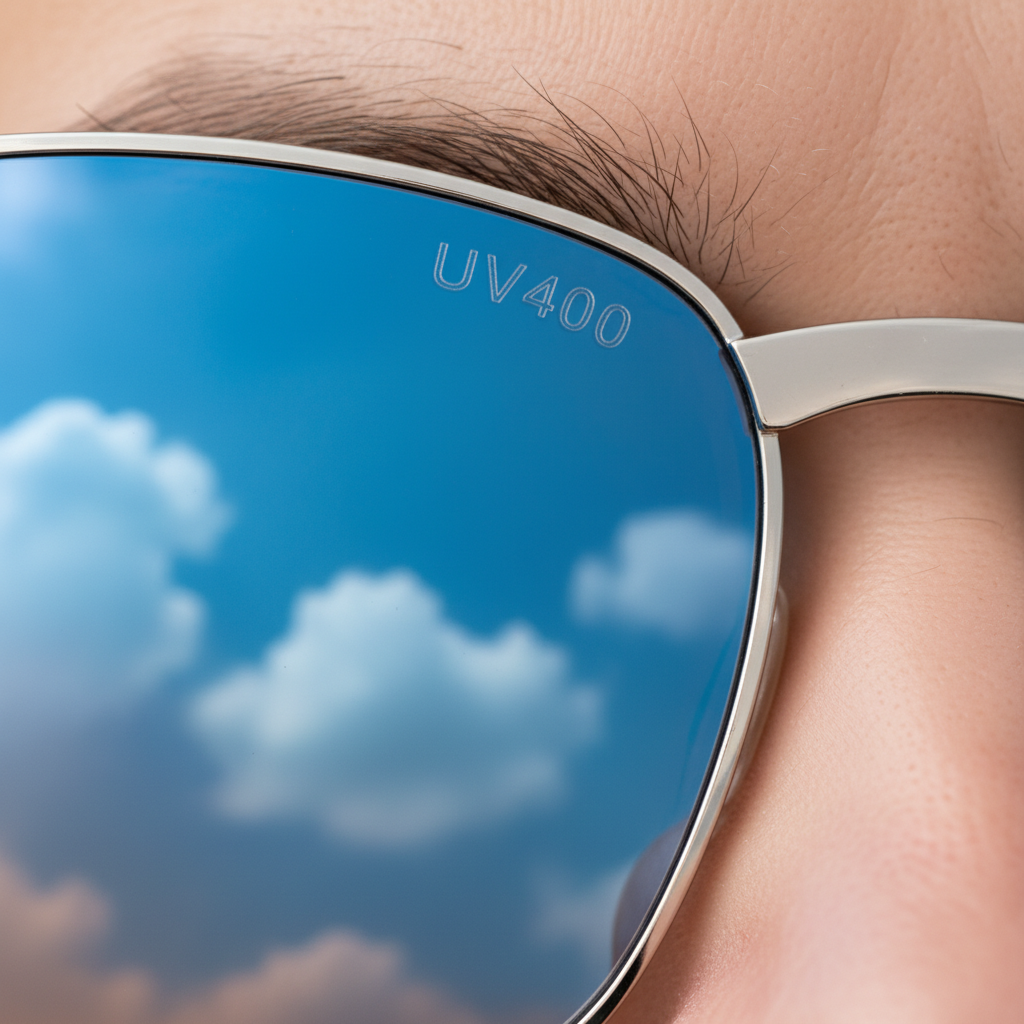
- The UV400 Standard: This is the most important factor. The label "UV400" or "100% UV Protection" means the lenses block all light rays with wavelengths up to 400 nanometers. This covers all of the harmful UVA and UVB spectrum. As technical reports have shown, standards that only protect up to 380 nm miss a significant portion of high-energy light, so insisting on UV400 is non-negotiable.
- Fit and Frame Style: To combat peripheral light leakage, opt for oversized or wraparound frames. According to the American Academy of Ophthalmology, these styles are best because they sit closer to the face and cover more skin, preventing UV rays from entering from the side. As a practical rule, a lens with a vertical height of at least 40 mm that sits close to your cheekbones offers robust coverage.
- Lens Material: For active lifestyles, polycarbonate or Trivex lenses are highly recommended. The American Optometric Association favors these materials for their superior impact resistance, which is a crucial safety feature for sports and outdoor work.
Selecting the Perfect Hat
A hat's effectiveness is determined by its brim. For reliable overhead shading, choose a hat with a brim that is at least three inches (about 7-8 cm) wide all the way around. This provides enough coverage to shade your entire face, including your eyes, from direct sun. Materials with a tight weave are better than loose, open-weave straw hats, as they physically block more sunlight.
Checklist for Maximum Eye Safety
Use this simple checklist every time you head outdoors to ensure you're protected:
- [ ] UV400 Certified: Your sunglasses must be labeled "UV400" or "100% protection against UVA and UVB."
- [ ] Coverage is Key: Choose large, oversized, or wraparound frames to minimize side exposure.
- [ ] Wide-Brimmed Hat: Your hat should have a brim of at least 3 inches.
- [ ] Lens Integrity: Regularly inspect your lenses for deep scratches, which can scatter light and impair vision. Replace them if damaged.
- [ ] All-Day, Every Day: Wear your protection even on cloudy days, as up to 80% of UV rays can penetrate clouds.
Special Considerations for Different Lifestyles
While the basic principles of UV protection are universal, certain situations and individuals require heightened awareness.
- For Children: UV damage is cumulative, and protection should start early. The Mayo Clinic advises that children can begin wearing sunglasses as early as six months old. For parents concerned about outdoor light exposure for myopia prevention, a key study found that even with sunglasses, outdoor light levels are more than sufficient to stimulate the retinal dopamine needed for healthy eye development.
- For Outdoor Workers and Athletes: People who spend significant time outdoors, especially near water or snow, face the highest risk from reflected UV. Wraparound frames, side shields, and durable, impact-resistant lenses are essential. For those in specialized fields like aviation, it's important to note that the FAA advises against polarized lenses for pilots as they can interfere with cockpit displays.
- For Drivers: Glare from the road is a major cause of eye strain and fatigue. While polarized lenses are excellent for reducing this glare, the American Optometric Association specifically recommends gray lenses for driving to ensure proper color recognition of traffic signals.
Key Takeaways for Lifelong Vision Health
Protecting your eyes from the sun is one of the most effective health investments you can make, and it doesn't need to be complicated or expensive. The science is clear: combining a wide-brimmed hat with UV400-rated sunglasses provides the most complete defense against the harmful radiation that causes long-term damage.
By understanding that UV protection is about more than just lens darkness and that coverage from all angles is crucial, you can take simple, practical steps to safeguard your vision. Making this two-part system a daily habit is a powerful commitment to ensuring a lifetime of clear and healthy sight.
Frequently Asked Questions (FAQ)
Do I need to wear sunglasses on a cloudy day? Yes. According to the AAO, up to 80% of the sun's UV rays can pass through clouds. It's important to wear protection anytime you are outside during daylight hours, regardless of cloud cover.
Are more expensive sunglasses more protective? Not necessarily. Price often reflects brand name, frame materials, and design features rather than UV protection. An inexpensive pair of sunglasses with a "UV400" label can be just as safe as a designer pair. The key is to verify the UV rating.
Can my regular clear prescription glasses offer UV protection? Absolutely. Many modern clear lens materials, particularly high-index plastics and polycarbonate, have UV protection built directly into the material. You can also add a UV-protective coating to most lenses. Recent research has highlighted the importance of ensuring this coating is also on the back of the lens to prevent UV rays from reflecting into the eye.
Disclaimer: This article is for informational purposes only and does not constitute professional medical advice. Please consult with a qualified eye care professional to address your specific vision needs and before making any decisions about your eye health. They can perform a comprehensive exam and recommend the best course of action.
References
- American Academy of Ophthalmology (AAO): Choosing the Best Sunglasses
- American Optometric Association (AOA): UV Protection
- Federal Aviation Administration (FAA): Sunglasses for Pilots
- MD Anderson Cancer Center: 9 Things to Know About Sunglasses
- Mayo Clinic: Why Sunglasses are a Must-Wear
- National Eye Institute (NEI): How UV Rays May Contribute to Cataract
- PMC (PubMed Central): Ocular UV Dosimetry & Frame Geometry
- PMC (PubMed Central): Taiwan Cataract & Protection Study