


Frame Width Guide: Sunglasses for Narrow vs. Wide Faces
TL;DR: The Frame Width Fit Formula
For a comfortable fit that prevents slipping or pinching, your sunglass frame width should be slightly wider than your face width (measured at your cheekbones).
- For Narrow Faces: Choose a frame width that is 0-4 mm wider than your face.
- For Wide Faces: Choose a frame width that is 4-8 mm wider than your face.
- For Average Faces: Aim for a frame width that is equal to or just slightly wider (0-2 mm) than your face width.
The single most important dimension for a comfortable pair of sunglasses is the total frame width. Get it right, and your glasses will feel stable and secure. Get it wrong, and you'll spend your day pushing up slipping frames or suffering from temple-pinching headaches. This guide breaks down how to measure your face and match it to the perfect frame width, whether your face is narrow, wide, or somewhere in between.
Why Frame Width is the Master Metric for Sunglass Fit
While numbers like lens diameter and bridge size are useful, they don't tell the whole story. The total width of the frame, from one endpiece to the other, is what determines how the sunglasses will sit on your face. A frame that is too narrow will bow out at the temples, creating uncomfortable pressure points. A frame that is too wide will constantly slide down your nose and can feel wobbly or insecure.
Beyond comfort, a proper fit is crucial for eye protection. A study on ocular UV exposure published in the journal Photochemical & Photobiological Sciences found that frame geometry is a major factor in how much peripheral light reaches the eye. Frames that are too small or sit too far from the face allow significant UV radiation to leak in from the sides and top. A well-fitting frame that closely follows the contours of your face offers a better shield.
How to Measure Your Face Width Accurately at Home
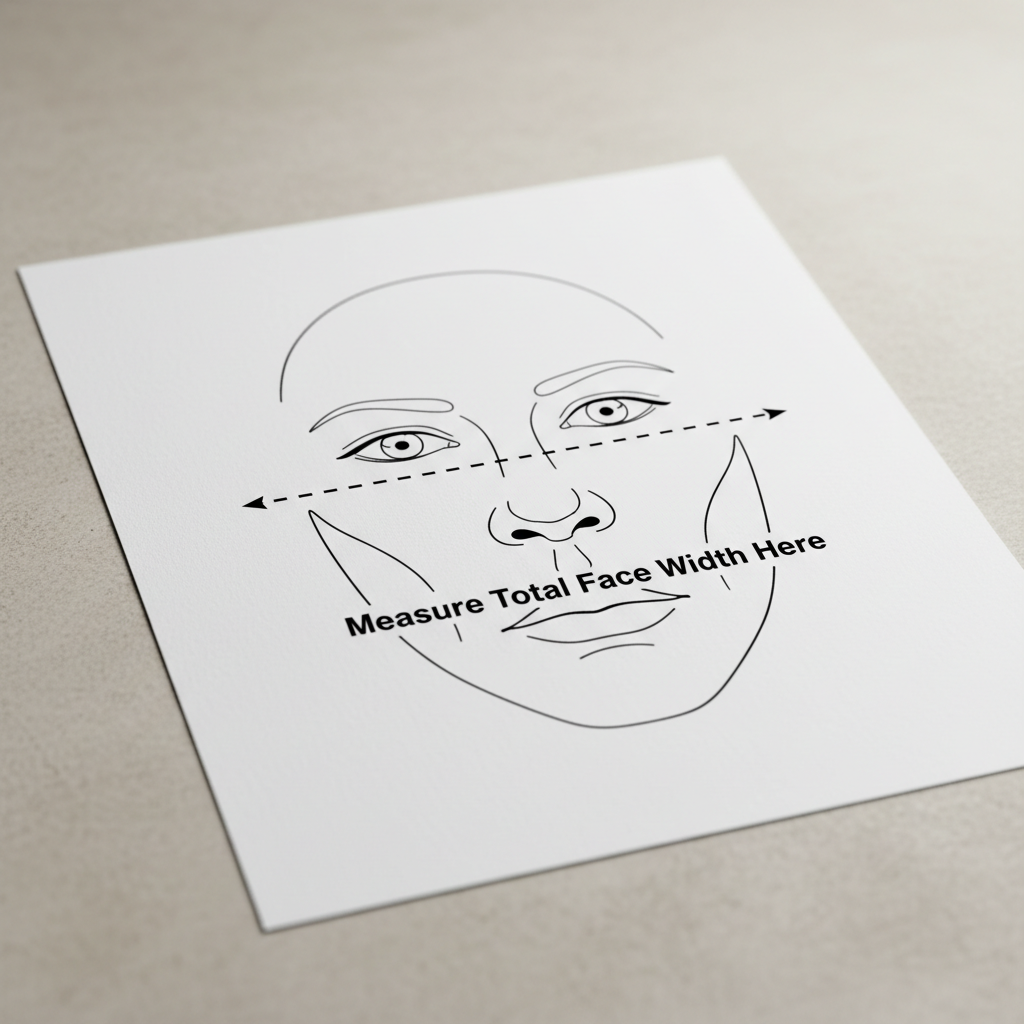
Finding your ideal frame width starts with one simple measurement: your face width. Many people make the mistake of measuring from temple to temple at their hairline, but for a truly accurate fit, you need to measure across your cheekbones.
Here’s how to do it correctly:
- Find a straight ruler (a flexible measuring tape can work, but a rigid ruler is often more accurate).
- Stand in front of a mirror. Look straight ahead.
- Position the ruler so it runs horizontally across your face, just below your eyes. The line should be centered on your pupils.
- Measure the distance from the outside of your left cheekbone to the outside of your right cheekbone. This number, in millimeters, is your face width.
For an even easier method, you can take a "ruler selfie." Hold the ruler level under your eyes, snap a photo, and then zoom in to read the measurement. This is a quick heuristic many online fitters use to get a reliable number. If you're also measuring your pupillary distance, you can often do both at once. You can learn more about this in our guide to measuring your PD at home.
The Fit Formula: Matching Frame Width to Your Face
Once you have your face width, you can apply a simple formula to find your ideal frame width. The goal is to have the frame be just slightly wider than your face to ensure it doesn't dig in, but not so wide that it lacks stability.
This table breaks down the recommended sizing based on practical insights from optical fitters:
| Face Type | Recommended Frame Width vs. Face Width | Rationale |
|---|---|---|
| Narrow | 0–4 mm wider | Provides a secure fit without pinching a slender face shape. |
| Average | 0–2 mm wider | Creates a balanced look where the frame is perfectly aligned. |
| Wide | 4–8 mm wider | Prevents the temples from bowing out and ensures comfortable all-day wear. |
Common Myth: "I can just use the numbers on the frame arm."
A common misconception is that the three numbers printed on the inside of a sunglass arm (e.g., 52-18-140) are all you need. These numbers represent the lens width, bridge width, and temple length, respectively. While helpful, they do not add up to the total frame width. The total width also depends on the thickness of the endpieces and the overall frame design. Always prioritize the total frame width measurement for the most reliable fit.
Beyond Width: Other Key Fit Factors
While frame width is the top priority, a few other elements contribute to a perfect fit.
- Bridge Width & Position: The bridge is critical for preventing slippage. If you have a low or wide nose bridge, look for frames with a narrower bridge measurement or adjustable nose pads. This provides the support needed to keep your sunglasses in place.
- Temple Length & Curvature: The temple arms should extend straight back and only curve down just behind your ears. If they curve too early, they will push the glasses forward and down your nose.
- Vertex Distance: This is the distance between the back of the lens and the front of your eye. As noted by the American Academy of Ophthalmology, a closer fit provides better protection from stray light. For those with stronger prescriptions, vertex distance is even more critical. A frame that sits too far from the eyes can alter the effective power of the lens. If you have a high prescription, consider how different frame styles, like wraparounds, affect this distance. You can explore this topic further in our guide to choosing frames for high prescription lenses.
Frequently Asked Questions (FAQ)
What if my sunglasses keep slipping down my nose? This is almost always a bridge fit issue. The bridge of the frame is likely too wide for your nose. If you don't have adjustable nose pads, you can try adhesive silicone pads to add grip. Otherwise, look for a new frame with a smaller bridge measurement.
Why do my sunglasses pinch the sides of my head? This is the classic sign of a frame that is too narrow for your face. The temple arms are flexing outward, creating pressure. You need a frame with a larger total width. Refer to the "Fit Formula" table to find your ideal size range.
How important is fit for sports sunglasses? Extremely important. According to a review of sports eyewear standards in the Journal of the American Medical Association, a primary function of protective eyewear is to limit energy transfer during impact. A frame that fits poorly can be easily dislodged, completely negating its protective value. For sports, a snug, wraparound fit is often recommended for maximum stability and peripheral coverage.
Wrapping Up: Your Path to a Perfect Fit
Shopping for sunglasses online doesn't have to be a guessing game. By taking one simple measurement—your face width—you can eliminate 90% of fit problems. Measure from cheekbone to cheekbone, apply the fit formula, and pay attention to the bridge design. This empowers you to choose a pair that not only looks great but also feels comfortable and secure all day long.
Disclaimer: This article is for informational purposes only and does not constitute medical advice. The fit recommendations are general guidelines. If you have specific facial features, a high prescription, or experience persistent discomfort, consult a qualified optician.
References
- Ocular UV exposure from peripheral light: the role of frame geometry. Photochemical & Photobiological Sciences, 2018. https://pmc.ncbi.nlm.nih.gov/articles/PMC6803516/
- How to Choose the Best Sunglasses. American Academy of Ophthalmology (AAO). https://www.aao.org/eye-health/glasses-contacts/sunglasses-3
- Protective Eyewear for Sports. JAMA, 2016. https://pubmed.ncbi.nlm.nih.gov/26875849/