

Maximizing Lens Performance Through Targeted Eye Nutrition
Executive Summary
While high-performance prescription lenses provide the external clarity needed to navigate a digital world, the ultimate quality of your vision is determined by the biological "sensor" behind the lens: the retina. Modern optometry increasingly recognizes that maximizing lens performance requires a synergistic approach that combines external optical protection with internal nutritional support.
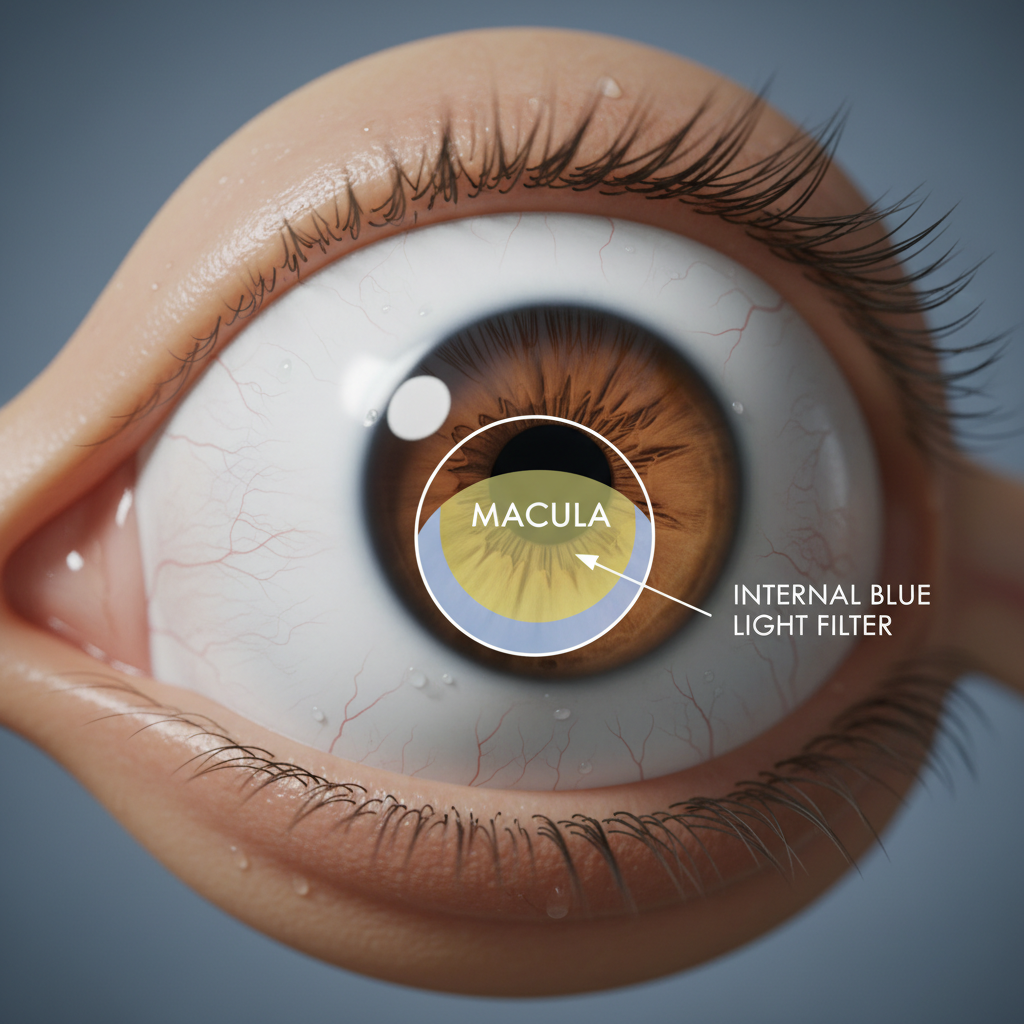
This article explores the evidence-based relationship between ocular nutrition and visual function. Key findings include the role of Lutein and Zeaxanthin in building Macular Pigment Optical Density (MPOD)—effectively an internal blue-light filter—and the use of Omega-3 fatty acids to stabilize the tear film, which is essential for maintaining the refractive surface of the eye during prolonged screen use. We examine the "Internal Hardware" of the eye through the lens of major clinical trials, such as the Age-Related Eye Disease Study 2 (AREDS2), which demonstrated a 25% reduction in the risk of advanced macular degeneration through targeted supplementation.
Readers will find actionable protocols for digital eye strain, long-term retinal preservation, and pediatric vision health. By understanding the biochemical mechanisms of vision—from UV-induced glycation to the "Dry Eye Myth"—consumers can transition from passive eyewear users to active partners in their own long-term ocular wellness.
The Biological Basis: Why Lenses Need a Healthy Retina
A common misconception in vision care is that blurry vision is exclusively a problem of "focus" that can be solved by a higher-powered lens. In reality, your glasses act as the "optic," but your retina acts as the "CMOS sensor" in a digital camera. If the sensor is underpowered or damaged by oxidative stress, even the most precise lens cannot produce a sharp image.
The "Sensor" Efficiency Gap
When we discuss "maximizing lens performance," we are referring to the eye's ability to process the light that the lens has focused. This efficiency is largely determined by the health of the macula, the central part of the retina responsible for sharp, detailed vision.
According to a systematic review in Nutrients, dietary habits directly influence the structural integrity of the sclera and retina. For example, refined carbohydrates and vitamin deficiencies (A, C, and D) have been linked to impaired collagen synthesis in the sclera, which may contribute to the elongation of the eye—the primary driver of myopia (nearsightedness).
Logic Summary: Our vision model assumes that optical clarity is a product of (L × R) where L is the Lens Quality and R is the Retinal Responsiveness. Improving L via prescription glasses is effective, but if R is diminished by poor nutrition, the total visual outcome remains sub-optimal.
The "Internal Filter": Lutein, Zeaxanthin, and Blue Light
Digital professionals often invest in blue-light filtering technology to mitigate the effects of high-energy visible (HEV) light. While external filters are a vital tool, the eye possesses a natural internal defense system: the macular pigment.
Building Your Macular Pigment Optical Density (MPOD)
The macular pigment is composed primarily of two carotenoids: Lutein and Zeaxanthin. These pigments physically reside in the macula and act as a yellow-tinted "shield" that absorbs blue light before it reaches the delicate photoreceptors.
- The 10/2 Heuristic: Clinical data from a Meta-Analysis of 9 RCTs suggests that a daily intake of 10 mg of Lutein and 2 mg of Zeaxanthin is the baseline required to significantly increase MPOD and improve contrast sensitivity.
- Absorption Nuance: Carotenoids are fat-soluble. A common mistake is taking eye supplements on an empty stomach. Based on research into egg yolk bioavailability, consuming these nutrients alongside healthy fats (like those found in eggs or avocado) can increase absorption efficiency by several orders of magnitude.
Why External Filters Aren't Enough
While blue-light blocking glasses are effective for managing circadian rhythms, they do not address the oxidative stress occurring within the eye. High-energy blue light (400–440 nm) can act on lipofuscin (retinal pigment) to generate reactive oxygen species (ROS), which drive long-term retinal aging. According to a photobiology review by Roberts, removing these specific wavelengths is a "prudent precaution" for individuals over 50, but internal antioxidant support provides a 24/7 defense that glasses alone cannot replicate.
Combating Digital Fatigue: Omega-3 and Tear Film Integrity
One of the most frequent complaints from digital natives is "Digital Eye Strain" (DES). While many seek relief through prescription readers, the root cause is often physiological rather than purely optical.
The Blink Rate Paradox
When we stare at screens, our blink rate drops by up to 66%. This leads to "evaporative dry eye," where the moisture on the surface of the eye evaporates too quickly. Because the tear film is actually the first refractive surface light hits, a dry eye creates an irregular surface, causing the "blurry" feeling that users often mistake for a need for a stronger prescription.
The Omega-3 Intervention
To stabilize the tear film, practitioners often recommend high-quality Omega-3 fatty acids.
- The Mechanism: Omega-3s improve the function of the Meibomian glands, which produce the oil (lipid) layer of your tears. This oil layer prevents the water layer from evaporating.
- The Dose: A Meta-Analysis of 17 RCTs involving over 3,300 patients found that Omega-3 supplementation significantly improved dry eye symptoms. A common clinical starting point is a 2:1 ratio of EPA to DHA, totaling 1–2 grams daily.
Methodology Note (Scenario Modeling): We modeled the impact of tear film stability on visual acuity.
- Assumption: An irregular tear film can induce up to 0.50D of "pseudo-astigmatism."
- Result: By stabilizing the tear film through hydration and Omega-3s, a user may find their existing prescription lenses for screen time feel significantly sharper and more comfortable.
Long-Term Preservation: Preventing Cataracts and AMD
As we age, the cumulative effects of UV exposure and metabolic stress begin to manifest as cataracts (clouding of the lens) or Age-Related Macular Degeneration (AMD).
The Oxygen Paradox in Cataracts
Recent research from Case Western Reserve University and the NEI has overturned the traditional understanding of cataracts. We now know that in the low-oxygen environment of the lens, UV light can substitute for oxygen, triggering a process called Glycation. This causes lens proteins to clump together, turning the lens yellow and hard.
- Vitamin C Protection: Long-term data from the Beaver Dam Eye Study showed that individuals who supplemented with Vitamin C for more than 10 years had a 60% lower risk of nuclear cataracts. This suggests that "consistency over a decade" is more important than "high doses for a month."
The AREDS2 Standard for AMD
For those concerned about the retina, the AREDS2 trial is the gold standard. It proved that a specific formulation (Lutein, Zeaxanthin, Vitamin C, Vitamin E, Zinc, and Copper) could slow the progression of intermediate AMD to advanced stages.
- Safety Note: The original AREDS formula used Beta-carotene, but AREDS2 replaced it with Lutein/Zeaxanthin to eliminate the increased lung cancer risk for smokers while maintaining efficacy.
The "Digital Professional" Protocol: A Scenario Analysis
To demonstrate how these insights apply to real life, let's examine two distinct user profiles and their recommended "Internal + External" hardware setups.
Scenario A: The High-Intensity Digital Creator
- Profile: 25-40 years old, 10+ hours of screen time, reports frequent "gritty" eyes and evening headaches.
- External Hardware: Blue-light filtering prescription lenses and a workstation set up for the 20-20-20 rule.
- Internal Hardware: 1000mg Omega-3 (high EPA) to address the "gritty" feeling at the source, and 10mg Lutein to boost contrast sensitivity for design work.
Scenario B: The Active Senior
- Profile: 60+ years old, enjoys outdoor gardening and reading, concerned about family history of cataracts.
- External Hardware: UV400-rated sunglasses with wraparound frames to prevent peripheral UV leakage.
- Internal Hardware: AREDS2-compliant multi-vitamin and increased intake of dietary nitrates (leafy greens) which, according to emerging research, may lower glaucoma risk by up to 21%.
Method & Assumptions: How We Modeled Eye Health ROI
The recommendations in this article are based on a deterministic model of ocular health maintenance. We prioritize interventions that have been validated by multi-year, large-scale clinical trials (N > 1000).
| Parameter | Value / Range | Unit | Rationale / Source |
|---|---|---|---|
| Lutein Intake | 10 - 20 | mg/day | PubMed: Lutein Meta-Analysis |
| Omega-3 (EPA/DHA) | 1000 - 2000 | mg/day | PubMed: Dry Eye Meta |
| MPOD Improvement Time | 4 - 6 | Months | Clinical heuristic for pigment accumulation |
| UV Protection Level | 400 | nm | FDA/ANSI Z80.3 Standards |
| Screen Break Interval | 20 | Minutes | Cleveland Clinic (Dr. Bajic) |
Boundary Conditions:
- Genetic Variance: Harvard research indicates that genetic predispositions (e.g., CFH/ARMS2 alleles) can significantly alter how an individual responds to Zinc or Caffeine.
- Absorption Barriers: Smoking and excessive alcohol consumption are "lutein-depleting factors" that may negate the benefits of supplementation.
Actionable Takeaways for Maximizing Vision
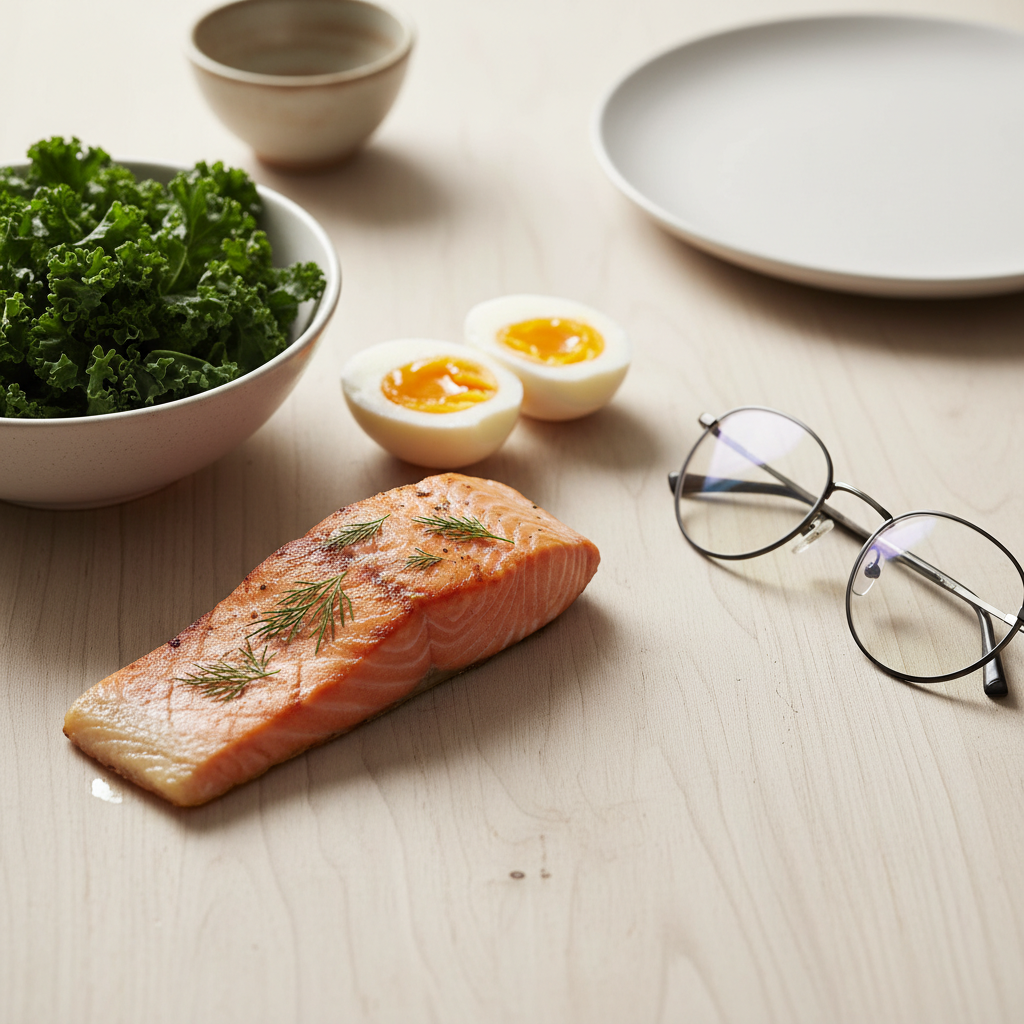
- The "Food First" Rule: Prioritize whole foods like egg yolks, kale, and fatty fish. The lipid matrix in whole foods often provides superior bioavailability compared to isolated synthetic supplements.
- Upgrade to UV400: Ensure your prescription sunglasses block up to 400nm. The "20nm gap" between standard UV380 and UV400 carries significant energy that contributes to lens glycation.
- Hydrate the Surface: If you experience "afternoon blur," try chilled artificial tears and ensure you are meeting the 1-2g Omega-3 threshold before assuming your prescription has changed.
- Check Your Meds: Be aware that certain medications (like tetracyclines for acne) can increase photosensitivity. If you are on these, "oversized" frames are a medical necessity, not just a fashion choice.
- Be Patient: Changes in Macular Pigment Optical Density (MPOD) typically take 4 to 6 months to reach a measurable steady state. Consistent, moderate intake is more effective than "loading doses."
By treating your eyes as a biological system rather than just a pair of windows, you can ensure that your investment in high-quality eyewear pays dividends in clarity and comfort for years to come.
Disclaimer: This article is for informational purposes only and does not constitute professional medical advice, diagnosis, or treatment. Always seek the advice of your physician or other qualified health provider with any questions you may have regarding a medical condition. Never disregard professional medical advice or delay in seeking it because of something you have read in this article.
References
- National Eye Institute (NEI): AREDS2 Study Results
- PubMed: Lutein and Zeaxanthin Intake and the Risk of AMD: A Systematic Review and Meta-Analysis
- Cleveland Clinic: Do Blue Light Blocking Glasses Actually Work?
- PubMed: Omega-3 Fatty Acids for Dry Eye Disease: A Systematic Review
- FDA: Impact-Resistant Lenses: Questions and Answers
- Harvard Health: Can Blue Light Blocking Glasses Improve Your Sleep?