

Relief for Dry Daily Lenses from Screen Time
TL;DR: Your Quick Guide to Comfortable Contacts
Struggling with dry daily lenses by 3 PM? Here’s the fix:
- Follow the 20-20-20 Rule: Every 20 minutes, look at something 20 feet away for 20 seconds.
- Use the Right Drops: Use preservative-free artificial tears in single-use vials for safe, frequent relief.
- Adjust Your Workspace: Position your monitor slightly below eye level and deflect direct air from vents.
- Talk to Your Doctor: Ask about daily lenses made from high-oxygen materials like Silicone Hydrogel.
- Never Reuse Dailies: A fresh pair every day is the safest way to wear contacts.
It’s a familiar story for any dedicated professional who wears contact lenses. You start the day with fresh, comfortable vision, but after hours of focusing on spreadsheets, presentations, and video calls, your eyes feel gritty, tired, and dry. That crisp vision turns into a nagging discomfort, forcing you to blink constantly or even remove your lenses early. If you’re a daily disposable lens wearer, you chose them for convenience and health, yet this end-of-day dryness can undermine the entire experience.
Staring at digital screens dramatically changes how we use our eyes, and our contact lenses can bear the brunt of it. But you don’t have to choose between your screen-heavy job and comfortable contact lens wear. This guide provides practical, expert-backed strategies to combat screen-induced dryness, helping you maintain clear, comfortable vision from your first morning email to your last task of the day.
Why Your Daily Lenses Get Dry at Work
Understanding the root cause of contact lens discomfort is the first step toward finding a lasting solution. It’s not just one thing, but a combination of your biology, your environment, and your habits.
The "Screen Stare" and Your Blink Rate
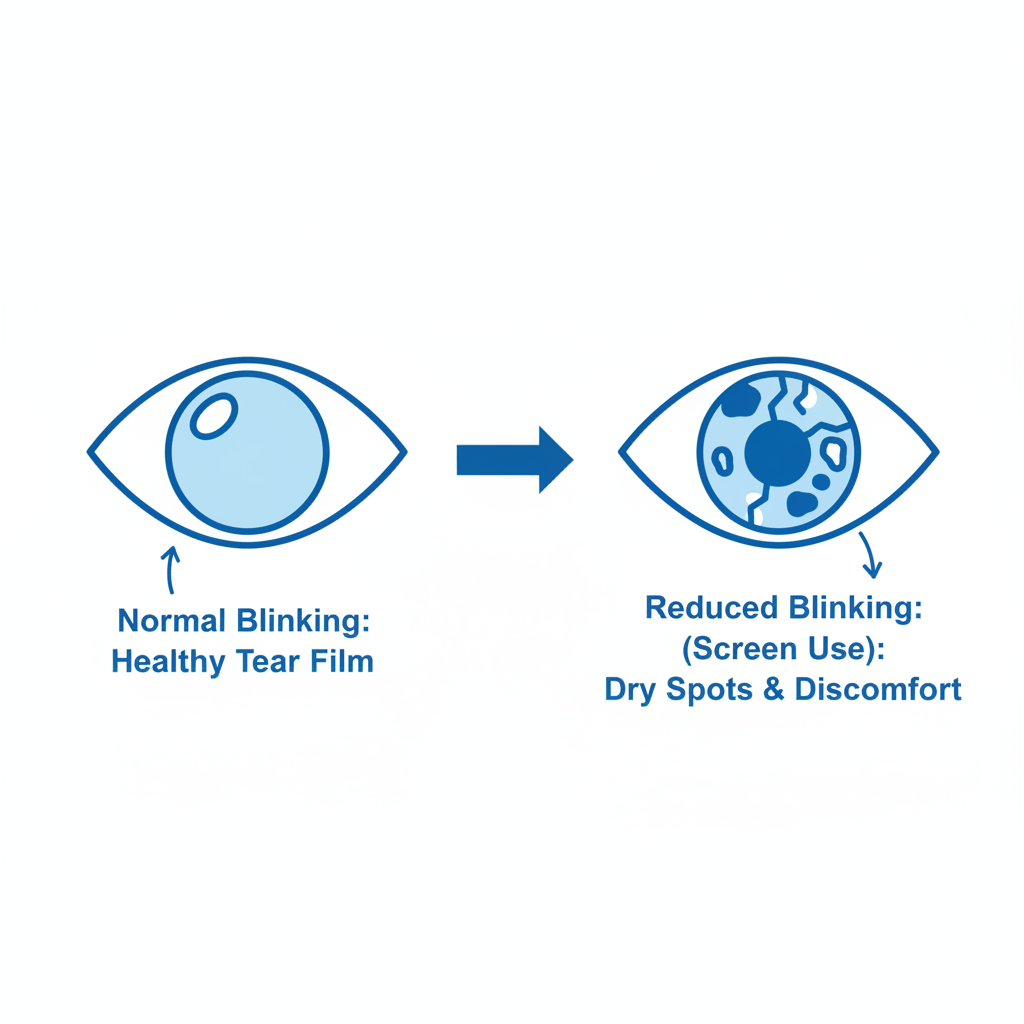
The primary culprit behind digital eye strain and contact lens dryness is a phenomenon I call the "screen stare." When we focus intently on a digital device, our blink rate can drop by more than 50%. Blinking is your eye’s natural cleaning and rewetting mechanism; each blink spreads a fresh layer of tears, called the tear film, over the surface of your eye and contact lens. When you don’t blink enough, this tear film becomes unstable and evaporates faster than it can be replenished. According to clinical experts at the Cleveland Clinic, this lack of blinking—not blue light—is the primary cause of what we call Digital Eye Strain. For a contact lens wearer, this means the lens surface dries out, leading to that classic gritty, foreign-body sensation.
The Invisible Drain: Your Office Environment
Your office itself is often engineered for dryness. Heating, ventilation, and air conditioning (HVAC) systems are designed to control temperature, but they also strip humidity from the air. This low-humidity environment acts like a sponge, pulling moisture from any available source—including your eyes and contact lenses. If your desk is positioned under a vent or in the path of a fan, the constant airflow accelerates this evaporation, making a bad situation worse. It’s a perfect storm for lens dehydration.
Common Misconception: "Higher Water Content is Better"
A myth I frequently encounter is that a contact lens with a higher water content is automatically better for dry eyes. This seems logical, but the physics of lens materials can be counterintuitive. While a high-water-content lens feels moist initially, it can sometimes act like a sponge in reverse. In a dry environment (like an office), the lens may lose its own moisture to the air and then try to draw moisture from your tear film to rehydrate itself, potentially worsening your symptoms.
Modern contact lenses, particularly those made of Silicone Hydrogel (SiHy), have revolutionized comfort. Instead of relying solely on water for oxygen to pass through, SiHy materials have microscopic channels that allow significantly more oxygen to reach the cornea directly. This superior oxygen permeability is often more critical for all-day comfort and eye health than water content alone, as it reduces eye fatigue and stress.
Immediate Relief: Quick Fixes at Your Desk
While changing your lens material requires a doctor’s visit, there are several effective strategies you can implement right now to drastically improve your comfort.
Habit #1: The 20-20-20 Rule
This is the most crucial habit to build. It’s simple and incredibly effective. Every 20 minutes, take a 20-second break and focus your eyes on something at least 20 feet away. Why does this work? It forces you to break your intense screen stare, allowing you to blink naturally and giving your eye’s focusing muscles a much-needed rest. Set a recurring timer or use a simple browser extension to remind you. It may feel disruptive at first, but it’s one of the most powerful interventions for preventing eye strain.
Habit #2: Strategic and Safe Rewetting
Even with frequent breaks, your lenses may need a little help. This is where rewetting drops come in, but not all drops are created equal, especially for contact lens wearers.
My strong recommendation is to use preservative-free artificial tears, which come in packs of sterile, single-use vials. The preservatives in standard multi-use bottles can accumulate on the surface of a soft contact lens and cause irritation or allergic reactions with repeated use. Since you’re just a few inches from your eye, keeping things sterile is paramount.
Here’s a quick comparison:
| Drop Type | Best For | Why It Matters for Contact Lenses |
|---|---|---|
| Preservative-Free (Single-Use Vials) | Frequent Use (more than 4x/day) | The safest option. No preservatives means no chemical buildup on your lenses, minimizing irritation. Ideal for sensitive eyes. |
| Preserved (Multi-Use Bottles) | Infrequent Use (less than 4x/day) | Contains preservatives to keep the solution sterile for weeks. Can cause irritation if used too often with contacts. |
Never use "get the red out" drops to rewet your lenses; they work by constricting blood vessels and do nothing to lubricate your eyes.
Habit #3: Optimize Your Workspace Ergonomics
A few small adjustments to your desk setup can yield significant gains in comfort.
- Lower Your Monitor: Your computer screen should be positioned so that your gaze is directed slightly downward, about 5 to 10 degrees. When you look straight ahead or up at a screen, your eyelids are open wider, exposing more of your eye and contact lens to the dry air. A lower gaze angle narrows this opening, naturally protecting the ocular surface.
- Mind the Airflow: Check for vents blowing directly at your face. If you can’t move your desk, use a small deflector to redirect the airflow. Adding a small, personal humidifier to your desk can also make a noticeable difference by raising the ambient moisture level in your immediate vicinity.

Long-Term Comfort: The Right Lens & The Right Fit
Immediate relief is great, but a long-term solution involves partnering with your eye care professional to ensure you’re wearing the best possible lens for your specific needs.
Discuss Advanced Lens Materials with Your Doctor
If you’re experiencing persistent dryness, it’s time for a conversation with your optometrist. Mention your screen time and symptoms. This is where the topic of lens material becomes critical. As we discussed, a Silicone Hydrogel (SiHy) daily disposable lens is often a superior choice for office workers. Ask your doctor about daily disposables that feature:
- High Oxygen Transmissibility (Dk/t): This technical measurement indicates how "breathable" a lens is. A higher Dk/t value means more oxygen reaches your eye, which is essential for keeping it healthy and comfortable during long hours of wear.
- Built-in Wetting Agents: Many modern lenses have moisture-retaining technologies integrated directly into the lens material. These molecules work throughout the day to help keep the lens surface hydrated, providing a more stable and comfortable experience. Studies on modern daily disposable lenses, even those worn for over 16 hours, have shown they can maintain high levels of comfort and vision, proving their capability for long workdays.
A Proper Fit is Non-Negotiable
A contact lens is a medical device that sits directly on your eye, and its fit is just as important as its material. A comfortable soft lens should move slightly with each blink (typically 0.5mm to 1.0mm). This movement allows your tears to circulate underneath the lens, flushing out debris and keeping the surface fresh.
- A lens that is too tight will barely move. This can trap debris and prevent proper tear exchange, leading to irritation and redness.
- A lens that is too loose will move excessively. This can cause unstable vision and a constant "lens awareness" sensation.
Only your eye doctor can properly assess the fit using a biomicroscope (slit lamp). Never purchase lenses without a valid prescription and a professional fitting.
Reinforce Good Hygiene
Daily disposables are the healthiest way to wear contacts because you eliminate the risks associated with cleaning and storage. However, basic hygiene is still essential. The Centers for Disease Control and Prevention (CDC) emphasizes that contact lenses are medical devices and require proper care. Always wash and dry your hands thoroughly before handling your lenses. Furthermore, never reuse your daily lenses. A study on reused daily disposable lenses found that 95% became contaminated with bacteria, creating a significant risk for a serious eye infection.
Troubleshooting: Is It Dryness, Allergies, or a Bad Fit?
If you’re still experiencing discomfort, it’s helpful to play detective before your next doctor’s appointment. Differentiating your symptoms can help your optometrist pinpoint the problem faster.
| Symptom Profile | Likely Cause | What to Do |
|---|---|---|
| Gritty, burning, sandy feeling. Worse in the afternoon or during screen work. | Evaporative Dry Eye | Try the 20-20-20 rule, use preservative-free drops, and adjust your workspace. Discuss SiHy lenses with your doctor. |
| Itchy, watery eyes. Often affects both eyes and may be worse in certain seasons. | Allergies | Consult your doctor. They may recommend specific anti-allergy eye drops (used without lenses in) or a daily disposable lens designed to reduce allergen buildup. |
| Feeling like something is always in your eye. Vision is blurry one moment and clear the next. | Poor Fit / Lens Defect | Remove the lens. If a new lens feels the same, schedule an appointment immediately for a fit assessment. |
When trying a new type of lens, give it a fair trial of about 3 to 7 days. Keep a brief log of your symptoms—what time of day they start, what activities you’re doing, and what provides relief. This information is invaluable to your doctor.
Red Flags: When to Call the Doctor Immediately
While most discomfort is manageable, some symptoms demand immediate medical attention. The U.S. Food and Drug Administration (FDA) warns that issues like corneal ulcers can progress rapidly. Remove your lenses and call your eye doctor right away if you experience:
- Significant eye pain
- Unusual redness
- Extreme sensitivity to light
- Sudden blurry vision that doesn’t clear
- Any eye discharge
Key Takeaways: Your Action Plan for Comfortable Vision
Living with screen-induced contact lens dryness isn’t something you have to tolerate. By taking a proactive approach, you can restore comfort and keep your eyes healthy. Focus on building small, consistent habits like the 20-20-20 rule. Make smart, immediate changes to your workspace and your choice of rewetting drops. Most importantly, maintain an open dialogue with your eye care professional. They are your best resource for finding the perfect combination of material, technology, and fit for your unique eyes.
Frequently Asked Questions (FAQ)
Can I reuse my daily disposables just to finish my workday? No. Daily disposable lenses are not designed or approved for reuse. They are made of materials that are not intended to withstand cleaning and disinfecting, and they lack the surface treatments of reusable lenses. Reusing them, even for a few hours, dramatically increases the risk of contamination and serious eye infections.
Are more expensive daily lenses always better for dry eyes? Not necessarily. Price is often linked to newer technology, like silicone hydrogel materials or advanced wetting agents, which are indeed beneficial for dry eyes. However, the "best" lens is the one that has the right material, oxygen permeability, and fit for your individual eye shape and tear chemistry. An expensive lens that fits poorly will be less comfortable than a less expensive, well-fitted one.
Do blue light filtering contact lenses help with dryness? No. The discomfort you feel from screen use is caused by a reduced blink rate leading to evaporative dryness and muscle fatigue from focusing—not from blue light itself. While some people find blue light filtering glasses helpful for regulating sleep cycles, they do not address the root causes of contact lens dryness.
How can I tell if my contact lens is inside-out? Place the lens on the tip of your dry finger. If it forms a perfect, smooth-edged cup shape, it’s correct. If the edge of the lens flares out, resembling a soup bowl with a rim, it’s inside-out. Most modern lenses also have a tiny laser marking (e.g., "123") that will be readable when the lens is oriented correctly.
Disclaimer: This article is for informational purposes only and does not constitute professional medical advice. The information provided is not a substitute for a comprehensive eye exam or a consultation with a qualified eye care professional. Always follow the advice of your doctor regarding contact lens wear, care, and any symptoms you may be experiencing. If you have a pre-existing medical condition or experience any pain or vision changes, seek immediate medical attention.
References
- Cleveland Clinic. (n.d.). Do Blue Light–Blocking Glasses Actually Work? Retrieved from https://health.clevelandclinic.org/do-blue-light-blocking-glasses-actually-work
- Centers for Disease Control and Prevention (CDC). (2023). Contact Lens Care Systems & Solutions. Retrieved from https://www.cdc.gov/contact-lenses/about/index.html
- U.S. Food and Drug Administration (FDA). (2018). Contact Lens Risks. Retrieved from https://www.fda.gov/medical-devices/contact-lenses/contact-lens-risks
- Diec, J., Tilia, D., & Thomas, V. (2017). Contamination Risk of Reusing Daily Disposable Lenses. Optometry and Vision Science, 94(11), 1039-1043. Retrieved from https://pubmed.ncbi.nlm.nih.gov/22041587/