

Swimming or Showering with Daily Lenses: The Risks
The Unseen Dangers: Why Water and Contact Lenses Are a Risky Combination
Exposing your daily disposable contact lenses to water may seem harmless, but it opens the door to serious, vision-threatening infections. Whether it's from a swimming pool, your shower, the ocean, or a hot tub, water can introduce dangerous microorganisms to your eyes. This article explains the critical reasons why you must keep your lenses away from water and provides safer, practical alternatives for enjoying water activities without compromising your eye health.
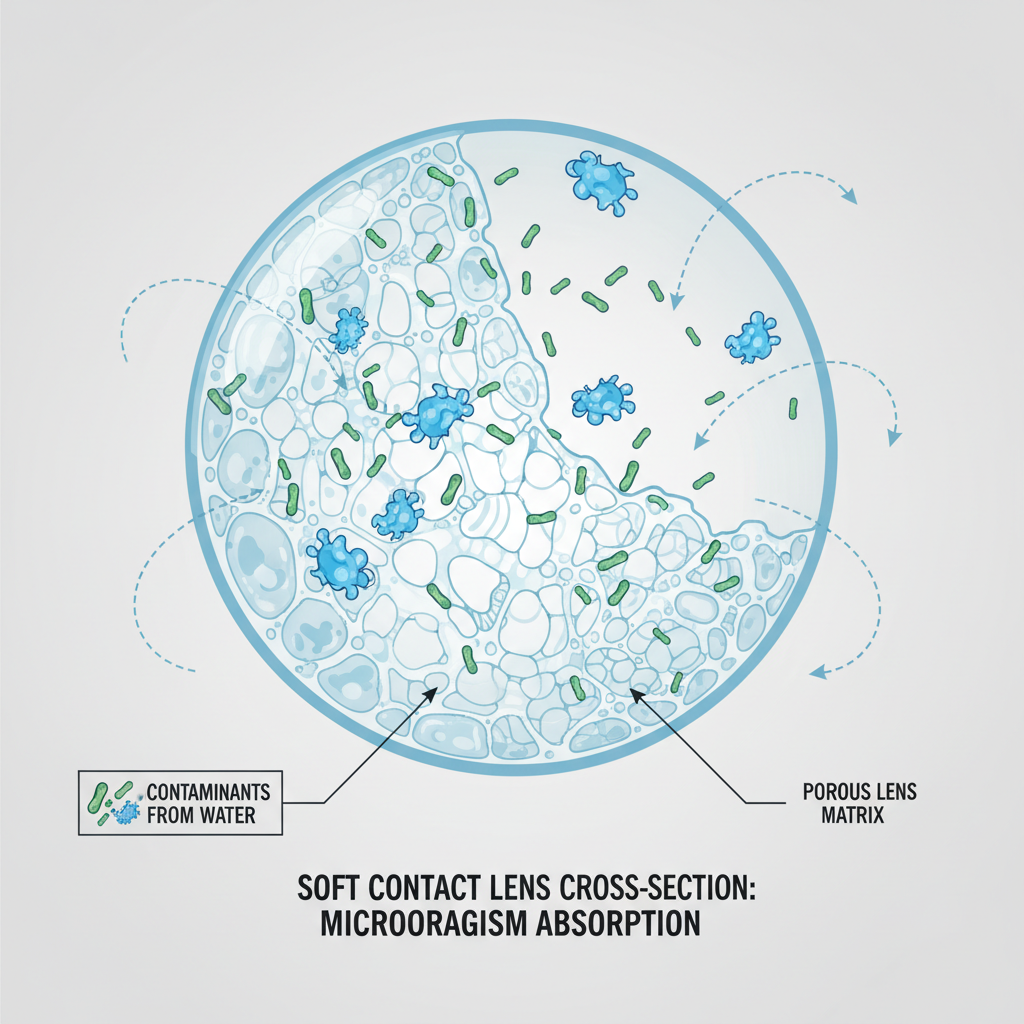
At the heart of the issue is the simple fact that contact lenses are not a perfect barrier. Soft lenses, including daily disposables, are made from porous, water-loving (hydrophilic) materials designed to stay moist and comfortable on your eye. This sponge-like quality means they can absorb and trap whatever they come into contact with—including bacteria, fungi, and parasites found in water.
The Most Serious Threat: Acanthamoeba Keratitis
The most significant risk is an infection called Acanthamoeba keratitis. Acanthamoeba is a microscopic, free-living amoeba that is commonly found in tap water, well water, lakes, oceans, pools, and showers. According to the U.S. Environmental Protection Agency (EPA), when this amoeba gets trapped between your contact lens and your cornea, it can cause an excruciatingly painful infection that is notoriously difficult to treat and can lead to permanent vision loss or blindness.
The Centers for Disease Control and Prevention (CDC) emphasizes that contact lenses are medical devices, not cosmetics. Their safe use requires strict adherence to hygiene protocols, and avoiding water exposure is one of the most critical rules.
Common Myths and Misconceptions
Myth #1: "Daily disposables are sterile, so they are safe." While it's true that daily disposable lenses are sterile when you take them out of the sealed blister pack, they lose that sterility the moment they are handled and placed on the eye. Once exposed to any environment—especially water—they can become a vehicle for infection. The lens itself can act as a petri dish, concentrating harmful microbes directly against the surface of your eye.
Myth #2: "Chlorine in pools kills all the germs." Chlorine is used to disinfect pool water, but it does not sterilize it instantly or completely. It can take time for chlorine to kill certain microorganisms, and its effectiveness can be reduced by factors like water temperature and pH. An amoeba or bacterium can easily be absorbed by your lens before the chlorine has a chance to neutralize it.
Myth #3: "It's just a quick splash, it won't hurt." Even a small amount of water from a splash or shower spray can transfer dangerous microbes to your lenses. Clinicians frequently see patients who develop infections after what they thought was insignificant water exposure. There is no "safe" amount of water exposure for contact lenses.
High-Risk Scenarios: Where Wearers Make Mistakes
Understanding the specific situations where risk is highest can help you avoid a serious eye injury. Many wearers underestimate the danger in these common, everyday activities.
Showering or Using a Hot Tub
Showering is perhaps the most common way people accidentally expose their lenses to water. Tap water is a primary source of the Acanthamoeba parasite. A stream of water hitting your face can force microbes under the lens, trapping them against the cornea. Hot tubs present a similar risk, with the added danger of heat-loving bacteria like Pseudomonas aeruginosa, a frequent cause of microbial keratitis, thriving in the warm water.
Swimming in Pools, Oceans, and Lakes
Swimming with contact lenses is a significant gamble. As discussed, pool chlorine isn't a foolproof shield. Oceans and lakes are even riskier, as they are teeming with a wide variety of bacteria, viruses, and fungi. Saltwater does not sterilize your lenses; it simply creates a different environment for a different set of potential pathogens. A study on the reuse of daily disposable lenses found that 95% of lenses stored improperly were contaminated with bacteria like Staphylococcus, highlighting how quickly contamination occurs (Contamination Risk of Reusing Daily Disposable Lenses, PubMed).
What to Do If Your Lenses Get Wet: An Emergency Checklist
Accidents happen. If you find yourself in a situation where your daily disposable lenses have been submerged or significantly splashed with water, do not panic. Follow these steps immediately to minimize your risk of infection. This is the advice eye care professionals give to patients who have had accidental exposure.
| Step | Action | Rationale |
|---|---|---|
| 1. Remove & Discard Immediately | As soon as it is safe to do so, wash and dry your hands thoroughly. Remove the contact lenses and throw them away. | This is the most critical step. You must remove the contaminated medical device from your eye as quickly as possible. |
| 2. Do NOT Attempt to Rinse or Save Them | Never try to rinse the lenses with saline or solution to "clean" them. They are daily disposables and must be discarded. | Saline is not a disinfectant. It cannot kill Acanthamoeba or other hardy microbes. Attempting to save the lens only prolongs the exposure. |
| 3. Let Your Eyes Rest | Avoid putting in a new pair of contact lenses for at least a few hours. Wear your glasses instead. | Your cornea needs time to recover and re-establish its natural tear film, which is a primary defense against infection. |
| 4. Monitor Your Eyes Closely | Over the next 24-72 hours, pay close attention to how your eyes feel and look. | Symptoms of an infection are not always immediate. Early detection is key to successful treatment. |
| 5. Escalate to a Doctor if Symptoms Appear | If you experience any of the following, contact an eye doctor immediately: Pain, Redness, Light Sensitivity, Blurry Vision, or a "Gritty" Feeling. | These are the classic signs of a corneal infection listed by the FDA as contact lens risks. Do not wait for symptoms to worsen. Inform the doctor that you had a water exposure event. |
Safe and Practical Alternatives for Clear Vision
Enjoying water activities doesn't mean you have to do so with blurry vision. With a little planning, you can keep your eyes safe and see clearly.
Prescription Swim Goggles: The Gold Standard
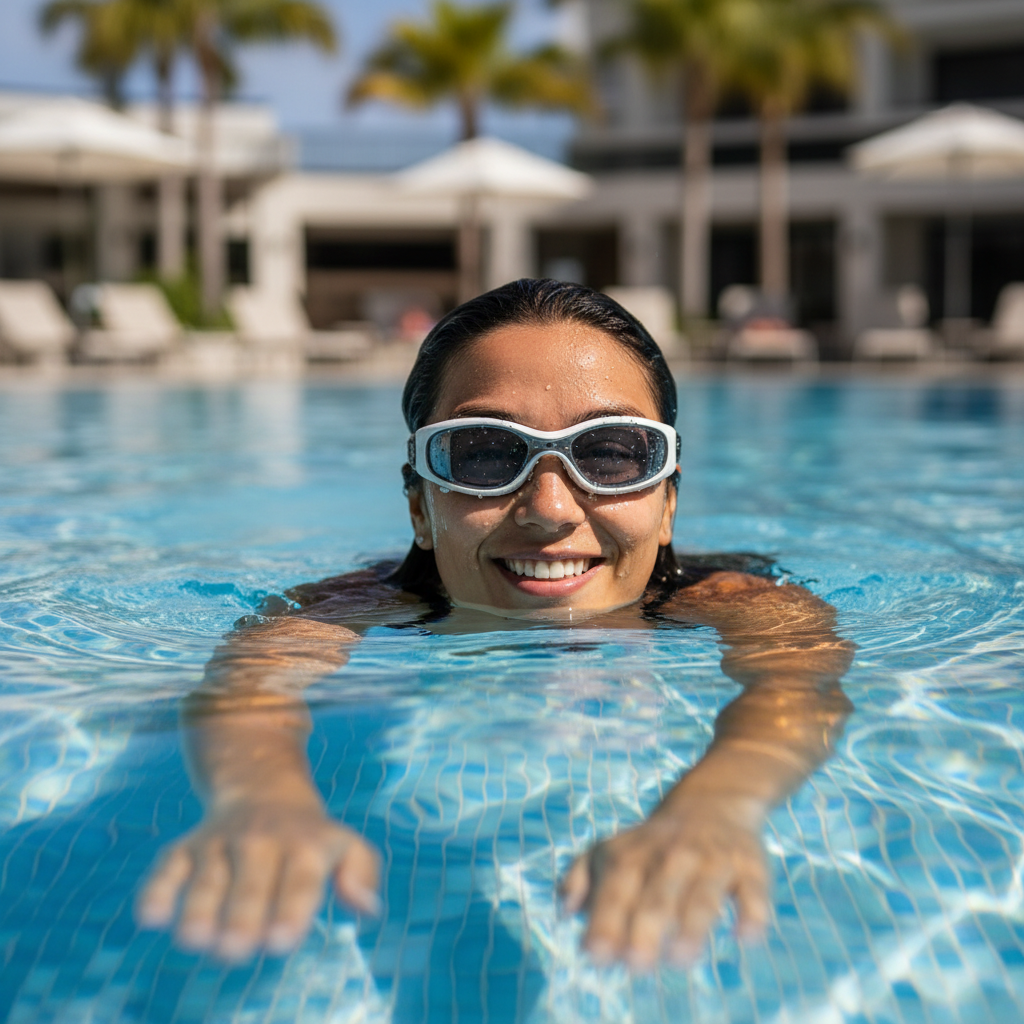
The safest and most effective solution is to invest in a pair of prescription swim goggles. These provide a secure seal to keep water out while correcting your vision. They are the number one recommendation from eye care professionals for anyone who swims regularly.
The "Remove and Replace" Strategy
If you don't swim often or don't want to buy prescription goggles, the next best strategy is simple: don't wear your lenses in the water.
- Before You Swim: Remove your daily disposable lenses and discard them.
- During Water Activities: Go without vision correction or use your backup eyeglasses if you are just lounging by the pool.
- After You Finish: Once you are out of the water, have dried off, and can wash your hands properly, insert a fresh pair of daily disposable lenses.
This method ensures that no contaminated lens ever sits on your eye, effectively eliminating the risk of water-borne infection.
Key Takeaways: Your Eye Health Comes First
- No Water, Ever: Never allow your contact lenses—especially daily disposables—to come into contact with water of any kind.
- Discard if Exposed: If a lens gets wet, throw it away immediately. Do not try to rinse or reuse it.
- Know the Symptoms: Pain, redness, light sensitivity, and blurry vision are red flags. Seek professional care immediately if they appear after water exposure.
- Choose Safe Alternatives: Use prescription swim goggles or remove your lenses before water activities and replace them with a fresh pair afterward.
By following these simple but crucial rules, you can continue to enjoy the convenience of daily disposable lenses without taking unnecessary risks with your vision.
Frequently Asked Questions (FAQ)
Can I quickly rinse my daily lens with tap water if I drop it? No, never. Tap water contains the Acanthamoeba organism and is not sterile. Rinsing a lens in tap water is one of the highest-risk behaviors for developing a severe corneal infection. If you drop a daily lens, it is best to discard it and use a new one.
Are tight-fitting swim goggles 100% safe to use with contact lenses? While they significantly reduce the risk, they are not foolproof. A forceful splash or a broken seal can still allow water to leak into the goggle and onto the lens. The safest approach remains not wearing lenses at all, but if you must, be prepared to discard the lenses immediately if any water gets in.
What if my eyes feel fine after I accidentally swam with my contacts in? Even if you don't have immediate symptoms, the risk is not gone. Microbes can take 24-72 hours or even longer to multiply to the point where they cause a noticeable infection. You should still remove and discard the lenses and monitor your eyes closely for any developing signs of trouble.
Disclaimer: This article is for informational purposes only and does not constitute professional medical advice. Always consult with a qualified eye care professional for any health concerns, before starting a new treatment, or for any questions about your specific eye health needs. If you suspect you have an eye infection, seek immediate medical attention.