


A Stress-Free Guide to Inserting and Removing Contact Lenses
TL;DR: Your Quick Start Guide
- Hygiene is everything. Always wash and dry your hands thoroughly before touching your lenses or eyes. Never use tap water on your lenses.
- Check your lens. Before inserting, make sure the lens is not inside out. It should look like a perfect bowl, not a saucer with a rim.
- Be gentle. Use the pads of your fingers, never your nails. If a lens feels stuck, use rewetting drops, don't force it.
- Practice makes perfect. The initial awkwardness is normal. Follow these steps, and the process will soon become a quick, natural part of your daily routine.
The Unskippable First Step: Aseptic Handling and Hygiene
Before a contact lens ever gets near your eye, your hands must be impeccably clean. This isn't just a casual suggestion; it's the most critical step in preventing serious eye infections. According to the Centers for Disease Control and Prevention (CDC), poor hygiene habits are a primary risk factor for conditions like microbial keratitis, an infection of the cornea that can lead to pain and even vision loss.
Your eyes have natural defenses, but placing a lens on the surface can bypass them. Think of a contact lens as a temporary guest on your cornea; you must ensure it doesn’t bring any dangerous bacteria with it.
Your Pre-Game Checklist for Clean Handling:
- Wash Your Hands: Use a mild, lotion-free soap and scrub your hands, fingers, and under your nails for at least 20 seconds.
- Rinse Thoroughly: Ensure all soap residue is gone.
- Dry Completely: Use a clean, lint-free towel. Water, especially tap water, is a major hazard. The U.S. Environmental Protection Agency (EPA) warns that tap water can contain an organism called Acanthamoeba, which causes a severe, hard-to-treat infection that can result in permanent vision loss. Never rinse your lenses or case in tap water.
- Prepare Your Station: Work over a clean, flat surface. If you're over a sink, place a clean towel over the drain to catch a dropped lens.

How to Insert Contact Lenses: A Step-by-Step Method
With clean, dry hands, you're ready to go. The goal is to be calm and deliberate. Rushing leads to mistakes and frustration.
Step 1: Prepare the Lens
- Gently slide one lens out of its case and into the palm of your hand with some fresh solution.
- Scoop the lens onto the pad of your index finger.
-
The Inversion Check (The "Taco Test"): This is a common point of failure for beginners. An inside-out lens will be uncomfortable and provide blurry vision. To check, hold the lens on your fingertip:
- Correct: The lens will form a perfect, upward-facing cup or "U" shape. The edges will point straight up.
- Incorrect (Inverted): The lens will look like a saucer with a distinct rim. The edges will flare outwards.
- If it's inverted, gently place it back in your palm with a drop of solution and flip it over.
Step 2: The Insertion
Most beginners find the two-handed method provides the most stability and control.
- Place the clean, correct lens on the pad of your dominant hand's index finger.
- With the middle finger of the same hand, pull down your lower eyelid.
- Use the fingers of your other hand to lift your upper eyelid and lashes firmly against your brow bone. This is key to controlling the blink.
- Look straight ahead in the mirror or slightly upwards.
- Bring the lens steadily towards your eye and gently place it on the colored part (the iris).
- Once it makes contact, don't release your eyelids immediately. Look left, right, up, and down to help the lens settle and push out any air bubbles.
- Slowly release your eyelids and blink a few times.
Your vision should be clear, and the lens should feel comfortable. If it feels like there's something in your eye, the lens may be inside out or have debris on it. Remove it, rinse with fresh solution, and try again.
Overcoming the Blink Reflex: A Practitioner's Tip
The most common frustration for new wearers is the involuntary blink reflex. Your eye is designed to protect itself. To overcome this, you need to desensitize that reflex. For a few days before you even try inserting a lens, practice this exercise: Wash your hands thoroughly, and while looking in a mirror, gently touch the white part of your eye (the sclera) with the clean pad of your fingertip. This trains your brain to accept contact without triggering a forceful blink, making actual lens insertion much less stressful.
How to Remove Contact Lenses Safely
At the end of the day, removal is just as important. Never sleep in lenses unless they are specifically prescribed for overnight wear. Doing so dramatically increases the risk of infection.
Step 1: Wash and Dry Your Hands
As always, start with clean, dry hands.
Step 2: The Pinch Method
- Look straight into the mirror.
- Using your non-dominant hand, pull your upper eyelid up.
- Look upwards, and with the middle finger of your dominant hand, pull your lower eyelid down.
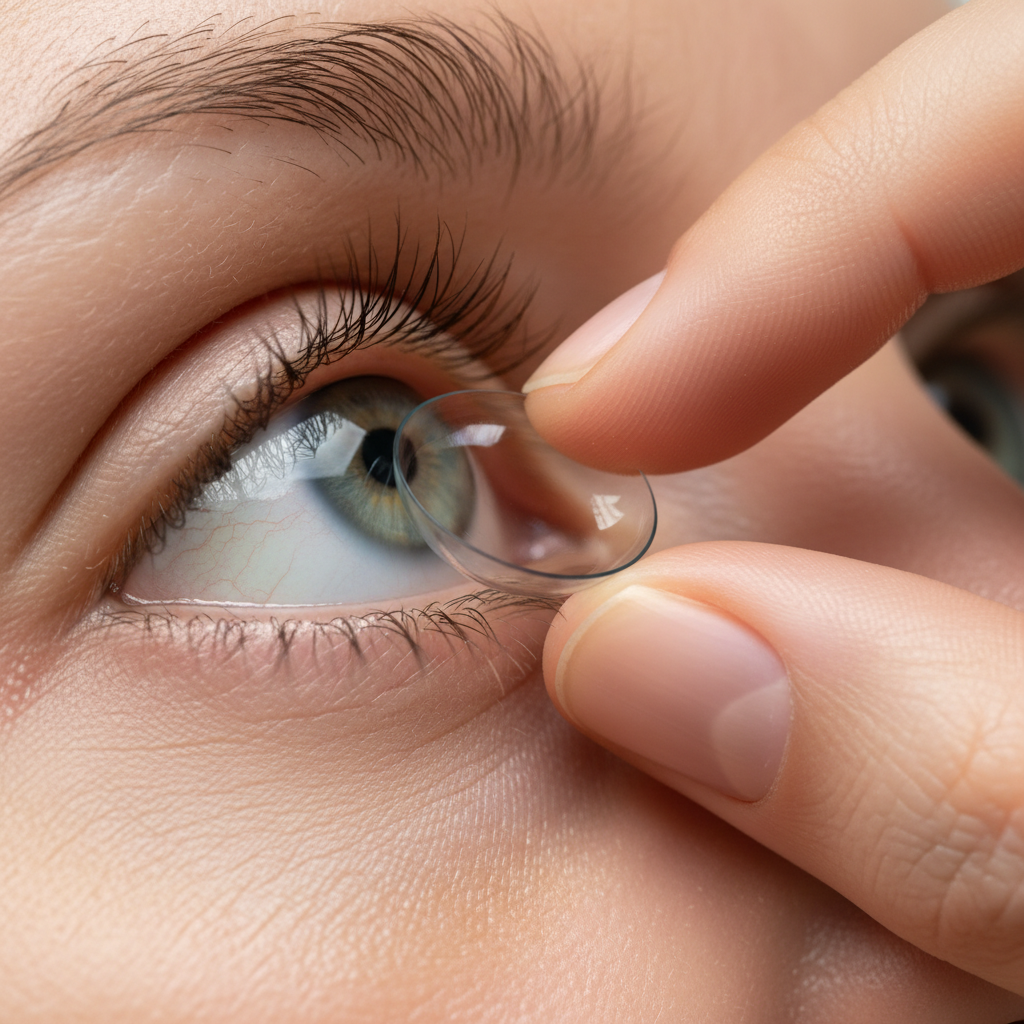
- With the index finger of that same hand, touch the bottom edge of the contact lens and slide it down off the cornea onto the white sclera.
- Once it's on the sclera, gently pinch the lens between your index finger and thumb and remove it from your eye.
Step 3: Clean or Discard
- Daily Disposables: Simply throw the lens away. This is the most hygienic option and can be a great choice for those with sensitivities or dry eyes. For more on this, see our guide on Can Daily Disposable Lenses Help with Dry Eyes?.
- Reusable Lenses: Place the lens in your palm, add fresh cleaning solution, and gently rub it with your finger for the time specified by the manufacturer (the "rub and rinse" step). Then, rinse it and place it in a clean case filled with fresh solution. Never "top off" old solution, as this negates the disinfecting process.
What If the Lens Feels Stuck?
A lens that won't move is usually just dry. This is common after long hours of screen time. The solution is simple: do not force it or panic. Instill a few preservative-free rewetting drops into your eye, close your eyes for about 30 seconds, and blink. This will rehydrate both the lens and your ocular surface, allowing it to move freely for a comfortable removal. If you often experience this, exploring tips for Relief for Dry Daily Lenses from Screen Time can be beneficial.
Frequently Asked Questions for New Wearers
-
Can a contact lens get lost behind my eye? No, this is physically impossible. A thin membrane called the conjunctiva covers the white of your eye and connects to the inside of your eyelids, preventing anything from slipping behind your eye.
-
Why is my vision blurry after putting my lens in? There are a few common reasons: the lens might be on the wrong eye (if you have different prescriptions), it could be inside out, or it might just need a moment to settle. If it doesn't clear up after a few blinks, remove, rinse, and re-insert.
-
Is it normal for my eyes to be red at first? A little bit of temporary redness can occur from manipulating your eyelids, but it should fade quickly. If you experience persistent redness, pain, light sensitivity, or discharge, remove the lenses immediately and contact your eye doctor. These could be signs of an infection or other issue.
-
How long will it take me to get used to this? It varies for everyone. Some people master it on the first day, while others take a week or two. Be patient with yourself. Following these steps consistently is the fastest way to build the muscle memory that makes insertion and removal a thoughtless, two-minute process.
This article is for informational purposes only and does not constitute professional medical advice. Always follow the specific instructions provided by your eye care professional and the manufacturer of your contact lenses and solutions. If you experience pain, discomfort, or changes in your vision, remove your lenses and consult your doctor immediately.