

Clear vs. Yellow Tint: Which Blue Light Lens is for You?
TL;DR: Clear vs. Yellow Lenses at a Glance
Not all blue light glasses are created equal. The choice between a virtually clear lens and a noticeably yellow-tinted one comes down to your primary goal. Clear lenses are for aesthetic-first, all-day wear with mild filtering, while yellow lenses offer more powerful filtering ideal for regulating your sleep cycle.
| Feature | Clear Blue Light Lenses | Yellow/Amber Tinted Lenses |
|---|---|---|
| Filtering Power | Low (Typically 10-25%) | Medium to High (30-70%+) |
| Primary Use Case | All-day office/screen use | Pre-sleep routine (1-3 hours before bed) |
| Color Distortion | Minimal to none | Noticeable yellow/amber shift |
| Best For | Color-sensitive work, daytime use, aesthetics | Maximizing sleep quality, high-sensitivity users |
| Key Trade-Off | Less effective for sleep benefits | Impractical for daytime or color-critical tasks |
The Science of Blue Light: Signal, Not Toxin
Before choosing a lens, it's crucial to understand what we're managing. Blue light itself isn't inherently bad. A review in the journal Chronobiology International clarifies that blue light is a primary signal for our brain's internal clock, promoting alertness and cognitive function during the day. The issue is one of timing and intensity, especially from digital screens in the evening.
There are two main reasons people seek out blue light glasses:
- To Reduce Digital Eye Strain: This is the most common motivation, but it's based on a widespread myth.
- To Improve Sleep Quality: This is where the technology has scientific backing.
Myth vs. Reality: Do Blue Light Glasses Cure Eye Strain?
A common misconception is that eye fatigue from screens is caused by the blue light itself. However, clinical consensus points elsewhere. According to ophthalmologist Dr. Nicole Bajic in an article for the Cleveland Clinic, digital eye strain is primarily caused by a reduced blink rate and the constant effort your eyes make to maintain focus on a close-up screen. You simply don't blink as often, leading to dryness and fatigue.
A rigorous double-blind study published in PubMed confirmed this, finding no significant difference in eye strain symptoms between participants wearing blue-blocking lenses and those wearing placebos. The most effective remedies for eye strain are practicing the "20-20-20 rule" (every 20 minutes, look at something 20 feet away for 20 seconds) and using artificial tears.
The Real Benefit: Protecting Your Sleep Cycle
Where these glasses prove their worth is in managing your circadian rhythm. Exposure to blue light in the evening, particularly in the 450–480 nm spectrum, suppresses the production of melatonin, the hormone that tells your body it's time to sleep. By filtering this light, the glasses help your body's natural sleep process begin on time. Research from Harvard Health Publishing suggests that wearing them in the hours before bed can improve sleep, potentially shortening the time it takes to fall asleep.
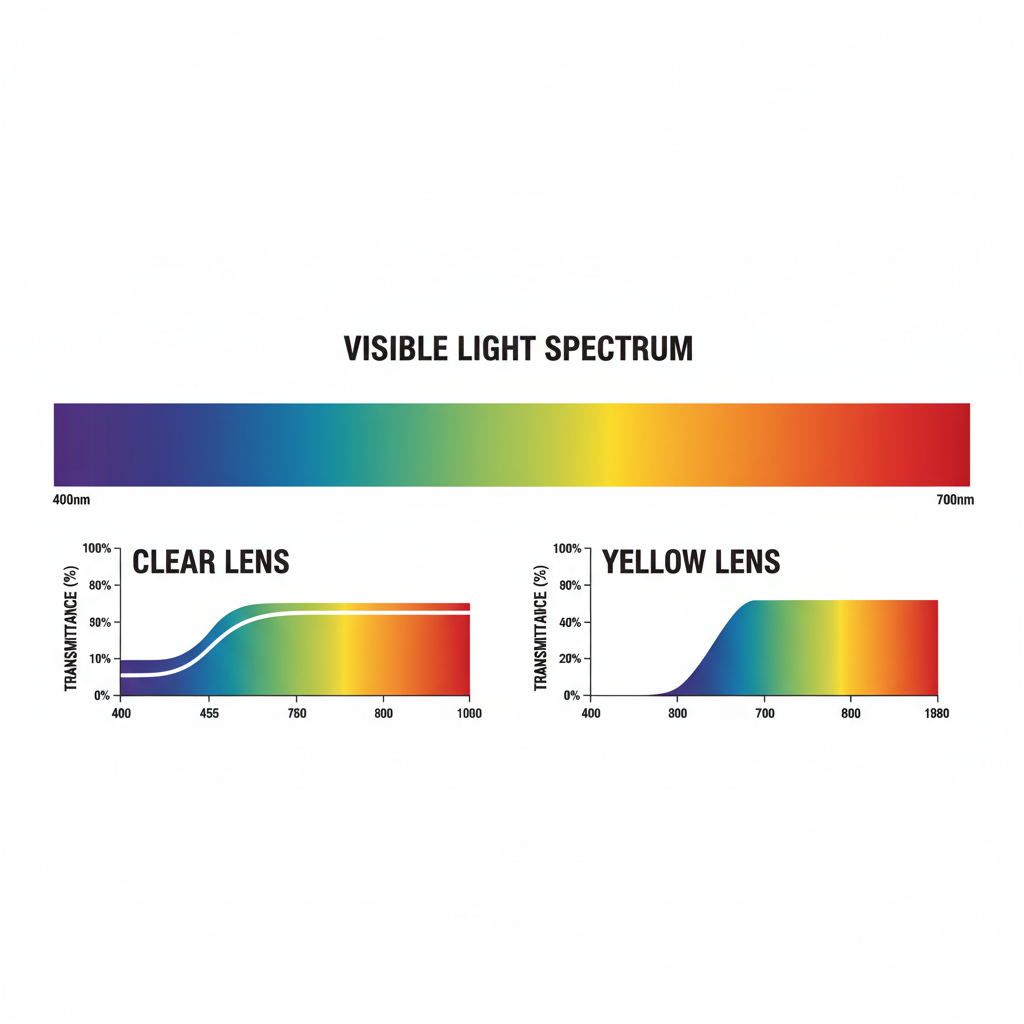
Clear Blue Light Lenses: The All-Day Aesthetic Choice
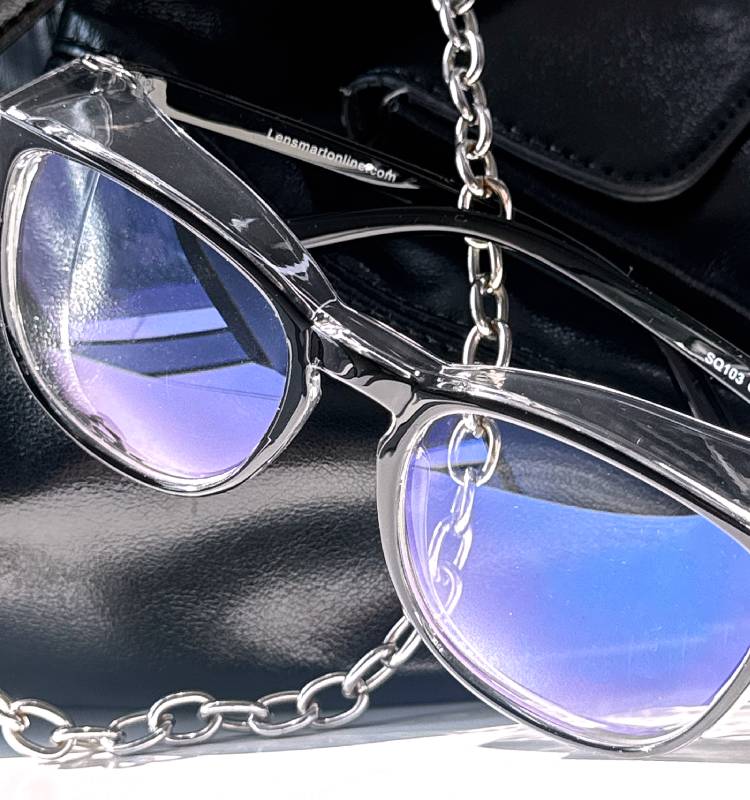
Clear blue light lenses are prescription or non-prescription lenses that have a special coating applied. This coating is engineered to be as transparent as possible while selectively filtering a small percentage of high-energy visible (HEV) blue light. From a practical standpoint, these lenses typically block between 10% and 25% of blue light, primarily in the 400-455nm range.
Who Should Choose Clear Lenses?
Clear lenses are an excellent choice for individuals who spend long hours in front of screens during the daytime and want a single pair of glasses for all activities. They are ideal for:
- Office Professionals: You get a slight reduction in blue light intensity without affecting your appearance in meetings or video calls.
- Designers & Creatives: For anyone whose work depends on accurate color perception—like graphic designers, video editors, or artists—clear lenses are the only viable option, as they don't distort the color spectrum.
- Fashion-Conscious Wearers: If you love your frame style and don't want a yellow tint to clash with your look, clear lenses offer an invisible solution.
The primary advantage is aesthetics and convenience. You can wear them all day without anyone knowing they have a blue light filter. However, this comes at the cost of potency; the filtering effect is mild and may not be sufficient for those with significant sleep disruption.
Yellow-Tinted Lenses: The Sleep-Cycle Specialist
Yellow and amber-tinted lenses are visibly colored for a reason: the tint is doing the heavy lifting of filtering blue light. Unlike a subtle coating, the dye in the lens material absorbs a much larger portion of the blue spectrum.
- Light Yellow Tints: These are a middle ground, often blocking between 30% and 60% of blue light. They offer a noticeable boost in filtering without severe color distortion.
- Amber/Orange Tints: These are the most powerful, designed for maximum effect. They can block 70% or more of blue light, making them highly effective for sleep preparation.
Who Should Choose Yellow Lenses?
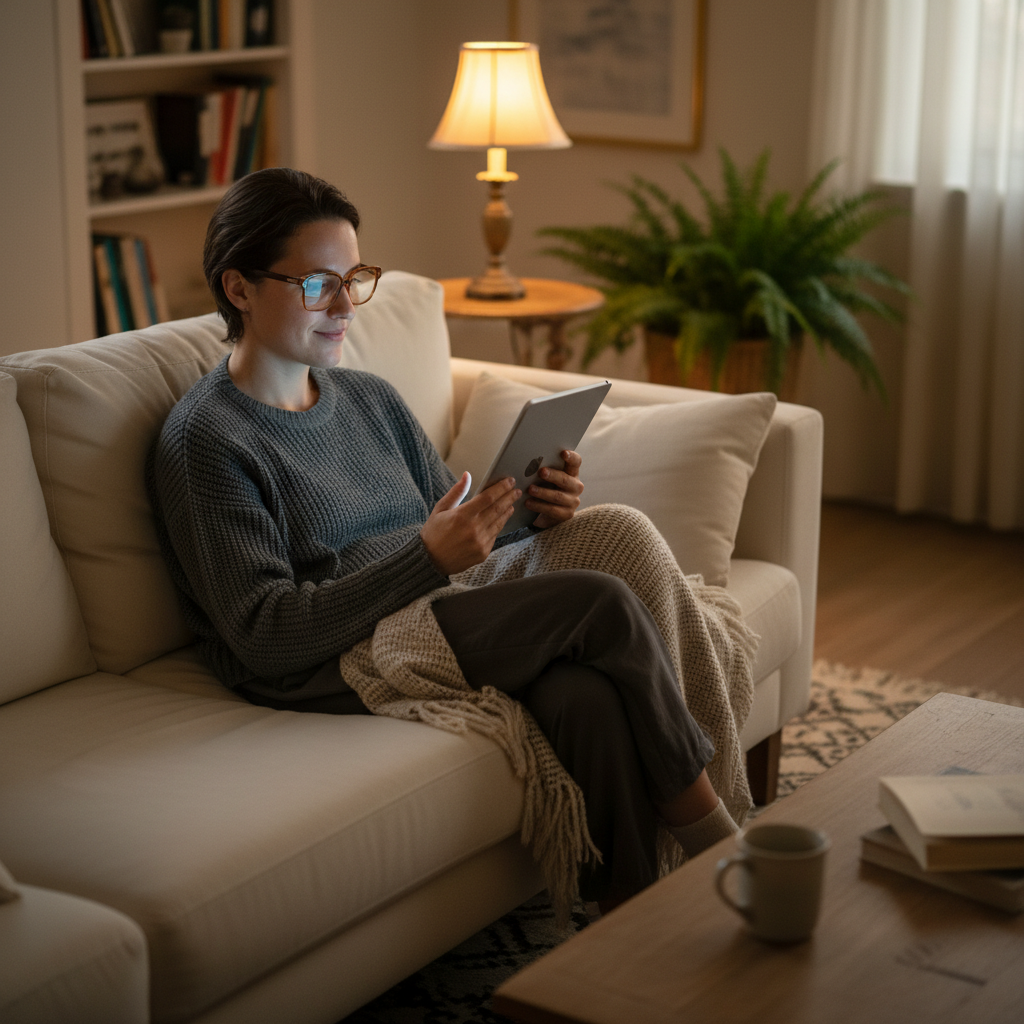
Yellow-tinted lenses are a specialized tool, not an all-purpose solution. Their use is strongly recommended for a specific window of time—the 1 to 3 hours leading up to your bedtime. According to a systematic review in PubMed, there is "substantial evidence" that evening wear reduces sleep onset latency.
These lenses are best for:
- Night Owls & Screen Users: Anyone who uses a phone, tablet, or watches TV right before bed will see the most significant circadian benefit.
- Individuals with Sleep Issues: If you struggle to fall asleep, these glasses can be a high-impact, non-pharmacological part of your evening wind-down routine.
- Shift Workers: People with irregular schedules can use amber lenses to help "tell" their brain it's nighttime, even when it's not, aiding in sleep cycle regulation.
The downside is obvious: they visibly alter color perception, making everything appear warmer or more yellow. This makes them unsuitable for driving, color-sensitive work, or all-day wear.
Expert Warnings and Key Considerations
Choosing the right lens involves more than just picking a color. Here are some expert-level considerations to ensure you get the right fit and performance.
Expert Warning: Avoid Blue Blockers for Children
While it may seem proactive to give blue light glasses to children, emerging research suggests caution. The developing eye requires exposure to a full spectrum of natural light for emmetropization—the process by which the eye grows to the correct size and shape to achieve clear vision. A theoretical risk model discussed by the Mayo Clinic suggests that chronically depriving a child's retina of blue light signals could potentially disrupt this process, possibly contributing to the development or progression of nearsightedness (myopia). Unless advised by an optometrist for specific conditions, it is best to manage a child's screen time and encourage outdoor activity rather than using blue-blocking lenses.
Fit and Accuracy Are More Important Than Tint
A common mistake is obsessing over filtering percentages while neglecting the most critical part of any pair of glasses: the prescription and fit. An inaccurate Pupillary Distance (PD) measurement can cause more eye strain and discomfort than any amount of blue light. This is especially true for stronger prescriptions (above ±3.00 D) and progressive lenses. An error of just one millimeter can induce prismatic effects that lead to headaches. Always prioritize getting an accurate PD; you can learn how to measure your PD at home for a perfect fit.
Frequently Asked Questions (FAQ)
1. Can I wear yellow-tinted blue light glasses all day? It's generally not recommended. Blue light during the day is beneficial for alertness and mood. Constantly blocking it may interfere with your natural energy levels. Reserve yellow lenses for evening use.
2. Will these glasses fix my headaches from computer use? Unlikely. Most screen-related headaches are caused by uncorrected vision problems, poor posture, or dry eyes from infrequent blinking, not blue light. If you experience persistent headaches, consult an eye care professional.
3. Do I need blue light filtering if my device has a "night mode"? Night modes (like Apple's Night Shift or Android's Night Light) work by warming the screen's color temperature, which does reduce blue light emission. However, high-quality amber lenses provide a more complete and consistent blockage of the specific light wavelengths that suppress melatonin.
4. Are more expensive blue light glasses better? Not necessarily. The price should reflect the quality of the frame, the precision of the prescription lenses (if any), and the quality of any additional coatings, like anti-reflective and scratch-resistant layers. A lens that blocks a high percentage of blue light but distorts vision is a poor choice. For high prescriptions, investing in high-index lens options with a quality AR coating is often more important.
Key Takeaways: Making the Right Choice
Choosing between clear and yellow blue light lenses is a strategic decision based on your lifestyle and priorities.
- Choose CLEAR lenses if: Your primary concern is aesthetics, you need to see accurate colors for work, and you want a single pair of glasses for all-day, everyday use. They offer a mild filter for general screen time.
- Choose YELLOW lenses if: Your primary goal is to improve your sleep quality. They are a powerful tool to be used specifically in the 1-3 hours before bed to prevent melatonin suppression.
Ultimately, blue light glasses are a tool, not a cure-all. They are most effective when combined with healthy habits like taking regular screen breaks, ensuring proper ergonomics, and practicing a consistent pre-sleep routine.
YMYL Disclaimer: This article is for informational purposes only and does not constitute professional medical advice. The information provided is not a substitute for a consultation with a qualified healthcare professional. Always seek the advice of your optometrist or physician with any questions you may have regarding a medical condition. Do not disregard professional medical advice or delay in seeking it because of something you have read here.
References
- Bajic, N. (via Cleveland Clinic). "Do Blue Light Blocking Glasses Actually Work?" https://health.clevelandclinic.org/do-blue-light-blocking-glasses-actually-work
- Harvard Health Publishing. "Can blue light blocking glasses improve your sleep?" https://www.health.harvard.edu/blog/can-blue-light-blocking-glasses-improve-your-sleep-202110262625
- Hester, L. et al. (PubMed). "Blue-blocker glasses as a therapeutic for sleep and mood disorders." https://pubmed.ncbi.nlm.nih.gov/34030534/
- Ostovari, J. et al. (Mayo Clinic). "The Biologic Effects of Blue Light on the Eye: A Narrative Review." https://pmc.ncbi.nlm.nih.gov/articles/PMC12009466/
- Rosenfield, M. et al. (PubMed). "Effect of blue-blocking spectacle lenses on visual performance, macular health and the sleep-wake cycle: a systematic review of the literature." https://pubmed.ncbi.nlm.nih.gov/32007978/
- Tosini, G. et al. (Chronobiology International). "The effects of blue light on the circadian system and eye physiology." https://pmc.ncbi.nlm.nih.gov/articles/PMC8897255/