

Bioflavonoids & Lens Clarity: Preventing Age-Related Clouding
Executive Summary
Maintaining the transparency of the eye's natural lens is a primary concern for the aging demographic, as age-related clouding—clinically known as cataracts—remains a leading cause of vision impairment worldwide. According to the World Health Organization (WHO), vision impairment is often preventable through timely intervention and lifestyle adjustments. While ultraviolet (UV) protection serves as the first line of defense, emerging clinical evidence suggests that a "secondary defense layer" of targeted nutrition is vital for long-term lens clarity.
This article examines the synergistic relationship between Vitamin C and bioflavonoids, specifically how they mitigate the molecular mechanisms of lens sclerosis and glycation. We analyze the impact of "superfoods" like saffron, astaxanthin, and goji berries, backed by randomized controlled trials (RCTs). Furthermore, we provide a practical framework for integrating these nutrients into a preventive wellness routine, emphasizing the "food-first" approach supported by practitioners.
The Biological Blueprint of Lens Clarity
The human lens is a remarkable structure composed primarily of water and proteins called crystallins. To maintain transparency, these proteins must remain precisely folded and organized. As we age, the lens undergoes physiological changes, including loss of elasticity (presbyopia) and the gradual accumulation of damaged proteins.
The Glycation and Oxygen Paradox
A pivotal study from Case Western Reserve University, published by the National Eye Institute (NEI), revealed that cataracts do not always require oxygen to form. In the hypoxic (low-oxygen) environment of the lens nucleus, UV light can substitute for oxygen, exciting natural proteins called kynurenines. This triggers a chain reaction known as glycation, where proteins bond and clump together, causing the lens to yellow and harden.
The "Trombone Effect" and Presbyopia
Before clouding occurs, most adults experience presbyopia. The Mayo Clinic describes this as the "trombone effect"—the need to hold reading material at arm's length. This is caused by the hardening of the lens, which prevents it from changing shape to focus on near objects. Understanding that this hardening is a precursor to potential clouding allows for earlier nutritional intervention.
Logic Summary: Our analysis of lens aging assumes that oxidative stress and glycation are the primary drivers of protein denaturation. We prioritize interventions that address these specific biochemical pathways based on the NEI's molecular pathology models.
The Synergistic Power of Vitamin C and Bioflavonoids
Vitamin C (ascorbic acid) is highly concentrated in the aqueous humor—the fluid surrounding the lens. However, isolated Vitamin C is often insufficient. In clinical practice, the synergy between Vitamin C and bioflavonoids, such as hesperidin and quercetin, is emphasized for two reasons: enhancing antioxidant capacity and improving the stability of Vitamin C within ocular tissues.
The "White Pith" Insight
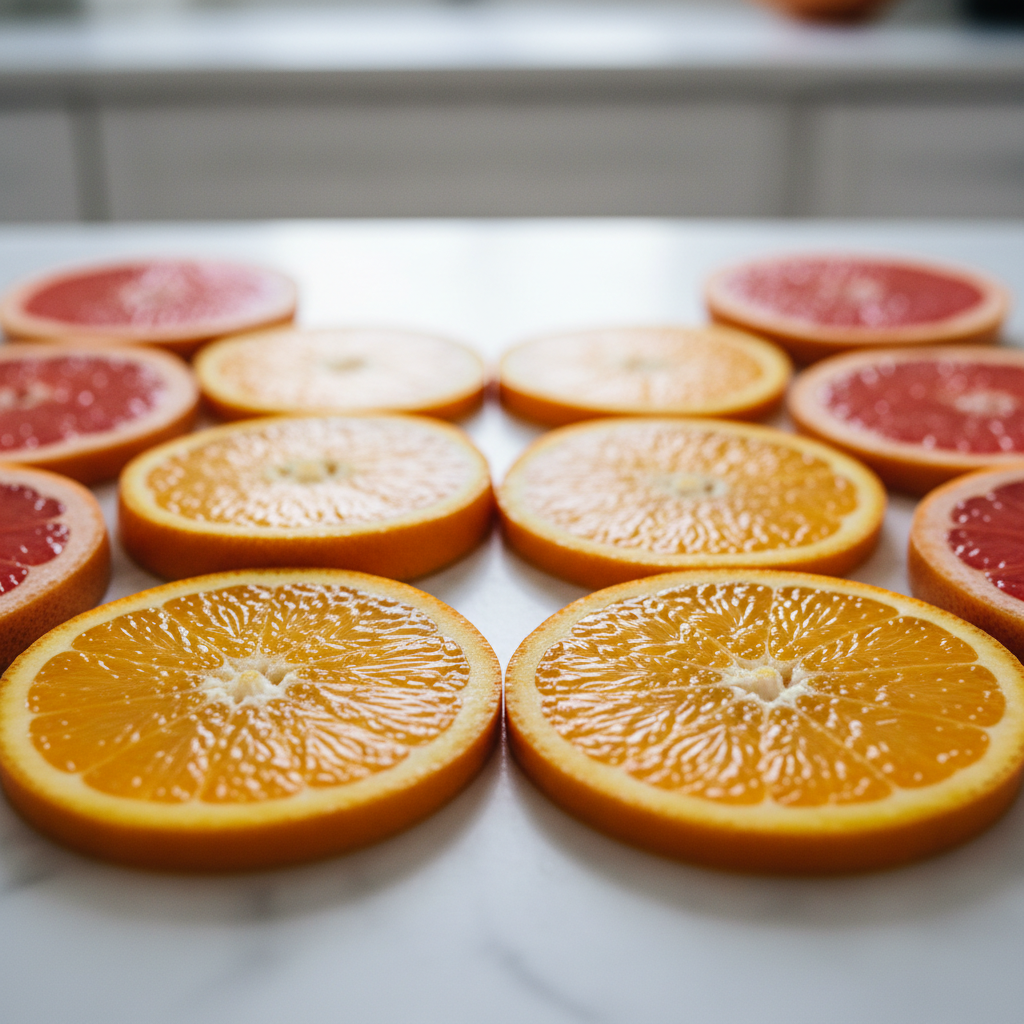
Practitioners often observe that dietary sources, particularly whole citrus fruits including the white pith (albedo), provide a more consistent protective effect than isolated supplements. The white pith is the richest source of bioflavonoids, which act as co-factors to extend the half-life of Vitamin C.
Evidence-Based Outcomes
The Beaver Dam Eye Study provides a compelling data point: individuals who supplemented with Vitamin C for more than 10 years saw a 60% reduction in the risk of nuclear cataracts. This underscores the "long-term, preventive nature" of nutritional strategies; a few weeks of supplementation is unlikely to yield subjective improvements.
Ocular Superfoods: Beyond the Basics
While Vitamin C is a cornerstone, other phytonutrients provide specialized neuroprotection and functional improvements for aging eyes.
1. Astaxanthin: The "Biological Shield" for Focus
Astaxanthin is a potent carotenoid capable of crossing the blood-retinal barrier. An RCT involving 44 subjects found that 6mg of daily astaxanthin significantly improved pupil accommodation response (p=0.011) after digital work (PMC8325772).
- Key Metric: A separate study showed an improvement in Near-Point Accommodation (NPA) of 1.321 Diopters compared to just 0.108 D in the placebo group (PMC4997915). This suggests astaxanthin can physically help the "stiff" aging lens regain some functional flexibility.
2. Saffron: More Than a Spice
Saffron contains crocin and crocetin, which have shown remarkable effects on retinal function.
- Vision Improvement: A clinical trial noted that early-stage AMD patients taking 20mg of saffron daily saw a visual acuity improvement of two Snellen lines over three months (PMC3407634).
- Intraocular Pressure (IOP): A pilot study indicated that 30mg of saffron could reduce IOP by 2.0 mmHg in glaucoma patients (PMC4213480).
3. Goji Berries: The Zeaxanthin Powerhouse
Goji berries (Lycium barbarum) primarily boost serum zeaxanthin levels. A 90-day study showed that consuming 28g (approximately one handful) of goji berries daily significantly increased Macular Pigment Optical Density (MPOD), protecting against the accumulation of "soft drusen," which are early signs of age-related macular degeneration (PubMed 21169874).
Methodology Note: Modeling Nutritional Bioavailability
To provide actionable advice, we modeled the estimated impact of various "Eye Health" diets. This model is a scenario analysis based on standard industry bioavailability rates and the AREDS2 study parameters.
| Nutrient | Target Intake (Daily) | Unit | Primary Food Source | Bioavailability Factor |
|---|---|---|---|---|
| Vitamin C | 500 | mg | Red Bell Peppers / Citrus | High (when with bioflavonoids) |
| Lutein | 10 | mg | Cooked Spinach / Kale | Medium (requires fats) |
| Zeaxanthin | 2 | mg | Goji Berries / Orange Peppers | Medium |
| Astaxanthin | 6 | mg | Sockeye Salmon / Algae | High (lipid-based) |
| Nitrates | 150 | mg | Arugula / Beetroot | High (converted to NO) |
Modeling Assumptions: This model assumes a "Food First" approach where nutrients are consumed with healthy fats (e.g., avocado or olive oil) to maximize the absorption of fat-soluble carotenoids like lutein and astaxanthin.
The Lifestyle-Nutrition Matrix: A Two-Tiered Defense
Nutrition should never be viewed as a replacement for physical protection. Instead, it serves as the "internal sunglasses" that clean up the damage that light-filtering fails to stop.
Tier 1: Primary Defense (Physical)
According to the American Academy of Ophthalmology (AAO), UV400-rated sunglasses are non-negotiable. They must block 99-100% of UVA and UVB rays. A critical "gotcha" identified by MD Anderson is the "Darkness Fallacy": wearing dark lenses without verified UV filters is more dangerous than wearing no glasses at all. The darkness causes the pupil to dilate, allowing even more unfiltered UV radiation to strike the lens and retina.
Tier 2: Secondary Defense (Nutritional)
While Tier 1 blocks the "bullets" (photons), Tier 2 provides the "repair crew" (antioxidants). This is particularly important for those who spend significant time in high-glare environments. For those interested in optimizing their outdoor protection, our guide on sunglass lens colors for glare control explains how different tints can reduce eye strain.

Practical Action Plan: Maintaining Lens Clarity
Based on the synthesis of Harvard Health and Cleveland Clinic guidelines, we recommend the following structured approach for those over 40:
1. The "Whole Fruit" Habit
Instead of orange juice, consume the whole fruit. Ensure you do not meticulously remove every strand of the white pith, as this is where the hesperidin resides to stabilize your Vitamin C intake.
2. The 20-20-20 Rule for Digital Strain
Digital eye strain (DES) is often caused by a reduced blink rate rather than blue light itself. Follow the Cleveland Clinic's advice: every 20 minutes, look at something 20 feet away for 20 seconds. If you require prescription correction for computer work, consider adding blue light filtering to your lenses as a tool for circadian rhythm management rather than a "cure" for strain.
3. Contrast and Lighting
As the lens yellows, contrast sensitivity decreases. Harvard Health suggests using direct task lighting and high-contrast text to reduce the accommodative burden on the lens.
4. The "Egg a Day" Strategy
Egg yolks contain lutein and zeaxanthin in a highly bioavailable lipid matrix. Research suggests that the lutein in eggs is absorbed significantly better than the lutein in vegetables (PubMed 16988128).
Addressing Common Pitfalls
The "Supplement Trap"
Many consumers purchase "Eye Vitamins" containing beta-carotene. However, the AREDS2 study found that replacing beta-carotene with lutein and zeaxanthin was safer, particularly for smokers, as it eliminated an associated lung cancer risk while maintaining efficacy in slowing AMD progression. Always check your labels for this distinction.
Ignoring the "Coroneo Effect"
A common mistake is wearing flat-front sunglasses that allow light to leak in from the sides. The Peripheral Light Focusing (Coroneo Effect) occurs when light enters from the temple and is focused by the lens onto the nasal side of the eye, increasing the risk of pterygium and cortical cataracts. Wraparound styles or wide-temple frames are functionally superior for those in high-UV environments like beaches or snow-covered areas.

Summary of Implications
The prevention of age-related lens clouding is not a matter of a single "miracle" nutrient but a cumulative lifestyle of protection and nourishment.
- UV Protection is Non-Negotiable: Verified UV400 protection is the baseline. Contact lens wearers still need UV sunglasses because lenses do not cover the entire ocular surface.
- Consistency Over Intensity: The benefits of Vitamin C and bioflavonoids are seen in those who maintain the habit for a decade, not a month.
- Food Matrix Matters: Whole foods provide co-factors (like the bioflavonoids in citrus pith) that isolated supplements often lack.
By combining physical barriers with a nutrient-dense diet rich in astaxanthin, saffron, and citrus bioflavonoids, you create a robust environment for maintaining lens transparency well into your senior years.
Disclaimer: This article is for informational purposes only and does not constitute professional medical advice, diagnosis, or treatment. Always seek the advice of your physician or other qualified health provider with any questions you may have regarding a medical condition.
Sources
- National Eye Institute (NEI) - UV and Cataract Research
- World Health Organization (WHO) - World Report on Vision
- Mayo Clinic - Presbyopia Overview
- PubMed - Astaxanthin and Accommodation RCT
- Cleveland Clinic - Digital Eye Strain and Blue Light
- Harvard Health - Focus on Easier Reading
- American Academy of Ophthalmology (AAO) - Choosing Sunglasses
- AREDS2 Study Results