


Astaxanthin: Can This Super-Antioxidant Ease Digital Fatigue?
The Unseen Strain: Why Your Eyes Feel Tired After a Day Online
If you spend hours switching between spreadsheets, video calls, and your smartphone, you're likely familiar with a distinct sense of eye fatigue. It's more than just feeling tired; it can manifest as headaches, difficulty focusing, and a feeling of "heaviness" in your eyes. While many people point to blue light as the primary culprit, the full story is more complex. A major factor is accommodative fatigue.
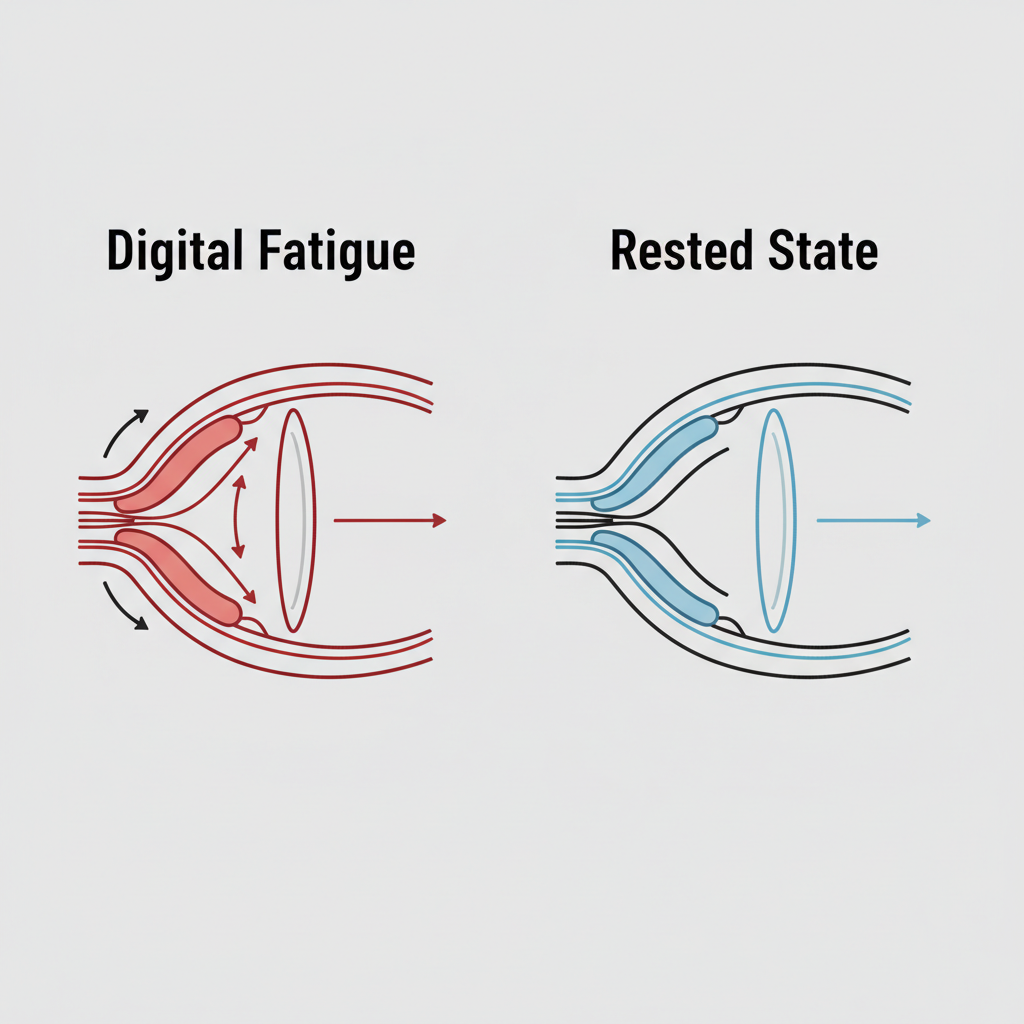
Think of your eye's ciliary muscle as a tiny, powerful lens adjuster. As you stare at a close-up screen, this muscle contracts to keep your focus sharp. Holding this contraction for hours on end is like holding a weight at the gym without rest—eventually, the muscle gets exhausted. According to the Cleveland Clinic, this prolonged focusing effort, combined with a reduced blink rate, is the true cause of Digital Eye Strain (DES), not the blue light itself.
This is why even with the best blue light filtering lenses, you might still feel that end-of-day strain. Those glasses are an excellent first line of defense, filtering the high-energy visible (HEV) light linked to sleep disruption. But they don't stop your ciliary muscle from doing the heavy lifting. To address the root cause of the fatigue, we need to look at supporting the muscle itself from the inside out.
Astaxanthin: A Biological Shield for Your Hardest-Working Muscle
Astaxanthin (pronounced "asta-zan-thin") is a potent antioxidant and anti-inflammatory compound that gives salmon, shrimp, and flamingos their characteristic pinkish-red hue. It's produced by a microalgae called Haematococcus pluvialis as a protective mechanism against environmental stress, like intense UV light.
What makes astaxanthin unique for eye health is its molecular structure. It is both water- and fat-soluble, allowing it to cross the blood-retinal barrier—a highly selective membrane that prevents most substances from reaching the delicate tissues of the eye. Once there, it can directly benefit the ciliary muscle, retina, and other crucial structures.
In the world of antioxidants, astaxanthin is a powerhouse. Research suggests it is significantly more powerful than other common antioxidants at neutralizing damaging free radicals (Reactive Oxygen Species, or ROS) that are generated by stress, UV light, and metabolic processes. One study even found its anti-inflammatory effects on certain eye tissues were comparable to the steroid medication Prednisolone, but without the associated side effects, highlighting its natural potency.
The Clinical Evidence: More Than Just a Theory
While many supplements have promising theories, astaxanthin is backed by compelling clinical research specifically targeting digital eye strain.
Methodology Note: The following insights are derived from peer-reviewed, randomized controlled trials (RCTs) published in medical journals. These studies compare astaxanthin to a placebo to isolate its specific effects on vision and eye fatigue.
1. Measurable Improvement in Focusing Power
A key measure of ciliary muscle function is the "near-point of accommodation" (NPA), which is the closest point your eyes can focus on clearly. A strained muscle struggles to focus up close. A 4-week RCT published in the Journal of Clinical Therapeutics & Medicines gave participants with eye strain 9 mg of astaxanthin daily. The results were remarkable: the astaxanthin group experienced an average improvement in accommodative power of 1.321 diopters, while the placebo group saw a negligible change. To put that in perspective, that's a significant, measurable restoration of the eye's focusing ability.
2. Enhanced Visual Acuity After Screen Use
Another study looked directly at visual performance after prolonged work on a video display terminal (VDT). Published in Ophthalmologica, this RCT found that participants taking 6 mg of astaxanthin daily for six weeks showed a statistically significant improvement in their visual acuity after a full day of screen work (p=0.011) compared to a placebo group. They also reported a dramatic reduction in subjective symptoms like "difficulty focusing."
3. It’s Safe and Effective for Younger Eyes, Too
With the rise of online learning and gaming, digital eye strain is no longer just an adult problem. Recognizing this, researchers conducted an 84-day RCT on children aged 10-14 who used screens for more than four hours a day. The study, published in Acta Ophthalmologica, found that astaxanthin supplementation effectively lowered both chronic and acute digital eye strain scores (CVS-Q), demonstrating its utility and safety for a younger demographic.
These studies collectively show that astaxanthin works by improving the endurance and recovery of the ciliary muscle, directly combating the physical strain of our digital lives.
A Practical Guide to Using Astaxanthin for Eye Health
Based on clinical findings and practitioner observations, getting the best results from astaxanthin involves more than just taking a pill. Here’s how to use it effectively.
-
Dosage for Digital Fatigue: Most studies showing benefits for eye strain use a daily dose between 6 mg and 12 mg. In clinical practice, a common starting point is 6 mg daily. For periods of intense screen use (e.g., project deadlines, long gaming sessions), some nutrition-focused eye doctors suggest temporarily doubling the dose.
-
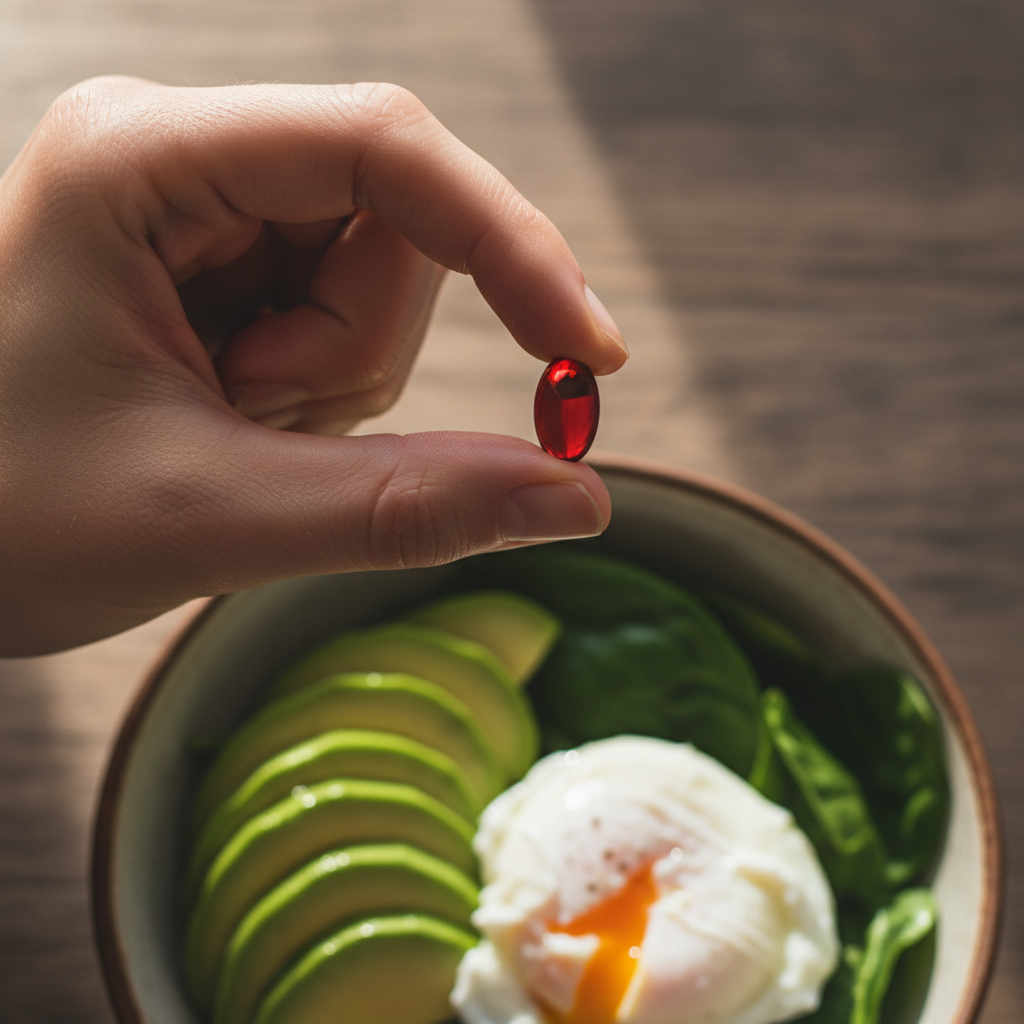
Take It with Fat (This is Non-Negotiable): Astaxanthin is fat-soluble. Taking it on an empty stomach or with a fat-free meal drastically reduces its absorption. To maximize bioavailability, always take your astaxanthin softgel with a meal that contains healthy fats, such as avocado, eggs, olive oil, nuts, or fish.
-
Consistency is Key: Astaxanthin builds up in your body's tissues over time. Sporadic use will yield negligible results. For best effects, it should be taken daily. Most users and clinical studies report noticeable improvements in eye comfort and reduced "screen headaches" within 2 to 4 weeks of consistent use.
-
Synergy with Blue Light Glasses: Think of astaxanthin and blue light glasses as a two-part system. The glasses act as the external shield, deflecting a portion of HEV light before it reaches your eye. Astaxanthin works as the internal shield, strengthening your eye's resilience to the strain that gets through and helping the ciliary muscle recover more efficiently.
-
Astaxanthin vs. Omega-3s: While both are beneficial for eye health, they address different issues. Omega-3 fatty acids are primarily known for supporting the lipid layer of the tear film, making them a great choice for combating dryness. Astaxanthin’s primary benefit for screen users is its targeted action on ciliary muscle fatigue and accommodation.
A Holistic Approach to Modern Eye Wellness
The demands of the digital age require a modern approach to eye care. While ergonomic adjustments and tools like blue light filtering glasses are essential for creating a healthier workspace, they only address external factors. The internal, biological strain on our eyes is a critical piece of the puzzle that is often overlooked.
Astaxanthin offers a scientifically-backed way to fortify your eyes from within. By improving the endurance and recovery of the ciliary muscle, it directly targets the root cause of accommodative fatigue. It doesn’t replace the need for good habits like taking screen breaks, but it provides a powerful nutritional backstop, helping your eyes better withstand the unavoidable pressures of a screen-filled world.
Adding this super-antioxidant to your daily routine, especially when combined with quality eyewear, represents a comprehensive strategy for maintaining long-term vision comfort and health in an increasingly digital life.
Disclaimer: This article is for informational purposes only and does not constitute professional medical advice. Always consult with a qualified healthcare provider before beginning any new supplement regimen, especially if you have pre-existing health conditions, are pregnant or nursing, or are taking other medications.
References
- Nitta, T., et al. (2005). Effects of astaxanthin on accommodation and asthenopia - Dose finding study in healthy volunteers. Journal of Clinical Therapeutics & Medicines, 21(5), 543-556.
- Nagaki, Y., et al. (2002). Effects of astaxanthin on accommodation, critical flicker fusion, and pattern visual evoked potential in visual display terminal workers. Journal of Traditional Medicines, 19(5), 170-173.
- Giannaccare, G., et al. (2020). A Scoping Review on the Clinical Use of Astaxanthin in Ocular Diseases. Marine Drugs, 18(7), 357.
- Pérez-Regalado, S., et al. (2024). Efficacy of an Astaxanthin-Based Formulation on Chronic and Acute Digital Eye Strain. Acta Ophthalmologica, 102, e747-e755.
- Nagaki, Y., et al. (2006). The supplementation effect of astaxanthin on accommodation and asthenopia. Journal of Clinical Therapeutics & Medicines, 22(1), 41-54.
- Bajic, N. (2022). Do Blue Light Blocking Glasses Actually Work? Cleveland Clinic Health Essentials. Retrieved from health.clevelandclinic.org/do-blue-light-blocking-glasses-actually-work.
- Ohgami, K., et al. (2003). Effects of astaxanthin on lipopolysaccharide-induced inflammation in vitro and in vivo. Investigative Ophthalmology & Visual Science, 44(6), 2694-2701.