

Can Affordable Sunglasses Still Offer Full UV Safety?
The Great Sunglass Myth: Why Lens Darkness Doesn't Equal UV Safety
A common and dangerous misconception is that darker sunglass lenses offer better protection from the sun's harmful ultraviolet (UV) radiation. In reality, the tint or color of a lens has almost nothing to do with its ability to block UV rays. This protection comes from an invisible chemical coating applied to the lens or from UV-absorbing properties inherent in the lens material itself.
This creates what eye care professionals call the "darkness fallacy." Wearing dark sunglasses that lack certified UV protection can be more hazardous than wearing no sunglasses at all. As highlighted in research from the MD Anderson Cancer Center, dark lenses cause your pupils to dilate, or open wider, to let in more light. If the lenses aren't blocking UV rays, this dilation allows an even greater amount of damaging radiation to enter your eye, increasing the risk for conditions like cataracts and macular degeneration.
How to Verify True UV Protection
So, how can you be sure your glasses are safe? The key is to look for a label or sticker that explicitly states "UV400" or "100% UV Protection." This certification ensures the lenses block all light rays with wavelengths up to 400 nanometers, which covers the entire spectrum of UVA and UVB rays. A technical report in PubMed criticizes older standards that only protected up to 380 nm, noting the 380-400 nm range contains 45% more UV energy, making the UV400 standard a medical necessity.
Here’s a quick checklist to ensure your affordable sunglasses are truly safe:
- Check the Label: First and foremost, look for a "UV400" or "100% UV Protection" sticker or etching on the lens. Reputable manufacturers always include this.
- Consider the Material: Many modern sunglasses, even affordable ones, use polycarbonate lenses. This material is lightweight, impact-resistant, and naturally blocks 100% of UV rays without needing a special coating.
- Get a Professional Test: If you have any doubts, you can take your sunglasses to an optical shop. As noted by University of Utah Health, most have a device called a UV photometer and can test your lenses for you, often for free.
Beyond UV: Essential Safety Standards for All Eyewear
While UV protection is critical, it’s not the only safety factor. In the United States, all sunglasses—regardless of price—must meet specific federal standards for durability and clarity to be legally sold.
Impact Resistance: The FDA's Non-Negotiable Rule
One of the most important safety regulations is for impact resistance. According to the FDA's guidance (21 CFR 801.410), all sunglass and prescription lenses must pass the "drop ball test." This test involves dropping a 5/8-inch steel ball from a height of 50 inches onto the lens. The lens cannot chip, crack, or break to pass. This ensures your eyewear won’t shatter into dangerous shards if you accidentally drop them or if they are struck by a small object, providing a fundamental level of eye safety.
Optical Clarity: Avoiding Distortion and Headaches
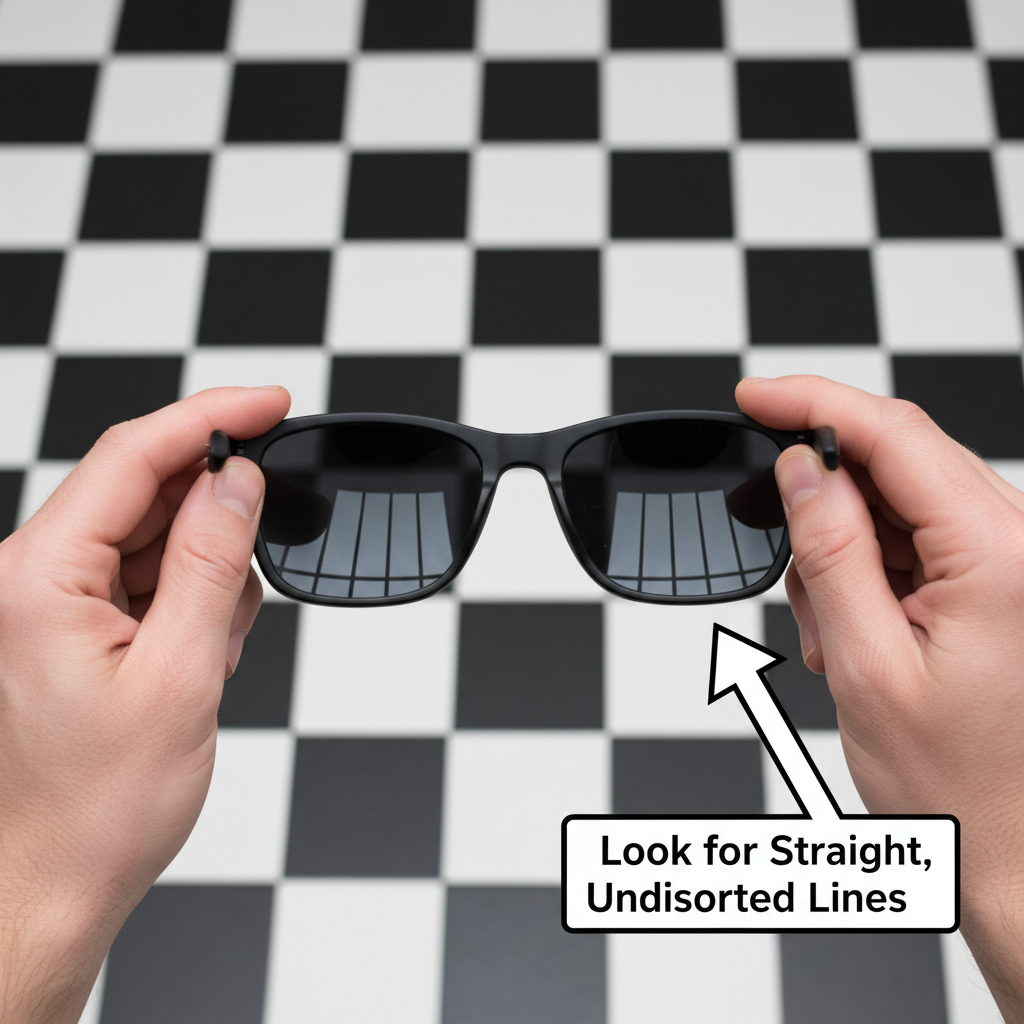
Another sign of quality, even in affordable pairs, is optical clarity. Poorly made lenses can have distortions, waves, or imperfections that force your eyes to strain, leading to headaches and fatigue. The American Academy of Ophthalmology offers a simple DIY quality test: hold the glasses at arm's length and look at a straight line, like the edge of a door or a floor tile. Move the glasses slowly across the line. If the line wiggles, curves, or distorts, the lenses are optically poor. A quality lens will keep the line straight.
Making Smart Choices: A Buyer's Guide to Affordable, Safe Sunglasses
Armed with the knowledge of what constitutes a safe pair of sunglasses, you can confidently shop for affordable options. It’s not about the price tag; it’s about verifying the right features.
Frame Fit and Peripheral Protection
The style of your frame contributes significantly to its protective ability. A study on ocular UV exposure published in PMC found that medium-sized, flat frames offered the least protection due to "peripheral light leakage" from the top and sides. For maximum safety during high-exposure activities like skiing or being on the water, choose oversized or wraparound styles. A good rule of thumb is to check the gap between your temple and the lens; if it’s wider than about 6 millimeters, a significant amount of UV radiation can still reach your eye from the side.
Comparison Table: Certified vs. Unverified Sunglasses
This table breaks down the crucial differences between unverified sunglasses you might find at a street market and certified affordable eyewear from a trusted vendor.
| Feature | Unverified "Cheap" Sunglasses | Certified Affordable Sunglasses |
|---|---|---|
| UV Protection | Uncertain, often none. High risk of eye damage. | Certified UV400 (blocks >99% of UVA/UVB rays) |
| Impact Resistance | Likely fails FDA standards; may shatter on impact. | FDA Compliant (passes the mandatory Drop Ball Test) |
| Optical Clarity | Often contains distortions, causing headaches and eye strain. | Optically clear, providing comfortable and sharp vision. |
| Verification | No labels, no documentation, no accountability. | Clearly labeled "UV400" or "100% UV Protection." |
For more guidance on vetting online eyewear retailers, our checklist on buying prescription glasses online safely provides a comprehensive framework that also applies to non-prescription sunglasses.
Frequently Asked Questions (FAQ)
Q1: Are my old sunglasses still safe?
It's possible for UV-protective coatings to degrade over time, especially with heavy use and exposure to sunlight. Research has shown that some lenses can lose their UV-blocking efficacy after just 50 hours of simulator exposure. If your sunglasses are several years old or heavily scratched, it’s a good idea to have them tested or consider replacing them.
Q2: Do kids really need sunglasses?
Yes, absolutely. According to the Mayo Clinic, UV damage is cumulative over a lifetime, and children's eyes are particularly vulnerable because their internal lenses are clearer, allowing more UV radiation to reach the retina. Starting sun protection early is crucial for long-term eye health.
Q3: What is the best lens color for sunglasses?
While color doesn't affect UV protection, it does impact vision. The Cleveland Clinic advises that gray and green tints are best for driving as they provide the most accurate color perception. Amber and brown lenses enhance contrast, which can be helpful for activities like fishing or for individuals with certain eye conditions. For a deeper dive, you can explore what sunglass tints are best for high prescriptions.
Q4: Are polarized lenses always better?
Polarized lenses are great for reducing glare from flat surfaces like water and roads, but they are not inherently better for all situations. The Federal Aviation Administration (FAA) advises pilots against them because they can interfere with reading digital cockpit displays. You might notice a similar effect when trying to view your smartphone screen.
Wrapping Up: Your Smart Buyer's Checklist
Finding safe, effective, and affordable sunglasses is entirely possible when you prioritize certification over price. A high cost is no guarantee of quality, and a low price doesn’t automatically signal a compromise on safety. By focusing on verified features, you can protect your eyes without overspending.
Remember these key takeaways:
- Demand UV400: This non-negotiable feature is the gold standard for eye protection.
- Ignore Darkness: Lens tint is a cosmetic choice, not a safety indicator.
- Check for Clarity: Ensure your vision is crisp and distortion-free.
- Cover Up: Choose frames that offer ample coverage to block light from all angles.
By following this guidance, you can make an informed decision and enjoy the sun safely and stylishly.
Disclaimer: This article is for informational purposes only and does not constitute professional medical advice. Consult with a qualified eye care professional for any concerns about your eye health, especially if you have pre-existing conditions. They can provide personalized recommendations for your vision needs.
References
- MD Anderson Cancer Center: 9 things to know about sunglasses, eye protection and cancer
- SPIE: UV protection by sunglasses: a review of the Brazilian standards and the influence of the lenses color and category on the solar ultraviolet blockage
- University of Utah Health: How to Tell if Your Sunglasses Are Really Protecting Your Eyes
- FDA Guidance: Impact-Resistant Lenses: Questions and Answers
- American Academy of Ophthalmology: How to Choose the Best Sunglasses
- PMC (NCBI): Ocular UV-Radiation and Carcinogenesis of the Eye & Adnexa
- Mayo Clinic: Mayo Clinic Minute: Why sunglasses are a must-wear
- Cleveland Clinic: Do Sunglasses Actually Protect Your Eyes?
- Federal Aviation Administration: Sunglasses for Pilots