


What If My New Online Prescription Feels Wrong?
That "Off" Feeling: A Troubleshooting Guide for New Prescription Glasses
Getting a new pair of prescription glasses should be exciting—a gateway to sharper, clearer vision. But what happens when you put them on and something feels wrong? You might experience blurriness, eye strain, or a sense of distortion. While it’s tempting to assume the prescription is incorrect, the issue is often more nuanced. A normal adjustment period is common, but persistent discomfort can signal a genuine error.
This guide is designed to help you navigate that uncertainty. We’ll walk through the difference between normal adaptation and a real problem, provide a step-by-step checklist to identify the culprit, and outline the exact steps to get the perfect pair of glasses you paid for.
TL;DR: Your Quick Troubleshooting Plan
Give It Time: Wear your new glasses consistently for 3–7 days. Mild distortion or eye strain is often part of the normal adjustment period, especially with new prescriptions or lens types like progressives.
Check for Red Flags: Severe headaches, nausea, or persistent double vision within the first 48 hours are not normal. This usually points to an error.
Verify the Details: Systematically check your entered prescription against your doctor's official copy. Look for swapped numbers for Right Eye (OD) and Left Eye (OS), incorrect signs (+/-), or typos in Sphere (SPH), Cylinder (CYL), or Axis values.
Confirm Your Pupillary Distance (PD): An incorrect PD is one of the most common causes of issues. A small error of 1–2 mm can cause blur, while larger errors often make glasses feel completely wrong.
Contact Support: If you’ve run through the checks and still have issues, contact the customer support team with your findings. A clear description of the problem will help expedite a solution.
Is It an Adjustment Period or a Real Problem?
Your brain is incredibly adept at processing visual information. When you wear a new prescription, even one that is perfectly accurate, your brain needs time to adapt to the new way of seeing. This is the adjustment, or adaptation, period.
Common Symptoms of a Normal Adjustment Period:
Minor Eye Strain: Your eye muscles are working differently, which can cause some initial fatigue.
"Fishbowl" Effect: The periphery of your vision might seem curved or distorted. This is very common with changes in astigmatism correction or with stronger prescriptions.
Slight Alteration in Depth Perception: Objects may appear closer or farther away than you're used to.
For minor prescription changes, this feeling typically subsides within a few days to a week. For more significant changes or for first-time progressive lens wearers, the adjustment period can last up to two weeks. The key is consistent wear. Taking them off and on frequently can prolong the process.
However, some symptoms go beyond normal adaptation and are red flags indicating a potential error.
| Normal Adjustment Symptoms (First 3-7 Days) | Red Flag Symptoms (Contact Support) |
|---|---|
| Mild, temporary eye strain or fatigue | Severe, persistent headaches |
| A slight "fishbowl" or distorted peripheral view | Nausea, dizziness, or motion sickness |
| A feeling of things being slightly "off" | Persistent double vision |
| Minor issues with depth perception | One eye is clear while the other is very blurry |
If you experience any of the red flag symptoms within the first 24–48 hours, it's best to stop wearing the glasses and begin the troubleshooting process.
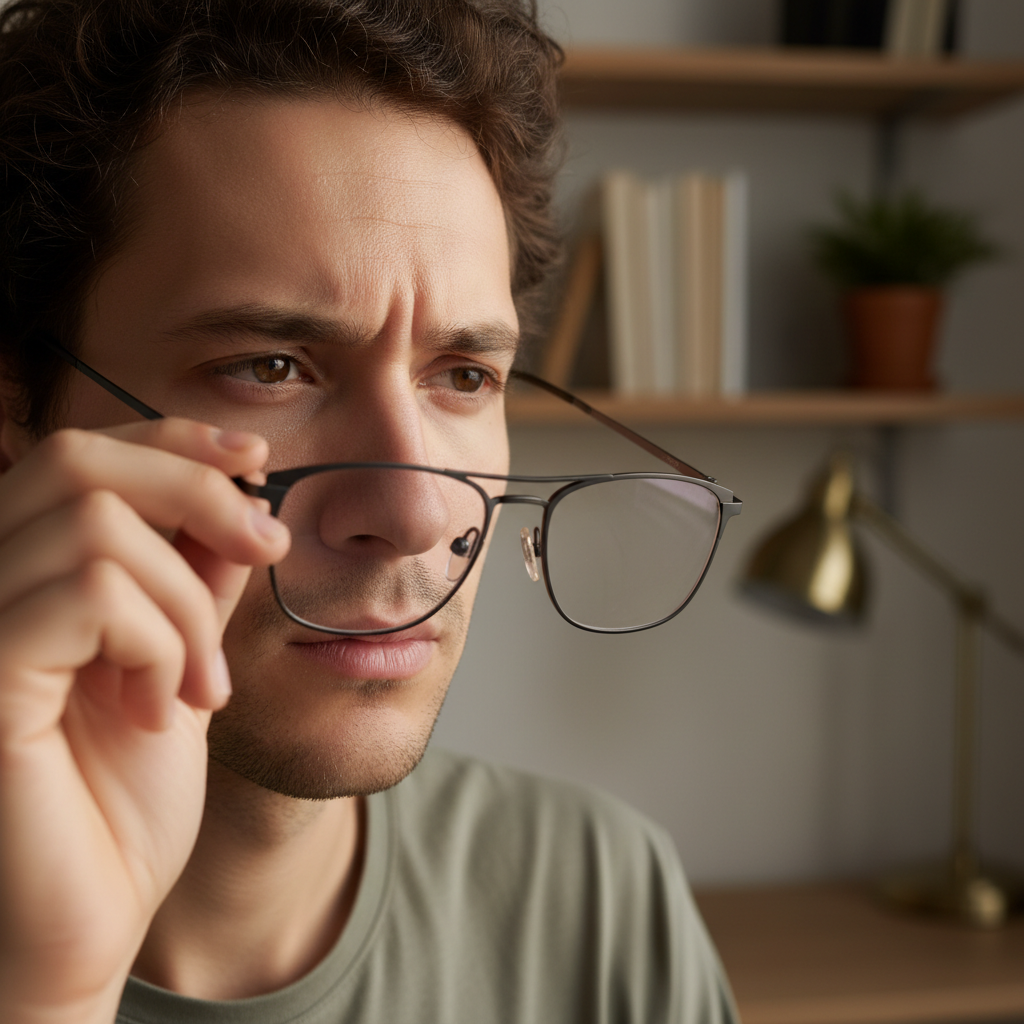
Your Troubleshooting Checklist: Pinpointing the Problem
If your symptoms point toward a potential error, systematically working through the most common culprits can help you identify the exact issue. This information is invaluable when you contact customer service for a resolution.
Step 1: Re-Examine Your Prescription Entry
The first place to check is the information you provided. A simple typo is a frequent source of error. Pull out the official prescription copy your eye doctor gave you. Under the FTC's Eyeglass Rule, your prescriber is required to give you a copy of your prescription immediately following your exam, ensuring you have the right to purchase glasses from any vendor.
Carefully compare your doctor's document with the prescription you entered online. Look for:
Swapped OD and OS Values: OD (Oculus Dexter) is your right eye, and OS (Oculus Sinister) is your left. It’s easy to mix these up during data entry.
Incorrect Signs: Check the plus (+) and minus (-) signs for your Sphere (SPH) values. A "+" indicates farsightedness, while a "-" indicates nearsightedness. A wrong sign will make your vision significantly worse.
Cylinder (CYL) and Axis Errors: If you have astigmatism, these values are critical. A small typo in the Axis value can cause significant blur and distortion.
Step 2: Verify Your Pupillary Distance (PD)
Pupillary Distance (PD) is the measurement in millimeters between the centers of your pupils. This measurement tells the lab where to center the optical sweet spot of your lenses. If the optical center is misaligned with your pupil, it can induce blur, eye strain, and a pulling sensation.
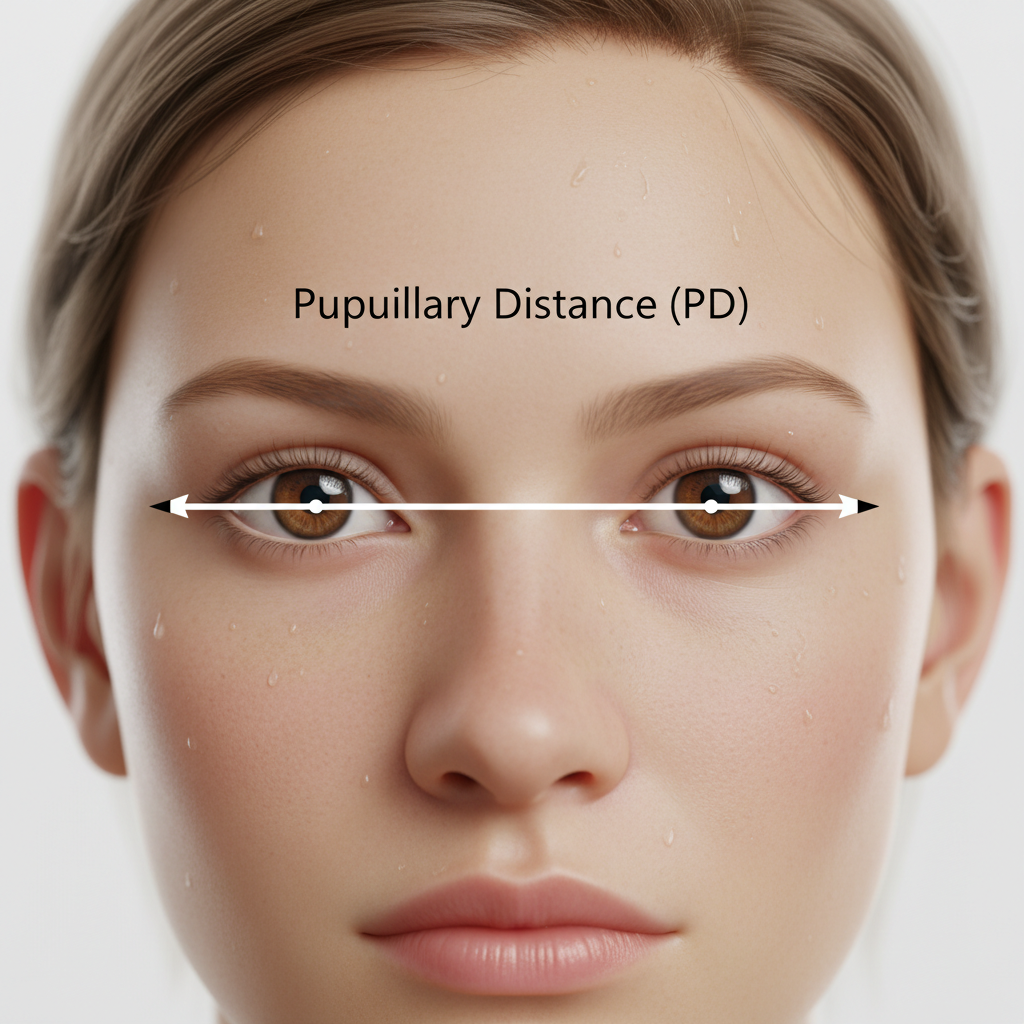
This is the single most common measurement error in online orders.
Minor Errors (1–2 mm): For most people, a very small PD error might cause slight edge distortion or a feeling that something is "off," but it may not be immediately debilitating.
Major Errors (>3 mm): An error of 3 mm or more is almost always noticeable and is a frequent cause of discomfort, strain, and the feeling that the glasses are "wrong."
Many prescriptions from doctors do not include the PD, as it's traditionally measured by the optician fitting the frames. If you measured it yourself, it’s worth re-measuring with a reliable tool or app to ensure accuracy. Also, confirm whether you used a single PD (e.g., "63") or a dual PD (e.g., "31/32").
Step 3: Confirm the Lens Type and Material
Review your order confirmation to ensure you selected the correct type of lens for your needs.
Single Vision Distance vs. Reading: Did you order glasses for distance when you needed them for reading, or vice versa?
Progressive Lenses: These lenses have multiple viewing zones and require a longer adjustment period. However, if your vision is blurry at all distances after a week, there might be an issue with the lens measurements or corridor height.
High-Index Lenses: For very strong prescriptions, the fit of the frame becomes more critical. The distance between the lens and your eye (vertex distance) and the tilt of the frame (pantoscopic tilt) can alter the effective power. A frame that sits too far from your face or at the wrong angle can make a perfect prescription feel incorrect.
Step 4: Assess the Frame Fit
A poorly fitting frame can sometimes be the culprit.
Nose Pads: If the glasses are sliding down your nose, the optical center will no longer be aligned with your pupils. Adjusting the nose pads can often fix this.
Temple Arms: The arms of the glasses should be snug enough to hold the frames in place without causing pressure behind your ears. A gentle bend can often improve the fit.
Frame Wrap: Highly curved or "wrapped" frames can induce distortion, especially with higher prescriptions, if the lenses are not properly compensated for the curve.
Debunking a Common Myth: "All Discomfort Means a Bad Prescription"
A pervasive myth is that any initial discomfort with new glasses automatically means the prescription is wrong or the glasses were made incorrectly. In reality, as we've covered, the brain's adjustment period is a physiological necessity. Forcing your brain to immediately accept a new visual input without any adaptation symptoms would be like running a marathon without warming up.
The key is to differentiate between productive adaptation and non-productive error signals. Mild strain is your visual system recalibrating. Sharp pain, nausea, or debilitating blur are error signals telling you to stop and troubleshoot.
How to Get Your Glasses Corrected
If you have completed the checklist and are confident there is an error, the next step is to seek a resolution. The good news is that reputable online retailers have processes in place for this exact situation. Studies, such as one published in PubMed on the accuracy of online eyewear, have shown that manufacturing and prescription errors can occur, making customer support and a good remake policy essential.
Gather Your Information: Before contacting customer support, have your order number, your original prescription from your doctor, and the notes from your troubleshooting checklist ready.
Clearly Describe the Issue: Explain your symptoms precisely. For example, instead of saying "they feel weird," say "my right eye is blurry when I look at a distance, and I get a headache after 20 minutes."
Follow the Process: The support team will likely ask you to confirm your prescription and PD. They will then outline the remake process. Typically, a decision on a remake is made within 48–72 hours. Once approved, the new pair usually ships within 7–14 business days.
Discuss Return Options: If a remake is not an option or if the issue is complex, ask about local return options to avoid potential friction with international shipping.

Wrapping Up: Your Path to Clear Vision
Discovering that your new glasses feel wrong can be frustrating, but it's a solvable problem. By understanding the difference between a normal adjustment period and a genuine error, you can approach the issue with confidence. Use the troubleshooting checklist to systematically investigate the cause, from simple data entry mistakes to your pupillary distance measurement.
Remember to be patient during the initial adaptation phase, but don't hesitate to act if you experience red flag symptoms. Armed with accurate information and a clear understanding of the potential issues, you can work effectively with customer support to get the sharp, comfortable vision you deserve.
Frequently Asked Questions (FAQ)
1. How long does it really take to get used to new glasses?For most people with minor prescription changes, it takes about 3-7 days. For those with significant changes, new astigmatism correction, or first-time progressive lenses, it can take up to two weeks. Consistent wear is the key to a faster adjustment.
2. What is the difference between a single PD and a dual PD?A single PD is the total distance between your pupils (e.g., 64mm). A dual PD measures the distance from the center of your nose to each pupil individually (e.g., 31.5/32.5mm). A dual PD is more precise, especially if your face is not perfectly symmetrical, and is highly recommended for progressive lenses.
3. Can a 1-2mm PD error really cause problems?Yes, for some people it can. While many may not notice a tiny error, sensitive individuals or those with high prescriptions can experience eye strain, headaches, or blurred peripheral vision. This is because the optical center of the lens is not perfectly aligned with their pupil.
4. What should I do if I think my doctor made a mistake on the prescription?If you suspect the prescription itself is the issue, the best course of action is to contact your eye doctor's office. They can review your chart and may offer a "prescription re-check" to confirm the values, often at no charge if done within a certain timeframe after your original exam.
Disclaimer: This article is for informational purposes only and does not constitute professional medical advice. If you experience severe eye pain, sudden vision changes, or other serious symptoms, please consult a qualified eye care professional immediately.
References
Cleveland Clinic. (n.d.). How To Read Your Eye Prescription. Retrieved from https://health.clevelandclinic.org/how-to-read-your-eye-prescription
Federal Trade Commission. (n.d.). Buying Prescription Glasses or Contact Lenses: Your Rights. Retrieved from https://consumer.ftc.gov/buying-prescription-glasses-or-contact-lenses-your-rights
The Vision Council. (n.d.). How Prescription Glasses and Contact Lenses are Made. Retrieved from https://thevisioncouncilfoundation.org/protect-your-eyes/how-prescription-glasses-and-contact-lenses-are-made-crafting-your-perfect-eyewear/
Dahir, N. B. (2011). Evaluation of a sample of online prescription spectacle eyeglasses. PubMed. Retrieved from https://pubmed.ncbi.nlm.nih.gov/21871395/