

Visual Snow Syndrome: Can Tinted Lenses Reduce the Static?
Executive Summary
Visual Snow Syndrome (VSS) is a complex neurological condition characterized by persistent, static-like dots across the entire field of vision. It is often accompanied by other debilitating symptoms, most notably severe light sensitivity (photophobia). While there is no definitive cure, managing environmental triggers is a primary strategy for improving a patient's quality of life. This article provides an evidence-based exploration of how specialized tinted lenses, such as the FL-41 tint, can serve as a critical tool in reducing the visual stress and discomfort associated with VSS. We will examine the neurological basis of the condition, the mechanism by which therapeutic tints may offer relief, and the practical, real-world considerations for selecting and fitting these specialized glasses.
Understanding Visual Snow Syndrome: More Than Just Static
For those who have it, Visual Snow Syndrome is a constant reality. The primary symptom is a persistent, flickering field of tiny dots, often compared to television static or looking at a pointillist painting. However, the condition is far more than just "visual static." According to a comprehensive review in the Frontiers in Neurology, VSS is a network disorder of the brain, not a problem with the eyes themselves. Functional MRI (fMRI) studies have revealed metabolic alterations and hyperactivity in the brain's visual processing centers, specifically the lingual gyrus and primary visual cortex.
This neurological hyperactivity manifests in a range of symptoms beyond the static. A high percentage of individuals with VSS also experience:
- Photophobia (44-81%): An abnormal and often painful sensitivity to light. This is one of the most common and disruptive symptoms.
- Palinopsia: The persistence or recurrence of visual images after the stimulus has been removed. This includes afterimages and trailing images.
- Nyctalopia: Impaired night vision.
- Tinnitus: A persistent ringing or buzzing in the ears, highlighting the condition's impact beyond the visual system.
- Comorbid Conditions: There is a significant overlap with migraine, with 52-72% of VSS patients also having a history of migraine headaches.
Because VSS is a brain-based processing issue, management strategies often focus on calming this neurological over-stimulation. This is where controlling the light that enters the visual system becomes a crucial therapeutic intervention.

How Tinted Lenses Can Help Manage Light Sensitivity
For a person with VSS, everyday lighting can be a significant source of discomfort. Fluorescent lights in an office, the glare from a computer screen, or bright sunlight can all trigger or worsen symptoms. Therapeutic tinted lenses work by filtering specific wavelengths of light before they reach the eye, thereby reducing the amount of "noisy" information sent to an already over-stimulated brain.
The most studied tint for light-sensitive conditions like migraine and VSS is the FL-41. This is a specific rose-colored tint developed to block the blue-green light spectrum (around 480-520 nm). This particular range of light is known to be a primary trigger for photophobia and can exacerbate the hyperexcitability of the visual cortex.
By selectively blocking these triggering wavelengths, FL-41 and similar precision tints aim to:
- Reduce Overall Light Intensity: Making bright environments more tolerable.
- Decrease Visual Stress: Lowering the triggering input to the brain can help reduce the perceived intensity of the static and other symptoms.
- Improve Visual Comfort: By cutting down on glare and harsh light, the lenses can make daily tasks like reading or using a computer less strenuous.
It is not a cure, but rather a management tool that can significantly improve functional vision and reduce the daily burden of the condition.

Practical Application: Finding the Right Tint and Frame
The response to tinted lenses is highly individual. What works for one person with VSS may not work for another. Therefore, a careful, methodical approach is necessary. Insights from clinical practice highlight several key factors for success.
Methodology Note: The following recommendations are based on established clinical heuristics and patient-reported outcomes in neuro-optometry practices. They are intended as a guide for discussion with a qualified healthcare professional.
- Start with Lighter Tints: While it may seem counterintuitive, darker tints are not always better for severe photophobia. A very dark lens can increase contrast, which may paradoxically make the visual static appear more pronounced in certain lighting. A common starting point is a lighter tint with 30-40% absorption to gauge a patient's initial response.
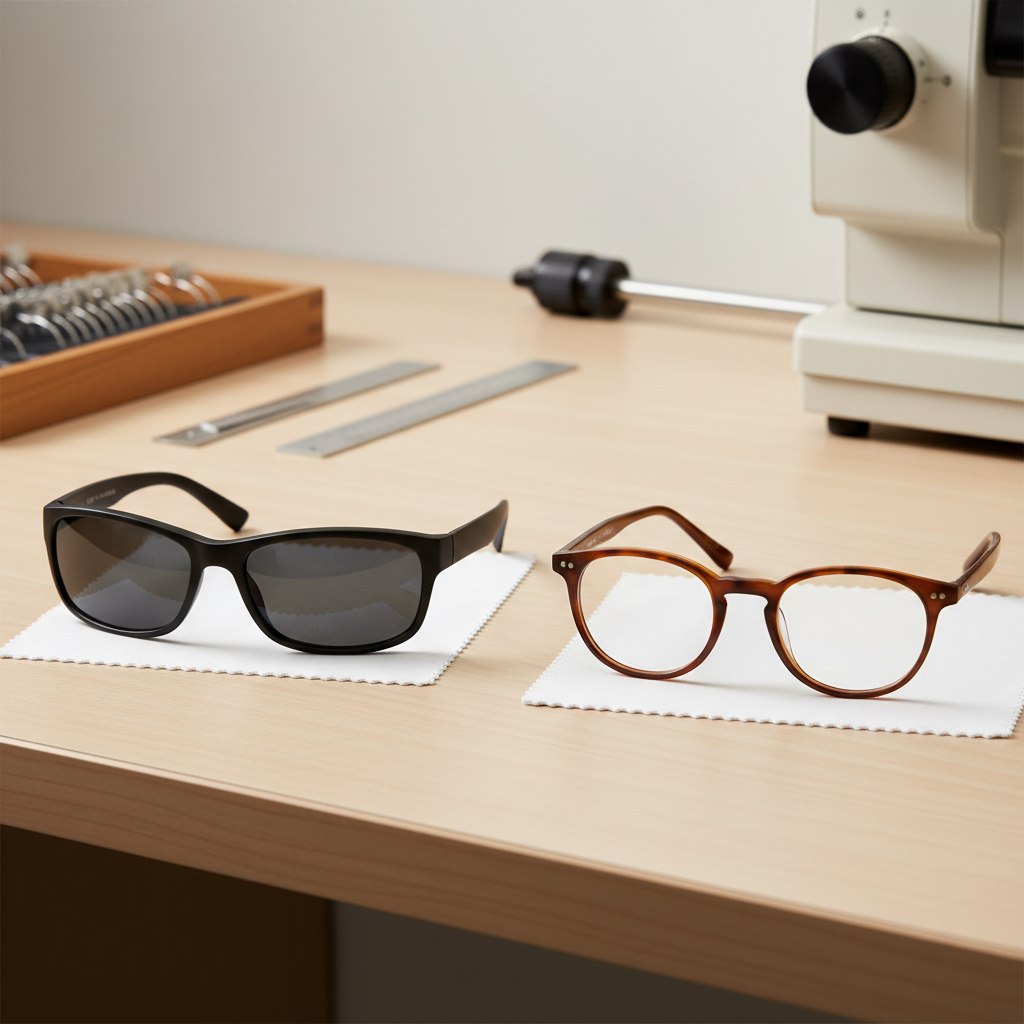
- Frame Coverage is Critical: A significant portion of triggering light enters the eye from the periphery (the sides, top, and bottom of the frames). A wraparound frame style or frames with side shields can provide substantially more relief than standard frames by creating a better seal against ambient light.
- Meticulous Fitting Matters: The therapeutic effect of a precision tint can be altered by the way the glasses sit on the face. Factors like vertex distance (how far the lens is from the eye) and pantoscopic tilt (the angle of the lens) must be carefully adjusted by a professional. Even minor shifts can change the effective tint density and visual field.
- The Patient Diary: To objectively measure if a tint is working, practitioners often recommend a two-week trial period. During this time, the patient keeps a simple diary, tracking symptom severity (e.g., on a scale of 1-10) in different lighting environments (office fluorescents, natural sunlight, screen time). This data provides a more reliable measure of efficacy than subjective memory alone.
A Holistic and Hopeful Outlook
Tinted lenses are a powerful tool, but they are most effective as part of a comprehensive management plan. Given the high comorbidity with conditions like anxiety and migraine, a multi-faceted approach is often necessary. Strategies may include stress management techniques, dietary adjustments for migraine, and consultation with neurologists or neuro-optometrists who specialize in VSS.
Research has identified a "vicious cycle" where high levels of the stress hormone cortisol can aggravate neurological conditions, which in turn causes more stress. Finding ways to manage this, alongside visual aids like tinted lenses, can contribute to an overall improvement in well-being.
Living with Visual Snow Syndrome presents daily challenges, but understanding the neurological nature of the condition opens the door to effective management strategies. Therapeutic tinted lenses offer a non-invasive, practical way to regain control over your visual environment. By filtering disruptive light, these lenses can reduce the constant neurological strain, lessen the impact of photophobia, and help turn down the "static." For many, it is a critical step toward clearer, more comfortable vision and a better quality of life.
Disclaimer: This article is for informational purposes only and does not constitute professional medical advice. The information contained herein is not intended to diagnose, treat, cure, or prevent any disease. Always seek the advice of a qualified healthcare provider with any questions you may have regarding a medical condition. Never disregard professional medical advice or delay in seeking it because of something you have read in this article.
References
- Puledda, F., Schankin, C., & Goadsby, P. J. (2021). Visual Snow Syndrome: A Clinical and Pathophysiological Update. Frontiers in Neurology, 12, 649_ visual-snow-syndrome-a-clinical-and-pathophysiological-update_._
- Yoo, Y. J., Yang, H. K., & Hwang, J. M. (2021). Visual Snow Syndrome: A Comprehensive Review. Journal of Clinical Neurology, 17(2), 167–173. Available at: https://pmc.ncbi.nlm.nih.gov/articles/PMC8092638/
- Szarvas, M., et al. (2021). Visual Snow: A Disorder of Visual Processing. Frontiers in Neurology, 12. Available at: https://www.frontiersin.org/journals/neurology/articles/10.3389/fneur.2021.724072/full
- Sabel, B. A., et al. (2018). Vision loss, stress and depression. Restorative Neurology and Neuroscience, 36(3), 341-354. Available at: https://pmc.ncbi.nlm.nih.gov/articles/PMC5972137/