

Light Transmission (VLT): Why 99% Clarity Matters for Your Vision
TL;DR: The Clarity Equation
Visible Light Transmission (VLT) measures the percentage of light that reaches your eyes through a lens. An uncoated plastic lens blocks about 8% of light, resulting in a VLT of 92%. A premium anti-reflective (AR) coating allows up to 99.5% of light to pass through. This seemingly small 7.5% difference dramatically reduces glare, improves contrast for safer night driving, and minimizes eye strain during screen use by making your vision sharper and more effortless.
The Unseen Barrier: How Reflections Compromise Your Vision
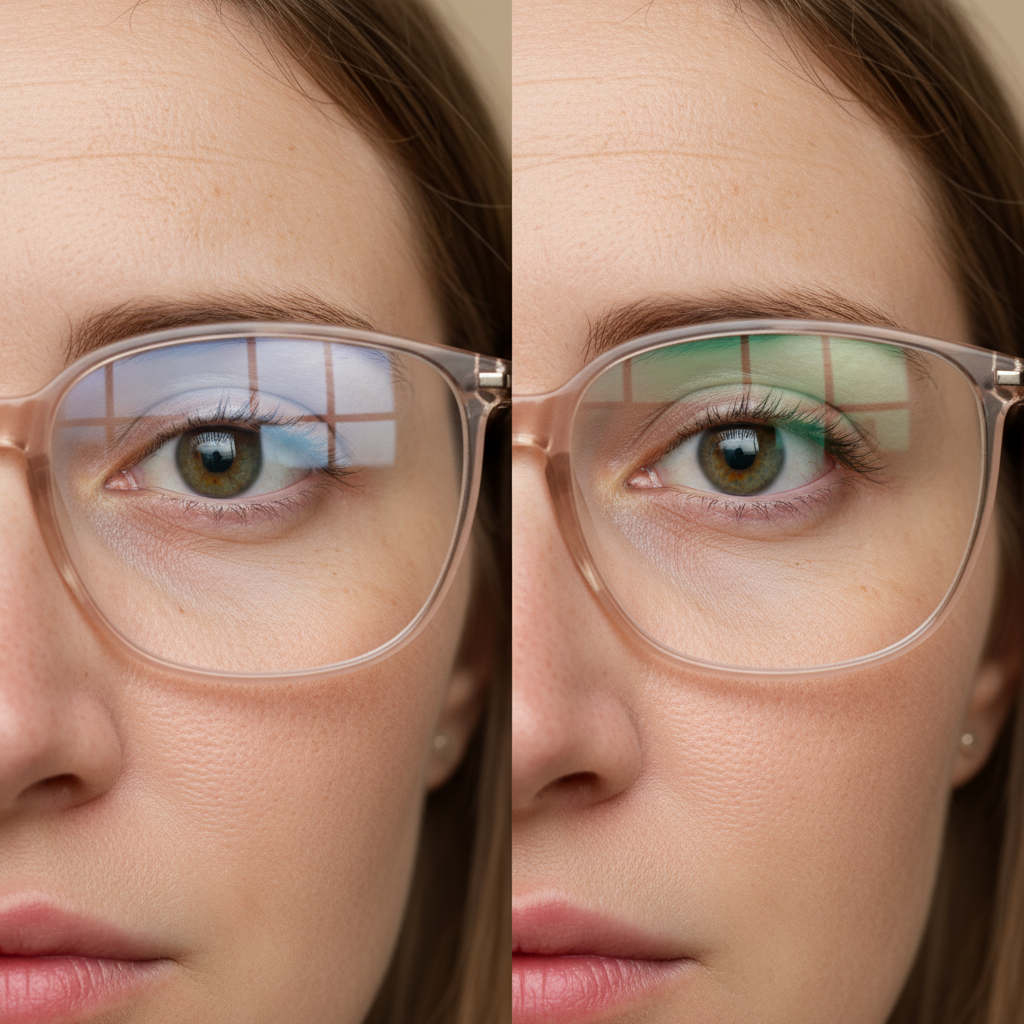
Every surface reflects some light, and eyeglass lenses are no exception. A standard, uncoated lens acts like a faint mirror, creating multiple reflections that interfere with your sight. You might notice it as the glare from a streetlight at night, the reflection of your own eye on the back of the lens, or the distracting image of a window behind you.
These reflections do more than just annoy you; they actively degrade your vision. An uncoated lens can lose up to 8% of available light to reflections from both its front and back surfaces. This means only about 92% of the light from the world is actually reaching your eye to form a clear image. Your brain must then work harder to process this dimmer, lower-contrast information, which can lead to headaches and visual fatigue.
The solution is an anti-reflective (AR) coating. This is an incredibly thin, multi-layered coating applied to the lens surface. Through a principle of physics called destructive interference, it cancels out the light waves that would otherwise be reflected. A high-quality AR coating can increase the VLT to over 99%, effectively eliminating visible reflections and allowing a clear, uninterrupted stream of light to reach your eye.
Why a 7.5% Light Increase Is a Game-Changer
While a jump from 92% to 99.5% VLT might not sound dramatic, the real-world impact on your visual comfort and safety is profound. Maximizing light is most critical when it's scarce.
Sharper Vision in Low Light and Bad Weather
The most significant benefit of a high-VLT lens is performance during the "shoulder hours" of dawn and dusk, or in adverse weather like rain and fog. In these conditions, every photon of light counts. A premium AR coating ensures your eyes receive the maximum possible information, improving your ability to spot hazards and perceive detail.
For night driving, this is a non-negotiable safety feature. Glare from oncoming headlights and streetlights is significantly muted, reducing the disorienting "starburst" effect. According to a study published in the journal Traffic Injury Prevention, anti-reflective coatings allow up to 99.5% of light through the lens, which can significantly improve reaction times and contrast sensitivity in glaring night conditions. Research has shown that intermittent glare can reduce a driver's ability to detect pedestrians by as much as 38%, a risk that high-VLT lenses directly mitigate.

Reducing Digital Eye Strain
When you stare at a screen, your eyes are battling reflections from the device itself and from overhead lighting. A high-VLT coating eliminates this visual "noise," allowing your eyes to focus on the digital content with less effort. The image appears crisper and has higher contrast, which reduces the accommodative stress on your eye muscles and can lead to significantly less fatigue after a long day of work.
Better Aesthetics
Function aside, high-VLT lenses are nearly invisible. This allows people to see your eyes and expressions clearly, without the distracting barrier of reflections. In photos or video calls, you avoid the bright white glare that can obscure your face, making for a much more natural appearance.
How to Spot a High-Quality AR Coating
Not all anti-reflective coatings are created equal. A budget coating might offer some glare reduction, but it often lacks the durability and advanced properties of a premium product. Here’s what differentiates them.
- Multi-Layer Construction: Premium coatings are more than just one layer. They typically include a hard coat for scratch resistance, multiple anti-reflective layers, and a super-hydrophobic topcoat. This topcoat repels water, oil, and dust, making the lenses easier to clean and keeping them clearer for longer.
- Durability: A common failure point for cheap coatings is peeling or crazing over time. High-quality coatings are bonded to the lens in a vacuum chamber for maximum adhesion, ensuring they last the life of your prescription. As we've discussed in our article, "Do Sunglasses Expire? Understanding UV Coating Longevity," the durability of a coating is key to its long-term performance.
- The Black Card Test: You can perform a simple test at home. Hold your glasses over a black surface or card in a well-lit room. A lens with a premium AR coating will show very faint, if any, reflection; the black card will look almost as dark and clear as if the lens weren't there. A poor coating will reveal a more noticeable white haze or multiple faint reflections, indicating significant light loss.
For individuals with high-prescription lenses, a premium AR coating is essential. The thicker the lens, the more light is lost to internal reflections as it bounces between the front and back surfaces. A high-VLT coating neutralizes this effect, preventing the compounded glare and loss of contrast that can make strong prescriptions uncomfortable.
Care and Maintenance: Protecting Your Investment in Clarity
An advanced AR coating is a piece of optical technology that requires proper care to maintain its peak performance. Using the wrong cleaning methods can permanently damage the hydrophobic layer, reducing its effectiveness and clarity.
The most common mistake is using alcohol-based wipes, harsh household cleaners (like window cleaner), or even the fabric of your shirt. These can strip the delicate outer layers of the coating and grind microscopic debris into the lens, creating fine scratches.
To properly care for your lenses:
- Rinse First: If possible, rinse your lenses with lukewarm water to wash away any abrasive dust or grit.
- Use the Right Solution: Apply a few drops of a pH-neutral lens cleaning spray specifically designed for AR-coated lenses.
- Wipe with Microfiber: Gently wipe the lenses dry with a clean, soft microfiber cloth. Avoid paper towels or tissues, which contain abrasive wood fibers.
Frequently Asked Questions
Why do I see a faint green or purple reflection on my AR lenses? This is the "residual reflex color" and it's a sign that the coating is working. It's impossible to cancel out 100% of reflections across the entire visible spectrum. Lens manufacturers tune their coatings to be most effective in the middle of the spectrum (the yellow-green light our eyes are most sensitive to), which leaves a very faint reflection in the less sensitive purple or green range.
Is a higher VLT always better? For clear prescription glasses intended for general use, yes. The goal is maximum visual information with minimum interference. However, for sunglasses, the VLT is intentionally and precisely lowered by adding tint. This reduces the overall brightness to comfortable levels for sunny conditions, while the AR coating on the back surface prevents bounce-back glare from entering your eye.
Can a scratched AR coating be repaired? Unfortunately, no. The coating is a series of layers bonded at a microscopic level. Once it's scratched, the only solution is to replace the lenses. This is why using a proper cleaning technique and storing your glasses in a case is so important.
Disclaimer: This article is for informational purposes only and does not constitute professional medical advice. Consult with a qualified optometrist or ophthalmologist for any questions regarding your eye health and prescription eyewear.
References
- Tough, Alistair, and Jonathan C. H. Tan. "Anti-reflective coating for spectacle lenses." Traffic Injury Prevention, vol. 25, no. sup1, 2024, pp. S104-S106, doi:10.1080/15389588.2024.2322961.
- Wood, Joanne M., et al. "The impact of glare on pedestrian detection." Lighting Research & Technology, vol. 53, no. 5, 2021, pp. 434-448, doi:10.1177/1477153520963847.