

How to Check if Your Sunglasses Are UV-Protected
TL;DR: How to Verify Sunglass UV Protection
- Check for a "UV400" or "100% UV Protection" Label: This is the first step, but it isn't foolproof.
- The Darkness Myth: Lens tint does not indicate UV protection. Dark lenses without a UV filter are more dangerous than no sunglasses at all.
- Professional Testing: The most reliable method is to have an optician test your lenses with a photometer, which is often a free service.
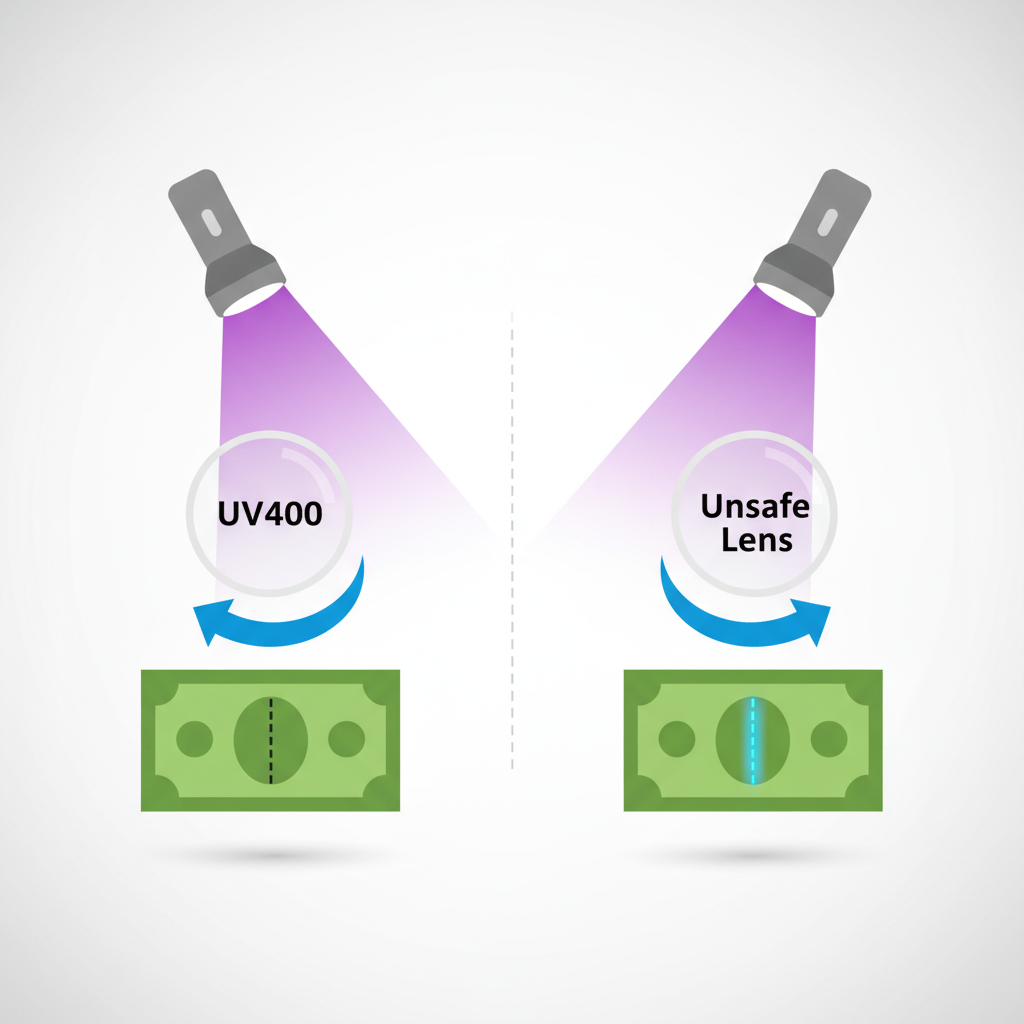
- At-Home Proxy Test: Use a UV flashlight and a fluorescent item (like a banknote) to see if the lens blocks UV light. This is a good pass/fail indicator.
- Frame Coverage Matters: Wraparound or large frames are critical for blocking peripheral UV rays that enter from the side.
- Demand Proof: The best sign of a trustworthy brand is a Certificate of Analysis (CoA) or a transmittance graph showing the lens blocks light up to the 400nm wavelength.
That sticker on your new sunglasses says "100% UV Protection," but in a market flooded with options, how can you be sure? Trusting a label at face value can be a gamble for your long-term eye health. Cumulative UV exposure is linked to serious conditions like cataracts and eyelid cancers, making proven protection essential.
This guide cuts through the marketing noise. We'll provide practical, actionable ways to verify the UV-blocking capability of your sunglasses, from simple at-home checks to understanding the professional equipment that separates safe eyewear from mere fashion accessories.
Understanding the Labels: What UV400 Really Means
Before you can test your sunglasses, you need to know what you're testing for. The gold standard for eyewear is UV400, which means the lenses block virtually all light rays with wavelengths up to 400 nanometers. This covers all of the sun's harmful UVA and UVB rays.
According to the American Optometric Association (AOA), sunglasses should block 99% to 100% of UVA and UVB radiation and screen out 75-90% of visible light for comfort. The UV400 rating meets this clinical recommendation. A technical analysis published on SPIE highlights that the 280–400 nm range contains 45% more UV energy than the 280–380 nm range used by some older standards, making the UV400 specification critical for comprehensive safety.
Common Misconception: The Darkness Myth
A very common and dangerous myth is that a darker lens offers more UV protection. This is false. The tint of a lens is created by visible light dyes, which have no bearing on its ability to block invisible UV radiation.
In fact, as experts at MD Anderson Cancer Center warn, wearing dark lenses without certified UV protection is more hazardous than wearing no sunglasses at all. The dark tint causes your pupils to dilate, which opens the door for more unfiltered UV radiation to enter and damage your retina.
Polarized vs. UV-Protected: They Are Not the Same
Another point of confusion is the difference between polarized and UV-protective lenses. As explained in a helpful guide by Science News Explores, polarization is like a "picket fence" for light—it only blocks the horizontal light waves that cause glare from surfaces like water or roads. UV protection, on the other hand, is a chemical or material property that absorbs high-energy UV photons.
While most quality polarized lenses also include UV protection, the two features are distinct. Never assume a polarized lens is automatically UV-safe. If you are considering your options, our guide on polarized vs. non-polarized sunglasses can help clarify the best choice for your activities.
How to Test Your Sunglasses: From Simple to Scientific
While a UV400 label is a good start, a significant portion of consumers are rightly skeptical. A study on public awareness published in PMC (Bakkar et al.) found that 47% of people who don't wear sunglasses cited "uncertainty in the efficiency of UV protection" as a primary reason. Verifying the claims is the best way to bridge this trust gap.
Here’s a breakdown of verification methods, from easiest to most definitive.
| Verification Method | How It Works | Accuracy | Accessibility |
|---|---|---|---|
| Look for the Label | Check for a sticker or etching that says "UV400" or "100% UV Protection." | Low | Very High |
| UV Flashlight Test | Shine a UV flashlight through the lens at a fluorescent object (like a banknote). If the object doesn't glow, the lens is blocking UV. | Medium (Good Pass/Fail Proxy) | High (Requires UV light) |
| Optician's Photometer | A professional machine (spectrophotometer) measures the exact amount of UV light passing through the lens. | Very High (Definitive) | Medium (Requires visiting an optical shop) |
| Certificate of Analysis (CoA) | A lab report from the manufacturer showing a spectral transmittance graph. | Very High (The Gold Standard) | Low (Only provided by transparent brands) |
The Gold Standard: The Optician's Photometer
The most reliable way to know for sure is to take your sunglasses to a reputable optical shop. As recommended by the University of Utah's health experts, they have a device called a photometer or spectrophotometer that can measure the exact UV transmittance. This test is definitive and most shops will do it for free in a matter of seconds.
A Practical At-Home Check: The UV Flashlight Test
For a quick check at home, you can use a small UV flashlight (also called a blacklight).
- Find a fluorescent object. The security strip in many banknotes or a fluorescent highlighter mark on paper works perfectly.
- Shine the UV light on the object. You will see it glow brightly.
-
Place the sunglass lens between the light and the object.
- If the glowing stops completely, your lenses have effective UV protection.
- If the object still glows, your lenses are not blocking UV light and are unsafe to wear.
Beyond the Lens: Why Fit and Material are Critical
True eye protection isn't just about the lens material; it's a combination of lens quality, frame design, and durability.
Frame Design: Blocking Peripheral Light
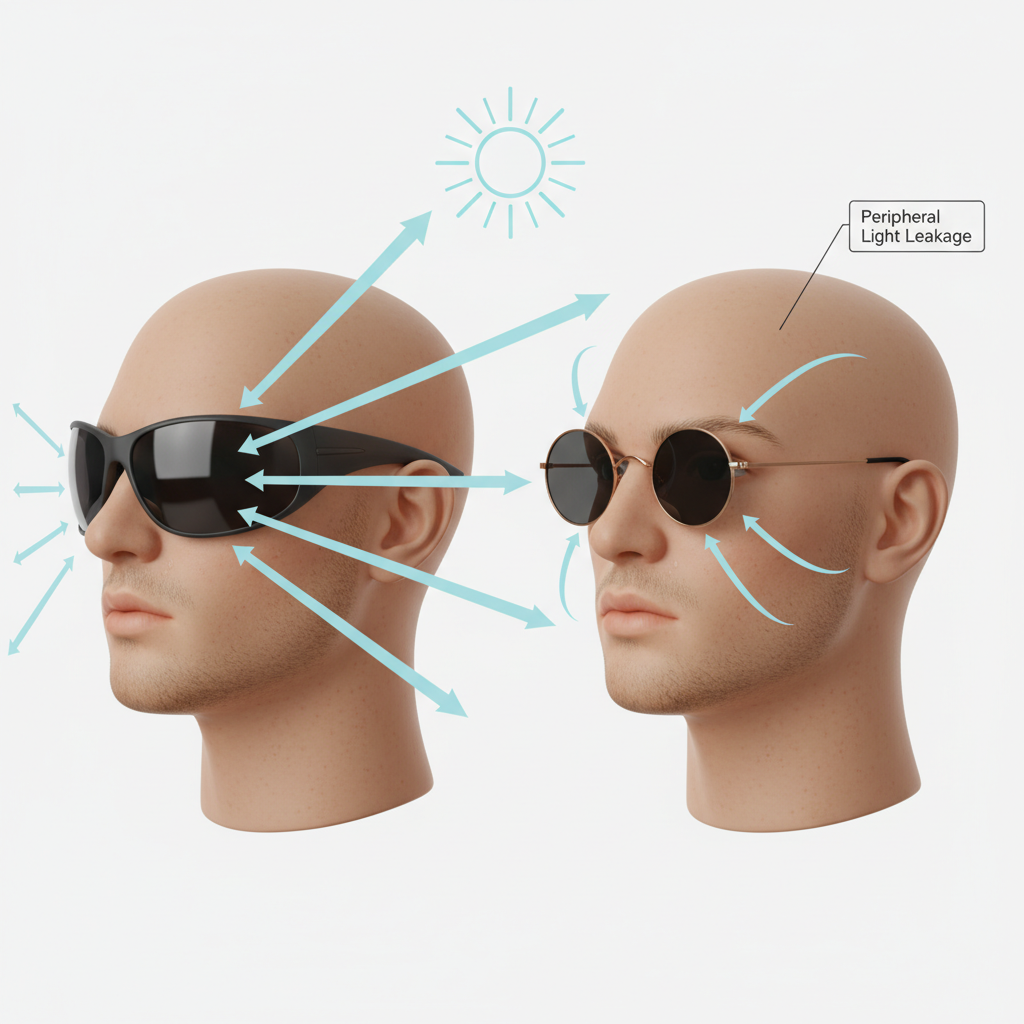
UV rays don't just come from the front. They can leak in from the top, bottom, and sides of your frames. A groundbreaking 3D head-form study found that standard, medium-sized fashion frames offered the least protection due to this peripheral light leakage.
For maximum safety during high-exposure activities like skiing or being on the water, choose oversized or wraparound styles. These designs fit closer to the face, creating a physical barrier that can block nearly 100% of UV rays from reaching the eye. For those with stronger prescriptions, a guide to wraparound high prescription sunglasses can be a valuable resource.
Lens Material: Embedded vs. Coated Protection
Modern lens materials like polycarbonate and Trivex have UV protection embedded directly into the polymer itself. This means the protection cannot scratch off or wear out. In contrast, cheaper plastic lenses may rely on a thin UV-blocking coating that can be compromised by scratches or wear over time. This is a key reason why verifying the source and quality of your lenses is so important for ensuring long-term safety.
Lens Durability: Does UV Protection Fade?
Research has shown that some lens materials can lose their UV-blocking efficacy after prolonged exposure to the sun, a process known as photobleaching. One study on lens durability found that some lenses showed reduced performance after just 50 hours in a solar simulator. For this reason, it is wise to consider replacing your primary sunglasses every couple of years, especially if you spend a lot of time outdoors.
Wrapping Up: Your Checklist for Verified Eye Safety
Choosing sunglasses should be a health decision, not just a fashion choice. By moving beyond simple stickers and using the verification methods in this guide, you can confidently protect your vision.
Here is your final checklist for buying safe sunglasses:
- [ ] Always look for a UV400 rating.
- [ ] Never equate dark tints with safety.
- [ ] Ask for a professional photometer test for 100% certainty.
- [ ] Choose large or wraparound frames for better coverage.
- [ ] Prioritize brands that offer a Certificate of Analysis (CoA) to prove their claims.
- [ ] Consider replacing high-use sunglasses every two years.
Frequently Asked Questions (FAQ)
Do expensive sunglasses offer better UV protection? Not necessarily. Price is often tied to brand name, frame materials, and design—not UV protection. A verified, affordable pair of UV400 sunglasses is safer than a luxury pair with no certified protection.
Can I add a UV coating to my existing sunglasses? No. A UV-blocking feature is either embedded in the lens material or applied as a factory coating during manufacturing. It cannot be added later.
Are my old sunglasses still safe? They might not be. Due to potential degradation from sun exposure (photobleaching) and the risk of scratches on coated lenses, it's best to have old sunglasses re-tested by an optician.
Do kids need sunglasses? Yes. UV damage is cumulative over a lifetime, and children's eyes are more susceptible to UV penetration. The Mayo Clinic advises that children should start wearing quality, protective sunglasses as early as possible.
Disclaimer: This article is for informational purposes only and does not constitute professional medical advice. Please consult a qualified eye care professional for any concerns about your vision or eye health.
References
- American Optometric Association (AOA): UV Protection
- SPIE: UV Protection Standards in Sunglasses
- MD Anderson Cancer Center: 9 Things to Know About Sunglasses
- Science News Explores: Polarized vs. UV Blocking
- PMC (Bakkar et al.): Public Awareness of UV Harm
- University of Utah Health: How to Tell if Your Sunglasses Are Really Protecting Your Eyes
- PMC: Ocular UV Dosimetry & Frame Geometry
- Mayo Clinic: Why Sunglasses are a Must-Wear