

How UV Sunglasses Help Prevent Cataract Formation
The Unseen Damage: How Ultraviolet Light Causes Cataracts
Cataracts, a progressive clouding of the eye's natural lens, are a primary cause of vision loss, particularly as we age. While many factors contribute to their development, one of the most significant and controllable is lifelong exposure to ultraviolet (UV) radiation from the sun. Many of us wear sunglasses to reduce glare or for style, but their most critical function is medical: to act as a shield for your eyes.
Consistent, proper use of sunglasses that block 100% of UV rays is a crucial preventative health measure. We’ll explore the science of how UV light damages the lens on a molecular level and provide a clear, evidence-based guide to selecting eyewear that offers genuine protection for your long-term vision.
TL;DR: Key Takeaways
- UV Radiation Accelerates Cataracts: Scientific evidence confirms that UV light triggers a chemical process called glycation within the eye's lens, causing it to harden, yellow, and become cloudy.
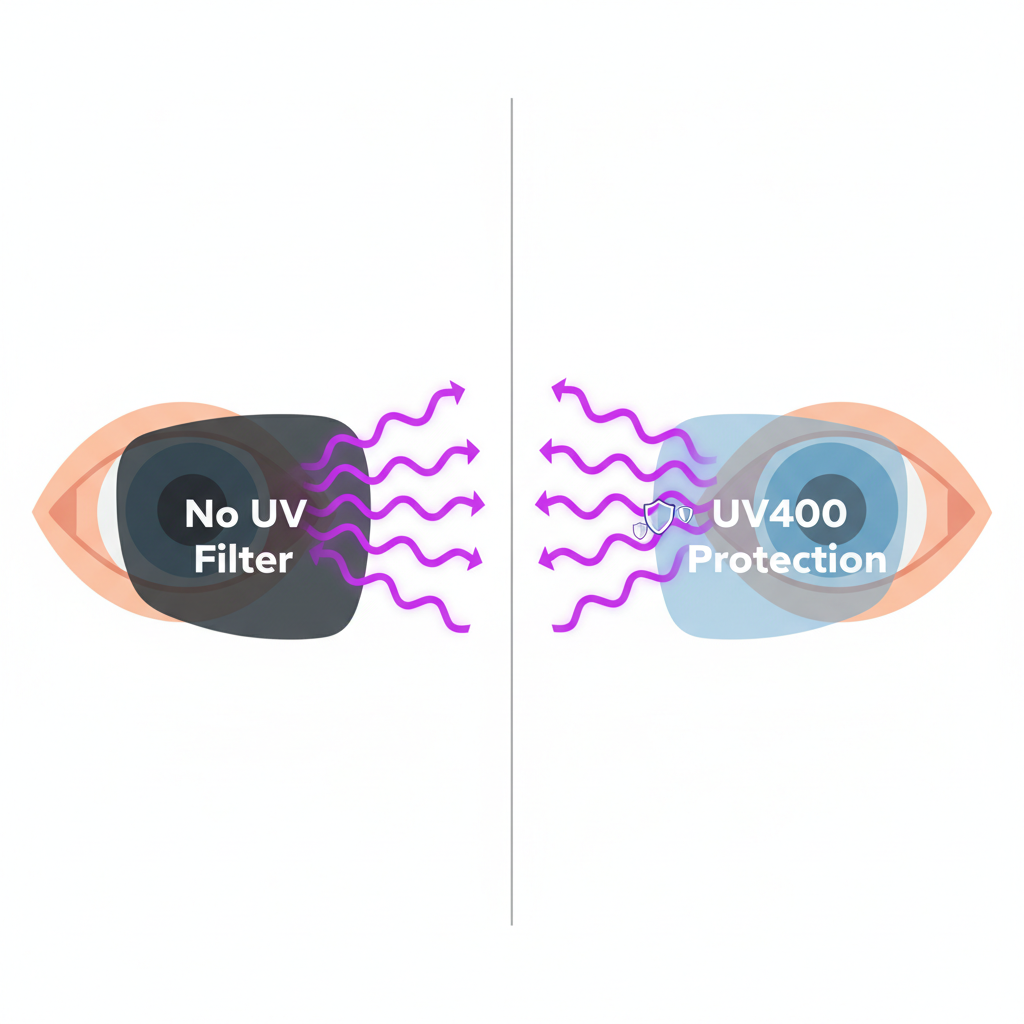
- "UV400" is the Gold Standard: This label signifies that the lenses block all light rays with wavelengths up to 400 nanometers, which covers all of the sun's harmful UVA and UVB rays.
- Darkness Does Not Equal Protection: Dark lenses without certified UV protection are more dangerous than no sunglasses at all. They cause your pupils to dilate, allowing more UV radiation to enter the eye.
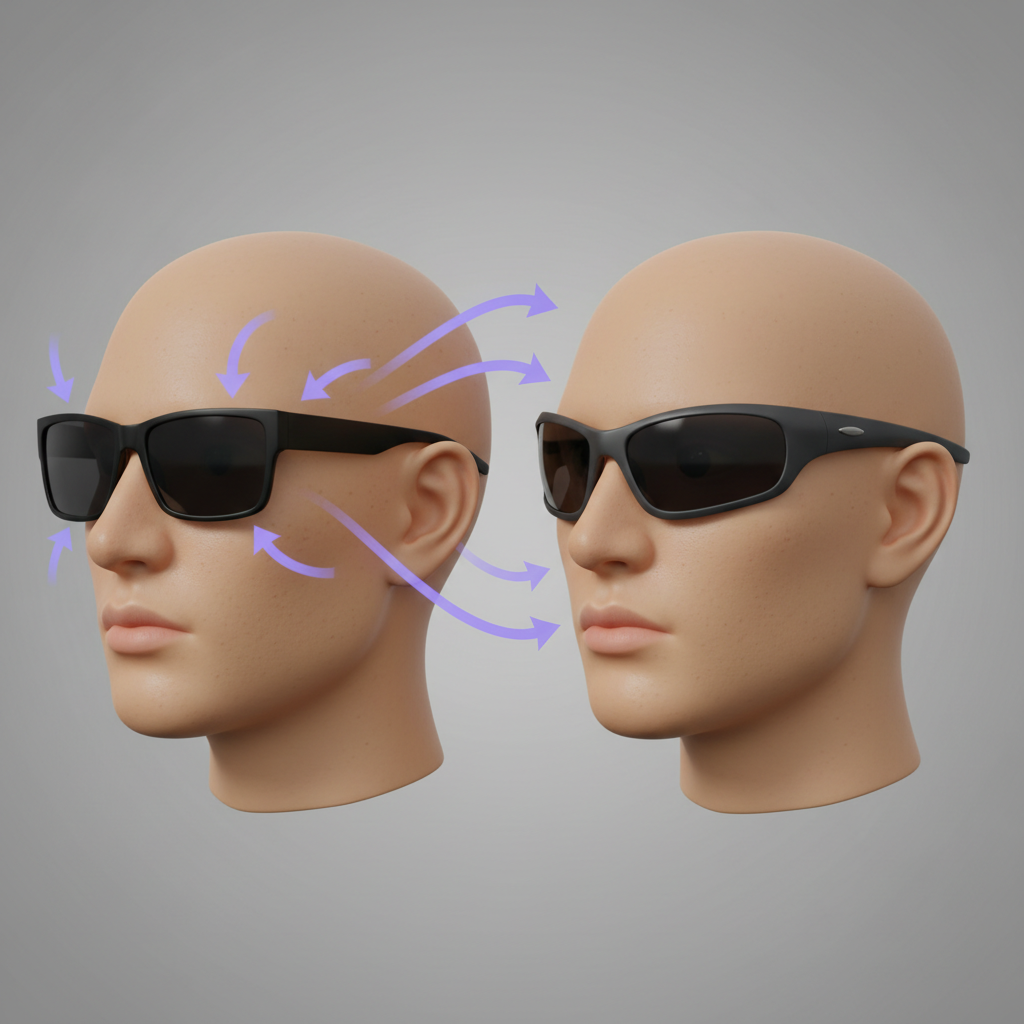
- Fit and Coverage are Critical: Large, wraparound-style frames are significantly more effective because they block damaging UV rays that enter from the periphery (the sides, top, and bottom).
Understanding Cataracts: A Closer Look at the Eye's Lens
To understand how sunglasses protect us, we first need to understand what a cataract is and how it forms. The lens of your eye, located behind the iris, works much like a camera lens. It focuses light onto the retina at the back of the eye, allowing you to see clear, sharp images. This lens is made mostly of water and highly organized proteins.
As we age, these proteins can start to break down and clump together. This clumping is what creates the cloudy or opaque areas on the lens known as a cataract. It can make vision blurry, colors seem faded, and cause trouble with glare, especially at night.
The Culprit: How UV Radiation Triggers Lens Damage
UV radiation dramatically accelerates the process of protein breakdown in the lens. Groundbreaking research from the National Eye Institute (NEI) has shed light on the specific chemical mechanism. Inside the low-oxygen environment of the lens, UV light excites natural proteins, triggering a chain reaction of glycation—essentially, the proteins begin bonding and clumping together. This process is what causes the lens to yellow, harden, and lose its transparency over time.
The damage is cumulative, starting in childhood. The consequences of unprotected sun exposure may not become apparent for decades, but the risk builds with every hour spent in the sun without proper eye protection. A compelling study of rural residents in Taiwan, a high-UV zone, found that participants who did not wear sunglasses had a 57% increased risk of developing cataracts.
The Science of Protection: What to Look for in Sunglasses
Not all sunglasses are created equal. The effectiveness of a pair of sunglasses is determined by its ability to absorb and block UV radiation, not by the color or darkness of the lenses.
Myth Debunked: The Danger of Dark, Uncertified Lenses
One of the most persistent and dangerous myths is that darker lenses offer more protection. In reality, lens tint is designed to reduce visible light (glare), not invisible UV radiation. As the MD Anderson Cancer Center warns, wearing dark sunglasses without certified UV blocking is actively harmful. The dark tint causes your pupils to open wider to let in more light. If the lenses aren't blocking UV, this dilated pupil allows a much larger dose of damaging radiation to flood into the eye, potentially accelerating cataract formation and other issues. You can learn more about this in our guide on whether darker sunglass lenses are more protective.
UV400: The Only Standard That Matters
When shopping for sunglasses, the most important feature to look for is a label that says "UV400" or "100% UV Protection." This means the lenses are treated to block all light rays up to 400 nanometers. This range is critical because some older standards only protected up to 380 nm, leaving a dangerous gap. A technical analysis published in PubMed highlights that the 380-400 nm range contains 45% more UV energy than the range below it, making UV400 a medical necessity, not just a marketing term.
Modern lens materials like polycarbonate often have UV protection embedded directly into the material itself, which is more durable than older lenses that relied on a coating that could scratch off over time.
Choosing the Right Sunglasses for Maximum Protection
Beyond the UV400 rating, the physical design of your sunglasses plays a massive role in their real-world effectiveness.
Frame Fit and Coverage: Blocking Peripheral Light
UV rays don't just come from the front. A significant amount of damaging light reflects off surfaces and enters the eye from the sides, top, and bottom of your frames. A 3D head-form study published in PMC revealed that standard, medium-sized sunglasses offered the least protection precisely because of this peripheral light leakage.
This phenomenon, known as the Coroneo Effect, is where peripheral light is focused onto the nasal part of the eye, a common site for conditions like pterygium ("surfer's eye"). To combat this, the American Academy of Ophthalmology (AAO) recommends oversized or wraparound styles that fit closely to the face and block light from all angles.
A Practical Checklist for Buying Protective Eyewear
Use this table as a quick reference guide when selecting your next pair of sunglasses.
| Feature | What to Look For | Why It Matters |
|---|---|---|
| UV Protection | "UV400" or "100% UVA/UVB Protection" label. | This is the non-negotiable standard for blocking the full spectrum of harmful UV radiation. |
| Frame Style | Oversized or wraparound designs. | Minimizes peripheral light leakage from the sides, top, and bottom, which is a major source of UV exposure. |
| Lens Material | Polycarbonate or Trivex. | These materials are naturally UV-blocking and highly impact-resistant, making them ideal for safety and sports. |
| Lens Color | Neutral Gray or Green. | Recommended by the American Optometric Association (AOA) for driving and general use as they provide the most accurate color perception. |
| Polarization | Optional, marked "Polarized". | Reduces glare from reflective surfaces like water and pavement. It is a feature for comfort, not UV protection. |
Beyond Cataracts: Other UV-Related Eye Conditions
While cataracts are a major concern, cumulative UV exposure is linked to several other serious eye diseases.
- Pterygium: Often called "surfer's eye," this is a non-cancerous growth on the white of the eye that can grow over the cornea and interfere with vision. It is strongly linked to UV exposure.
- Age-Related Macular Degeneration (AMD): This is a leading cause of vision loss in older adults. While the evidence is less conclusive than for cataracts, some research suggests that high-energy blue light (400-440 nm), which is adjacent to the UV spectrum, can contribute to retinal damage. Wearing UV400 sunglasses is considered a prudent precaution against AMD.
- Eyelid Cancers: The delicate skin on and around the eyelids is highly susceptible to skin cancer. It's estimated that 90% of eyelid cancers are Basal Cell Carcinomas. Large-format sunglasses that cover this area provide a critical barrier.
Wrapping Up: A Lifetime of Healthy Vision
Protecting your eyes from ultraviolet radiation is one of the most effective steps you can take to preserve your vision for a lifetime. The link between UV exposure and cataract formation is scientifically proven, and the damage is cumulative.
Making a conscious choice to wear certified UV400 sunglasses, particularly those with large or wraparound frames, is not a matter of fashion—it is a fundamental health decision. By understanding the risks and making informed choices, you can significantly reduce your chances of developing cataracts and other serious eye conditions, ensuring your vision stays clear and healthy for years to come.
Frequently Asked Questions (FAQ)
1. Do I need to wear sunglasses on cloudy days? Yes. According to the AAO, clouds do not block all UV rays. Up to 80% of the sun's UV radiation can penetrate cloud cover, so it's essential to wear protection even on overcast days.
2. When should my children start wearing sunglasses? The Mayo Clinic advises that children should start wearing sunglasses as early as 6 months of age. UV damage is cumulative over a lifetime, and children's eyes are particularly vulnerable because their natural lenses are clearer, allowing more UV to penetrate deeper into the eye.
3. Do sunglasses "wear out" or lose their UV protection? Yes, they can. Over time, exposure to intense sunlight can cause the UV-blocking properties in some lens coatings to degrade through a process called photobleaching. Scratches can also compromise protection. It's a good practice to replace your sunglasses every 2-5 years, especially if you spend a lot of time outdoors or if the lenses show signs of wear.
4. Is polarization the same as UV protection? No. As explained by Harvard Health, polarization is a filter that specifically reduces horizontal glare from surfaces like water or roads. While many polarized lenses also include UV protection, the two features are distinct. Always verify the UV400 label independently.
Disclaimer: This article is for informational purposes only and does not constitute professional medical advice. The information provided is not a substitute for a consultation with a qualified ophthalmologist or optometrist. Please consult with a healthcare professional for any health concerns or before making any decisions related to your eye health.
References
- National Eye Institute (NEI): "New research sheds light on how UV rays may contribute to cataract"
- PMC (Wang et al.): "Outdoor Work and the Five-Year Incidence of Age-Related Cataract in a Rural Taiwanese Population"
- MD Anderson Cancer Center: "9 things to know about sunglasses, eye protection and cancer"
- PubMed (Masili et al.): "Ultraviolet protection of sunglasses: an inter-comparison of the standards"
- PMC (Serrano et al.): "Ocular UV-B radiation dosimetry: a comparison between a 3D mannequin and a human"
- American Academy of Ophthalmology (AAO): "How to Choose the Best Sunglasses"
- American Optometric Association (AOA): "UV Protection"
- Mayo Clinic: "Mayo Clinic Minute: Why sunglasses are a must-wear"
- Harvard Health Publishing: "Polarized sunglasses: Protecting your eyes from harmful glare"