


A Man's Guide to Sunglass Bridge Fit & Nose Pads
TL;DR: Your No-Slip Sunglass Solution
If your sunglasses constantly slide down your nose, you're dealing with a bridge fit problem. The solution lies in understanding whether you need a standard or low bridge fit and learning how to use nose pads for a custom feel. For plastic frames, stick-on silicone pads can add grip and lift. For metal frames, small, careful adjustments to the pad arms can eliminate slipping entirely. Getting this right ensures your sunglasses stay put, feel comfortable, and provide consistent eye protection.
Nothing ruins the cool confidence of wearing a great pair of sunglasses faster than having to constantly push them back up your nose. It’s a small but persistent annoyance that signals more than just a minor inconvenience—it’s a sign of a poor fit. The culprit is almost always the bridge, the part of the frame that sits on your nose. It’s the primary anchor for your eyewear, and when it doesn’t make proper contact, gravity inevitably wins.
This guide is your definitive resource for solving that problem. We'll break down the crucial differences between bridge types, explain the unsung role of nose pads, and give you practical, step-by-step instructions to adjust your sunglasses for a secure, comfortable, all-day fit. Say goodbye to the constant slip and hello to eyewear that feels like it was made for you.
Section 1: Decoding Bridge Fit: The Foundation of Sunglass Comfort
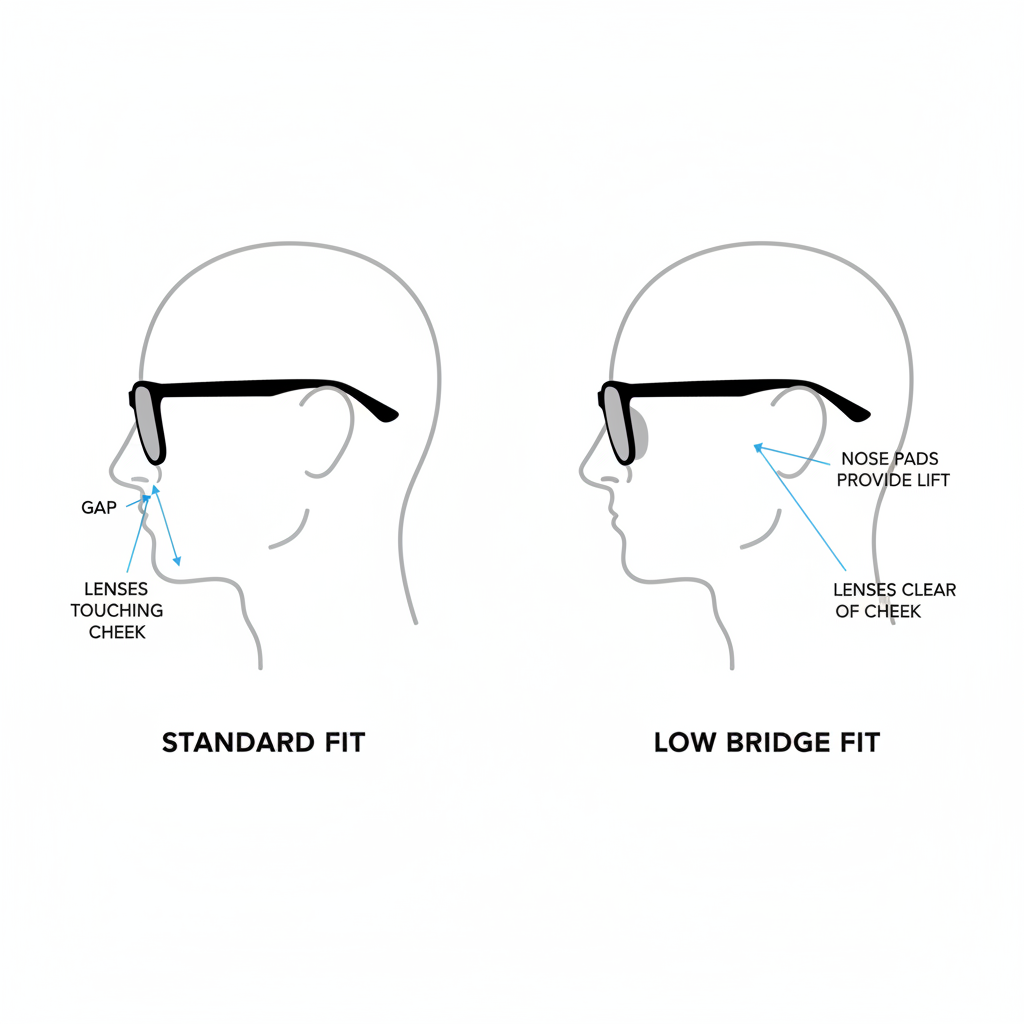
The bridge is the single most important factor for comfort and stability. If it doesn't fit your unique facial geometry, no amount of tightening the arms will truly fix the problem. The primary distinction is between a "Standard Fit" and a "Low Bridge Fit."
Standard Fit vs. Low Bridge Fit
Originally known as "Asian Fit," the term "Low Bridge Fit" is now widely used because it more accurately describes the facial features it accommodates, which can be found across all ethnicities. These frames are engineered for faces with a low nose bridge (where the bridge is level with or below the pupils) and/or wider facial features.
Here’s a breakdown of the key engineering differences:
| Feature | Standard Fit | Low Bridge (Asian) Fit | Why It Matters for a No-Slip Fit |
|---|---|---|---|
| Bridge Design | Narrower and more angled | Wider and flatter | Distributes weight evenly across the nose instead of pinching or leaving a gap. A wider bridge prevents the frame from sitting too high. |
| Nose Pads | Smaller, often molded into the frame | Larger and sometimes adjustable or built-up | Creates more surface area for contact and support, which is critical for preventing slippage on a lower bridge. |
| Frame Tilt | More tilt (pantoscopic tilt) | Less tilt, sitting more vertically | Prevents the bottom of the lenses from touching your cheeks, a common issue for those with higher cheekbones. |
| Frame Curve | Can be more curved or "wrapped" | Often flatter | Accommodates the contours of a wider face, preventing the arms from digging into the temples. |
How to Know Which Fit You Need
A quick self-assessment can tell you what to look for:
- The Bridge Test: Look in a mirror. Is the top of your nose bridge above or below your pupils? If it's at or below your pupils, you likely have a low nose bridge and will benefit from a low bridge fit.
- The Cheek Test: Put on a pair of sunglasses and smile. Do the frames touch your cheeks? If they do, you need frames with less tilt or more effective nose pads to lift them off your face.
- The Slip Test: Do your current glasses slide down your nose with simple movements like nodding? This is the clearest sign that you need a better bridge fit, likely with more surface contact or grip.
A poor fit doesn't just feel annoying; it compromises eye safety. Research on ocular UV exposure published in a study available through PMC has shown that frame geometry and "peripheral light leakage" are significant factors in how much UV radiation actually reaches the eye. When sunglasses slide down, they open up a gap at the top, allowing harmful rays to enter from above.
Section 2: The Unsung Hero: How Nose Pads Perfect the Fit
Nose pads are the critical contact points that bear most of your sunglasses' weight. Their size, material, and adjustability determine how securely the frames sit. Understanding them is key to achieving a custom fit.
Types of Nose Pads and Their Purpose
-
Fixed (Molded) Nose Pads: These are common on acetate or plastic frames, where the pads are molded as part of the frame itself. They offer a smooth, integrated look but lack adjustability. Their effectiveness is entirely dependent on how well the frame’s built-in bridge shape matches your nose. If you have a low bridge, you may need thicker, built-up pads, which can be found on low-bridge-specific frames.
-
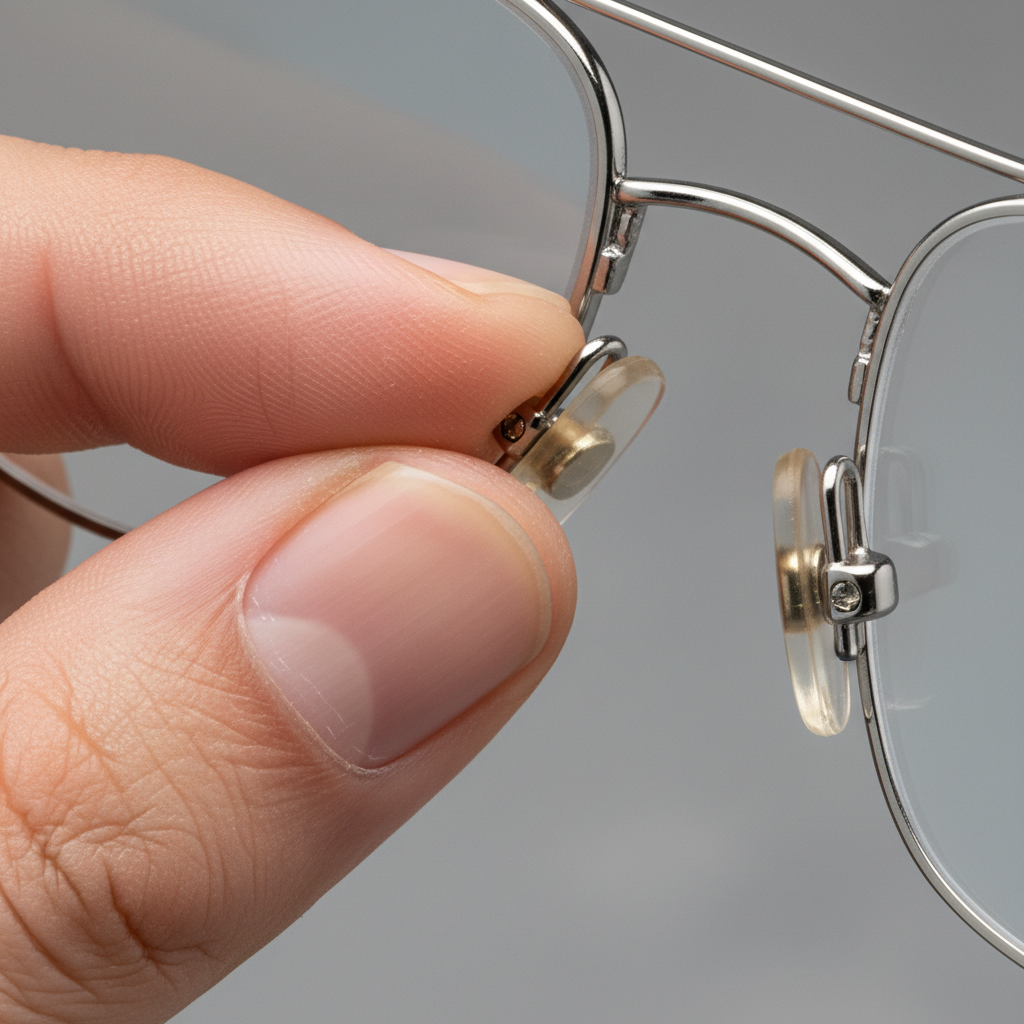
Adjustable Pad Arms: Found on most metal frames, these consist of small pads (usually silicone) attached to thin metal arms. They are the gold standard for fit customization. You can bend these arms to change the width, angle, and height of the frame, allowing for a truly personalized fit.
Material Matters: Silicone vs. PVC
-
Silicone: This is the preferred material for most high-quality adjustable pads. It’s soft, flexible, and has a slightly tacky texture that grips the skin, preventing slippage even when you sweat. It’s hypoallergenic for most people.
-
PVC (Polyvinyl Chloride): This is a harder, smoother plastic. While durable, it doesn't offer the same level of grip as silicone and is more likely to slide. It's often found on lower-cost frames.
For those with low or narrow bridges, swapping standard pads for thicker silicone pads (e.g., adding 1-1.5 mm in thickness) can provide the necessary lift and friction to keep frames perfectly in place.
Section 3: A Practical Guide to At-Home Adjustments
You can often resolve minor fit issues yourself with a few careful tweaks. The golden rule is to make small, incremental changes. Be gentle, as excessive force can damage your frames.
YMYL Disclaimer: This guide is for informational purposes for minor adjustments. If your frames require significant changes, are made of a delicate material, or if you feel unsure, please consult a qualified optician. Improper adjustments can lead to frame damage or an uncomfortable fit.
How to Adjust Metal Pad Arms (Step-by-Step)
Use your thumbs and forefingers for these adjustments. Avoid using pliers, which can scratch the pads and frame.
- If your sunglasses are slipping down: Gently and evenly push the nose pads closer together. This narrows the fit, allowing them to sit higher and more securely on your nose.
- If your sunglasses sit too high: Gently and evenly pull the nose pads farther apart. This widens the fit, allowing them to rest lower on your nose.
- If your sunglasses are crooked or asymmetrical: Look in the mirror to see which side is higher. If the left side is higher, use your thumb to push the left pad arm slightly away from the frame. Make tiny adjustments of about 0.5–1 mm until the frames are level.
The Best Hack for Plastic Frames: Stick-On Silicone Pads
If you have plastic frames that slip, stick-on nose pads are a game-changer. These are small, adhesive-backed silicone pads that you apply directly to the frame's molded pads. They offer two key benefits:
- Increased Grip: The silicone material adds significant friction.
- Added Lift: They typically add 1-2 mm of thickness, lifting the frames slightly off your face to improve alignment and prevent them from resting on your cheeks.
They are inexpensive, widely available, and the single most effective way to improve the fit of non-adjustable frames.
Section 4: Debunking Fit Myths & Pro Tips
Getting the right fit is often clouded by misconceptions. Let's clear a few up and share some expert advice.
Myth: Tighter arms are the best way to stop slipping.
Reality: While temple arms should be snug enough to prevent frames from feeling loose, their primary job isn't to clamp the frames to your head. The nose bridge is meant to support about 90% of the frame's weight. Over-tightening the arms will only lead to pressure headaches behind your ears. Always fix the bridge fit first.
Myth: All expensive sunglasses have a good fit.
Reality: Price reflects brand, materials, and lens quality—not necessarily the fit for your face. A $30 pair with a low-bridge design will fit a low-bridged nose better than a $500 standard-fit pair. Fit is about engineering and anatomy, not price tags. No matter the cost, all legitimate sunglasses sold in the U.S. must comply with the FDA's impact resistance standards, as outlined in 21 CFR 801.410, ensuring a baseline of safety.
Expert Warning: Avoid Bending Acetate Frames Yourself
A common mistake is trying to adjust the bridge or arms of a plastic (acetate) frame while it's cold. Acetate is brittle and will likely crack. Professional opticians use a special hot air warmer to make the material pliable before making adjustments. If your plastic frames need bending, take them to a pro.
Pro Tip: Consider the Entire Frame for Optimal Protection
A perfect bridge fit is the first step. To maximize protection, the American Academy of Ophthalmology (AAO) recommends oversized or wraparound styles. A secure fit on the nose ensures these larger frames don't slide down, keeping them properly positioned to block UV light from the sides and top. For those with stronger prescriptions, exploring options like a guide to wraparound high prescription sunglasses can provide further insight into combining fit with optical needs.
Key Takeaways: Your Checklist for a Perfect Fit
Achieving a secure, comfortable sunglass fit is entirely within your control. It doesn’t require spending a fortune, but it does require paying attention to the right details. Remember these key points:
- Assess Your Bridge: First, determine if you have a high or low nose bridge to understand what frame architecture you need.
- Prioritize Low Bridge Fit: If you have a low bridge and/or high cheekbones, specifically shop for "Low Bridge" or "Asian Fit" frames. This will solve most fit issues from the start.
- Leverage Nose Pads: For metal frames, make small, precise adjustments to the pad arms. For plastic frames, use stick-on silicone pads to add grip and lift.
- Fit Before All Else: A perfect fit is more important than brand or style. A well-fitting frame is more comfortable, looks better, and provides superior protection.
Frequently Asked Questions (FAQ)
Q: Can I make my standard-fit sunglasses into a low-bridge fit? A: You can improve the fit significantly with stick-on silicone nose pads, which add height and grip. However, they can't change the frame's inherent width or tilt, so a true low-bridge frame designed for your features will always provide a better overall fit.
Q: Why do my sunglasses rest on my cheeks when I smile? A: This is a classic sign that the frame's nose bridge is too narrow, sits too low, or the frame has too much pantoscopic tilt for your face. Lifting the frame with larger or adjusted nose pads is the solution.
Q: How often should I replace stick-on nose pads? A: This depends on your skin type and environment. Typically, they should be replaced every 1-3 months, or whenever you notice them losing their grip or accumulating oils and dirt.
Q: Is it important to measure my pupillary distance (PD) for non-prescription sunglasses? A: While PD is absolutely critical for prescription lenses, it's not necessary for non-prescription (plano) sunglasses. However, understanding your measurements can help you choose a frame width that is proportional to your face. If you're curious, you can learn how to measure your PD at home easily.