

Post-Op Checklist: The Top 3 Metrics Your Surgeon Monitors.
TL;DR: The Three Pillars of Your Post-Op Eye Exam
Your surgeon's check-ups go far beyond a simple "read the chart" test. They are focused on three critical areas to ensure a successful and safe recovery:
- Visual Acuity & Quality: They assess not just if you can see the 20/20 line, but how you see it. This includes checking for common post-op issues like glare, halos, or ghosting, which are signs of higher-order aberrations (HOAs).
- Corneal Health & Stability: Using a powerful microscope, your surgeon examines the cornea—the front surface of your eye that was reshaped during surgery. They look for perfect healing, flap integrity, and any signs of inflammation or rare complications like ectasia.
- Intraocular Pressure (IOP): Your eye's internal pressure is monitored closely, as post-operative steroid drops can sometimes cause it to rise. Surgeons look for consistent trends over time, not just a single reading, to prevent any potential damage to the optic nerve.
Metric #1: Visual Acuity & Quality — More Than Meets the Eye Chart
When you sit in the exam chair for your first post-op visit, your eyes are naturally drawn to the Snellen eye chart. Achieving 20/20 vision is a major milestone, and modern refractive surgery has an incredible track record. In fact, studies show that over 90% of LASIK patients achieve 20/20 vision or better, with 99.5% reaching at least 20/40, the legal minimum for driving in most states.
But here's an inside secret from the world of ophthalmology: that number is only the beginning of the story.
Why Vision Quality Is the Real Goal
An experienced surgeon knows that a patient can read the 20/20 line perfectly in a well-lit room yet struggle with debilitating vision issues in the real world. This is the difference between visual acuity (sharpness) and visual quality.
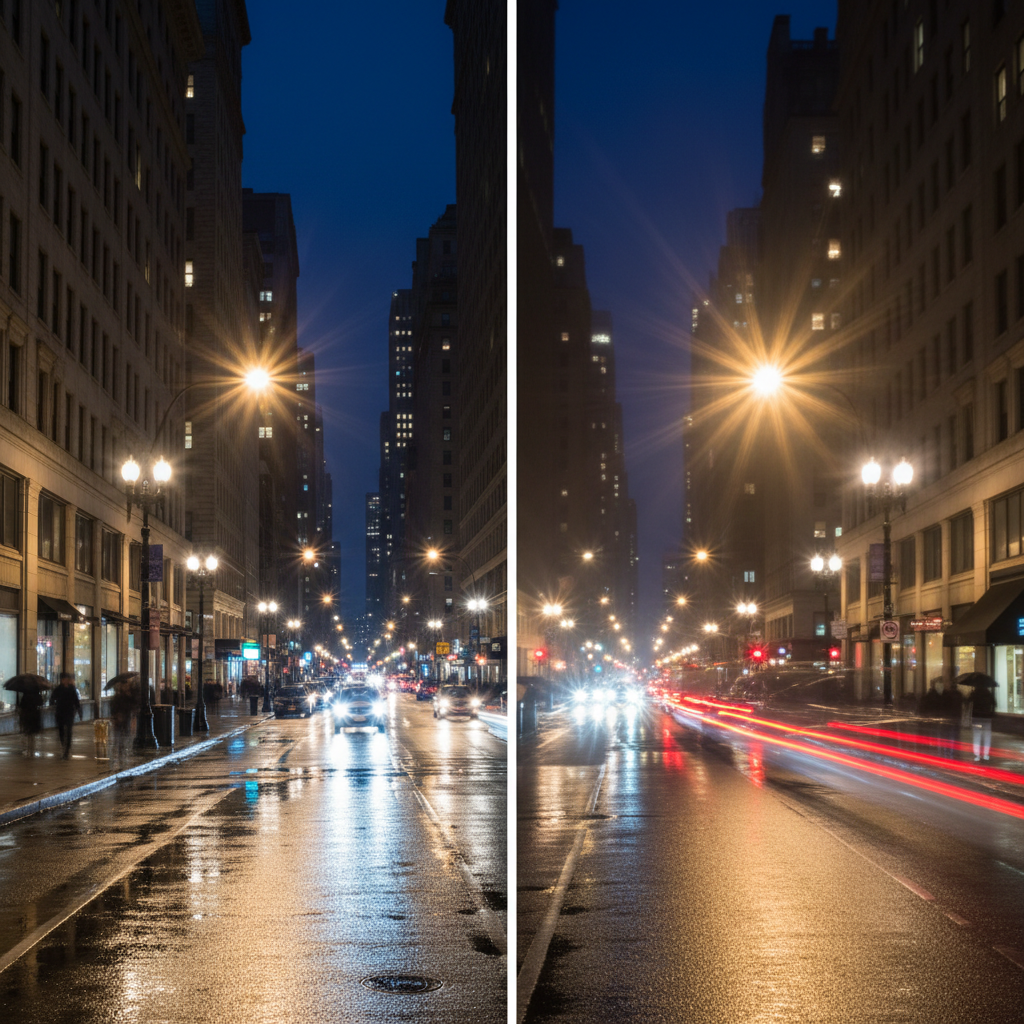
Poor visual quality is often caused by higher-order aberrations (HOAs). Think of these as subtle optical imperfections that scatter light as it enters your eye, resulting in:
- Glare: Difficulty seeing in the presence of bright light.
- Halos: Seeing rings around lights, especially at night.
- Starbursts: Rays of light appearing to radiate from bright sources.
- Ghosting: A faint, secondary image appearing next to the primary one.
These aren't just minor annoyances; they can significantly impact activities like night driving. Data from FDA-reviewed trials found that six months after LASIK, 19.7% of patients reported issues with glare and 17.5% reported halos. Furthermore, the landmark PROWL studies conducted by the FDA revealed that up to 46% of patients without symptoms before surgery reported new visual symptoms (like halos) three months after.
These issues often stem from the new shape of the cornea, pupil size in low-light conditions, or even post-operative dry eye. This is why your subjective feedback is one of the most important data points for your doctor.
How Surgeons Assess Vision Quality
To get a complete picture, your surgeon combines your feedback with objective tests:
- Subjective Questionnaires: They will ask specific questions about your vision in different scenarios (day vs. night, reading vs. distance).
- Contrast Sensitivity Testing: This test measures your ability to distinguish between faint and dark objects, which is crucial for real-world vision.
- Wavefront Analysis: Advanced diagnostic devices can create a detailed map of your eye's optical system, precisely identifying and quantifying any HOAs. This is why many surgeons prefer advanced techniques like topography-guided LASIK, which has been shown to result in 20/16 or better vision in 57% of eyes, compared to just 17% for standard wavefront-optimized LASIK.
Metric #2: Corneal Health — The Foundation of Your New Vision
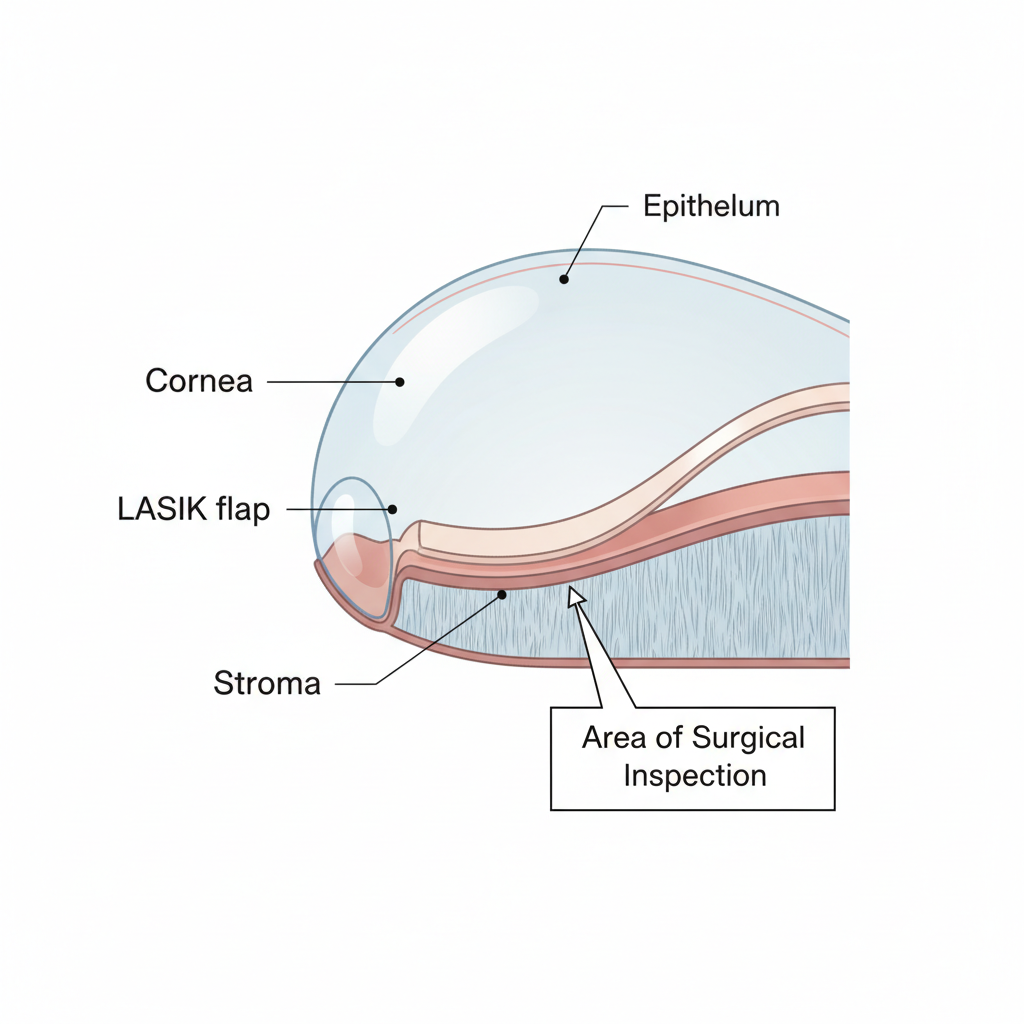
The cornea is the transparent front part of the eye that was permanently reshaped during your procedure. Its health and stability are paramount to the long-term success of your surgery. To assess it, your surgeon uses a slit-lamp microscope—a powerful instrument that provides a highly magnified, 3D view of your eye's structures.
This isn't a quick glance. The surgeon meticulously examines the different layers of the cornea, looking for specific signs of healing.
Post-LASIK & SMILE Surgical Checklist
For procedures that involve creating a corneal flap (LASIK) or removing a lenticule (SMILE), the checklist is extensive:
- Flap/Lenticule Integrity: The surgeon confirms the flap is perfectly positioned and the edges are healing cleanly. While rare, flap dislocation can be a lifelong risk, making proper healing essential.
- Inflammation: A primary concern is a sterile inflammatory condition called Diffuse Lamellar Keratitis (DLK), sometimes vividly called "Sands of Sahara." This occurs in roughly 1 out of every 50 cases and is a sign of cellular inflammation under the flap. Fortunately, it is almost always resolved quickly with steroid eye drops.
- Epithelial Ingrowth: The surgeon checks for any signs of surface cells growing underneath the flap, a subtle sign that requires monitoring.
- Corneal Stability (Ectasia): The most critical check is for any sign of corneal ectasia. This is a rare but serious complication where the cornea thins and begins to bulge forward, distorting vision. The risk is incredibly low (around 0.09% for modern LASIK) because of rigorous pre-operative screening. Surgeons ensure a minimum Residual Stromal Bed (RSB) of 250 micrometers is left behind, a safety standard set by the American Academy of Ophthalmology (AAO).
Post-Cataract Surgery Checklist
After cataract surgery, the focus of the corneal exam is slightly different:
- Wound Integrity: The surgeon verifies that the tiny, self-sealing incision is closed and secure to prevent infection.
- Corneal Edema: Some swelling of the cornea is normal after cataract surgery. The surgeon assesses the degree of swelling and ensures it is resolving as expected.
- Clarity: The cornea must be perfectly clear to allow light to pass through to the new, clear intraocular lens (IOL) that replaced your cloudy cataract.
Metric #3: Intraocular Pressure (IOP) — The Silent Indicator
Intraocular pressure (IOP) is the fluid pressure inside your eye. While you can't feel it, maintaining a healthy IOP is essential for protecting your optic nerve, the cable that connects your eye to your brain.
Why IOP is a Critical Post-Op Metric
Monitoring IOP is a standard part of every eye exam, but it takes on special importance after surgery.
Expert Insight: The Trend is Your Friend An experienced surgeon is less concerned with a single IOP reading than with the overall trend. A pressure that consistently creeps up by 2-3 points (mmHg) over several post-op visits is a more reliable early warning sign of an issue than a single, isolated high reading. This allows for proactive treatment before any damage can occur.
Two main factors make post-op IOP monitoring crucial:
- Steroid Response: Steroid eye drops are essential for controlling inflammation after surgery. However, in a portion of the population known as "steroid responders," these drops can cause IOP to rise. Regular checks ensure this response is caught and managed immediately, often by switching to a different drop.
- Inflammation: After cataract surgery, inflammation can temporarily clog the eye's natural drainage system, leading to a temporary spike in pressure.
The Post-LASIK Measurement Challenge
An important consideration for LASIK patients is that the procedure changes the cornea's thickness. This can cause standard measurement tools (tonometers) to produce artificially low IOP readings. Your surgeon is aware of this and will use correction formulas or specialized equipment to document your true IOP. This becomes critically important for your future eye care, as it ensures accurate glaucoma screening for the rest of your life.
Your Role in a Successful Recovery
Understanding what your surgeon is looking for empowers you to be an active partner in your own recovery. Your role is just as important as theirs.
- Be a Good Communicator: Don't just say your vision is "blurry." Describe the quality. Is it blurry like a smudged window, or are you seeing halos? Your specific feedback is invaluable data.
- Follow Instructions Religiously: Your eye drop schedule is designed to control inflammation and prevent infection. Adhering to it is the single most important thing you can do to ensure a smooth recovery.
- Never Skip a Follow-Up: These appointments are not optional. They are a critical safety net designed to catch potential issues before they become serious problems. Even if you feel great and see perfectly, your surgeon is looking at microscopic details you can't see or feel.
- Manage Your Environment: Especially in the early weeks, your eyes are more sensitive. Managing screen time by following guidelines like the 20-20-20 rule can help reduce dry eye, which can interfere with healing and visual quality.
Frequently Asked Questions (FAQ)
Q: Why was my vision blurry the day after surgery?
A: This is completely normal. Mild corneal swelling (edema) is a natural part of the healing process and typically resolves within the first 24-48 hours, leading to a dramatic improvement in clarity.
Q: How can I tell the difference between blur from dry eye and a real complication?
A: Blur from dry eye is often intermittent and tends to improve temporarily after you use artificial tears or blink several times. Blur from a more significant issue is usually constant and does not clear with blinking or drops.
Q: I see 20/20, so why do I still have trouble driving at night?
A: This is a classic example of good acuity but reduced quality. The night-driving issues are caused by higher-order aberrations (HOAs) like glare and halos. While these often improve over several months as your brain adapts, you should discuss them with your doctor.
Q: How long will my vision keep changing after LASIK?
A: Most of your visual recovery happens in the first 3 to 6 months. However, minor changes can still occur. A 12-year study on LASIK stability found that while regression is possible, it's typically mild, averaging only -0.74 diopters over more than a decade.
Q: Will I need reading glasses after LASIK?
A: LASIK corrects your distance vision permanently, but it does not stop the natural aging process of the eye. You will still develop presbyopia, the age-related need for reading glasses, typically starting in your 40s. Some patients opt for a "monovision" correction to delay this, where one eye is set for distance and one for near.
This article is for informational purposes only and does not constitute professional medical advice. Always consult with a qualified healthcare provider for any questions about your medical condition or post-operative care.
References
- U.S. Food and Drug Administration (FDA). (2022). What are the risks and how can I find the right doctor for me? https://www.fda.gov/medical-devices/lasik/what-are-risks-and-how-can-i-find-right-doctor-me
- Bailey, M. D., & Zadnik, K. (2007). Outcomes of LASIK for myopia with FDA-approved lasers. Cornea, 26(3), 246–254.
- American Academy of Ophthalmology. (2020). Refractive Errors & Refractive Surgery PPP 2020. https://www.aao.org/education/preferred-practice-pattern/new-preferredpracticepatternguideline-3
- Randleman, J. B., et al. (2021). Risk Factors for Post-LASIK Ectasia. American Journal of Ophthalmology, 232, 115-125.
- Marietta Eye Clinic. LASIK Eye Surgery Statistics. https://www.mariettaeye.com/eye-care-info/lasik-eye-surgery-statistics/
- StatPearls [Internet]. (2024). Diffuse Lamellar Keratitis. https://www.ncbi.nlm.nih.gov/books/NBK555970/