


What Are the Benefits of Non-Prescription Blue Light Glasses?
TL;DR: The Real Deal on Non-Prescription Blue Light Glasses
You don't need a prescription to get the benefits of specialized eyewear in the digital age. Non-prescription blue light glasses are designed for anyone who spends significant time in front of screens.
- Primary Benefit: The strongest scientific evidence supports their use for improving sleep quality. Wearing them in the evening can help regulate your natural sleep-wake cycle (circadian rhythm) by blocking blue light that suppresses melatonin production.
- Myth vs. Fact: They are not a direct cure for digital eye strain. Eye strain is primarily caused by reduced blinking, screen glare, and focusing fatigue—not blue light itself.
- What to Look For: For evening use, amber-tinted lenses are more effective. For daytime use, a quality anti-reflective (AR) coating on a clear lens is more important for reducing glare.
- Fit is Key: Even without a prescription, proper fit, including pupillary distance (PD), ensures the optical center of the lens is correctly aligned, preventing unnecessary discomfort.
The Science of Blue Light: A Signal, Not a Toxin
Before we explore the benefits, it's crucial to understand what blue light is and what it isn't. Blue light is a high-energy, short-wavelength light on the visible spectrum, naturally emitted by the sun and artificially by digital screens and LED lighting.
For decades, it has been marketed as a digital boogeyman, responsible for eye strain and potential damage. However, the scientific consensus tells a different story. According to a comprehensive review in the journal Chronobiology International, blue light is better understood as a critical signal for our bodies. Natural exposure during the day is essential for alertness, mood, and cognitive function. The issue isn't the light itself, but its timing and intensity.
The core myth we must address is that blue light from screens causes digital eye strain. In a rigorous double-blind study published in PubMed, researchers compared blue-blocking lenses to placebo lenses and found no significant difference in reported eye strain symptoms. Dr. Nicole Bajic, an ophthalmologist at the Cleveland Clinic, confirms that digital eye strain is primarily caused by how we use our screens—we blink less, stare at a fixed distance for too long, and deal with screen glare.
The Real Benefit: Supporting Your Circadian Rhythm for Better Sleep
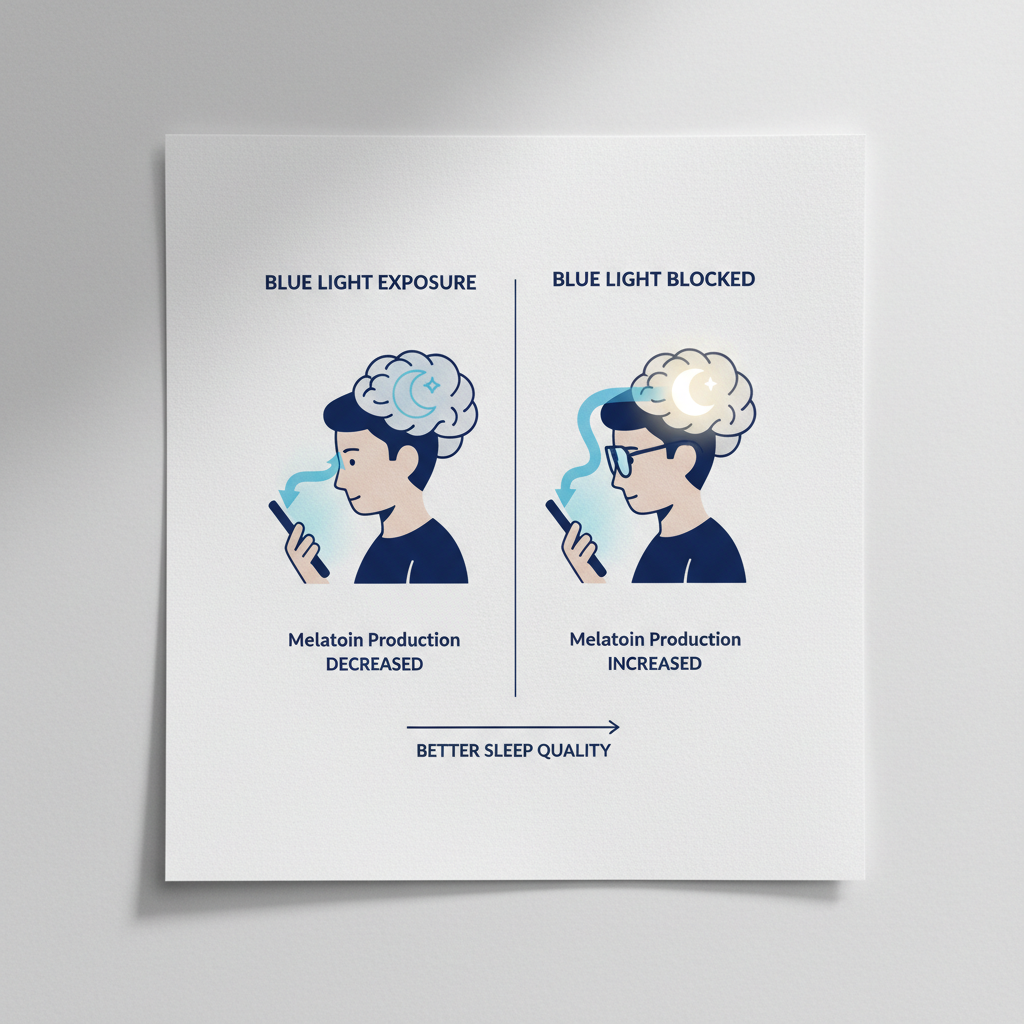
While blue light glasses won't cure your afternoon eye fatigue, they are a powerful tool for improving your sleep. Our bodies are wired to associate blue light with daytime. When we're exposed to it in the evening from phones, laptops, and TVs, it can trick our brains into thinking it's still daytime, suppressing the production of melatonin—the hormone that tells our body it's time to sleep.
A systematic review of 16 randomized controlled trials published in PubMed found "substantial evidence" that wearing blue-blocking glasses in the evening can reduce the time it takes to fall asleep, particularly for people with insomnia or jet lag. Research from Harvard Health Publishing supports this, noting that blocking the 450–480 nm spectrum is effective at preventing this melatonin suppression.
This makes non-prescription blue light glasses an excellent "sleep hygiene" tool. By wearing them for 1-2 hours before bed, you send a clear signal to your brain that the day is ending, allowing melatonin production to proceed naturally. This can lead to falling asleep faster and enjoying more restful sleep.
Your Guide to Buying Effective Non-Prescription Glasses
Since the goal is managing light exposure and improving comfort, a few key features are critical, even without a prescription.
Lens Tints and Selective Filtration
Not all blue light lenses are created equal. The key is selective filtration, which blocks a high percentage of the disruptive blue-violet wavelengths (around 400–455nm) while letting beneficial blue-turquoise light through.
- Clear Lenses: These are best for daytime use. They typically block a smaller amount of blue light (10-30%) and are primarily effective because they often come with a high-quality anti-reflective (AR) coating. This AR coating is what truly reduces screen glare and eases visual discomfort.
- Amber/Yellow Lenses: These are the most effective choice for evening use. The tint allows them to block a much higher percentage of blue light, making them ideal for preparing your body for sleep. The color distortion makes them less suitable for daytime or color-sensitive work.
Why Fit Still Matters: Frame Width and PD
You might think that if there's no prescription, the fit doesn't matter. This is a common and costly mistake. Two factors are the biggest drivers of returns for online eyewear: frame fit and pupillary distance (PD).
Your PD is the distance between the centers of your pupils. Even in non-prescription lenses, there is an "optical center." If this center is misaligned with your pupils because the PD is wrong or the frames are too wide or narrow, it can cause a prism-like effect that induces eye strain and headaches. For a comfortable experience, getting an accurate measurement is essential. You can learn how to measure your PD at home to ensure your glasses work for you, not against you.
The Unsung Hero: Anti-Reflective Coating
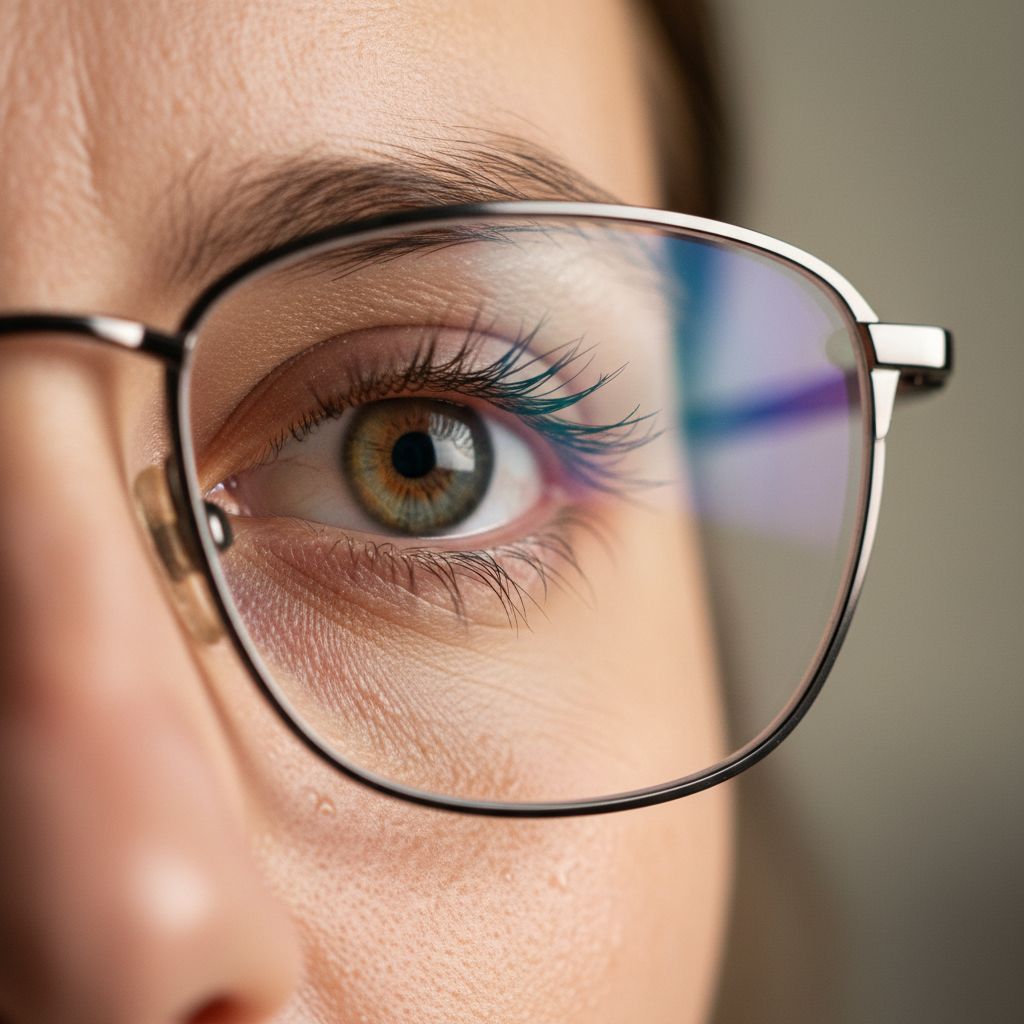
If you take away one technical tip, let it be this: always opt for an anti-reflective (AR) coating. This coating is applied in ultra-thin layers to the lens surface and is engineered to reduce reflections from both the front and back of the lenses.
For computer users, this is a game-changer. It significantly cuts down on the glare from your screen and overhead lighting, which is a major contributor to digital eye strain. It also makes your lenses appear clearer and less distracting. From a practical standpoint, technicians report that a combination of AR and a hard coat treatment also reduces returns related to scratches and surface reflections.
A Checklist for Combating Digital Eye Strain
Since glasses alone aren't the solution for eye strain, use this checklist to address the root causes.
| Habit/Setup | Action | Why It Works |
|---|---|---|
| Blinking | Consciously blink fully and often, especially during long reading tasks. | Prevents dry eye, which is the #1 cause of digital discomfort. |
| The 20-20-20 Rule | Every 20 minutes, look at something 20 feet away for at least 20 seconds. | Relaxes the focusing muscles in your eyes, reducing fatigue. |
| Screen Position | Position your monitor so the top of the screen is at or slightly below eye level. | Prevents neck and shoulder strain from looking up or down. |
| Lighting | Reduce overhead lighting to minimize screen glare. Use soft, ambient light. | Minimizes reflections that cause your eyes to work harder. |
| Text Size | Increase the font size on your devices to a comfortable reading level. | Reduces squinting and the effort required to read. |
| Artificial Tears | Use preservative-free artificial tears to keep eyes lubricated. | Directly addresses the dryness caused by reduced blink rates. |
Wrapping Up: A Tool for Modern Life
Non-prescription blue light glasses are not a magic bullet, but they are a valuable tool when used correctly. By understanding their true benefit lies in supporting your natural sleep cycle, you can cut through the marketing hype.
When shopping, prioritize the features that deliver real comfort: an amber tint for evening use, a high-quality anti-reflective coating for daytime glare, and a frame that fits your face perfectly. By focusing on these elements and adopting better screen habits, you can create a healthier and more comfortable relationship with your digital devices.
Frequently Asked Questions (FAQ)
Can I wear blue light glasses all day?
It is generally discouraged. As noted by chronobiology experts, exposure to natural blue light during the day is important for maintaining alertness and a healthy circadian rhythm. Over-blocking it during the day could be counterproductive. It's best to reserve them for evening use or specific situations with heavy glare.
Are blue light glasses safe for kids?
Caution is advised. The long-term effects of altering light exposure on developing eyes are not well understood. Research from the Mayo Clinic explores the theoretical risk that blocking blue light in children could interfere with the eye's natural development. For children, the best approach is managing screen time and encouraging outdoor activities rather than using blue-blocking glasses.
Will non-prescription blue light glasses damage my eyes?
No, wearing non-prescription (plano) glasses will not harm your vision. The only risk comes from a poor fit (incorrect PD or frame size) which can cause temporary discomfort like headaches or strain.
Disclaimer: This article is for informational purposes only and does not constitute professional medical advice. Consult with a qualified eye care professional for any concerns about your eye health, especially if you have pre-existing conditions.
References
- Cleveland Clinic: "Do Blue Light Blocking Glasses Actually Work?" - https://health.clevelandclinic.org/do-blue-light-blocking-glasses-actually-work
- Harvard Health Publishing: "Can blue light blocking glasses improve your sleep?" - https://www.health.harvard.edu/blog/can-blue-light-blocking-glasses-improve-your-sleep-202110262625
- PubMed: "Ocular and systemic effects of blue light-blocking lenses in humans: a systematic review" (Hester et al.) - https://pubmed.ncbi.nlm.nih.gov/34030534/
- PubMed: "Blue-light filtering spectacle lenses: optical and clinical performances" (Rosenfield et al.) - https://pubmed.ncbi.nlm.nih.gov/32007978/
- PMC: "Functional Roles of Blue Light in the Retina" (Tosini et al.) - https://pmc.ncbi.nlm.nih.gov/articles/PMC8897255/
- PMC (Mayo Clinic): "The Unintended Consequences of Blue Light Filtering Spectacles in Children" (Ostovari et al.) - https://pmc.ncbi.nlm.nih.gov/articles/PMC12009466/