

Matching Sunglass Frames to Men's Hairstyles & Beards
Your face shape is just the starting point. The real art of choosing the perfect sunglasses lies in harmonizing them with your complete look—specifically, your hairstyle and beard. Think of your frames not as an isolated accessory, but as the final piece that balances your entire silhouette. Get it right, and your sunglasses will feel like a custom-fit extension of your personal style. Get it wrong, and you create visual noise that throws off your whole vibe.
We’ve all seen it: a great pair of sunglasses that just looks… off. More often than not, it’s because the frames are fighting with the flow of the hair or the bulk of a beard. This guide moves beyond the basic round vs. square sunglasses debate to give you the practical, real-world heuristics we use in editorial styling to create a cohesive, intentional, and effortlessly cool appearance.
Here’s what we’ll cover:
- Balancing Proportions: How to use frame width and height to complement your hair volume.
- Beard-Specific Pairings: A guide to matching frames with everything from stubble to a full beard.
- Hairstyle Harmonies: Selecting sunglasses that work with, not against, your haircut.
- Advanced Styling Details: Mastering color contrast, temple fit, and other pro-level considerations.
The Foundation: It’s All About Balance
Before we get into specific styles, let's establish the core principle: balance. Your sunglasses should balance the visual weight of your hair and beard. This isn't about rigid rules, but about creating a sense of proportion.
Frame Width vs. Facial Width
A common piece of advice is to match your frame width to your face width. We take it a step further by considering your hairstyle. A good starting point is to find a frame width that is 90–105% of your facial width. However, if you have a hairstyle with a lot of volume on the sides, you can handle a slightly wider frame without it looking oversized. Conversely, on angular faces or with very short, tight haircuts, a frame that is slightly narrower (around 90-95% of facial width) can help soften your look and prevent the frames from dominating your face.
Frame Top-Line and Hair Volume
Pay close attention to the relationship between the top bar of your sunglasses and your hair. This is a subtle detail that has a major impact.
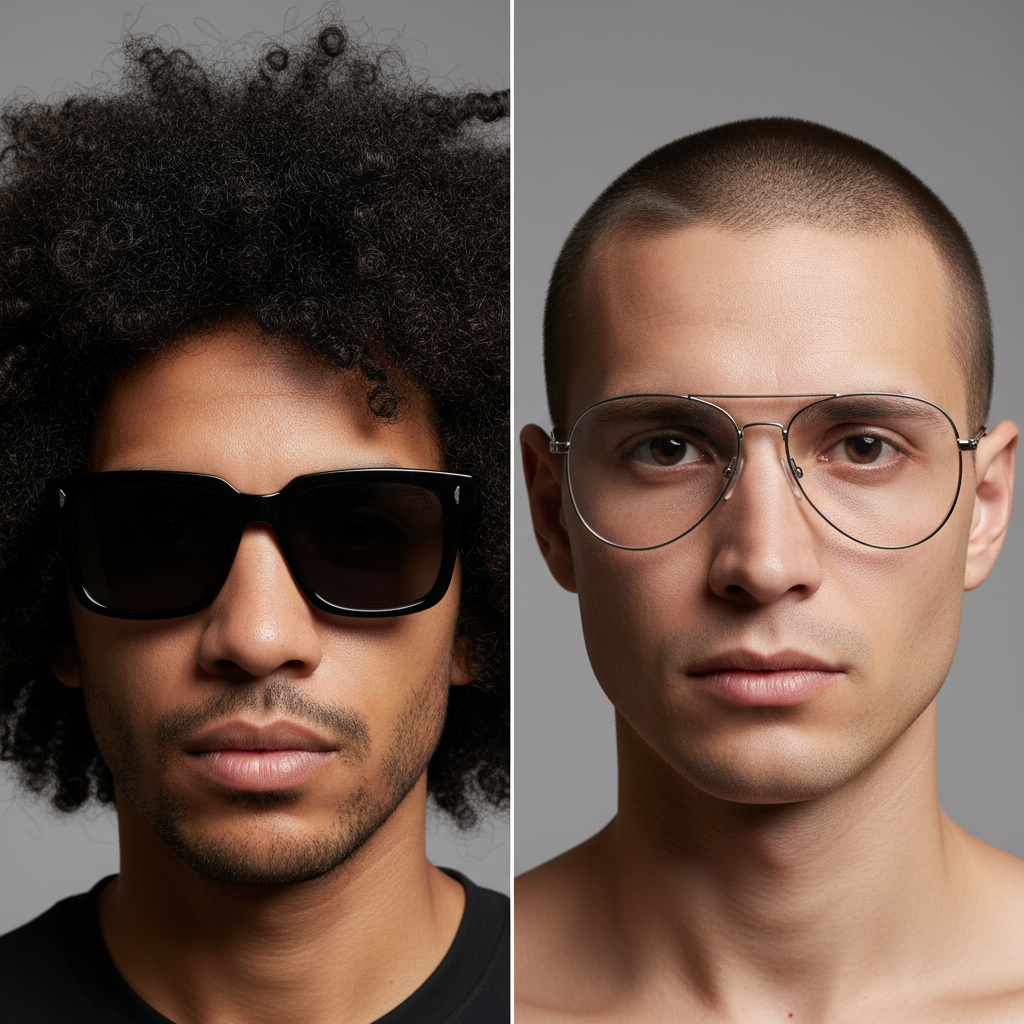
- High-Volume or Textured Hair: If you rock a fuller hairstyle like curls, waves, or a high-top, you can easily balance a thicker frame or one with a prominent top bar, like a classic aviator style. The volume of your hair provides a counterweight to the stronger frame.
- Low-Volume or Slicked Hair: For men with shorter, cropped hair, fades, or slicked-back styles, a heavy top bar can look top-heavy. You’re often better served by frames with a lower bridge, a thinner top line, or even a rimless design. This keeps the focus on your eyes and maintains a clean, sleek profile.
Matching Sunglasses to Your Beard Style
A beard dramatically changes your face shape and the space you have to work with. The primary mistake we see is ignoring the physical interaction between the frame and the beard, leading to a "beard collision" where the glasses are constantly being pushed up or don't sit naturally.

Here’s a breakdown of how to pair frames with different beard lengths.
The Stubble (0-3mm) & The Short Beard (3-10mm)
With a short, tight beard, you have the most freedom. Your beard doesn’t add much bulk to the lower half of your face, so it won’t interfere with the frame. This is your chance to experiment with bolder, fuller frames that might overwhelm a longer beard. The key is to ensure the nose bridge still fits correctly, allowing the glasses to sit properly without being held up by the top of your facial hair.
The Medium Beard (10-25mm)
This is where "beard clearance" becomes crucial. As your beard grows, it starts to occupy the space where the bottom of your sunglass frames would naturally sit. You need to ensure there’s a visible gap—ideally at least 6-8mm—between the top of your beard line and the lower rim of your frames. This prevents the beard from pushing your glasses up your nose. Look for frames that are either slightly smaller vertically or have a higher bridge to lift them clear of your beard line.
The Long Beard (>25mm)
With a long beard, the goal is to avoid adding more visual weight to the lower half of your face. Heavy, dark, full-rimmed glasses combined with a long beard can make you look bottom-heavy and drag your features down.
The solution is to go for lighter styles:
- Higher Bridges: Look for keyhole bridges or high-set bridges that lift the frames up.
- Lighter Materials: Opt for wire-frames, rimless, or semi-rimless styles.
- Softer Shapes: Round or oval shapes can contrast nicely with the length of the beard.
- Minimalist Designs: Explore minimalist sunglasses that offer a clean aesthetic without competing with your beard.
Pro Tip: The Beard-Matching Cheat Sheet
To make it easier, we’ve created a simple table to guide your choices. This structured asset helps you quickly identify the best frame strategy for your beard length.
| Beard Length | Category | Frame Strategy | Key Consideration |
|---|---|---|---|
| 0–3 mm | Stubble | Go wild. Bolder, fuller frames work well. | Focus on nose bridge fit. |
| 3–10 mm | Short Beard | Highly versatile. Most styles work. | Ensure frames don't rest on the beard. |
| 10–25 mm | Medium Beard | Prioritize vertical clearance. | Look for smaller lens heights or higher bridges. |
| >25 mm | Long Beard | Go for visual lightness. | Avoid bottom-heavy frames; opt for wire or semi-rimless. |
Harmonizing Frames with Your Hairstyle
Just like with beards, your hairstyle dictates the "canvas" your sunglasses will be placed upon. You want a frame that complements the shape and volume of your hair.
Short Hair, Fades, and Buzz Cuts
This is the ultimate clean slate. With your hair cropped close, your face and your frames become the main event. This is a great opportunity to make a statement with unique shapes, bold colors, or interesting materials. Because there’s no hair volume to compete with, almost any style can work, so it comes down to your personal aesthetic and face shape.
Medium-Length & Long Hair
For those with longer hair, the key variable is the temple arms of the sunglasses. If you often tuck your hair behind your ears, you know the frustration of sunglass arms that are too short or tight. They create pressure points and push the frames down your nose.
Expert Tip: Add 3–7 mm to the standard temple length if you wear your hair long or tucked behind your ears. This extra length provides a secure and comfortable fit without interfering with your hair.
High-Volume Hair (Curls, Afros, Pompadours)
As mentioned earlier, volume on top needs a counterweight. If you have big, beautiful hair, don't be afraid of a substantial frame. A thick acetate frame, a strong browline style, or an oversized shape will feel balanced and intentional. A tiny, delicate frame can get lost and look comically small.
Advanced Styling: The Details That Make the Difference
Once you’ve nailed the proportions, focus on these final details to perfect your look.
Color Contrast
Matching your frame color exactly to your hair or beard color can look a bit too deliberate and contrived. A more sophisticated approach is to aim for moderate contrast. Choose a frame color that is one or two tonal steps lighter or darker than your hair/beard. For example:
- Dark Brown/Black Hair: Try frames in tortoiseshell, charcoal gray, or olive green.
- Blond/Light Brown Hair: Rich browns, navy blue, or even a muted crystal frame can look fantastic.
- Gray/Silver Hair: You can pull off almost anything, but black, deep blue, and clear frames create a particularly sharp, modern contrast.
Debunking a Myth: The Danger of Unverified Lenses
There's a common misconception that the darkness of a lens is what protects your eyes. This is dangerously false. In reality, UV protection comes from an invisible coating or inherent properties of the lens material. As MD Anderson Cancer Center points out, wearing dark lenses without certified UV protection is more harmful than wearing no sunglasses at all. The dark tint causes your pupils to dilate, allowing even more damaging UV radiation to enter your eye.
This is why it's critical to only buy from reputable sources. A study published in PMC found that a major reason people avoid sunglasses is "uncertainty in the efficiency of UV protection" from affordable brands. Always look for a label that guarantees 100% UVA/UVB or UV400 protection. The American Optometric Association recommends sunglasses that block 100% of UV-A and UV-B rays to safeguard against cataracts and other long-term eye diseases.
Key Takeaways: Your New Sunglass Strategy
Choosing the right sunglasses is about creating a holistic, balanced look. It’s time to move beyond just face shape and consider the crucial role of your grooming.
- Think in Proportions: Use your sunglasses to balance the visual weight of your hair and beard. Fuller hair can handle bolder frames.
- Mind the Beard Gap: For medium-to-long beards, ensure there is at least 6-8mm of clearance between the top of your beard and the bottom of your frames to prevent "beard collision."
- Match Temple Length to Your Hairstyle: If you tuck your hair behind your ears, opt for longer temple arms (add 3-7mm) for a comfortable, secure fit.
- Aim for Contrast, Not a Perfect Match: Choose frame colors that are a few tonal steps away from your hair and beard color for a more stylish, less contrived look.
- Prioritize Protection: Style is important, but safety is paramount. Never compromise on certified UV400 protection.
By applying these real-world styling heuristics, you can confidently select sunglasses that not only fit your face but perfectly complement your entire aesthetic, from the top of your head to the tip of your beard.
Disclaimer: This article is for informational purposes only and does not constitute professional medical advice. Always consult a qualified eye care professional for any concerns about your vision or eye health. Ensure your sunglasses meet the required safety standards for UV protection in your region.
References
- MD Anderson Cancer Center: 9 things to know about sunglasses, eye protection and cancer
- PMC (Public Awareness of UV Harm): Public Awareness, Knowledge, and Behavior Related to Ultraviolet Radiation Exposure
- American Optometric Association (AOA): UV Protection