

Are Light-Colored Eyes More Sensitive to UV Than Dark Eyes?
Are Light-Colored Eyes More Sensitive to UV Than Dark Eyes?
You may have noticed that friends with blue, green, or hazel eyes seem to squint more in bright sunlight. This isn't just a coincidence; it's a direct result of the eye's natural protective mechanisms. There is a clear scientific link between eye color and sensitivity to ultraviolet (UV) radiation.
This article breaks down the science behind why light-colored eyes face a higher risk from sun exposure. We will explore the specific health concerns this creates and provide an expert-backed, practical guide to ensure your eyes, no matter their color, are fully protected for a lifetime of healthy vision.
TL;DR: The Short Answer
- Yes, light-colored eyes are more sensitive to light and UV radiation. They contain less of a protective pigment called melanin, which acts as a natural, internal sunblock.
- This leads to greater risk. Lower melanin levels are linked to increased immediate light sensitivity (photophobia) and a statistically higher lifetime risk for developing serious conditions like uveal melanoma (a type of eye cancer) and cataracts.
- Your best defense is certified protection. Always choose sunglasses that are explicitly labeled "UV400" or "100% UVA/UVB Protection." Lens darkness and color do not indicate UV protection.
- Frame design is critical. A significant amount of UV radiation enters the eye from the sides of your glasses. Wraparound styles or large, close-fitting frames are essential for blocking this peripheral exposure.
The Science of Melanin: Your Eye's Natural Shield
To understand why eye color matters, we first need to talk about melanin. This is the same pigment that determines the color of your skin and hair. In the eye, melanin is found in the iris, the colored ring that controls the size of your pupil.
A common misconception is that blue or green eyes contain blue or green pigments. In reality, all eyes contain the same type of brown pigment, eumelanin. The difference is in the amount and density of that pigment in the front layers of the iris.
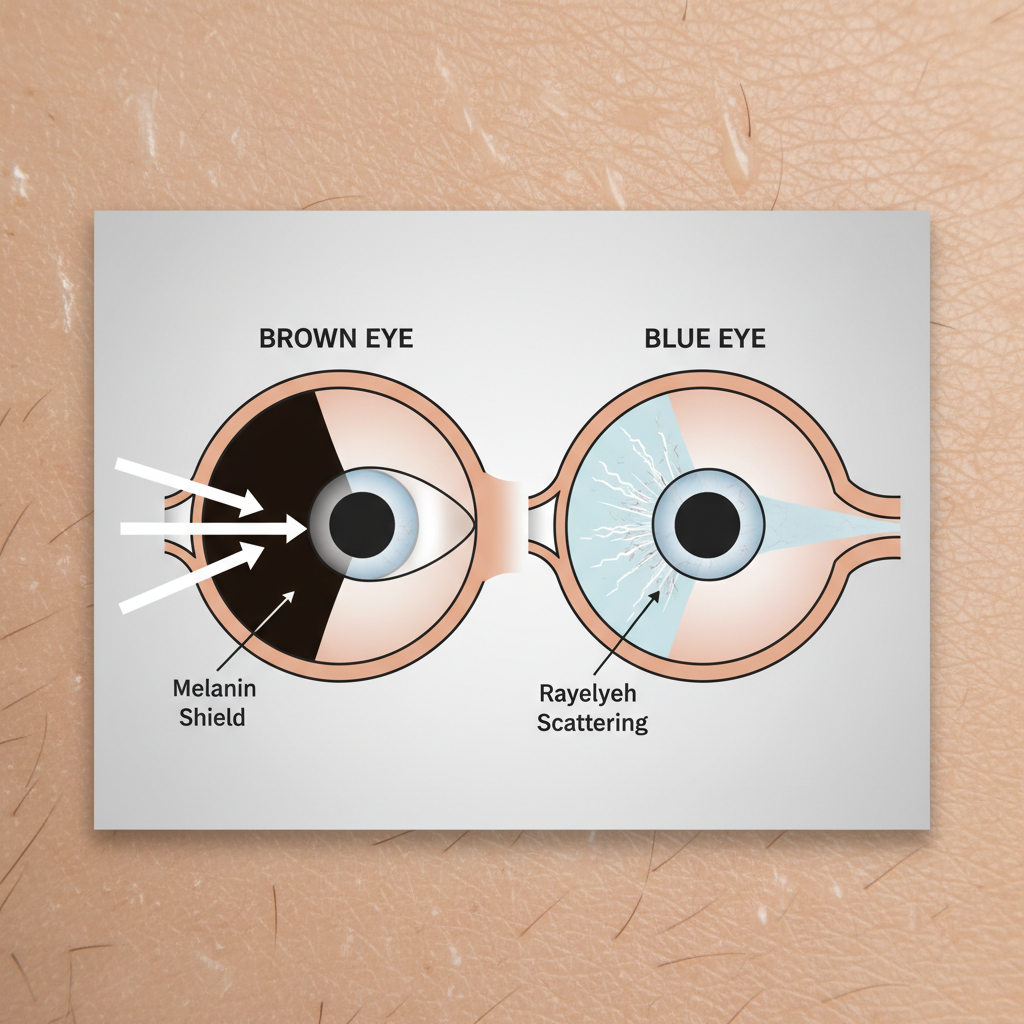
- Brown Eyes: A dense concentration of melanin in the iris absorbs most of the light that enters, making the eye appear dark brown. This dense layer acts as a "melanin shield," blocking UV radiation from passing through to the delicate structures at the back of the eye, like the lens and retina.
- Blue, Green, or Hazel Eyes: These eyes have significantly less melanin. Instead of absorbing light, the less-pigmented iris scatters it. This phenomenon, known as the Tyndall effect, is what makes the eyes appear blue or green. With a weaker melanin shield, more harmful UV light can penetrate the eye.
The Real Risks: What "More Sensitive" Actually Means
The lack of protective pigmentation in lighter eyes leads to two distinct categories of risk: immediate discomfort and long-term cellular damage.
Immediate Discomfort: Photophobia
Photophobia is the medical term for light sensitivity. As confirmed by experts at Duke Health, people with light-colored eyes experience this more frequently because their irises are less effective at blocking harsh light. This results in symptoms like:
- Excessive squinting in normal daylight
- Eye pain or discomfort in bright environments
- Watery eyes when exposed to sun
While photophobia itself doesn't cause permanent damage, it's a clear signal that your eyes are being overwhelmed by more light than they can comfortably handle.
Long-Term Damage: Increased Disease Risk
The more serious concern is the cumulative damage from years of UV exposure. Because more radiation passes through a light-colored iris, the lifetime risk for several eye diseases is elevated.
- Uveal Melanoma: This is a rare but very serious form of cancer that develops in the melanin-producing cells of the eye. A rigorous study on the topic, published in the International Journal of Molecular Sciences, identifies light eye color as a significant risk factor, with a risk increase of 1.5 times or more. The study explains that the reduced eumelanin in light-colored irises provides far less photoprotection.
- Cataracts: According to the Mayo Clinic, cumulative UV exposure is a primary cause of cataracts, the clouding of the eye's natural lens. Research from the National Eye Institute has shown how UV light triggers a destructive process called glycation within the lens, causing it to harden and yellow over time. With less melanin to block this radiation, the process can be accelerated.
- Pterygium ("Surfer's Eye"): This is a fleshy growth on the white of the eye that can eventually grow over the cornea and interfere with vision. It is strongly linked to UV exposure, particularly from peripheral light that reflects off surfaces like water or snow. A scientific review on photoprotection highlights the "Coroneo Effect," where side-on UV rays are focused onto the part of the eye where these growths typically form.
The Ultimate Protection Playbook for Light-Colored Eyes
The good news is that these risks are highly manageable with the right protective strategy. Protecting your eyes is not just about comfort; it's a critical health measure.
Step 1: Master the Lens Requirements
Not all sunglasses are created equal. When selecting a pair, these features are non-negotiable.
- Demand the UV400 Standard: This is the single most important feature. A UV400 rating ensures the lenses block at least 99% of UVA and UVB rays up to 400 nanometers. As noted in a technical report in Clinical and Experimental Optometry, some standards only require protection up to 380nm, leaving a dangerous gap that allows high-energy UVA radiation to pass through.
- Forget the Darkness Myth: One of the most dangerous misconceptions is that a darker lens provides more protection. According to experts at the MD Anderson Cancer Center, wearing dark lenses without certified UV protection can be worse than wearing no glasses at all. The dark tint causes your pupils to dilate, opening a wider pathway for invisible UV radiation to enter and damage the eye.
- Understand Polarization vs. UV: Harvard Health Publishing clarifies that polarization and UV protection are two different things. Polarization is a filter that cuts down on horizontal glare from reflective surfaces like roads and water. While excellent for visual comfort and safety, it does not block UV radiation on its own. Always check for the UV400 label, even on polarized lenses.
Step 2: Prioritize Frame Geometry
Where the lenses are the shield, the frame is the fortress wall. Research using 3D models has shown that standard, flat-front frames allow a significant amount of UV radiation to leak in from the top and sides.
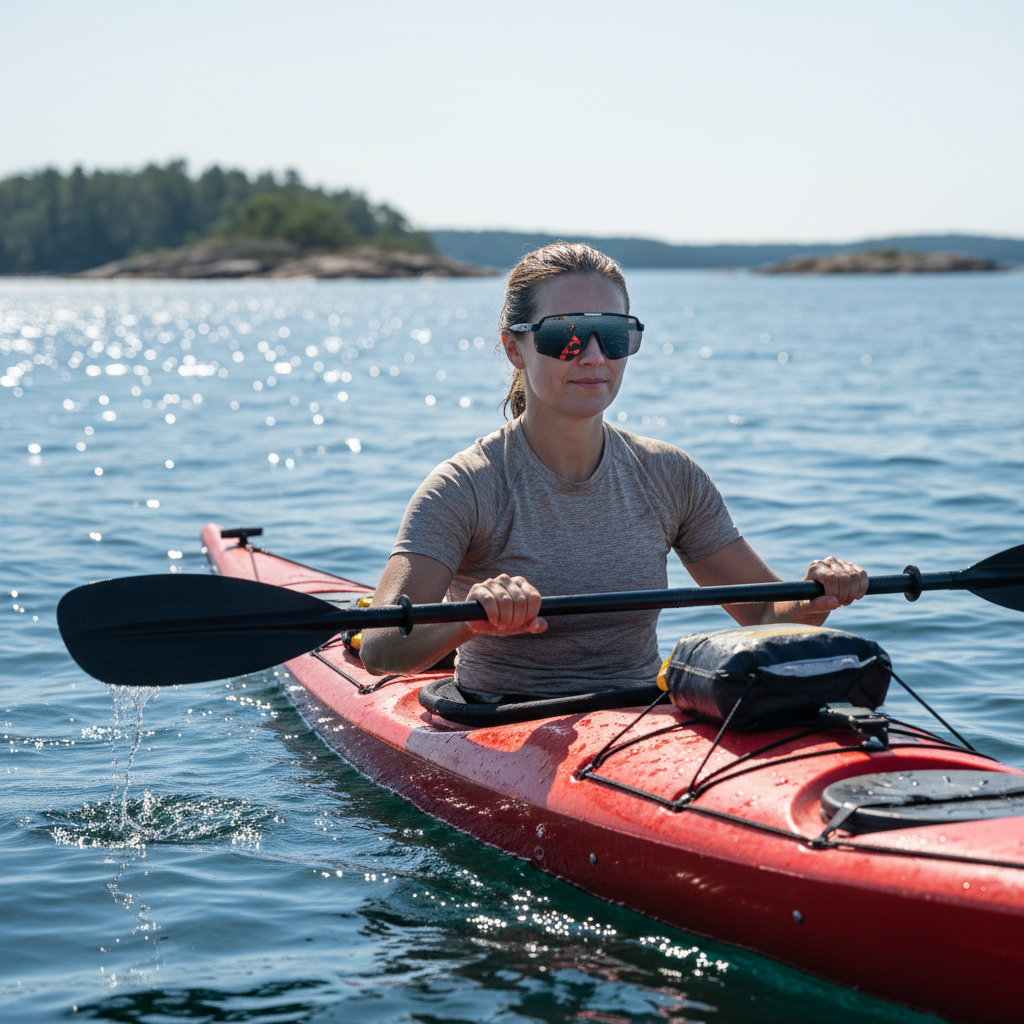
- Choose Wraparound or Oversized Styles: The American Academy of Ophthalmology (AAO) recommends oversized or wraparound sunglasses to cut down on this peripheral exposure. A close-fitting, large frame can block up to 95% of damaging rays.
Step 3: Build a Sun-Smart Lifestyle
Your sunglasses are your primary tool, but they work best as part of a broader strategy.
- Add a Wide-Brimmed Hat: A hat can block a significant amount of overhead sunlight, further reducing the total UV load on your eyes and face.
- Know High-Risk Environments: The AOA warns that UV exposure is more intense at high altitudes and when reflected off snow, water, or sand. Be extra vigilant in these conditions.
- Protect Your Children: UV damage is cumulative over a lifetime. The Mayo Clinic advises that children should start wearing proper eye protection as early as 6 months old. This is especially critical for children with light-colored eyes, as their internal lenses are clearer than an adult's, allowing more UV to reach the retina.
Frequently Asked Questions
Q: Are expensive sunglasses better at UV protection? Not necessarily. While price can reflect frame material, design, and lens clarity, it does not guarantee superior UV protection. A study published in PubMed found that while unregulated vendors carry higher risks, price itself is not the best indicator. The most important factor is a clear label certifying "UV400" or "100% UV Protection," which can be found on affordable pairs from reputable retailers.
Q: What is the best lens color for sunglasses? Lens color is mostly a matter of preference, but some colors have advantages for specific activities. According to the Cleveland Clinic, gray lenses provide the most accurate color perception, making them ideal for driving. Brown or amber lenses can enhance contrast, which can be useful for sports. Regardless of the color, it must be paired with a UV400 rating.
Q: My eyes feel tired and gritty after a day in the sun, even with sunglasses. Why? This can be a mild form of photokeratitis, essentially a sunburn on the surface of your cornea. It's a sign that your eyes are still getting too much UV exposure. This often happens due to peripheral light leakage. Consider upgrading to a larger, wraparound frame for better coverage.
Your Eyes, Your Responsibility
While having light-colored eyes does place you in a higher-risk category for sun-related damage, this risk is almost entirely manageable. It simply means that you must be more diligent and non-negotiable about your eye protection strategy.
Think of high-quality, UV400-rated sunglasses not as a seasonal accessory, but as essential health equipment, just like sunscreen for your skin. By choosing the right lenses and frames, you take control of your long-term eye health, ensuring your vision stays clear and comfortable for years to come.
Disclaimer: This article is for informational purposes only and does not constitute professional medical advice. Please consult with a qualified eye care professional for any health concerns or before making any decisions related to your vision health.
References
- The Impact of Ultraviolet Radiation on the Aetiology and Development of Uveal Melanoma. International Journal of Molecular Sciences. https://pmc.ncbi.nlm.nih.gov/articles/PMC8038359/
- Myth or Fact: Blue Eyes Are More Sensitive to Light. Duke Health Blog. https://www.dukehealth.org/blog/myth-or-fact-people-light-eyes-are-more-sensitive-sunlight
- 9 things to know about sunglasses, eye protection and cancer. MD Anderson Cancer Center. https://www.mdanderson.org/cancerwise/9-things-to-know-about-sunglasses--eye-protection-and-cancer.h00-159699123.html
- Choosing the Best Sunglasses. American Academy of Ophthalmology. https://www.aao.org/eye-health/glasses-contacts/sunglasses-3
- Mayo Clinic Minute: Why sunglasses are a must-wear. Mayo Clinic News Network. https://newsnetwork.mayoclinic.org/discussion/mayo-clinic-minute-why-sunglasses-are-a-must-wear/
- Solar UV protection by sunglasses: a technical report on the status of the standards. Clinical and Experimental Optometry. https://pubmed.ncbi.nlm.nih.gov/31274741/
- Ocular UV dosimetry from 3D head-form study. Photochemical & Photobiological Sciences. https://pmc.ncbi.nlm.nih.gov/articles/PMC6803516/
- New research sheds light on how UV rays may contribute to cataract. National Eye Institute. https://www.nei.nih.gov/about/news-and-events/news/new-research-sheds-light-how-uv-rays-may-contribute-cataract