


Troubleshooting Common Fit Issues for Kids' Eyewear
A Practical Guide to Solving Common Fit Problems with Your Child's Eyewear
Getting the right pair of glasses for a child involves more than just a correct prescription; the fit is just as crucial. Children's faces are constantly growing and changing, which makes finding a comfortable, secure fit a unique challenge. When glasses slip, pinch, or sit incorrectly, they don't just cause discomfort—they can also compromise the effectiveness of the lenses.
This guide provides a step-by-step approach to identifying and fixing the most common fit issues. Think of it as your at-home toolkit for making those small adjustments that make a world of difference.
TL;DR: The Four-Point Fit Check
- The Bridge: Do the glasses rest securely on the nose without slipping or leaving red marks?
- The Temples: Do the arms hug the side of the head gently and loop comfortably over the ears?
- Lens Position: Are your child's pupils centered in the lenses?
- Overall Size: Is the frame width aligned with your child's face width?
The Foundation of a Good Fit: Sizing and PD
Before we dive into adjustments, let's start with the foundation: the initial measurements. Getting these right from the start prevents most common problems.
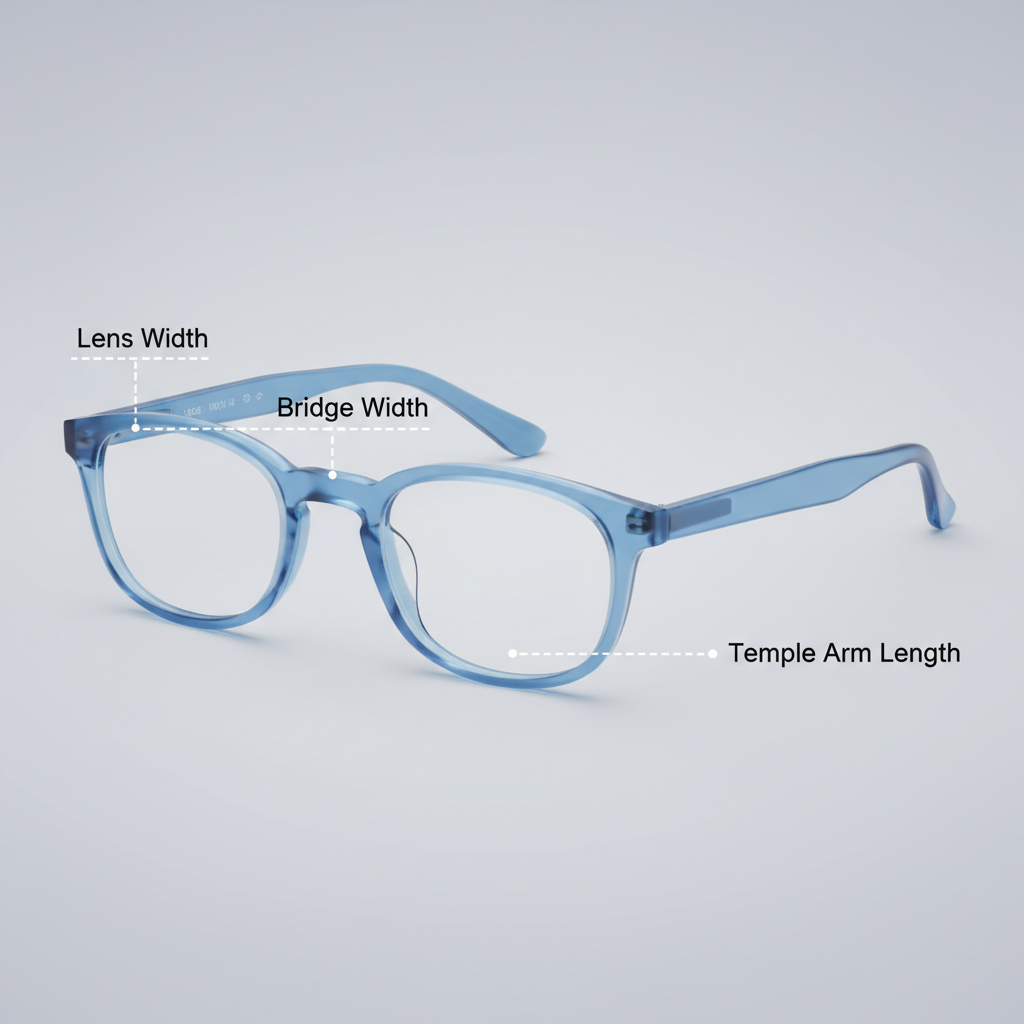
Decoding the Numbers: Lens Width is Key
While style is important, the frame's dimensions are the most critical factor for a good fit. The primary number to focus on is the lens width (also called "lens-box"). From my experience, this is the best anchor for sizing a child's frame.
Here is a reliable heuristic for matching lens width to age:
- Toddlers (2–4 years): ~39–43 mm
- Young Children (5–8 years): ~44–46 mm
- Pre-teens (9–12 years): ~47–50 mm
- Teens (13+): ~50–54 mm
These are starting points, of course, and should always be verified against your child's unique face width.
The Critical Role of Pupillary Distance (PD)
Pupillary Distance (PD) is the measurement in millimeters between the centers of your pupils. It's essential because it dictates where the optical center of the lenses should be placed. An incorrect PD means your child won't be looking through the most precise part of the lens, which can cause eye strain and visual distortion.
For children, the tolerance for error is very small. A PD that is off by more than 2 mm can noticeably impact vision and comfort. While online tools have become quite accurate, it's vital to ensure you have a precise number. For more information, our guides on how to measure your PD at home and understanding if a small PD error matters are excellent resources.
Step-by-Step Troubleshooting for Common Fit Problems
Even with the right measurements, minor issues can arise as your child wears their new glasses. Here’s how to tackle the most frequent complaints.
Problem 1: The Glasses Keep Slipping Down the Nose
This is the most common issue parents face. If your child is constantly pushing their glasses back up, it's a clear sign an adjustment is needed.
-
Cause A: The Bridge is Too Wide. If the frame’s bridge doesn't make proper contact with the sides of your child's nose, gravity will win. For plastic frames, the fit of the bridge is fixed, so it's crucial to select one that sits snugly from the start. For metal frames with adjustable nose pads, you can gently push the pads closer together for a tighter fit.
-
Quick Fix: For active kids, silicone nose pads or cable converters that wrap around the ear can be a lifesaver. They add grip and keep frames securely in place during play.
-
Cause B: The Temple Arms are Too Loose. The bend in the temple arm behind the ear is what secures the frame. The arm should follow the contour of the ear and have a gentle, inward pressure. A common mistake is having the arms bent at too sharp an angle, or not bent enough. The ideal adjustment creates a gentle 8–15° toe-in for a stable hold.
Problem 2: The Frames are Pinching or Leaving Red Marks
Discomfort is a sure sign of a poor fit. Red marks are a tell-tale sign that the pressure is too concentrated in one area.
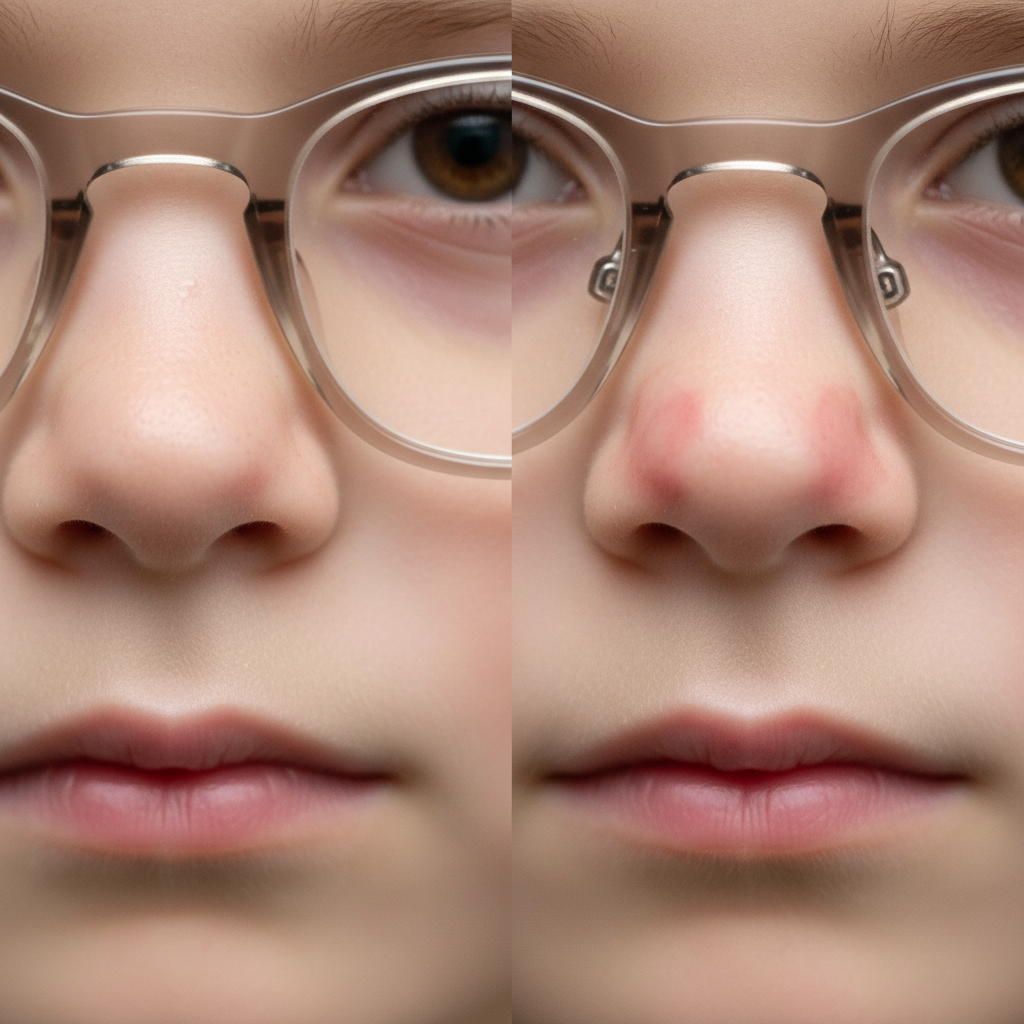
- Cause A: The Bridge is Too Narrow. If you see red marks on either side of the nose, the bridge is likely too tight, putting undue pressure on the area. This is a sizing issue that can't be adjusted and requires a frame with a wider bridge.
- Cause B: The Overall Frame Width is Too Narrow. If the red marks are on the side of the head, the frame itself is too small. The temple arms should run straight back without flaring out. A good solution for this is selecting frames with spring hinges, which offer more flexibility and a gentler grip.
Problem 3: Your Child is Looking Over the Top of the Lenses
If your child has to tilt their head down to see through their glasses, the prescription isn't helping them. This is almost always a symptom of the glasses slipping down their nose. Refer back to the solutions in Problem 1 to secure the bridge and temple fit. The goal is to have their pupils consistently aligned with the optical center of the lenses.
Problem 4: Eyelashes are Brushing Against the Lenses
This can be incredibly annoying for a child and may cause them to avoid wearing their glasses. The issue here is an incorrect vertex distance—the space between the back of the lens and the front of the eye.
For children with high prescriptions (greater than ±4.00 D), this distance is especially important, as even a 1 mm change can alter the effective power of the lens. The easiest fix is to use adjustable nose pads to move the frames slightly further from the face, creating the necessary clearance for their lashes.
A Quick-Fix Checklist for Parents
Use this table as a quick reference for diagnosing and solving common fit issues.
| Issue | Primary Check | Quick Fix Solution |
|---|---|---|
| Slipping Down Nose | Bridge Fit & Temple Bend | Add silicone ear grips or adjust nose pads. Gently increase the inward bend of the temple arms. |
| Red Marks on Nose | Bridge Width | This indicates the bridge is too narrow. A different frame style is likely needed. |
| Pinching at Temples | Overall Frame Width | Ensure the frame width matches the face width. Look for frames with spring hinges for added comfort. |
| Looking Over Lenses | Pupil Alignment | This is a symptom of a slipping frame. Address the bridge and temple fit to keep pupils centered. |
| Lashes Hitting Lenses | Vertex Distance | If the frame has adjustable nose pads, move them to create more space between the eyes and the lenses. |
Durability and Safety First
A good fit also means a durable and safe pair of glasses.
- Lenses: For children, polycarbonate or high-index lenses are the standard recommendation. They are significantly more impact-resistant than basic plastic. All spectacle lenses sold in the United States must comply with the FDA's impact-resistant standards (21 CFR 801.410), providing a baseline of safety for your child.
- Frames: Look for flexible materials like TR-90, which can withstand bending and twisting. Spring hinges are also a must-have feature for kids, as they allow the temples to flex outwards without breaking.
A Note on Adjustments: When to DIY and When to See a Pro
You can perform many minor adjustments at home. Gently bending a temple arm or repositioning silicone nose pads is perfectly safe. For plastic frames, running them under warm water for a minute can make them pliable enough for a slight adjustment.
However, avoid any adjustments that require high heat. Without professional tools, you risk damaging the frame material or lens coatings. If a simple adjustment doesn't solve the problem, it's always best to consult an optical professional.
Wrapping Up: Key Takeaways for a Perfect Fit
Ensuring your child's glasses fit correctly is an ongoing process, but it doesn't have to be complicated. By focusing on the right initial measurements and learning to spot the signs of a poor fit, you can make simple adjustments that keep their eyewear comfortable and effective.
Remember to prioritize function and measurement first, choose durable materials, and regularly check the fit, especially after a growth spurt. A well-fitting pair of glasses is a tool that empowers your child to see the world clearly and confidently.
Frequently Asked Questions (FAQ)
How often should my child's glasses fit be checked? A good rule of thumb is to check the fit every six months, or anytime your child has a noticeable growth spurt. A quick check after a rough day of play is also a good idea.
Can I use adult frames for my teenager? While some teens may fit into smaller adult sizes, it's always best to focus on the measurements, not the label. Pediatric and teen frames are often designed to accommodate developing facial features, such as a lower or wider nose bridge.
Are spring hinges really necessary for kids' glasses? They are highly recommended. Spring hinges allow the temple arms to flex beyond 90 degrees, which provides a more forgiving and durable fit for active children who may not always handle their glasses with care.
Disclaimer: This article is for informational purposes only and does not constitute professional medical advice. The information provided is intended to help with minor comfort adjustments. Always consult a qualified optometrist or optician for comprehensive eye exams, prescriptions, and significant frame adjustments.
References
- U.S. Food & Drug Administration (FDA). (2021). Impact-Resistant Lenses: Questions and Answers. https://www.fda.gov/regulatory-information/search-fda-guidance-documents/impact-resistant-lenses-questions-and-answers