

Do Sunglasses Expire? Understanding UV Coating Longevity
The Unseen Expiration Date on Your Sunglasses
We replace sunscreen, running shoes, and even kitchen sponges when they wear out. But what about sunglasses? They don't have a printed expiration date, yet the vital protection they offer isn't permanent. While the frames might last for years, the invisible shield against ultraviolet (UV) radiation can degrade, leaving your eyes vulnerable to serious, cumulative damage.
This isn't just about a few scratches. It's about the gradual, invisible failure of a critical health device. Understanding the lifespan of your sunglasses is essential for protecting your vision. This article examines the science behind UV lens coatings, the factors that cause them to break down, and the clear signs that indicate it's time for a new pair.
The Science of UV Protection: More Than Just Tint
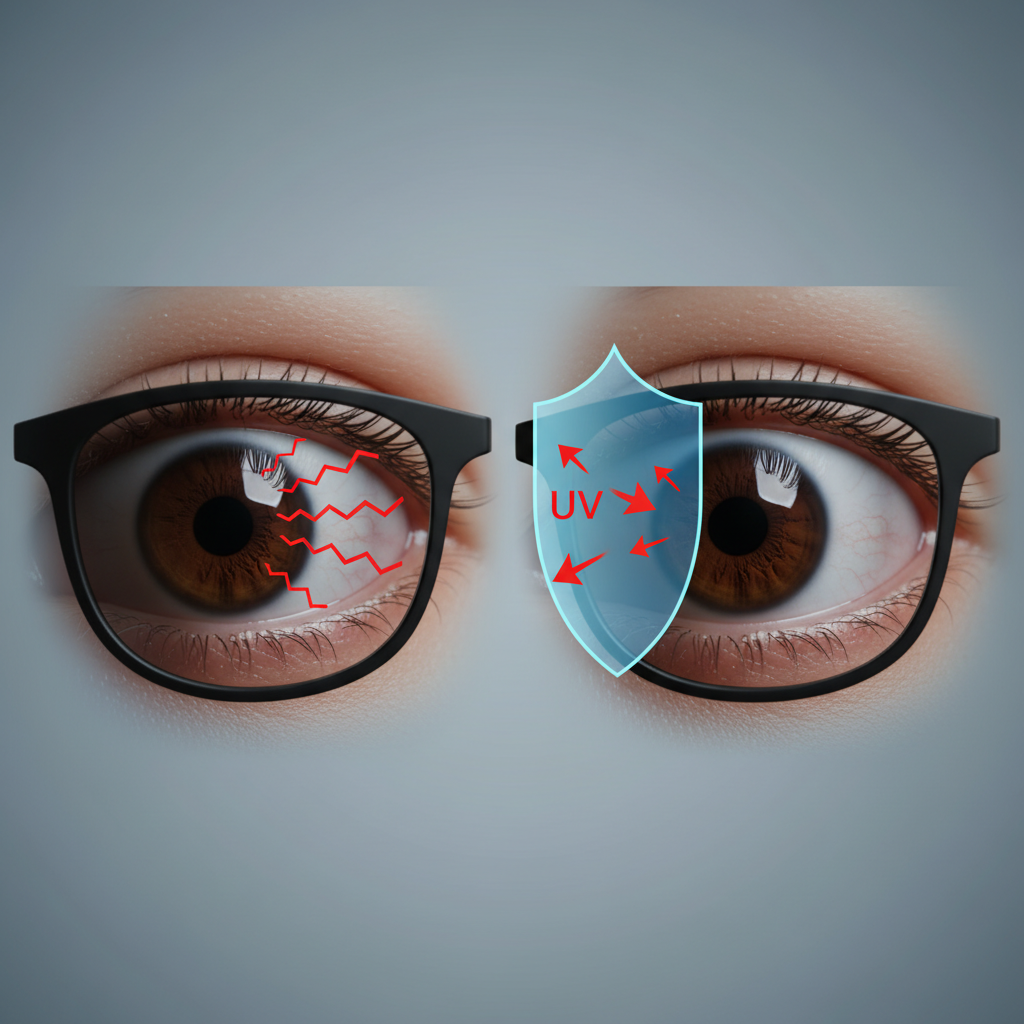
The most common misconception about sunglasses is that the darkness of the lens is what protects your eyes. In reality, the tint has little to do with UV safety. A dark lens without a proper UV filter is actually more dangerous than wearing no sunglasses at all.
This phenomenon, often called the "Darkness Fallacy," is a simple matter of physiology. As noted by experts at the MD Anderson Cancer Center, in dim light, your pupils dilate to let more light in. If your dark lenses lack a UV filter, they trick your pupils into opening wide, allowing an even greater dose of damaging UV radiation to flood into your eyes.
True protection comes from a clear chemical coating or inherent properties within the lens material that absorb or reflect UV rays. Here’s what to look for:
- UV400 Protection: This is the gold standard, indicating that the lenses block light rays with wavelengths up to 400 nanometers. This range covers 100% of both UVA and UVB rays.
- Embedded vs. Coated: Many modern lens materials, like polycarbonate, have UV protection built directly into the polymer. This "embedded" protection won't scratch off or wear out. However, other plastic lenses rely on a UV-blocking coating applied to the surface. This coating is what's susceptible to degradation over time.
- The 380nm vs. 400nm Gap: Some older or lower-quality standards only certify protection up to 380 nm. However, research has shown that the 380-400 nm range contains a significant amount of high-energy UV light. A technical report highlighted by PubMed criticizes these standards as "not at all cautious," advocating for the full 400 nm blockage. A separate analysis in a SPIE proceeding found that the 280-400 nm range contains 45% more UV energy than the 280-380 nm range, underscoring the importance of the "UV400" label.
How Your UV Shield Wears Down
The protective power of sunglass lenses degrades through two primary mechanisms: direct UV exposure and, more significantly, physical damage from improper care.
Photobleaching: The Sun's Toll
Just as sunlight fades a photograph, it can also break down the chemical bonds in a lens's UV coating. This process is known as photobleaching. Research has demonstrated that lenses can lose their UV-blocking efficacy after prolonged exposure. One study published by SPIE found measurable degradation after just 50 hours of intense simulator exposure.
For the average wearer, this gradual decline happens over a couple of years. However, the timeline accelerates dramatically in high-UV environments.
Rule of Thumb for Replacement:
- Moderate Climate / Daily Wear: Expect effective UV protection to last approximately 2-3 years.
- High-UV Environments (Beaches, Mountains, High Altitudes): Consider replacing your sunglasses every 12-18 months. Snow and water can double your UV exposure, as warned by the American Academy of Ophthalmology (AAO).
The Real Culprit: Improper Cleaning
While UV degradation is a factor, our own observations in optical care show that the single biggest accelerator of coating failure is improper cleaning. Using abrasive materials like paper towels, napkins, or the corner of your shirt grinds microscopic particles of dust and debris across the lens surface. This creates a network of fine scratches.
These micro-scratches do more than just obscure your vision; they become focal points for the UV coating to begin peeling, flaking, and delaminating. Ammonia-based glass cleaners are equally destructive, as they can strip away the delicate lens coatings.
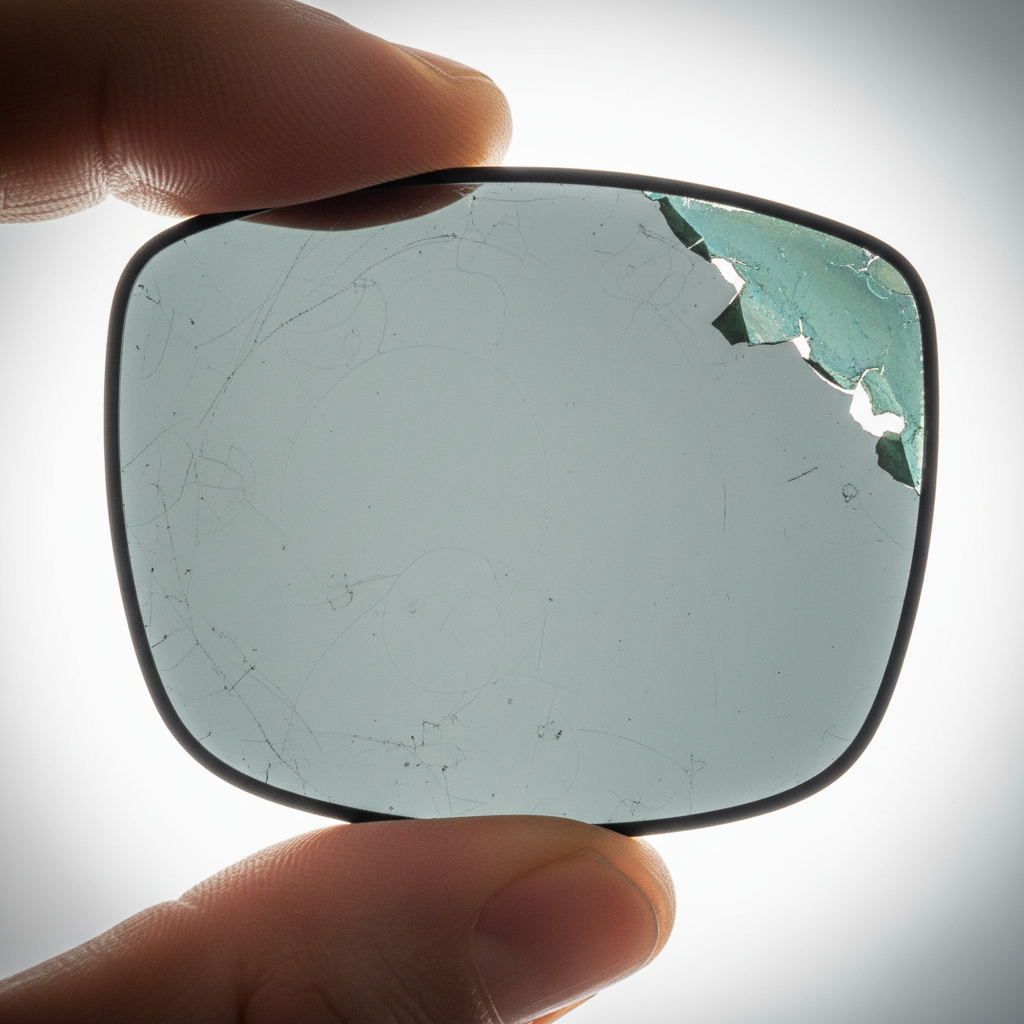
Three Ways to Check if Your Sunglasses Have Expired
Since there's no digital display counting down the life of your UV filter, you need to rely on inspection and professional testing.
- The Bright Light Test: Hold your sunglasses up to a bright, diffuse light source, like an overcast sky or a well-lit white computer screen. Tilt them back and forth. If you can see a fine, grainy haze, a spiderweb of tiny scratches, or any areas that look like a peeling film, the coating integrity is compromised.
- The Professional Photometer Test: This is the only definitive way to know your lens's current UV-blocking capability. As recommended by University of Utah Health, most optical shops have a device called a UV photometer and can test your sunglasses, often for free. It provides an exact measurement of UV transmittance, leaving no room for doubt. Consumer-grade UV meter guns sold online often lack the precision to detect the subtle but critical 5-10% degradation that can impact eye safety.
- Age and Usage Audit: If you can't remember when you bought them, or if they have been your constant companion on sunny hikes, beach trips, and ski adventures for several years, it is prudent to assume the protection has diminished. Proactive replacement is a cornerstone of good eye health.
The Health Consequences of Faded Protection
Wearing sunglasses with compromised UV filters is not a neutral act; it's an active risk. The cumulative nature of UV damage means the consequences may not appear for decades.
- Cataracts: This clouding of the eye's natural lens is strongly linked to UVB exposure. Research from the National Eye Institute (NEI) has uncovered the specific molecular mechanism: UV light triggers a process called glycation, causing proteins in the lens to clump together. A compelling study of rural residents in a high-UV zone in Taiwan found that participants who did not wear glasses had a 57% increased risk of cataracts.
- Pterygium ("Surfer's Eye"): This is a fleshy growth on the white of the eye that can invade the cornea and affect vision. It's caused by UV light, wind, and dust. The risk is heightened by a phenomenon known as the "Coroneo Effect," where peripheral light entering from the side of the glasses is focused onto the inner edge of the eye—the most common site for these growths. This is why the AAO recommends oversized or wraparound styles for maximum protection.
- Eyelid Cancers: According to MD Anderson, a staggering 90% of cancers on the eyelid are Basal Cell Carcinomas, directly linked to sun exposure. Large frames are crucial for protecting this delicate skin.
- Macular Degeneration (AMD): While the evidence is less definitive than for cataracts, some research suggests a link between long-term UV and high-energy blue light exposure and the development of AMD, a leading cause of vision loss in older adults. A review in PubMed Central notes that short-wavelength blue light can generate reactive oxygen species in the retina, a key driver of AMD. Wearing UV400 sunglasses is considered a prudent precaution.
Treat Your Sunglasses as a Health Necessity
Your sunglasses are not just a fashion accessory; they are an essential piece of health equipment with a finite service life. The invisible shield they provide against UV radiation is constantly under assault from the sun itself and, more often, from our own cleaning habits.
Regularly inspecting your lenses for scratches and hazing, having them professionally tested every couple of years, and replacing them proactively—especially after heavy use in intense sun—are not frivolous acts. They are fundamental steps in preserving your vision for a lifetime. Just as you wouldn't rely on expired sunscreen, don't entrust your irreplaceable eyesight to worn-out sunglasses.
Disclaimer: This article is for informational purposes only and does not constitute professional medical advice. Consult with a qualified optometrist or ophthalmologist for any concerns about your eye health.
References
- Cole, B. L. (2019). Solar ultraviolet radiation protection by sunglasses: a technical report. Clinical and Experimental Optometry, 102(6), 571–579. https://pubmed.ncbi.nlm.nih.gov/31274741/
- Masili, M., & Ventura, L. (2014). UV protection of sunglasses: A review on the relevance of the 280-400 nm range. Proceedings of SPIE, 8930, 89301E. https://ui.adsabs.harvard.edu/abs/2014SPIE.8930E..1EM/abstract
- MD Anderson Cancer Center. (2023). 9 things to know about sunglasses, eye protection and cancer. https://www.mdanderson.org/cancerwise/9-things-to-know-about-sunglasses--eye-protection-and-cancer.h00-159699123.html
- National Eye Institute. (2014). New research sheds light on how UV rays may contribute to cataract. https://www.nei.nih.gov/about/news-and-events/news/new-research-sheds-light-how-uv-rays-may-contribute-cataract
- Wang, S. Y., et al. (2021). The prevalence and risk factors of senile cataract and the association with protective behaviors in the elderly population of the Shipai community in rural Taiwan. BMC Ophthalmology, 21(1), 304. https://pmc.ncbi.nlm.nih.gov/articles/PMC8321156/
- University of Utah Health. (2023). How to Tell if Your Sunglasses Are Really Protecting Your Eyes. https://healthcare.utah.edu/healthfeed/2023/06/how-tell-if-your-sunglasses-are-really-protecting-your-eyes