

The Real Cost of Skipping Sunglasses: Irreversible Eye Damage
The Unseen Toll: How Forgoing Sunglasses Leads to Irreversible Eye Damage
Many of us grab sunglasses on a bright day as a simple matter of comfort, to reduce glare and stop us from squinting. We treat them as a seasonal accessory, a fashion statement tucked away when clouds appear. This common habit, however, is based on a fundamental misunderstanding of the real threat. The danger isn't the visible light that makes us squint; it's the invisible, high-energy ultraviolet (UV) radiation from the sun that causes cumulative, irreversible damage to our eyes.
Viewing sunglasses as optional is a costly mistake. The consequences of long-term UV exposure are not temporary discomforts but severe, sight-threatening medical conditions including cataracts, macular degeneration, and even cancer on and around the eyelids. This article reframes the conversation: sunglasses are not an accessory. They are essential, year-round medical equipment for preserving your vision. We will explore the science behind UV-induced eye damage, debunk dangerous myths, and provide a clear framework for choosing genuinely protective eyewear.
The Invisible Threat: Understanding UV Radiation
Sunlight is a spectrum of radiation, and the most damaging components to our eyes are ultraviolet A (UVA) and ultraviolet B (UVB) rays. These high-energy waves are present regardless of the season or cloud cover, penetrating atmospheric layers to reach our eyes.
-
Acute Damage: Photokeratitis: Think of photokeratitis as a sunburn on your cornea, the clear front surface of the eye. It occurs after short, intense exposure, common in environments with high reflectivity like snow, water, or sand. Symptoms include pain, redness, extreme light sensitivity, and a gritty feeling. While it's typically temporary, it's a stark warning of UV's destructive power. According to the American Academy of Ophthalmology (AAO), even on cloudy days, up to 80% of UV rays can penetrate the clouds, making protection a daily necessity.
-
The Darkness Fallacy: One of the most critical misconceptions is that a darker lens offers more protection. In reality, lens tint has no bearing on UV-blocking capability. The danger lies in wearing dark lenses that lack certified UV protection. As noted by experts at the MD Anderson Cancer Center, dark lenses cause your pupils to dilate to let in more light. If these lenses don't block UV rays, this dilation creates a wider gateway for harmful radiation to enter the eye, potentially causing more damage than wearing no sunglasses at all.
Long-Term Consequences: A Lifetime of Cumulative Damage
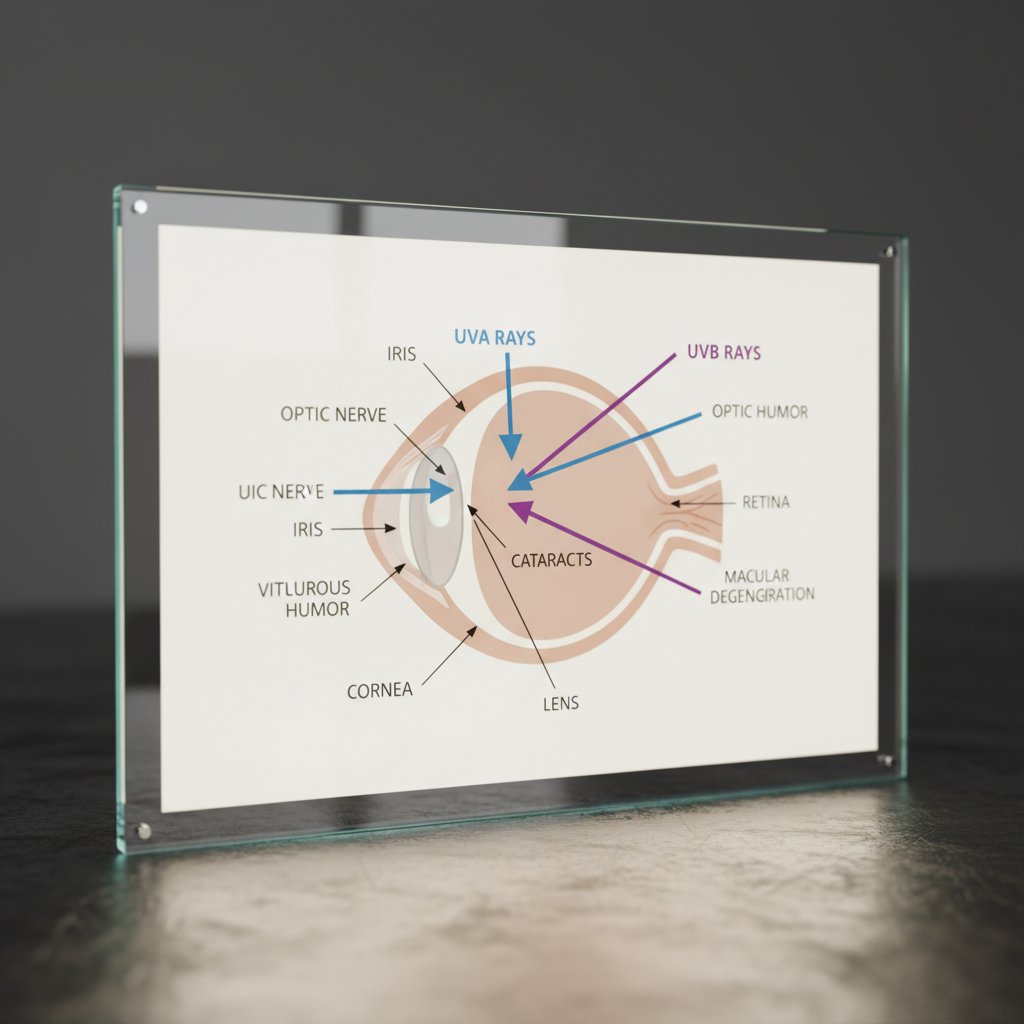
Unlike a skin sunburn that heals, much of the UV damage to your eyes is cumulative and permanent. Each unprotected exposure adds to a lifetime tally of cellular damage, slowly paving the way for serious conditions decades later.
Cataracts
A cataract is the clouding of the eye's natural lens, leading to blurry vision, faded colors, and difficulty seeing at night. The link between UV exposure and cataracts is scientifically undeniable. Research from the National Eye Institute (NEI) reveals a specific molecular mechanism: in the low-oxygen environment of the lens, UV light triggers a process called glycation, causing lens proteins to clump together and lose their transparency.
The statistical evidence is compelling. A large-scale epidemiological study in Taiwan found that individuals who consistently failed to wear sunglasses had a 57% increased risk of developing cataracts. This highlights that simple, preventative action can dramatically lower the odds of requiring future surgery. For those who have already had surgery, understanding the need for protection is even more critical, as detailed in our guide to sunglasses for post-cataract surgery.
Age-Related Macular Degeneration (AMD)
AMD is a leading cause of vision loss in older adults, destroying the sharp, central vision needed for reading and driving. While the link to UV is more complex than with cataracts, evidence suggests that high-energy visible light, particularly the blue-violet light (400-440 nm) adjacent to the UVA band, plays a role. A comprehensive review in PubMed explains that this light causes photooxidative stress, generating reactive oxygen species that damage the light-sensing cells in the macula. While the evidence linking standard UV to AMD is considered marginal, experts agree that minimizing exposure to high-energy light is a prudent, protective measure.
Pterygium ("Surfer's Eye")
Pterygium is a fleshy, wedge-shaped growth of tissue that extends from the white of the eye (conjunctiva) onto the cornea. It can cause irritation, redness, and in advanced cases, can grow over the pupil and obstruct vision. Its primary cause is chronic UV exposure. A key mechanism is the "Coroneo Effect," where peripheral light entering from the side is focused onto the nasal part of the eye, a common site for these growths. This underscores why the physical shape and fit of sunglasses are just as important as the lens technology itself.
Eyelid Cancers
The delicate skin of the eyelids is highly susceptible to sun damage. According to MD Anderson, about 90% of cancers on the eyelid are basal cell carcinomas. Because this area is difficult to protect with sunscreen, sunglasses that provide ample coverage are the primary line of defense against these malignancies.
Debunking Dangerous Myths About Sun Protection
Misinformation about sunglasses is rampant and can lead to a false sense of security. Let's clarify the facts.
-
Myth 1: "Polarization is the same as UV protection." This is incorrect. As explained by Harvard Health Publishing, polarization is a specialized filter that blocks horizontal light waves, commonly known as glare, which reflects off surfaces like water and roads. UV protection, by contrast, is a treatment that blocks high-energy radiation. A lens can be polarized without offering UV protection, and vice-versa. While polarization enhances comfort, it does not protect against UV damage.
-
Myth 2: "My contact lenses have UV protection, so I'm covered." While many modern contact lenses do incorporate a UV filter, they do not cover the entire eye or the surrounding eyelid skin. They leave the conjunctiva and eyelids completely exposed. Therefore, even if you wear UV-blocking contacts, you still need sunglasses for comprehensive protection. We explore this in-depth in our article on why contact lens wearers still need sunglasses.
-
Myth 3: "You only get what you pay for. Cheap sunglasses are useless." Price does not determine protective quality. The critical factor is certification. A 2022 study on public awareness found that 47% of people who don't wear sunglasses cited uncertainty about the effectiveness of cheap pairs as a key reason. However, in the United States, all sunglasses, regardless of price, are regulated as Class I Medical Devices by the FDA. This means they must meet standards for impact resistance and their UV protection claims must be accurate. An inexpensive pair of sunglasses from a reputable source that is certified "UV400" or "100% UV Protection" can be just as safe as a designer pair. The danger comes from unverified sellers where labels may be fraudulent.
A Practical Guide to Choosing Medically-Effective Sunglasses
Making an informed choice is simple once you know what to look for.
The UV400 Standard is Non-Negotiable
You will see labels like "Blocks 100% of UVA/UVB" or "UV400." These are not just marketing terms. Some older standards only protected up to 380 nanometers (nm), but a critical technical report published in PubMed argues this is "not at all cautious." Research from SPIE confirms that the 380-400 nm range contains 45% more solar energy than the range below it. The UV400 standard ensures that the lenses block all light rays with wavelengths up to 400 nanometers, covering the entire harmful spectrum.
Frame Geometry: Your Second Layer of Defense
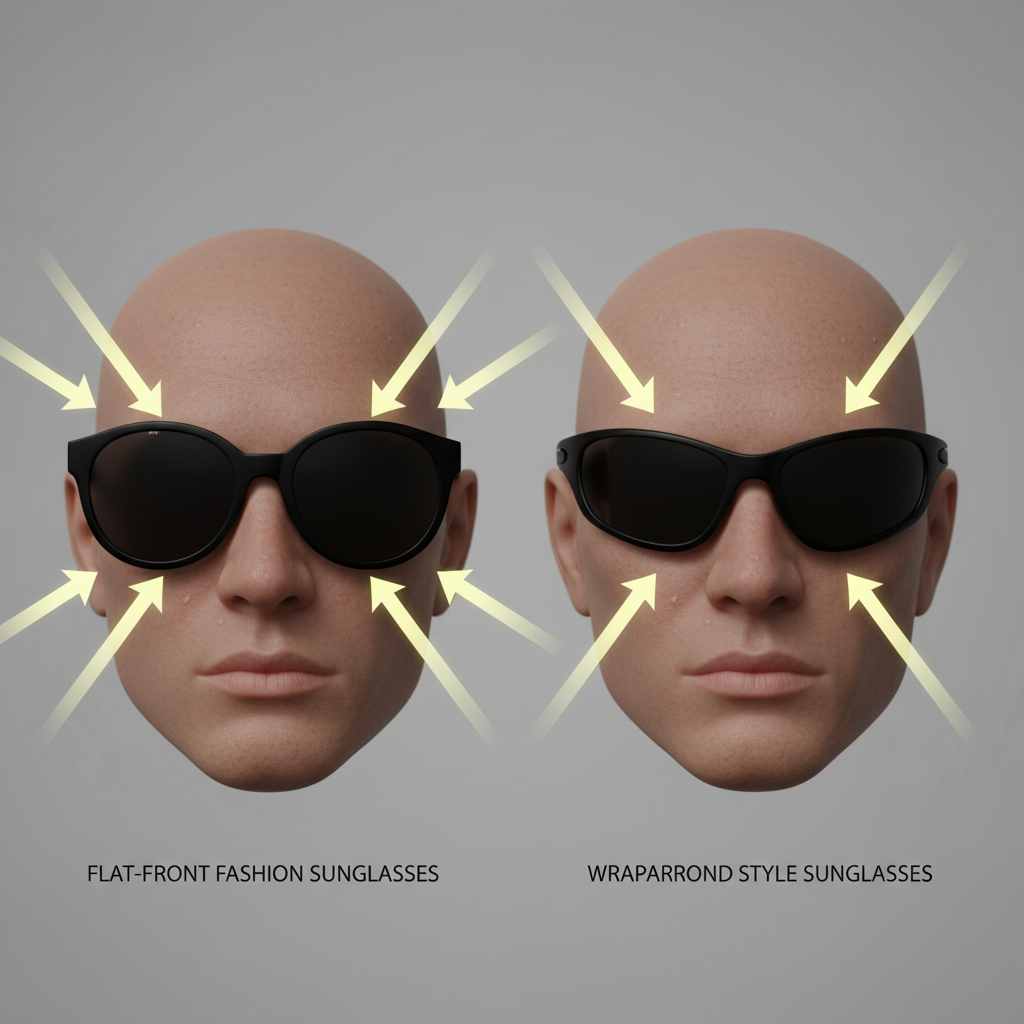
Even with perfect lenses, up to 50% of UV radiation can reach the eyes by leaking around the frames. A 3D head-form study published in PMC used sensors to measure actual UV dose at the eye. It found that "middle-sized" fashion frames offered the least protection, while wraparound styles provided nearly 100% blockage.
Expert Insight: When choosing a frame, consider the "Coroneo Effect." Stand in front of a mirror and look straight ahead. A well-fitting frame should have temples wide enough to block light from entering at the sides. This peripheral protection is crucial for preventing conditions like Pterygium.
Lens Material and Color
Modern sunglasses predominantly use polycarbonate lenses. This material is not only highly impact-resistant, meeting FDA standards, but it also inherently blocks 100% of UV rays at the material level. The quality of the hard coat applied over it determines its scratch resistance and longevity.
While tint doesn't affect UV protection, it does filter visible light differently. The American Optometric Association (AOA) recommends gray lenses for activities like driving, as they reduce brightness without distorting color perception. Amber and brown lenses enhance contrast and are often preferred for sports.
Special Considerations for At-Risk Groups
Children: UV damage begins in childhood. According to the Mayo Clinic, children's eyes are more vulnerable because their crystalline lenses are clearer, allowing 2-5% of UV to reach the retina compared to just 1% in adults. Instilling the habit of wearing sunglasses from a young age is one of the most important things a parent can do for their child's long-term eye health. A common concern is whether sunglasses might interfere with the protective effect of outdoor time against myopia (nearsightedness). A 2019 study resolved this, showing that even with sunglasses, outdoor light levels are far higher than what's needed to stimulate the retinal dopamine that helps prevent myopia.
Outdoor Workers and Enthusiasts: Individuals who spend significant time outdoors, whether for work or recreation, face the highest risk. A German study found that while 50% of adults wear sunglasses, only 31% of outdoor workers do, representing a major public health gap. For these individuals, wraparound frames and durable, impact-resistant lenses are not optional—they are essential personal protective equipment.
Protecting your vision is not a matter of chance; it is a matter of choice. The evidence is clear: consistent use of certified, well-fitting sunglasses is one of the most effective and accessible ways to prevent a host of debilitating eye diseases. It's time to stop thinking of them as a summer accessory and start treating them as a daily investment in a lifetime of healthy sight. The real cost of skipping sunglasses isn't measured in dollars, but in the clarity and quality of the vision you stand to lose.
Disclaimer: This article is for informational purposes only and does not constitute professional medical advice. Please consult with a qualified eye care professional for any concerns about your eye health.
References
- American Academy of Ophthalmology (AAO). (n.d.). Sun Safety. Retrieved from https://www.aao.org/eye-health/tips-prevention/sun
- Cole, B. L. (2019). Solar ultraviolet radiation protection by sunglasses: a technical report. Clinical & experimental optometry, 102(4), 326–335. Retrieved from https://pubmed.ncbi.nlm.nih.gov/31274741/
- MD Anderson Cancer Center. (2023). 9 things to know about sunglasses, eye protection and cancer. Retrieved from https://www.mdanderson.org/cancerwise/9-things-to-know-about-sunglasses--eye-protection-and-cancer.h00-159699123.html
- National Eye Institute (NEI). (2021). New research sheds light on how UV rays may contribute to cataract. Retrieved from https://www.nei.nih.gov/about/news-and-events/news/new-research-sheds-light-how-uv-rays-may-contribute-cataract
- Serrador, K., et al. (2022). Public Awareness on the Harmful Effects of Ultraviolet Radiation on the Eyes. Clinical Ophthalmology, 16, 4115–4124. Retrieved from https://pmc.ncbi.nlm.nih.gov/articles/PMC9778245/
- Wang, T. J., et al. (2021). The Association of Sun-Protection Behavior with the Occurrence of Cataract in a Rural Population of Taiwan: The Tian-Liao Old-Age (TLOA) Study. International Journal of Environmental Research and Public Health, 18(15), 7858. Retrieved from https://pmc.ncbi.nlm.nih.gov/articles/PMC8321156/