

Infused vs. Coated Blue Light Lenses: Which Lasts Longer?
Executive Summary
When choosing blue light filtering glasses for long-term screen use, the manufacturing method of the lens is a critical factor in its durability. This article examines the two primary technologies: surface-level coatings and infused lenses. Coated lenses, where a reflective film is applied to the surface, are widely available but are susceptible to scratching, peeling, and damage from common cleaning agents. Infused lenses, which integrate blue-light-absorbing compounds directly into the lens material itself, offer vastly superior durability as the protection cannot scratch off or peel away. For users seeking the most resilient and long-lasting investment, infused lenses present a clear advantage by design, though they may come at a premium and with a slight inherent tint.
How Blue Light Lenses Work: A Tale of Two Technologies
The effectiveness and longevity of blue light glasses depend entirely on how the filtering technology is incorporated into the lens. While both methods aim to manage exposure to high-energy visible (HEV) light, their fundamental construction dictates how they will withstand daily use.
The Coated Method: A Protective Surface Layer
The most common method for creating blue light lenses involves applying a multi-layer coating to the surface of a standard prescription lens. This process, done in a vacuum chamber, deposits a microscopically thin film engineered to reflect a specific portion of the blue-violet light spectrum, typically between 400 and 455 nanometers.
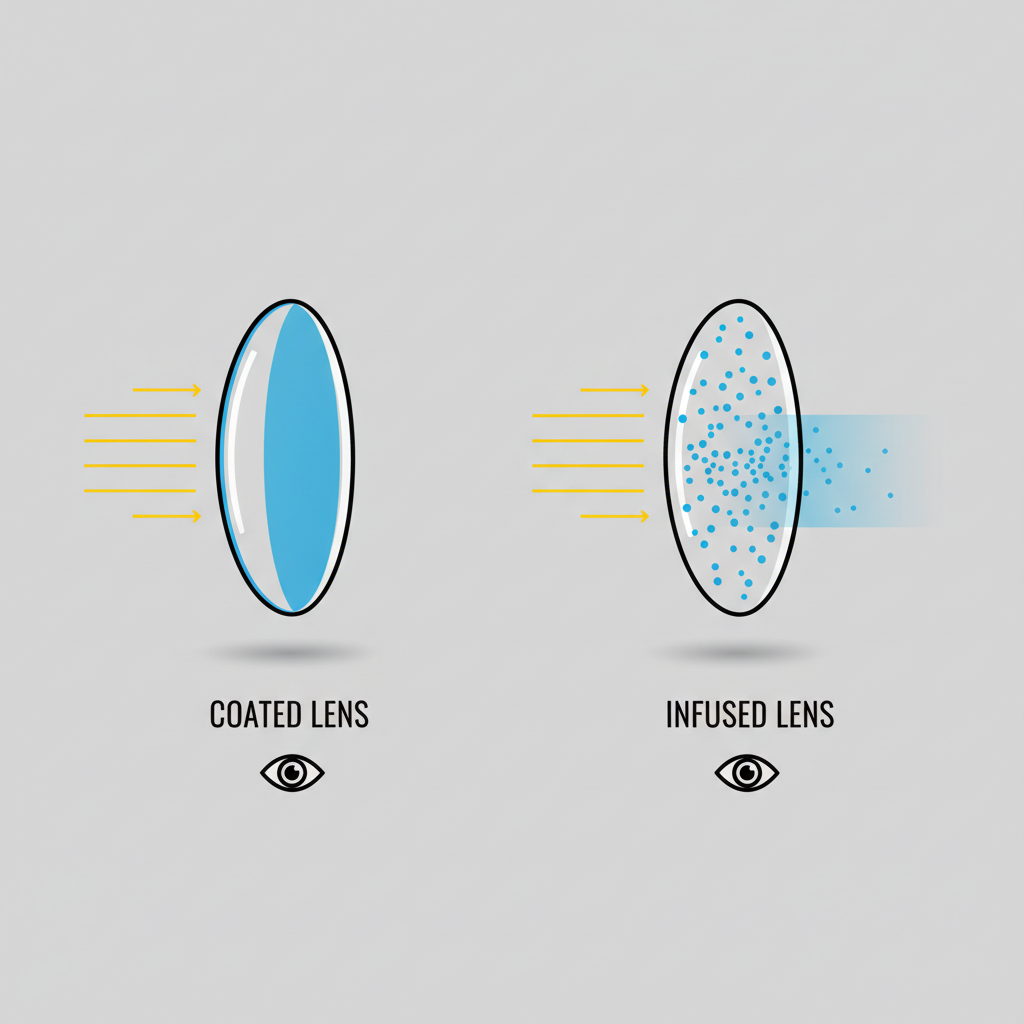
- Mechanism of Action: Reflection. The coating acts like a selective mirror, bouncing specific HEV wavelengths away from the eye. This is often what causes the characteristic blue or purple glare you see on the surface of these lenses.
- Advantages: This technology is versatile and can be applied to nearly any lens material or design. Its widespread availability often makes it a more cost-effective option upfront.
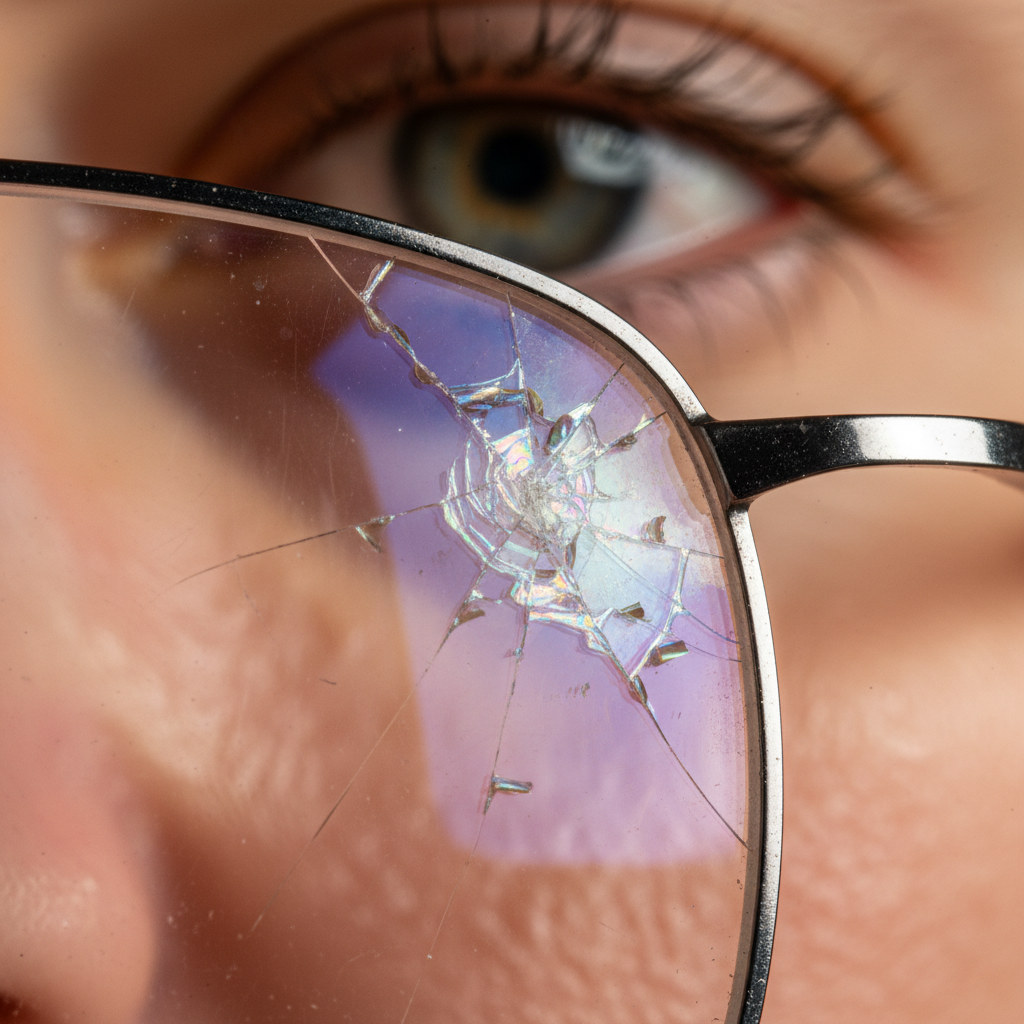
- Vulnerability: The primary drawback is that the protection is only as durable as the surface layer. This coating is exposed to every wipe, touch, and environmental stressor, making it the lens's most significant point of failure.
The Infused Method: Protection from Within
A more advanced and durable approach is to infuse the blue light filtering properties directly into the lens material itself. This is often called an "in-monomer" or "substrate-level" filter. During manufacturing, special monomers that absorb HEV light are mixed into the liquid lens material before it is cast and cured into its final solid form.
- Mechanism of Action: Absorption. Instead of reflecting light, the molecules within the lens absorb the energy from specific HEV light wavelengths, preventing them from passing through to the eye.
- Advantages: The filter is an integral part of the lens structure. It cannot be scratched off, peeled, or worn away. The protection will last for the entire life of the prescription.
- Trade-Offs: This method can sometimes result in a very faint, inherent yellow or amber tint. This is not a defect but a visible sign of the absorbing molecules at work. Because it alters the lens material itself, it may not be available for all lens types and can sometimes be a more premium option.
The Durability Showdown: Which Lens Survives Real-World Use?
While both lens types perform their primary function when new, their resilience to the rigors of daily life differs significantly. The distinction becomes clear when analyzing their common failure points, which are often rooted in routine maintenance and handling.
Methodology Note: The following insights are based on common patterns observed by optical labs and dispensaries in handling lens remakes and customer complaints. They represent real-world failure modes rather than the results of a controlled, comparative lab study.
Coated Lens Failure: The Enemy in Your Cleaning Kit
The single biggest threat to a coated blue light lens is not necessarily a major drop or impact, but the cumulative damage from improper cleaning.
Practitioners observe that coatings with weaker adhesion can begin to show micro-cracks, hazing, or peeling within 6 to 12 months when repeatedly cleaned with solutions containing high concentrations of isopropyl alcohol (typically above 30%). Many commercially available lens wipes and sprays contain alcohol levels that can, over time, degrade the bond between the coating and the lens substrate. Once this bond is compromised, the coating can begin to flake or peel, rendering the blue light filter (and often the anti-reflective properties) ineffective and creating visual distortions. Furthermore, any surface scratch that penetrates the coating compromises its integrity.
Infused Lens Failure: A Matter of Edges and Brittleness
Because the filter in an infused lens is part of the material, it is immune to the cleaning-related damage that plagues coated lenses. A scratch on an infused lens is just a scratch; it does not remove the blue light protection in that area.
However, infused lenses have a different, less common vulnerability. The introduction of the filtering monomer can slightly alter the physical properties of the lens material, particularly in high-index plastics. Optical labs note that this can sometimes increase the material's brittleness, making it more susceptible to edge chipping during the final step of grinding the lens to fit into a frame. This is not an issue for the user after purchase but is a consideration during the manufacturing process. The only other "drawback" is aesthetic; the slight residual tint cannot be removed, as it is the filtering technology itself.
A useful heuristic from dispensaries is this: if a patient reports having to replace glasses due to coating failure more than once in a two-year period, switching them to an infused lens technology typically resolves the durability issue permanently.
Beyond Durability: Optical Clarity and Efficacy
While durability is a major concern, the optical performance of the lens is equally important. Both technologies must filter the right kind of light without compromising visual clarity.
According to a detailed optical analysis in a study published in PMC, a well-designed blue light filter should be selective. It should target the most potentially damaging HEV light (around 400-455 nm) while allowing the beneficial blue-turquoise light (455-500 nm) to pass through. This blue-turquoise light is crucial for regulating our sleep-wake cycle, or circadian rhythm, as noted in a review by chronobiology expert Gianluca Tosini.
- Coated Lenses: High-quality coatings can achieve this selectivity, but lower-quality versions may reflect light in a way that creates distracting glare or colored reflections.
- Infused Lenses: These lenses provide consistent absorption across the entire lens, offering clear optics without the risk of surface reflections or coating-related distortions developing over time.
For more information on the different types of lens coatings and their benefits, see our guide on how to add blue light filtering to your prescription lenses.
Making the Right Choice for Your Lifestyle
The decision between coated and infused blue light lenses comes down to a balance of budget, lifestyle, and long-term expectations.
Who Should Consider COATED Lenses?
- The Careful User: If you are meticulous with your eyewear and follow proper cleaning protocols (using only microfiber cloths and approved, alcohol-free sprays), a coated lens can serve you well.
- The Budget-Conscious Buyer: Coated lenses are often more affordable upfront, providing accessible protection.
- Specialty Lens Wearers: For those with highly complex or specialized prescriptions, a coated option may be the only one available.
Who Should Invest in INFUSED Lenses?
- The Long-Term Investor: If you view your glasses as a multi-year investment and prioritize maximum durability, infused lenses offer the best value over time.
- The Active User: For anyone whose glasses are subject to frequent handling, cleaning, or exposure to demanding environments (from a busy workshop to a toddler's grasp), the built-in protection is essential.
- The "Set It and Forget It" Type: If you want effective protection without having to worry about special cleaning instructions or the gradual degradation of a coating, infused technology provides peace of mind.
Ultimately, while the initial function of both lens types is similar, their construction defines their lifespan. A coated lens relies on a fragile surface layer for its protection, whereas an infused lens has that protection built into its very core. For the modern screen user, whose glasses are a constant daily tool, choosing a technology that is inherently resilient is a practical step toward ensuring both clear vision and lasting value.
Disclaimer: This article is for informational purposes only and does not constitute professional medical advice. The information provided is not intended to be a substitute for a consultation with a qualified eye care professional. Always seek the advice of your optometrist or other qualified health provider with any questions you may have regarding a medical condition or treatment.
References
- Rahmani, E., et al. (2020). "Blue-blocking filters and digital eyestrain." Journal of the American Medical Association, 323(17), 1735-1736. Available from: https://pmc.ncbi.nlm.nih.gov/articles/PMC7431718/
- Tosini, G., et al. (2016). "The effects of blue light on the circadian system and eye physiology." Molecular Vision, 22, 61-72. Available from: https://pmc.ncbi.nlm.nih.gov/articles/PMC8897255/
- Downie, L. E., et al. (2024). "Blue-light filtering spectacle lenses for visual performance, sleep, and macular health in adults." Cochrane Database of Systematic Reviews. Available from: https://pubmed.ncbi.nlm.nih.gov/37593770/
- Masili, M., & Schor, P. (2014). "Evaluation of the 280-400 nm UV radiation protection of sunglasses and eyeglasses in Brazil." Proceedings of SPIE, 8930. Available from: https://ui.adsabs.harvard.edu/abs/2014SPIE.8930E..1EM/abstract