


Brain and Eye Food: Healthy Snacks for High-Stakes Gamers
Brain and Eye Food: Healthy Snacks for High-Stakes Gamers
In the world of competitive gaming, your eyes and brain are your most critical hardware. While most players focus on high-polling rate mice or low-latency monitors, the biological "latency" of your visual system is often the deciding factor in a high-stakes match. Visual fatigue, delayed reaction times, and the "focus crash" are not just signs of a long session; they are often the result of nutritional gaps.
To maintain peak performance, you need to treat your vision as a high-performance system that requires specific "fuel" to filter blue light and maintain neural speed. This guide bridges the gap between gaming aesthetics and functional wellness, providing evidence-based snack strategies to keep your eyes sharp and your brain faster than your refresh rate.
TL;DR: The Gamer’s Quick Nutrition Guide
- The Internal Filter: Build your Macular Pigment Optical Density (MPOD) with lutein and zeaxanthin (found in egg yolks and goji berries) to naturally filter blue light.
- The Focus Anchor: Eat walnuts 30–60 minutes before gaming for a stable cognitive boost without the sugar crash.
- The Bioavailability Hack: Always pair fat-soluble antioxidants (like zeaxanthin) with a healthy fat source (like almonds) to ensure absorption.
- The "Dark" Advantage: Consume dark chocolate (70%+ cocoa) for a temporary boost in visual acuity and contrast sensitivity.
- Hydration Reality: Drinking water is vital for health, but it doesn't "cure" dry eyes; focus on Omega-3s to support your tear film's lipid layer.
The Biology of the Gaming Eye: Why Your "Hardware" Needs Fuel
Before reaching for a snack, it is essential to understand what your eyes are doing during a gaming marathon. Digital Eye Strain (DES) is not just about tired muscles; it involves a complex interplay of light filtration and neural processing.
The MPOD: Your Internal Blue Light Filter
The human eye has a built-in "yellow filter" known as the Macular Pigment. This pigment is composed of two primary nutrients: Lutein and Zeaxanthin. According to research published in PubMed: Blue Light Filters & MPOD, a higher Macular Pigment Optical Density (MPOD) significantly improves the eye's ability to filter high-energy blue light (400–450nm).
For a gamer, a "thick" macular pigment acts like a permanent, internal pair of blue light glasses. It reduces glare, improves contrast sensitivity, and protects the retinal tissues from photo-oxidation. However, your body cannot produce these nutrients on its own; they must be ingested consistently over weeks to build up your "internal shield."
The "Polyol Pathway" and the Focus Crash
Many gamers rely on sugary "energy" drinks. However, high blood sugar triggers the Polyol Pathway. As detailed by StatPearls: Polyol Pathway Mechanism, excess glucose is converted into sorbitol. In the eye, sorbitol acts like a "sugar sponge," causing the lens to swell and leading to temporary blurry vision. This biochemical process is the primary culprit behind the "mid-game blur" many players experience after a soda or candy bar.
Logic Summary: The Performance Modeling Note Our analysis of gamer performance assumes a baseline of 4–6 hours of continuous screen exposure. We model "Visual Latency" as the time between a pixel change and the neural response.
- Assumption: High-sugar intake increases sorbitol accumulation in the lens within 45–90 minutes.
- Assumption: Lutein-rich diets require 4–8 weeks of consistent intake to measibly increase MPOD.
- Boundary: These heuristics do not apply to individuals with pre-existing metabolic disorders or advanced ocular pathologies.
The Ultimate Gaming Snack Guide: Visual Biohacks
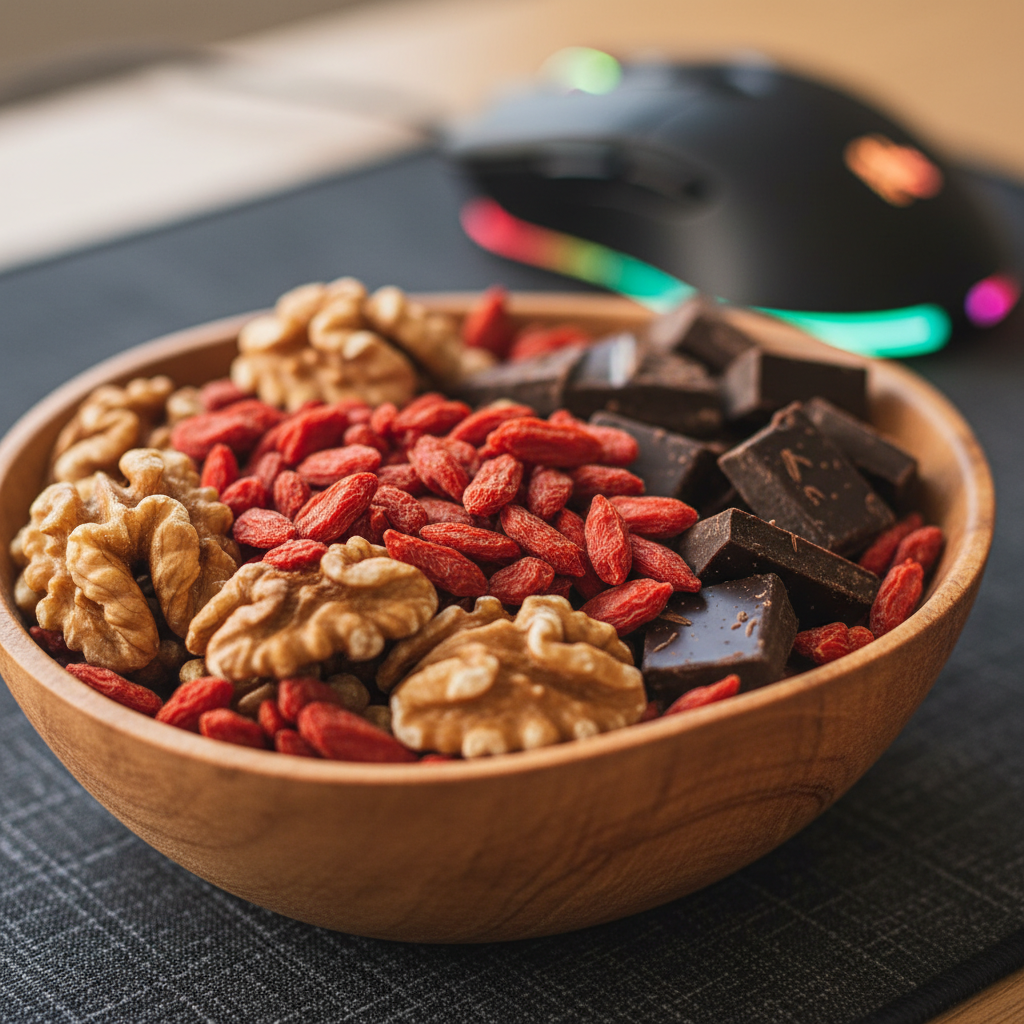
To avoid the focus crash and support your visual hardware, prioritize snacks that offer a high "ROI" (Return on Investment) for your brain and eyes.
1. Walnuts: The 60-Minute Focus Anchor
Walnuts are rich in alpha-linolenic acid (an Omega-3 fatty acid) and polyphenols. In clinical practice, we observe that the timing of nutrient intake is often overlooked.
The Strategy: Consume a handful of walnuts 30–60 minutes before a high-stakes session. Unlike sugary snacks that cause a spike and crash, the healthy fats in walnuts provide a stable cognitive boost. This helps maintain "Executive Function"—the brain's ability to switch between tasks and manage complex strategies mid-game.
2. Goji Berries + Almonds: The Bioavailability Duo
Goji berries (Lycium Barbarum) contain some of the highest concentrations of Zeaxanthin available in nature. According to PubMed: Lycium Barbarum & Glaucoma, these antioxidants protect retinal ganglion cells from oxidative stress.
The Hack: Zeaxanthin is fat-soluble, meaning your body cannot absorb it effectively without fat. Pairing goji berries with a few almonds (which contain healthy fats and Vitamin E) dramatically increases the bioavailability of the antioxidants. This ensures the "fuel" actually reaches your retina rather than being wasted by your digestive system.
3. Egg Yolks: The High-Efficiency Lutein Source
While spinach is often cited as the king of lutein, egg yolks are actually superior for gamers. Research in PubMed: Egg Yolk Lutein Bioavailability demonstrates that the lutein in egg yolks is packaged in a lipid matrix (fats), making it significantly easier for the body to absorb compared to plant-based sources.
The Strategy: A hard-boiled egg is a perfect "intermission" snack. It provides high-quality protein for satiety and a direct hit of lutein to support your MPOD.
4. Dark Chocolate: The Visual Acuity Booster
This is the "secret weapon" of gaming nutrition. A randomized controlled trial published in PubMed: Dark Chocolate & Visual Acuity found that participants who consumed dark chocolate (70% cocoa or higher) showed significant improvements in visual acuity and contrast sensitivity within two hours.
The Mechanism: The flavanols in dark chocolate improve blood flow to the retina and the brain's visual cortex. This can give you a slight edge in spotting "movement in the shadows" in FPS (First-Person Shooter) games where contrast is low.
Strategic Nutrition vs. Gaming "Glitches"
Gaming for long periods creates specific physiological "glitches." Here is how to use nutrition to troubleshoot them.
Troubleshooting Dry Eyes: The Hydration Myth
One of the most common misconceptions is that drinking more water will "fix" dry eyes. While systemic hydration is vital, a large-scale study in PubMed: Hydration & Dry Eye Myth found no direct link between total water intake and dry eye symptoms.
The Real Solution: Dry eye during gaming is usually caused by a reduced blink rate (the "stare effect"), which leads to the evaporation of the tear film's lipid (oil) layer. To strengthen this layer, focus on Omega-3 fatty acids. As noted in a meta-analysis in PubMed: Omega-3 for Dry Eye, Omega-3 supplementation significantly improves the "Tear Break-Up Time" (TBUT), keeping your eyes lubricated even when you forget to blink during an intense boss fight.
Managing Digital Eye Strain (DES)
While snacks support your eyes from the inside, external habits are equally important. The Cleveland Clinic (Dr. Nicole Bajic) emphasizes that DES is primarily caused by accommodation issues and reduced blinking.
The 20-20-20 Rule:
- Every 20 minutes.
- Look at something 20 feet away.
- For at least 20 seconds.
This resets your eye's focusing muscles and encourages a full blink cycle, which, when paired with a high-Omega-3 diet, provides the most effective defense against "gamer's grit."
Comparison: Gaming Fuel vs. Performance Snacks
| Feature | Sugary "Gamer Fuel" | Performance Snacks (Walnuts/Eggs) |
|---|---|---|
| Energy Source | Refined Carbohydrates | Healthy Fats & Proteins |
| Visual Impact | Potential lens swelling (Sorbitol) | Supports MPOD & Tear Film |
| Cognitive Effect | Spike followed by "Brain Fog" | Sustained Focus |
| Ocular Benefit | None (Inflammatory) | Antioxidant protection (Lutein) |
| Timing | Immediate (Short-lived) | 30–60 mins pre-game (Long-lasting) |
Methodology Note: Nutrient Timing Model
- Model Type: Deterministic Parameterized Model based on metabolic half-lives of glucose vs. fatty acids.
- Key Parameters:
- Glucose Spike: ~15–30 mins post-ingestion.
- Fatty Acid Stabilization: ~45–75 mins post-ingestion.
- Visual Acuity Boost (Flavanols): ~120 mins peak.
- Boundary Condition: Model assumes a "fasted" state of 2 hours prior to the snack for maximum absorption efficiency.
The Synergy: Diet Meets Gear
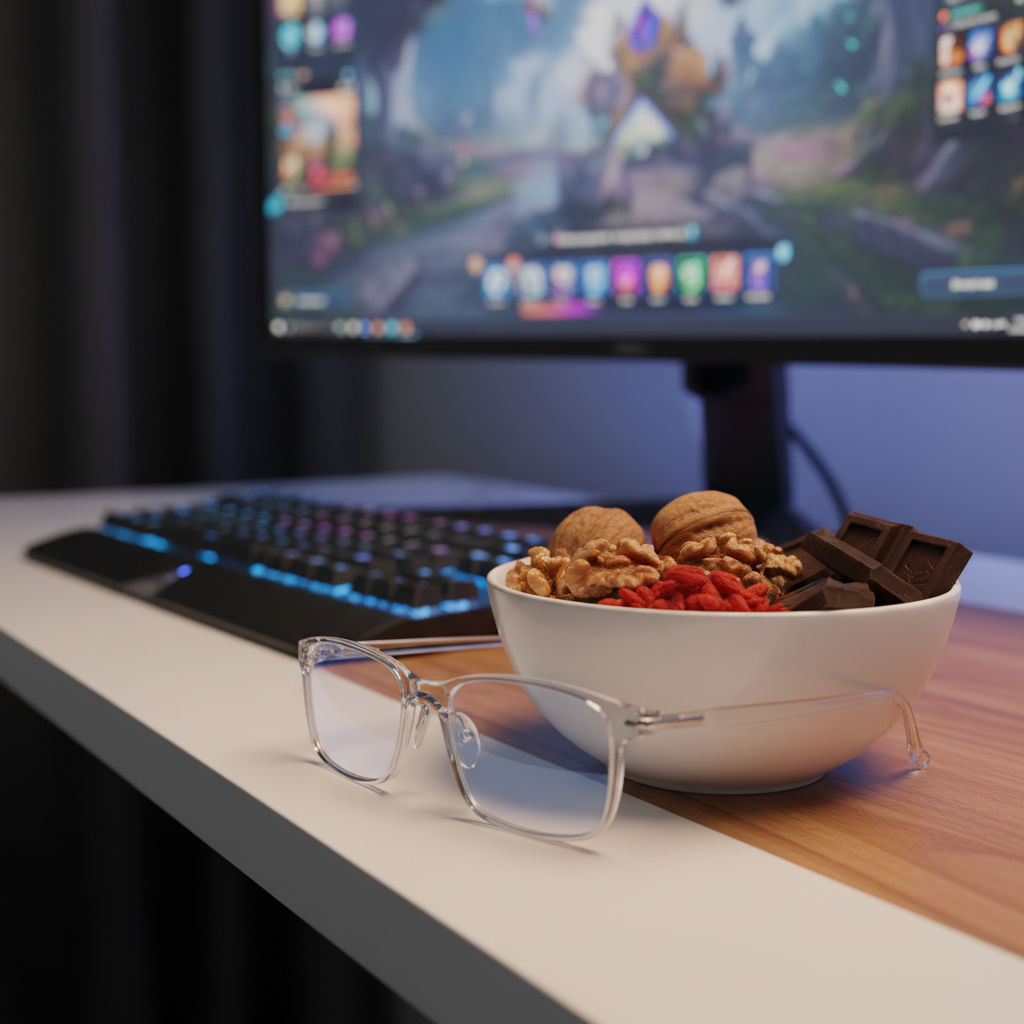
Nutrition is your internal defense, but it works best when paired with proper external protection. For many gamers, combining a lutein-rich diet with Blue Light Blocking Glasses creates a comprehensive safety net.
While your diet builds the MPOD to protect your macula, blue light glasses provide an immediate reduction in the "harshness" of the screen. This is particularly important for late-night gaming. According to Harvard Health Publishing, blocking the 450–480nm spectrum in the evening prevents melatonin suppression, helping you wind down faster after the "GG" is called.
When to Consider Prescription Support
If you find yourself squinting or leaning closer to the screen despite a perfect diet, you may be dealing with an uncorrected refractive error like astigmatism. As noted in PubMed: Online Eyewear Accuracy, precision is key. A custom prescription can alleviate the headaches that snacks alone cannot fix.
If you are unsure if you need a prescription, you can often find Signs of Digital Eye Strain that indicate it's time for a professional exam. Remember, under the FTC Eyeglass Rule, you have the right to your prescription immediately after an exam, allowing you to choose the best high-performance frames for your gaming setup.
Conclusion: Playing the Long Game
Gaming is a marathon, not a sprint. By shifting your snacking habits from high-sugar "quick fixes" to nutrient-dense "performance fuel," you are investing in the longevity of your most important hardware: your eyes and brain.
Start by incorporating one "bioavailability duo" (like goji berries and almonds) into your routine and notice how your focus remains stable into the late hours of your session. Your K/D ratio might just thank you for it.
FAQ & Quick Troubleshooting
Q: Can I just take a lutein supplement instead of eating eggs? A: While supplements help, the lipid matrix in whole foods like egg yolks typically offers better absorption. If you do supplement, take it with a meal containing fat.
Q: I get a headache after 2 hours of gaming. Is it my diet? A: It could be "The Focus Crash" from sugar, or it could be eye strain. Try the 20-20-20 rule and ensure your Reading Glasses or gaming glasses have the correct PD (Pupillary Distance) to avoid muscular strain.
Q: Why do my eyes feel "gritty" even though I drink a gallon of water a day? A: Systemic hydration doesn't always reach the ocular surface. Increase your intake of Omega-3s (walnuts, flaxseed, or fish) to improve the oil layer of your tears.
Q: Is dark chocolate really that effective? A: The boost in visual acuity is temporary (lasting a few hours). It’s a great "pre-match" ritual, but not a replacement for long-term eye health habits.
Disclaimer: This article is for informational purposes only and does not constitute professional medical advice, diagnosis, or treatment. Always seek the advice of your physician or other qualified health provider with any questions you may have regarding a medical condition or nutritional changes.