


Can Blue Light Glasses Really Improve Your Sleep Quality?
The Modern Dilemma: Screens, Blue Light, and Your Sleep
Many of us have been there. After a long day, you unwind by scrolling through your phone or watching a series on your tablet, only to find yourself staring at the ceiling hours later, unable to fall asleep. It’s a common frustration, and a growing body of evidence points to a specific culprit: the blue light emitted from our digital screens. This has led to a surge in popularity for blue light blocking glasses, but can they truly improve your sleep quality?
The short answer is yes, but with important caveats. While these glasses are a powerful tool for managing your body's internal clock, they are not a cure for all sleep problems or the solution for digital eye strain many believe them to be.
This article delves into the science of how blue light impacts your sleep cycle, examines the clinical evidence for and against blue light glasses, and provides a practical guide to using them effectively as part of a healthy evening routine.
TL;DR: Quick Takeaways
- For Sleep? Yes. Strong evidence shows that wearing blue light blocking glasses in the evening can help you fall asleep faster.
- For Eye Strain? No. The consensus among ophthalmologists is that digital eye strain is caused by reduced blinking and focusing issues, not blue light itself.
- Timing is Everything. These glasses are most effective when worn for 1-3 hours before your intended bedtime. Wearing them during the day can be counterproductive.
- Not All Lenses Are Equal. Amber or orange-tinted lenses designed for evening use are far more effective for sleep than the clear, "computer glasses" style coatings.
The Science: How Blue Light Controls Your Internal Clock
To understand how these glasses work, we first need to understand our biology. Every person operates on a circadian rhythm, an internal 24-hour clock that regulates our sleep-wake cycle, hormone release, and other bodily functions. This clock's primary environmental cue is light.
For millennia, the rising and setting of the sun kept this rhythm in sync. Bright, blue-rich sunlight in the morning signals our brain to be awake and alert. As the sun sets, the absence of this blue light triggers the pineal gland to produce melatonin, the hormone that makes us feel sleepy.
The problem is that our modern, screen-filled environment disrupts this natural process. As Harvard Health Publishing explains, the specific wavelengths of blue light (around 450-480 nm) emitted by LEDs in our phones, laptops, and TVs are particularly effective at suppressing melatonin. When you're exposed to this light after dusk, your brain gets a mixed signal. It thinks it's still daytime, delaying the onset of sleepiness and shifting your entire circadian rhythm.
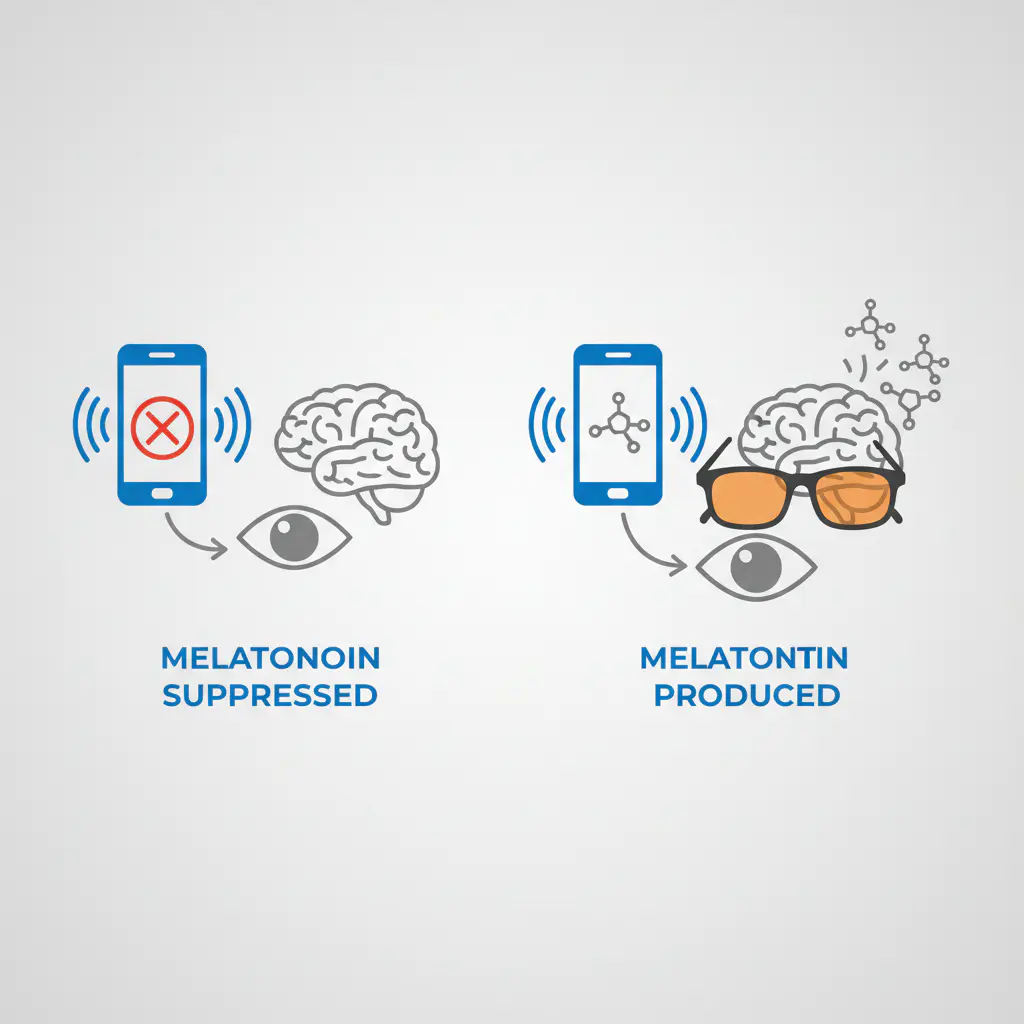
A comprehensive review in the journal Chronobiology International reinforces this, noting that blue light is not an inherent "toxin" but a powerful biological signal. The issue isn't the light itself, but its timing. By filtering out these specific wavelengths, blue light glasses prevent this "it's daytime" signal from reaching your brain, allowing melatonin production to proceed naturally.
The Evidence: What Clinical Studies Say About Sleep
The claim that blue light glasses can aid sleep isn't just theoretical; it's backed by significant clinical research. A systematic review published in PubMed Central analyzed 16 randomized controlled trials and found "substantial evidence" that wearing blue-blocking glasses in the evening reduces sleep onset latency—the time it takes to fall asleep—for people with insomnia, jet lag, or variable sleep schedules.
Some studies have even quantified the benefit. Research highlighted by Harvard suggests improvements can be modest but meaningful, potentially shortening the time to fall asleep by 8-15 minutes and increasing total sleep time by about 25 minutes.
Interestingly, one study uncovered a fascinating paradox between subjective feeling and objective data. Researchers found that while participants felt they fell asleep faster and slept better, actigraphy data (from sleep-tracking devices) showed little objective change. This suggests the glasses have a powerful effect on our perceived sleep quality, which is a crucial part of feeling rested.
Expert Warning: Blue Light Glasses Are Not a Cure for Digital Eye Strain
Here we must address the single most common misconception about blue light glasses. Despite widespread marketing claims, there is no strong evidence that they prevent or reduce digital eye strain.
A rigorous double-blind, randomized controlled trial had participants perform a reading task and found no significant difference in eye strain symptoms between those wearing blue-blocking lenses and those wearing placebo lenses.
According to ophthalmologist Dr. Nicole Bajic in a Cleveland Clinic article, digital eye strain isn't caused by blue light. Instead, it's a result of two things:
- Reduced Blink Rate: When we stare at screens, we tend to blink less frequently, leading to dry, irritated eyes.
- Accommodation Issues: The constant effort of focusing on a close-up screen fatigues the small muscles inside our eyes.
The most effective, expert-recommended solution for digital eye strain is the "20-20-20 rule": every 20 minutes, look at something 20 feet away for at least 20 seconds. This relaxes your eye muscles and helps reset your blink rate. Using preservative-free artificial tears can also provide significant relief for dryness.
A Practical Guide to Choosing and Using Blue Light Glasses
To get the real sleep benefits from blue light glasses, you need to use the right type at the right time. Not all lenses are created equal, and their effectiveness depends entirely on how and when you wear them.
When to Wear Them: Timing is Key
The number one rule is to use them exclusively in the evening. As a clinical heuristic, start wearing them 1 to 3 hours before you plan to go to sleep.
Wearing them during the day is not recommended. Exposure to natural blue light in the morning and afternoon is essential for setting your circadian rhythm, promoting alertness, and boosting mood. Blocking it can be counterproductive. Think of them as "sunglasses for artificial light" that you put on after the sun has gone down.
What to Look For: Daytime Filters vs. Nighttime Lenses
The difference between a cheap "computer coating" and a lens designed for sleep is significant. An analysis in the journal PMC explains that high-quality filters work selectively. They aim to reduce the most disruptive blue light (400–455nm) while allowing some of the less disruptive turquoise light (455–500nm) to pass through, which helps maintain better color perception.
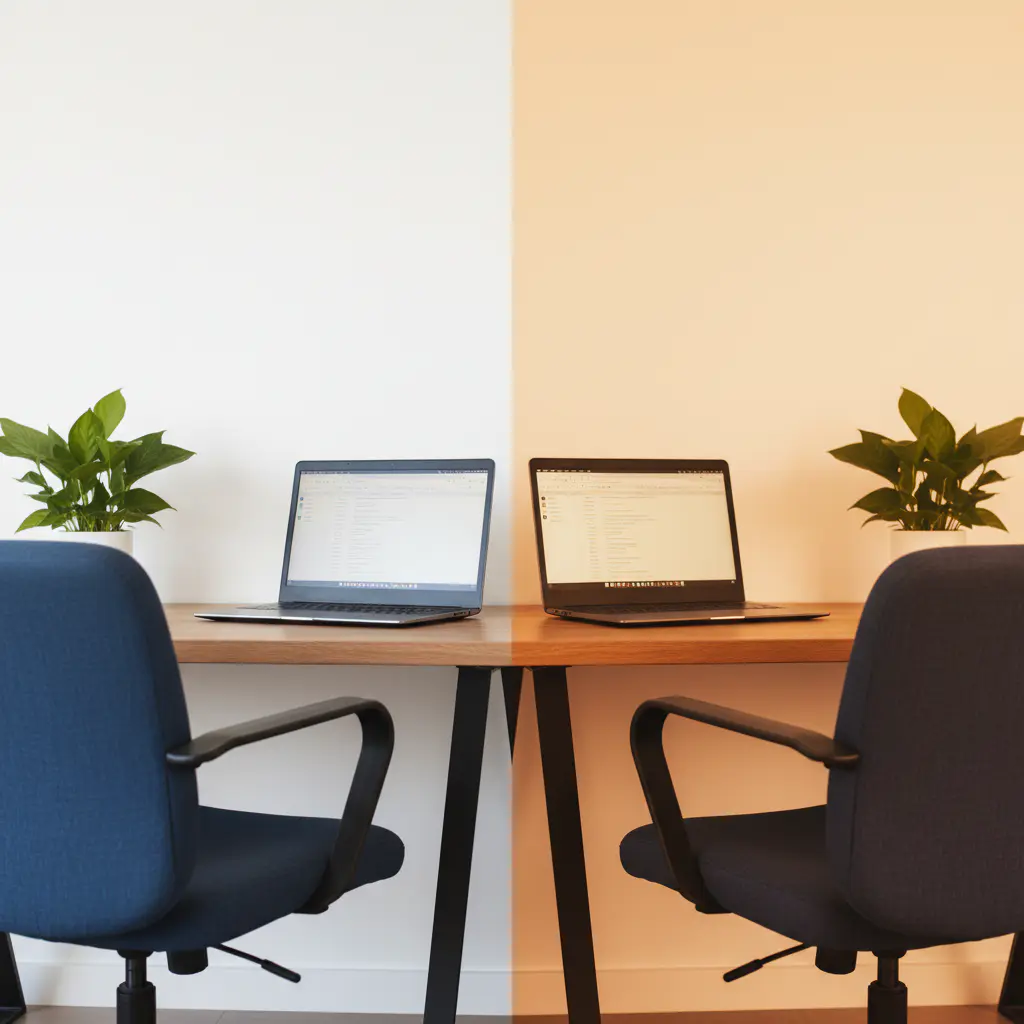
Here’s a breakdown of the common types:
| Lens Type | Primary Purpose | Blue Light Reduction | Best For |
|---|---|---|---|
| Clear / "Computer" Lens | Reducing glare, minimal filtering | Low (10-25%) | Daytime screen use for those sensitive to glare. Not effective for sleep. |
| Amber / Orange Lens | Melatonin preservation, sleep cycle regulation | High (70-99%) | Evening use (1-3 hours before bed) to prepare the body for sleep. |
| Red Lens | Maximum light blocking | Very High (>99%) | Advanced use for shift workers or individuals with severe circadian disruption. |
For most people seeking better sleep, an amber or orange-tinted lens is the ideal choice. While the color shift is noticeable, it's a sign that the lens is effectively filtering the wavelengths that suppress melatonin.
A Note on Fit and Quality
Even the best lenses won't work if the frames don't fit well. A poor fit can allow unfiltered light to leak in from the top and sides, defeating the purpose. When choosing a pair, ensure they provide good coverage. If you wear prescription glasses, you can find options for fit-overs or custom lenses. For more guidance on ensuring your glasses are made correctly, see our checklist for buying prescription glasses online safely.
Wrapping Up: A Powerful Tool, Not a Magic Bullet
Blue light blocking glasses can be a highly effective and non-pharmacological tool to improve your sleep, particularly if you have a habit of using screens before bed. By filtering the specific light wavelengths that suppress melatonin, they help your body's natural sleep processes function as they should.
However, it's crucial to use them correctly: wear amber or orange lenses for 1-3 hours before bed, and don't expect them to solve digital eye strain. They are one component of good sleep hygiene, which also includes maintaining a consistent sleep schedule, creating a dark and quiet bedroom, and avoiding caffeine late in the day. When used as intended, they can be a game-changer for reclaiming a healthy sleep cycle in our modern, brightly-lit world.
Frequently Asked Questions (FAQ)
Can I wear blue light glasses all day?
It is not recommended. Your body needs exposure to natural blue light during the day to maintain a healthy circadian rhythm and stay alert. Reserve blue light glasses for evening use, 1-3 hours before bed.
Will blue light glasses help with my screen-induced headaches?
While some people report fewer headaches, this is likely due to a reduction in glare or correcting an underlying vision issue with a prescription. For headaches caused by eye strain, the 20-20-20 rule and ensuring your prescription is correct are more direct solutions.
What's the difference between cheap and expensive blue light glasses?
The primary difference lies in the quality and technology of the lens filter. More advanced lenses, often found in mid-range to higher-priced glasses, use selective filtering technology to block the most harmful blue light wavelengths while minimizing color distortion. Cheaper glasses may use a simple surface coating that filters less effectively or blocks a broader spectrum, leading to poor color perception.
Are blue light blocking glasses safe for children?
This is an area that requires caution. Some research, like a theoretical model from the Mayo Clinic, suggests that altering the spectrum of light reaching a child's developing eyes could potentially interfere with normal eye growth (a process called emmetropization). For this reason, it's best to consult with an optometrist or ophthalmologist before having a child use blue light glasses regularly. Prioritizing non-screen activities before bed is the safest approach.
Disclaimer: This article is for informational purposes only and does not constitute professional medical advice. Always consult with a qualified healthcare provider for any health concerns or before making any decisions related to your health or treatment.
References
- Harvard Health Publishing: Can blue light blocking glasses improve your sleep?
- PubMed: Blue-blocking glasses as a therapeutic intervention for sleep: a systematic review
- PubMed: Blue-light filtering spectacle lenses: optical and clinical performances
- Cleveland Clinic: Do Blue Light Blocking Glasses Actually Work?
- PMC: Effects of blue light on the circadian system and eye physiology
- PMC: The effect of blue-light filtering spectacle lenses on the satisfaction of adult patients: a systematic review
- PMC (Mayo Clinic): Could blue light-blocking lenses be effective in slowing paediatric myopia progression?