


Do I Need Blue Light Protection After ICL or Cataract Surgery?
The New Rules of Screen Time After Eye Surgery
You’ve just had cataract or ICL surgery, and the world looks sharper and more vibrant than ever. But as you return to your daily life, a new question emerges from the glow of your smartphone, tablet, and computer screen: Do you need blue light protection for your newly enhanced eyes?
The answer isn't a simple yes or no. The need for blue light filtering lenses after surgery depends heavily on the type of procedure you had, the specific lens implanted in your eye, and your daily digital habits. This guide will walk you through the science and practical considerations to help you make an informed decision for your long-term comfort and health.
TL;DR: Your Quick Guide to Post-Surgical Blue Light Protection
- For Cataract Patients: It depends entirely on your new Intraocular Lens (IOL). Many modern premium IOLs have a built-in blue light filter. Older or standard monofocal IOLs typically only block UV light, leaving you with less blue light protection than your natural lens had.
- For ICL Patients: Your natural crystalline lens, which has its own UV and blue light filtering properties, remains in your eye. For you, the primary concern is often managing post-operative glare and halos, where blue light glasses can be a helpful tool for comfort, not a necessity for protection.
- The Comfort Factor: The main, scientifically-backed reason to wear blue light glasses is to reduce digital eye strain, glare, and visual fatigue. There is currently no strong evidence that blue light from screens causes retinal damage.
- A Practical Rule of Thumb: If you spend more than four hours a day in front of digital screens and experience eye strain, headaches, or sensitivity, trying blue light filtering glasses is a reasonable step.
- The Best First Step: Always consult your ophthalmologist or optometrist. They know the specifics of your surgery and can give you the most personalized advice.
How Surgery Changes Your Eye's Natural Defenses
Before we can decide on adding protection, we need to understand what changed inside your eye. Your natural lens isn't just for focusing; it's also a lifetime filter.
Cataract Surgery: Swapping a Natural Filter for a Clear Window
During cataract surgery, your cloudy, aged natural lens is removed and replaced with a crystal-clear Intraocular Lens (IOL). For decades, your natural lens has been gradually yellowing, a process that, while eventually causing a cataract, also served as a powerful, built-in filter against both ultraviolet (UV) and high-energy visible (HEV) blue light.
When a clear IOL is implanted, it’s like replacing an old, tinted window with brand-new glass. Suddenly, more light—including more blue light—can reach your retina. This is why colors appear so much more vivid after surgery, but it’s also why some patients report increased light sensitivity.
ICL Surgery: Adding a Lens, Keeping the Shield
Implantable Collamer Lens (ICL) surgery is different. Instead of replacing your natural lens, a micro-thin lens is inserted between your iris and your natural lens.
Because your original lens stays in place, you retain its natural protective capabilities against UV and blue light. The primary visual adjustment for ICL patients is often adapting to new or increased glare and halos, especially at night. While blue light glasses won't stop this, they can sometimes reduce the harshness of bright digital screens, making for a more comfortable experience.
Does Your New Implant Already Filter Blue Light?
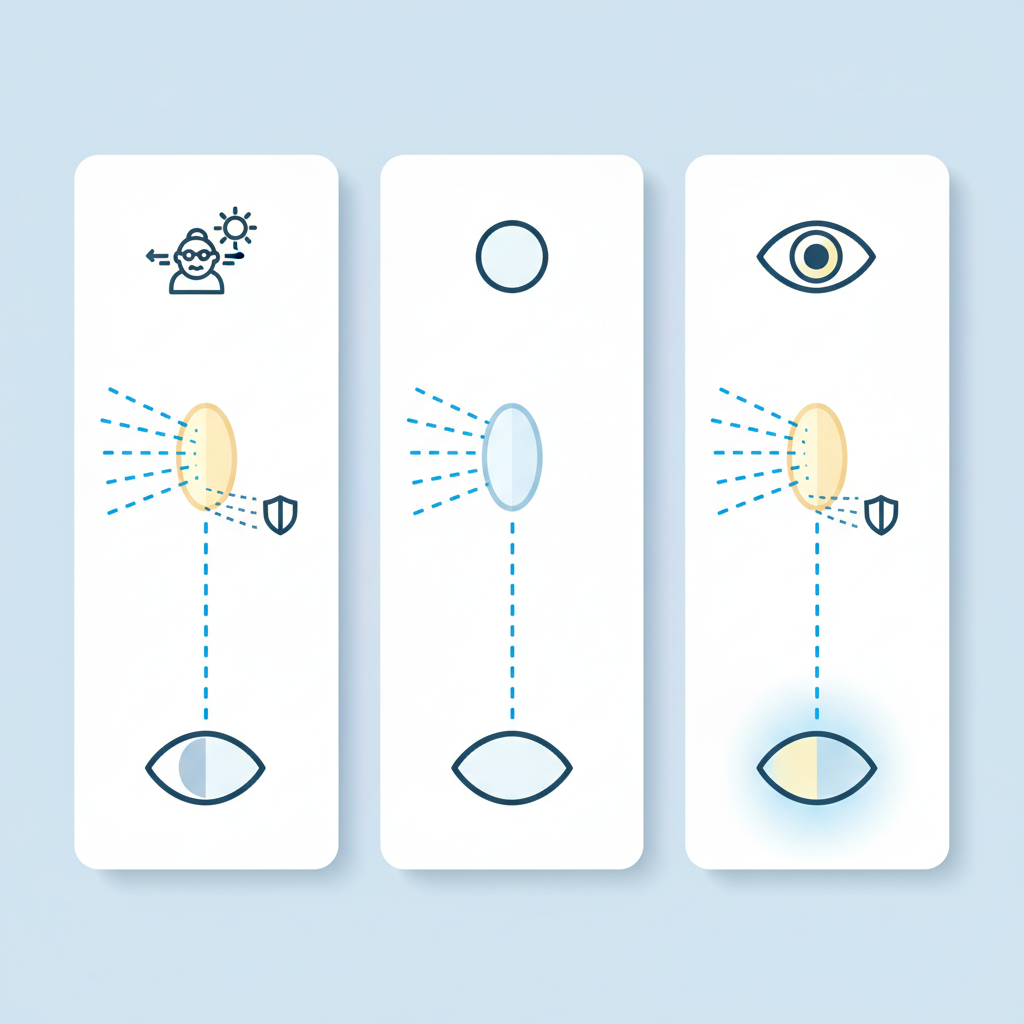
The single most important factor for a cataract patient is the type of IOL you received. Lens technology has advanced significantly, and many now incorporate protection.
- Standard Monofocal IOLs: These are the most common lenses used in cataract surgery. While they all provide excellent UV protection, many older or basic models do not have advanced blue light filtering. If you have a standard IOL, your retina is exposed to more blue light than it was before the cataract formed.
- Modern Blue-Filtering IOLs: Most of today's premium IOLs (including many toric, multifocal, and Extended Depth of Focus models) are manufactured with a special "yellow chromophore." This is a fancy term for a light yellow tint integrated into the lens material itself, designed to selectively filter blue light in a way that mimics a healthy, middle-aged natural lens.
The only way to know for sure is to ask your surgeon. After your procedure, you should have received an IOL card that details the make and model of your implant. This card will specify whether your new lens has a blue light or "violet filtering" feature.
The Real Role of Blue Light Glasses: Comfort Over Crisis
It’s crucial to separate the two conversations around blue light: the fear of retinal damage and the reality of digital eye strain.
According to the American Academy of Ophthalmology (AAO), there is no scientific evidence that blue light from digital screens causes damage to your retina. The concern among some clinicians is that a lifetime of increased exposure after cataract surgery could theoretically pose a risk, but this has not been proven.
The real, tangible benefit of blue light filtering lenses lies in improving visual comfort. As explained by ophthalmologists at the Cleveland Clinic, what we call "digital eye strain" isn't caused by blue light itself. It’s the result of:
- Reduced Blink Rate: When we stare at screens, our blink rate can drop by more than half (from ~15 times a minute to 5-7), leading to dry, irritated eyes.
- Accommodation Issues: Constantly focusing on a near object for hours fatigues the tiny muscles inside your eye.
- Screen Glare: Uncontrolled glare from screens and overhead lighting forces you to squint and strain to see clearly.
For a post-surgical eye that is already healing and adapting to a new optical system, these factors can be even more pronounced. This is where blue light glasses can help—by reducing glare and enhancing contrast, they can make long screen sessions feel less taxing.

A Practical Guide: When to Consider Blue Light Lenses
So, how do you decide if you need them? Use this checklist based on common clinical heuristics.
You probably DON'T need them if:
- You have a modern IOL with a built-in blue light filter.
- You spend less than 3-4 hours per day on digital devices.
- You experience no significant eye strain, headaches, or light sensitivity when using screens.
You MIGHT find them beneficial if:
- You have a standard, non-filtering IOL and work a job that requires all-day computer use.
- You are an ICL patient who finds the glare from your monitor or phone particularly harsh.
- Your eyes generally feel tired, dry, or achy after a few hours of screen time, regardless of your surgery type.
Beyond Glasses: Free and Effective Ways to Reduce Eye Strain
Before investing in new glasses, try incorporating these expert-recommended habits:
- Follow the 20-20-20 Rule: The Cleveland Clinic and other eye health authorities recommend this simple trick. Every 20 minutes, look at something at least 20 feet away for 20 seconds. This relaxes your eye's focusing muscles.
- Use Artificial Tears: Combat the reduced blink rate by keeping your eyes lubricated. A top tip from the University of Mississippi Medical Center is to use chilled artificial tears for superior relief from fatigue.
- Optimize Your Workstation: Position your monitor about an arm's length away and so the top of the screen is at or slightly below eye level. Adjust ambient lighting to minimize screen glare.
- Leverage Software Tools: Use your device's built-in "Night Mode" or "Dark Mode" in the evenings. This shifts the screen colors to the warmer end of the spectrum, which is less stimulating and may help regulate your sleep cycle.
How to Choose the Right Post-Surgical Glasses
If you decide to get blue light filtering glasses, fit and quality matter more than ever after surgery.
- Prescription First: If you still have a residual prescription for astigmatism or need reading glasses, the best option is to have a blue light filtering coating added to your custom prescription lenses. This ensures the optics are perfectly aligned for your eyes.
- Beware of Poor Fit: A common oversight with non-prescription "readers" or computer glasses is the vertex distance—the space between the lens and your eye. If the glasses sit too far down your nose, the filtering technology can become less effective.
- Prioritize Lightweight Comfort: Your eyes and the surrounding tissues are still healing. Avoid heavy frames that put pressure on the bridge of your nose or your temples. Look for lightweight materials like titanium or flexible polymers.
- Coverage is Key: Choose a lens shape that provides good coverage to help reduce glare not just from your screen, but from overhead and peripheral light sources as well.
Frequently Asked Questions
1. Can blue light glasses harm my eyes after surgery? No. When sourced from a reputable vendor, they are perfectly safe. They are simply filtering a portion of the visible light spectrum and will not interfere with your surgical outcome.
2. Should I wear blue light glasses all day? It's not necessary. The primary benefit is for digital screen use. For general outdoor wear, a high-quality pair of sunglasses that blocks 100% of UV rays is far more important for protecting your eyes.
3. What's more important after cataract surgery: UV protection or blue light filtering? UV protection is non-negotiable and the absolute top priority. UV radiation is a known risk factor for numerous eye diseases. Fortunately, all IOLs implanted in the U.S. have a built-in UV filter. Blue light filtering is an optional feature for added comfort.
4. My surgeon said my IOL has a UV filter. Is that the same as a blue light filter? No. A UV filter is a standard, mandatory safety feature. A blue light filter is an advanced, optional feature found in many premium lenses. You can have UV protection without blue light filtering.
5. I have ICLs and see halos around lights. Will blue light glasses fix this? They will not eliminate halos, which are an inherent optical side effect of the lens. However, by reducing the overall intensity and glare from light sources like LED screens, they may make the halos feel less distracting and more manageable during computer work.
Disclaimer: This article is for informational purposes only and does not constitute professional medical advice. The information provided should not be used for diagnosing or treating a health problem or disease. Always seek the advice of your ophthalmologist, optometrist, or other qualified health provider with any questions you may have regarding a medical condition.
References
- Cleveland Clinic - Do Blue Light Blocking Glasses Actually Work?
- American Academy of Ophthalmology (AAO) - Blue Light: Hype vs. Science
- Harvard Health Publishing - Can blue light blocking glasses improve your sleep?
- University of Mississippi Medical Center - Expert Consult on Blue Light
- PubMed - Double-Blind RCT on Blue-Blocking Lenses and Eye Strain