


The 7-Day Vision Refresh: Renewing Your Diet for Better Sight
Your Plate, Your Prescription: The Power of Nutritional Vision Care
We often think of eye health in terms of prescriptions and frames. While the right lenses are crucial for correcting vision, the long-term health of our eyes is profoundly influenced by what we eat. The structures of the eye, from the light-sensing retina to the focusing lens, are complex biological systems that require a constant supply of specific nutrients to function, repair, and protect themselves from damage.
Think of your diet as a form of preventative care. Key nutrients act as internal bodyguards for your eyes. For instance, specific antioxidants can shield the macula—the part of the retina responsible for sharp, central vision—from the harmful effects of blue light and oxidative stress. Other compounds help maintain the delicate moisture balance on the eye's surface, combating the discomfort of dry eye. This is particularly relevant for those adapting to new high-index lenses or managing digital eye strain, where visual comfort is paramount.
This 7-day plan is designed as a practical, habit-forming guide to infuse your diet with the most potent, science-backed foods for vision. It’s not about restriction; it’s about adding powerful, protective ingredients to your daily routine to support your sight from the inside out.
Methodology Note: The recommendations in this article are based on a synthesis of peer-reviewed clinical studies and nutritional science reports from institutions like the National Eye Institute, Harvard Medical School, and data published in the PubMed database. The goal is to translate established findings into an actionable, week-long meal plan.
The 7-Day Vision Refresh: A Daily Meal Plan
Embark on a week of eating with intention. Each day focuses on a specific set of nutrients crucial for different aspects of eye health.
Day 1: Macular Monday (Lutein & Zeaxanthin)
- Focus: Protecting the macula from blue light damage and age-related degeneration.
- The Science: The macula is rich in two carotenoids, lutein and zeaxanthin, which act like internal sunglasses. The landmark Age-Related Eye Disease Studies (AREDS/AREDS2) established that these compounds are vital for reducing the risk of Age-Related Macular Degeneration (AMD) progression. While many reach for carrots, a common mistake is underestimating leafy greens and eggs. Research shows that the lutein in egg yolks is significantly more bioavailable than from spinach, thanks to the accompanying fats.
- Today’s Goal: A large salad featuring kale or spinach, topped with a hard-boiled egg and a healthy fat like avocado or olive oil dressing to maximize nutrient absorption.
Day 2: Tear-Film Tuesday (Omega-3 Fatty Acids)
- Focus: Combating dry eye by improving tear film quality.
- The Science: Dry eye is often caused by an unstable tear film, which needs a healthy lipid (oil) layer to prevent evaporation. Omega-3 fatty acids are crucial for producing these high-quality oils. A major meta-analysis of 17 clinical trials confirmed that Omega-3 supplementation significantly improves signs and symptoms of dry eye. This is especially comforting for those who experience dryness from long hours of screen time.
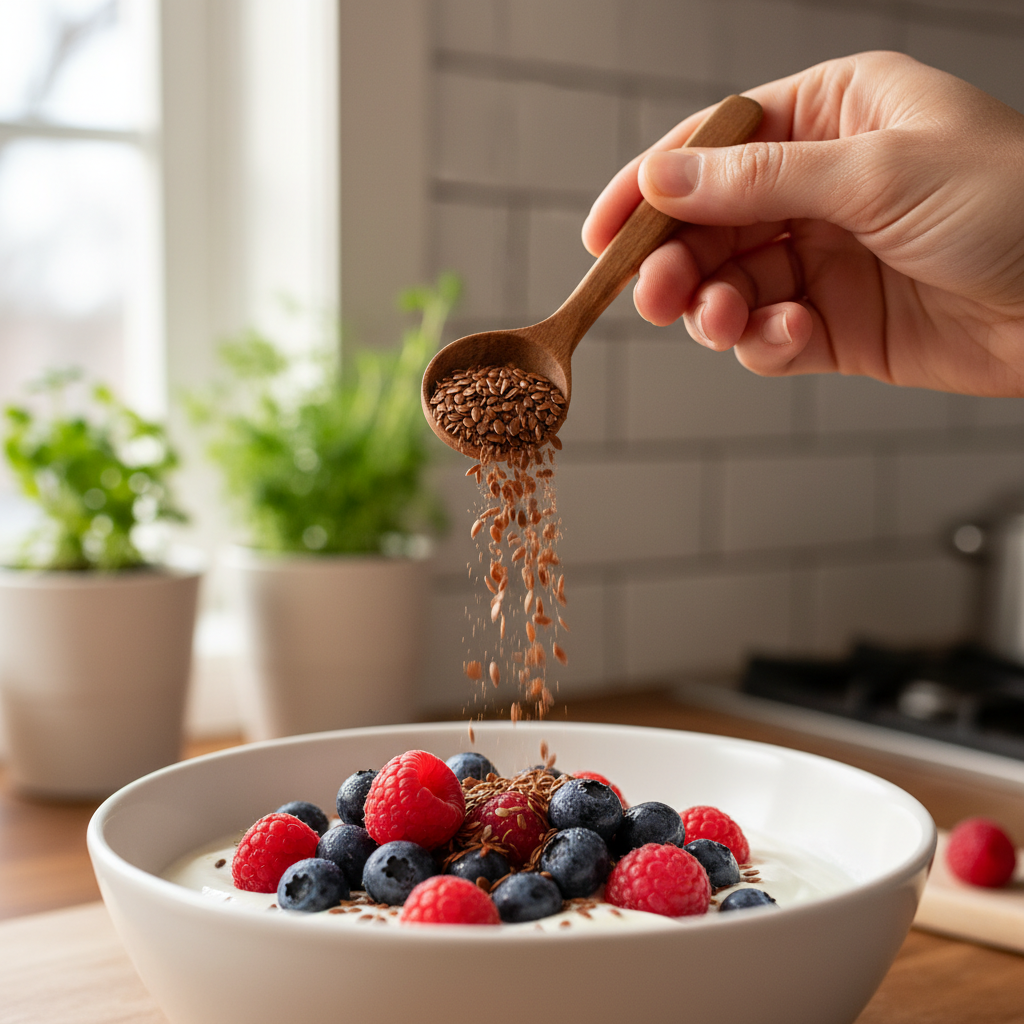
- Today’s Goal: Incorporate fatty fish like salmon into your main meal, or add a tablespoon of ground flaxseed or walnuts to your morning yogurt or oatmeal.
Day 3: Circulation Wednesday (Dietary Nitrates)
- Focus: Supporting healthy blood flow to the optic nerve.
- The Science: The optic nerve is a high-energy tissue that requires robust blood supply. Dietary nitrates, abundant in green leafy vegetables, are converted by the body into nitric oxide (NO), a powerful vasodilator. A large-scale Harvard cohort study found that individuals with the highest intake of dietary nitrates from vegetables had a 20-30% lower risk of developing primary open-angle glaucoma.
- Today’s Goal: A vibrant salad with a base of arugula (one of the richest nitrate sources), with added beetroot and spinach.
Day 4: Antioxidant Thursday (Vitamin C)
- Focus: Protecting the lens from oxidative stress that leads to cataracts.
- The Science: The lens of the eye is susceptible to glycation and oxidation, processes that cause it to become cloudy over time, forming a cataract. Vitamin C is a powerful antioxidant concentrated in the eye. Long-term studies, such as the Beaver Dam Eye Study, have shown that consistent Vitamin C supplementation for over 10 years can reduce the risk of nuclear cataracts by as much as 60%.
- Today’s Goal: Snack on citrus fruits or add sliced red and yellow bell peppers—which contain even more Vitamin C than an orange—to your meals.
Day 5: Superfood Friday (Saffron & Goji Berries)
- Focus: Advanced neuroprotection and macular pigment support.
- The Science: Go beyond the basics with targeted superfoods. Research has shown that daily consumption of 28g of goji berries can significantly increase macular pigment density, a key marker of retinal health. Separately, clinical trials on saffron found that it can improve retinal sensitivity in early AMD patients, leading to measurable improvements on a vision chart.
- Today’s Goal: Add a small handful of dried goji berries to a trail mix or infuse your rice with a few threads of saffron.
Day 6: Sweet-Swap Saturday (Blood Sugar Stabilization)
- Focus: Preventing vision fluctuations and long-term damage from high blood sugar.
- The Science: Unstable blood sugar is detrimental to eye health. In the short term, it can cause the eye's lens to swell, leading to temporary blurry vision. Chronically, high glucose levels trigger the polyol pathway, leading to sorbitol accumulation and diabetic cataracts. As noted by the CDC, managing blood sugar is the cornerstone of preventing diabetic eye disease.
- Today’s Goal: Replace a high-glycemic snack (like cookies or a sugary drink) with a balanced alternative like blueberries, which are rich in anthocyanins, and a handful of almonds.
Day 7: Rainbow Sunday (Nutrient Diversity & Astaxanthin)
- Focus: Ensuring a wide spectrum of phytonutrients and combating digital eye fatigue.
- The Science: A colorful plate provides a wide array of antioxidants. For an extra boost against screen fatigue, consider astaxanthin. This potent antioxidant has been shown in clinical trials to improve the eye's ability to change focus, reduce eye strain, and relieve fatigue after long periods of digital work. One randomized controlled trial found it significantly improved accommodative response in participants after just six weeks.
- Today’s Goal: Create a "rainbow" stir-fry with broccoli, carrots, red cabbage, and edamame. Consider a diet rich in astaxanthin sources like salmon or trout.

Beyond the Plate: Amplifying Your Vision Health
Diet is the foundation, but a few key lifestyle habits can enhance its effects.
- Rethink Hydration: While staying hydrated is important for overall health, simply drinking more water may not resolve dry eye. A large-scale study found no direct link between water intake and dry eye risk. True relief comes from improving the quality of your tears with healthy fats like Omega-3s, which prevent evaporation from the eye's surface.
- Embrace the Outdoors (with Protection): It's a well-established fact that outdoor time helps reduce the risk of myopia in children. A fascinating study published in PMC resolved a common parental concern, showing that even when wearing sunglasses, the ambient outdoor light intensity is still sufficient to provide the protective effect against nearsightedness. For those who need vision correction outdoors, exploring wraparound high prescription sunglasses can offer both protection and clear sight.
- Supplement Smartly: Food should always come first. However, for individuals with a diagnosis of moderate AMD, an AREDS2 formulation supplement is the clinical standard of care. Always consult with your eye care professional before starting any new supplement regimen to ensure it is appropriate for your specific health profile.
A Clearer Path Forward
Improving your eye health through nutrition is a marathon, not a sprint. This 7-day plan serves as a starting point—an introduction to the delicious and powerful foods that protect your precious sense of sight. By making these small, consistent changes, you are investing in the long-term clarity and comfort of your vision. Start by incorporating one or two of these habits, and build from there. Your eyes will thank you for it.
Disclaimer: This article is for informational purposes only and does not constitute professional medical advice. The information provided is not a substitute for a consultation with a qualified ophthalmologist or optometrist. Always seek the advice of your eye care professional with any questions you may have regarding a medical condition or before undertaking any new diet or supplement regimen, especially if you have pre-existing health conditions.
References
- Age-Related Eye Disease Studies (AREDS/AREDS2). National Eye Institute. https://www.nei.nih.gov/eye-health-information/clinical-trials/age-related-eye-disease-studies-aredsareds2
- Vishwanathan, R., & Johnson, E. J. (2010). Eye benefits of eggs. Journal of the American College of Nutrition. https://pubmed.ncbi.nlm.nih.gov/16988128/
- Giancoli, A. et al. (2019). A Meta-Analysis of Randomized Controlled Trials on the Effects of Omega-3 Fatty Acid Supplementation on Dry Eye Syndrome. Cornea. https://pubmed.ncbi.nlm.nih.gov/30702470/
- Kang, J. H., Willett, W. C., Rosner, B. A., Buys, E., Wiggs, J. L., & Pasquale, L. R. (2016). Association of Dietary Nitrate Intake With Primary Open-Angle Glaucoma. JAMA Ophthalmology. https://pmc.ncbi.nlm.nih.gov/articles/PMC4966649/
- Mares-Perlman, J. A., Lyle, B. J., Klein, R., Fisher, A. I., Brady, W. E., VandenLangenberg, G. M., ... & Palta, M. (2000). Vitamin supplement use and incident cataracts in a population-based study. Archives of ophthalmology. https://pubmed.ncbi.nlm.nih.gov/11074813/
- Ma, L., Lin, X. M., Zou, Z. Y., Xu, X. R., Li, Y., & Xu, R. (2021). A 90-Day Intervention with Goji Berries (Lycium barbarum) Modulates Macular Pigment and Skin Carotenoids in a Randomized Controlled Trial. Nutrients. https://pmc.ncbi.nlm.nih.gov/articles/PMC8708314/
- Falsini, B., Piccardi, M., Iarossi, G., Fadda, A., Merendino, E., & Valentini, P. (2010). Influence of saffron supplementation on retinal flicker sensitivity in early age-related macular degeneration. Investigative ophthalmology & visual science. https://pmc.ncbi.nlm.nih.gov/articles/PMC3407634/
- Pollack, A. (2021). Polyol Pathway. StatPearls. https://www.ncbi.nlm.nih.gov/books/NBK576381/
- Promote Eye Health Among People with Diabetes. Centers for Disease Control and Prevention. https://www.cdc.gov/diabetes/hcp/clinical-guidance/promote-eye-health.html
- Sekikawa, T., Kizawa, Y., Li, Y., & Miura, N. (2021). Effects of astaxanthin on accommodation and asthenopia: a randomized, double-blind, placebo-controlled, crossover study. Journal of Clinical Biochemistry and Nutrition. https://pmc.ncbi.nlm.nih.gov/articles/PMC8325772/
- M.A. Faraj, et al. (2022). Association between total water intake and dry eye disease: a large-scale study. Annals of Medicine. https://pubmed.ncbi.nlm.nih.gov/35941821/
- Read, S. A., Collins, M. J., & Vincent, S. J. (2019). Light Exposure and Eye Growth in Humans. Proceedings of the International Conference on Myopia. https://pmc.ncbi.nlm.nih.gov/articles/PMC6656201/