


One Pair for Everything: The Best Glasses for Summer Travel
Summer travel asks a lot from your glasses. One moment you are reading signs at the airport, the next you are walking through bright city streets, driving along the coast, or relaxing near the beach. If you wear prescription glasses, the question gets even trickier: should you pack regular glasses, sunglasses, contacts, or a backup pair?
The easiest answer is to choose one pair that fits your trip. Below, we compare prescription sunglasses, photochromic lenses, and clip-on sunglasses so you can pack lighter and still see clearly.

Quick Answer: Which Travel Glasses Are Best?
● Best for strong sun: prescription sunglasses
● Best for mixed indoor/outdoor days: photochromic lenses
● Best one-frame solution: clip-on sunglasses
● Best for one-bag travel: clip on sunglasses with a secure case
● Best overall choice: depends on how often you switch between sun, shade, indoor spaces, and driving
If you spend most of your trip outdoors, prescription sunglasses give you the darkest, most consistent tint.
If you go in and out of buildings all day, photochromic lenses adapt automatically.
If you want the lowest cost and most flexibility, clip on sunglasses are hard to beat.
What Makes the Best “One Pair” Glasses for Summer Travel?
The best summer travel glasses should be useful in more than one setting. Before choosing a pair, look for:
● UV protection for bright outdoor days
● Clear prescription vision if you need correction
● Lightweight comfort for long wear
● Glare control for roads, water, and open spaces
● Easy indoor/outdoor use
● A durable frame and protective case
A stylish pair of Lensmart sunglasses can work well for casual summer outfits, but travel eyewear also needs to handle real movement: airports, walking tours, beach bags, restaurant stops, and changing light.

Are Prescription Sunglasses Good for All-Day Travel?
Prescription sunglasses are a strong choice if your trip is mostly outdoors. They combine your vision correction with sun lenses, so you do not need to wear contacts or place regular sunglasses over your glasses.
Best for:
Beach resorts, cruises, hiking, sightseeing, outdoor markets, and sunny destinations.
Watch out for:
Indoor switching. Tinted lenses may feel too dark in museums, cafes, airports, or hotel lobbies.
Travel example:
If you are spending the day walking along the coast or sitting by the pool, prescription sunglasses are convenient and comfortable. But if your day includes many indoor stops, you may still want regular glasses nearby.
Can Photochromic Lenses Be Your Only Travel Glasses?
Photochromic lenses are designed to adapt to light. They look clearer indoors and darken outdoors, which makes them useful for travelers who do not want to keep changing glasses.
Best for:
City breaks, sightseeing, shopping streets, theme parks, and casual travel days with frequent indoor/outdoor movement.
Watch out for:
They may not darken as much behind car windshields, because many windshields block part of the UV light that activates the lenses. They may also feel less protective than dedicated sunglasses in very bright beach or water conditions.
Travel example:
If you are moving from an airport to a taxi, then to a hotel, then out for a walk, photochromic lenses are convenient. For intense midday sun on sand or water, darker sunglasses may still feel better.

Why Are Clip-On Sunglasses a Top Two-in-One Travel Choice?
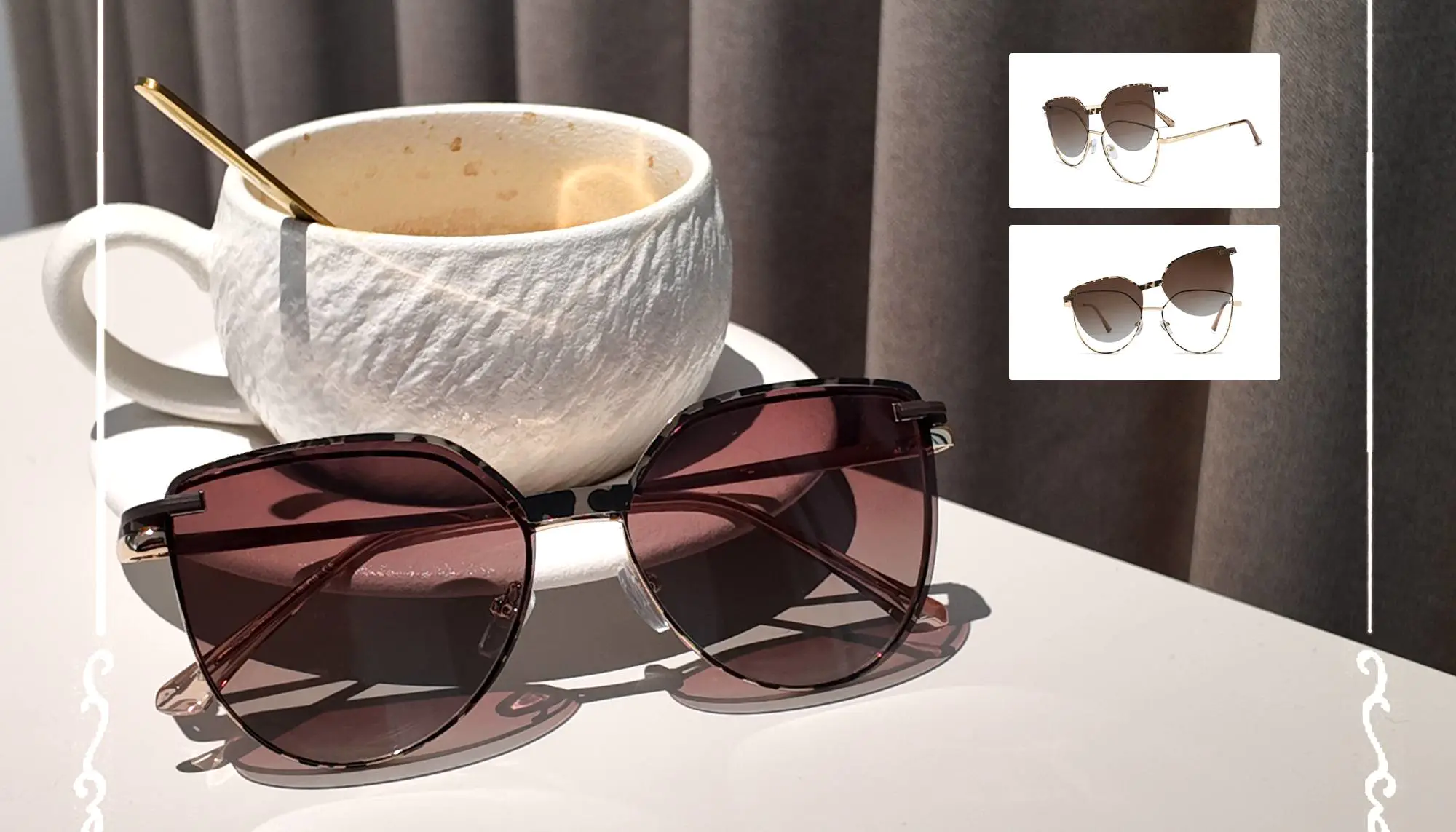
Clip-on sunglasses are one of the most practical options for prescription wearers who want one frame for the whole trip. You wear your regular prescription glasses indoors, then attach the sun clip when you step outside.
Best for:
Travelers who want prescription clarity, sun coverage, and less packing.
Watch out for:
Fit matters. Clip-ons should match your frame shape and sit securely without shifting or scratching the lenses.
Travel example:
For a road trip, city walk, or outdoor lunch, clip-on sunglasses make switching simple. You do not need to carry a full second pair, and the clip can be stored in a hard case or small pouch when not in use.
Prescription Sunglasses vs. Photochromic Lenses vs. Clip-On Sunglasses
Option | Best For | Main Advantage | Main Limitation |
Prescription sunglasses | Strong sun, beaches, sightseeing | Clear vision with consistent sun coverage | Less convenient indoors |
Photochromic lenses | Mixed indoor/outdoor travel | Adapts automatically to changing light | May not get dark enough in cars or harsh sun |
Clip-on sunglasses | One-frame travel | Regular glasses and sunglasses in one setup | Needs a compatible frame fit |
Which Single Pair Should You Actually Pack for Summer?
There is no universal winner. The right pair depends on your destination and how you travel.
● Beach resort: Choose prescription sunglasses or darker sun lenses for stronger brightness.
● City break: Choose photochromic lenses if you move between shops, cafes, streets, and public transport.
● Road trip: Choose polarized prescription sunglasses or clip-ons with glare control.
● One-bag traveler: Choose clip-on sunglasses if you want one frame and less bulk.
● Mixed itinerary: Choose photochromic lenses for convenience, or clip-ons if you prefer stronger sun coverage on demand.
If you spend most of your day outside, prescription sunglasses are usually the most comfortable. If your day constantly changes between indoors and outdoors, photochromic lenses are easier. If you want the most flexible one-frame setup, clip-on sunglasses are hard to beat.
Pack Light, See Clear
The best travel glasses help you pack less without giving up comfort, clarity, or style. Whether your summer plans include beaches, city streets, road trips, or weekend getaways, Lensmart offers options for different travel needs.
Exploresunglasses,prescription sunglasses, andclip-on sunglasses to find the pair that fits your trip.
FAQs
Q1: Are polarized lenses necessary for summer travel?
Not always. Polarized lenses reduce glare from flat surfaces like water and roads, which helps during beach trips and drives. For city sightseeing, standard UV-blocking lenses are usually enough. If you plan to spend time near water, polarized lenses are worth the upgrade.
Q2: Do photochromic lenses get dark enough on the beach?
It depends. Photochromic lenses darken less in high heat because the chemical reaction slows in warm temperatures. On a hot beach day, they may reach about 60%-80% of their full tint. If you need maximum darkness at the beach, prescription sunglasses are a safer pick.
Q3: Can I wear clip on sunglasses over my regular prescription glasses?
Yes. That's exactly how they're designed. Clip on sunglasses attach to your existing frames using a clip or magnet. You'll want to make sure the clip-on matches your frame's size and shape for a secure fit. Most styles work with rectangle, square, and oval frames.
Q4: Will photochromic lenses darken inside a car?
Not fully. Most car windshields block the UV light that activates photochromic lenses. You may get a slight tint, but not enough for comfortable driving in bright sun. If you drive a lot during your trip, pair photochromic glasses with a set of clip on sunglasses or use dedicated prescription sunglasses for the road.
Q5: How do I pick between photochromic lenses and clip on sunglasses?
Consider your priorities. Photochromic lenses are hands-free and seamless, so you never need to remember an extra accessory. Clip on sunglasses cost less and give you full tint instantly. If convenience matters most, go photochromic. If budget matters most, go clip-on.