



Glasses for High Prescriptions: How to Get Thin, Light Lenses That Look Good
A strong prescription doesn't have to mean thick, heavy glasses that slide down your nose and distort your eyes. High index lenses have made thin glasses possible at prescriptions once considered impossible to flatter.
Knowing which lens index fits your prescription, and which frames work with it, gets you glasses you actually want to wear.
Quick Answers
● Thick glasses happen because standard lenses need more material to bend light for strong prescriptions.
● High index lenses bend light more efficiently, so less material is needed and lenses come out thinner.
● Lensmart offers 1.56, 1.61, 1.67, and 1.74 index lenses for prescriptions from -1.00 to +9.00 SPH.
● For a -6 prescription, 1.67 index is a solid starting point. For -8 or stronger, 1.74 is worth it.
● Smaller frames mean thinner edges, which makes a bigger visual difference than the index alone.
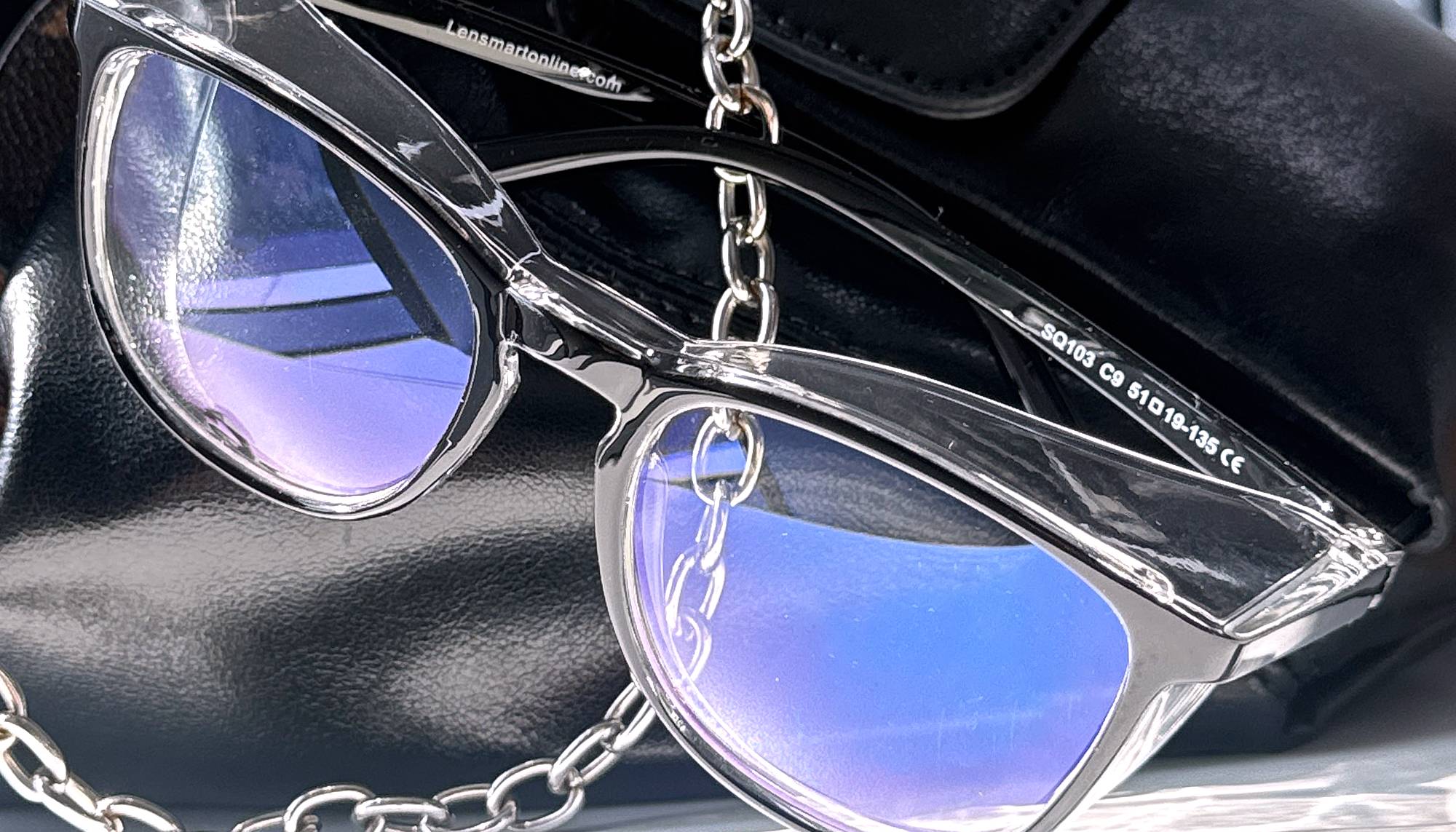
Why Do High Prescriptions Usually Mean Thick Glasses?
It comes down to physics. Standard plastic lenses (index 1.50) bend light at a relatively low rate.
To reach a strong prescription, the lab grinds the lens to a steeper curve. That uses more material and creates more thickness, especially at the edges for nearsighted prescriptions.
The higher your prescription number, the more curvature needed, and the more material required. At a -6 or stronger, standard lenses can look noticeably thick in the frame, sometimes described as the "coke bottle" look.
Two things control how thick glasses end up: the lens material and the frame size. For a strong prescription, the lens material is where most of the improvement comes from. That is where high index lenses come in.
What Does High Index Mean?
High index refers to a lens material's refractive index, a number that measures how efficiently the material bends light.
The higher the number, the more light gets bent per unit of material. That means less material is needed for the same prescription power, and the lens comes out thinner and lighter.
Refractive Index in Plain Terms
A 1.74 index lens achieves the same optical correction as a 1.50 lens, but uses noticeably less material to get there. The prescription power is identical. The physical thickness is not.
High index lenses also tend to be aspheric. The lens surface curves less dramatically, which reduces the distortion effect that makes eyes look smaller or larger through the lens. Here is what that difference looks like in actual numbers.
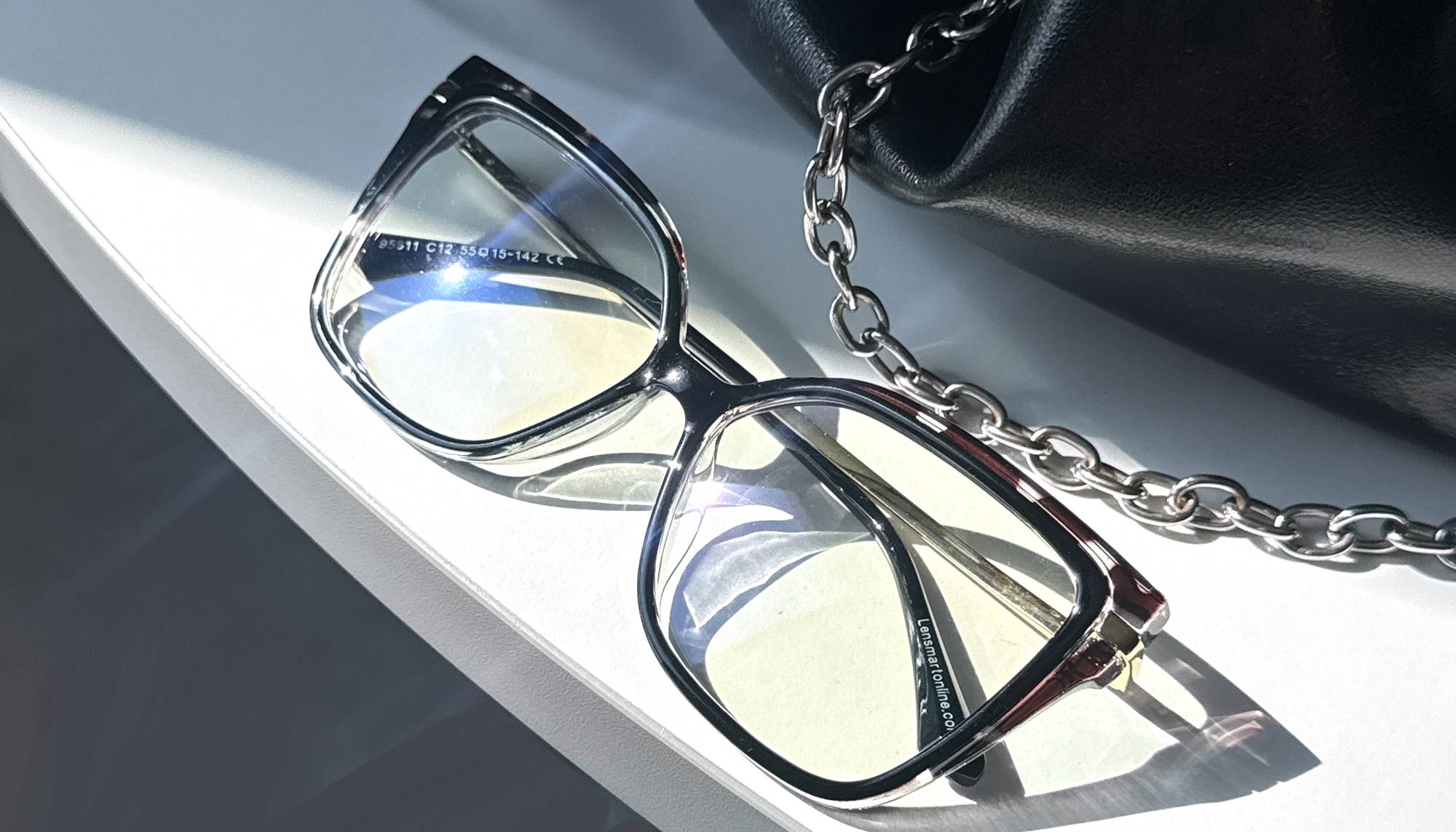
How Do High Index Lenses Make Glasses Thinner?
Standard lenses for a -6 prescription can have edge thickness of 7 to 9 mm (0.27 to 0.35 in) in a mid-size frame.
A 1.67 index lens at the same prescription typically brings that down to 5 to 6 mm (0.20 to 0.24 in).
What Changes With High Index
● Less edge thickness on nearsighted lenses, which is where the bulk is most visible.
● Less center thickness on farsighted lenses, which prevents the magnified, protruding lens look.
● Lighter weight because less material is used overall.
● Flatter lens profile because aspheric designs reduce the bulging curve.
High index lenses also come standard with anti-reflective coating at Lensmart. Higher-index materials reflect more light than standard lenses, so AR coating keeps the lens looking clear rather than producing surface glare.
Frame Size Still Matters
Frame size determines how much of that thickness is visible. A large frame needs a bigger lens blank, which means more edge material even with high index glass.
For the same prescription and the same index:
● A frame with a 52 mm (2.05 in) lens width will have thinner edges than a 58 mm (2.28 in) frame.
● Smaller, rounder frames concentrate lens material toward the center and minimize visible edge thickness.
Picking a high index lens without considering frame size addresses only part of the problem. That brings up the next question: which index level actually fits your prescription?
What Are the Index Options and How Do You Choose?
Lensmart offers four index levels. Here is how they compare and who each fits best.
Index | Thickness vs. Standard | Prescription Range | Best For |
1.56 | Slightly thinner | Up to ±3.00 | Low prescriptions, budget-conscious |
1.61 | About 20% thinner | Weaker than -4.00, or around ±3.00 to ±6.00 | Mild to moderate prescriptions |
1.67 | About 30% thinner | Around ±6.00 to ±8.00 D, or -4.00 to -8.00 D | Strong prescriptions, most high-rx wearers |
1.74 | About 40% thinner | ±8.00 and stronger | Very strong prescriptions, rimless frames |
● 1.56 works fine for low prescriptions when keeping costs down is the priority.
● 1.61 suits moderate prescriptions with a noticeable improvement over standard.
● 1.67 is the most practical choice in the -4.00 to -8.00 range, balancing thinness and price.
● 1.74 is the thinnest plastic lens available, most worth it above -8.00 or +4.00, and for rimless frames where edge thickness shows.
Lensmart's ordering system suggests the right index automatically, but you can always select manually. For prescriptions around -6 or stronger, frame choice matters just as much as index.
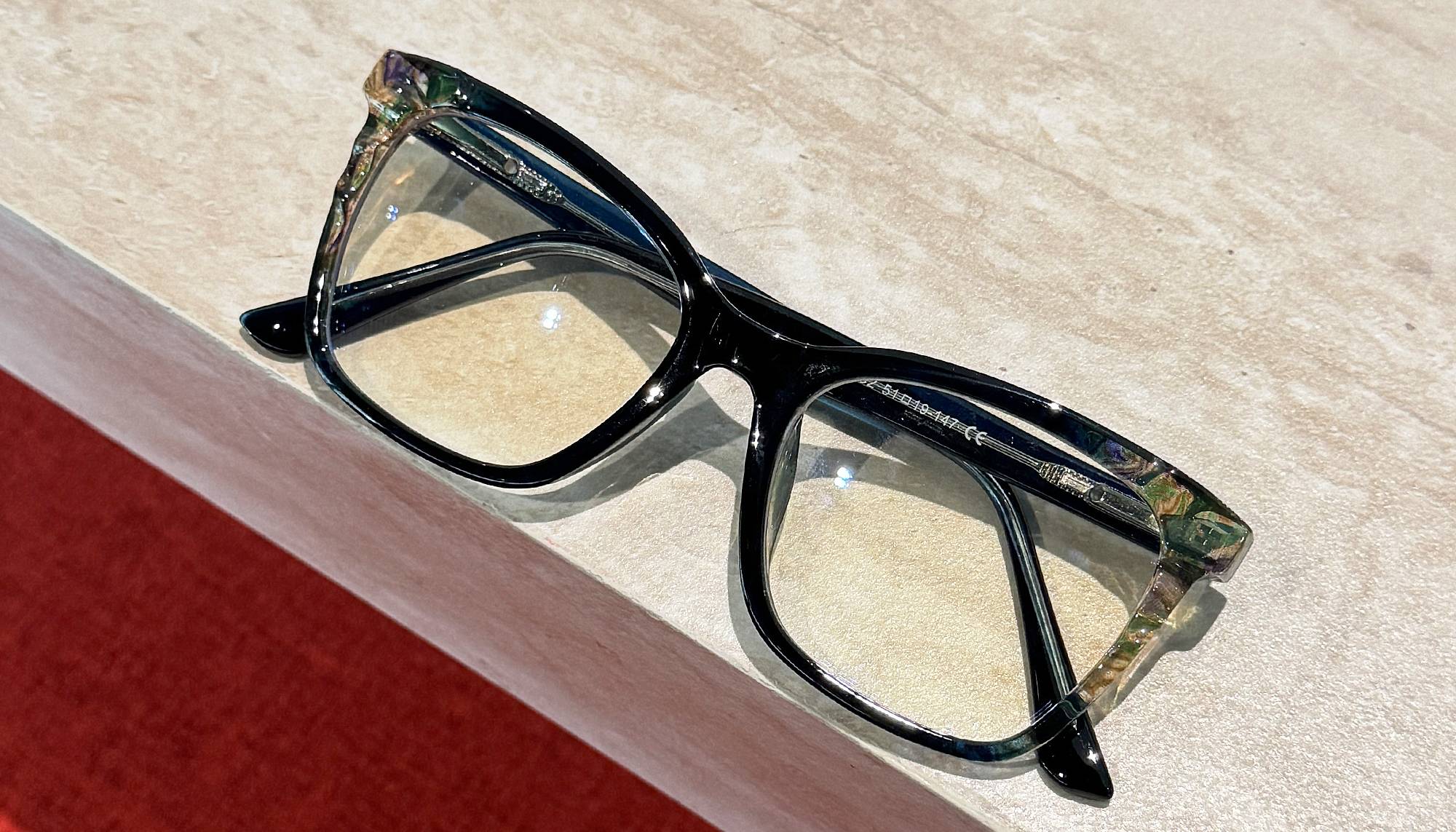
What Are the Best Glasses for a -6 Prescription or Higher?
At -6, lens choice and frame choice both make a visible difference. Here is what works.
Lens Choice at -6 or Stronger
1.67 index is the practical pick for most people at -6. It brings edge thickness down meaningfully at a price that is easy to justify.
1.74 index becomes worth it at -8 or stronger, or if you want a rimless or semi-rimless frame where any edge thickness will show.
Frame Choice at -6 or Stronger
● Small to medium frames work best. A lens width under 54 mm (2.13 in) keeps edges manageable.
● Full-rim frames are the most forgiving because the frame covers the lens edge entirely.
● Round and oval shapes distribute thickness more evenly than rectangular frames, which concentrate thickness at sharp corners.
● Acetate frames in darker colors make edges less visible than thin metal frames.
What to Avoid
● Frames over 56 mm (2.20 in) wide will produce visible edge thickness even with 1.74 lenses.
● Rimless frames at -6 are possible but require 1.74 lenses and careful frame selection.
That said, avoiding large frames entirely is not the answer.
Can You Wear Big Glasses With a High Prescription?
Yes, with the right lens choice. Big frames are a strong style trend and high-prescription wearers are not excluded. Pairing them with the right index and accepting some edge visibility makes it work.
What "Big" Means for Lens Thickness
A wide frame at -6 will show more edge thickness than a small frame at -6, regardless of index. That is not a reason to avoid big frames.
It is a reason to go with 1.74 index. Some edge may still be visible depending on frame depth, and that is a reasonable trade-off for the style.
Frame Features That Help With Big Glasses
● Thick acetate rimshide edge thickness better than thin metal or rimless designs.
● Darker frame colors draw attention away from lens edges.
● Browline styles with a strong visual presence at the top direct the eye to the frame rather than the lens.
At Lensmart, high-prescription shoppers often find that going one size smaller than their first instinct still looks bold while keeping lenses manageable.
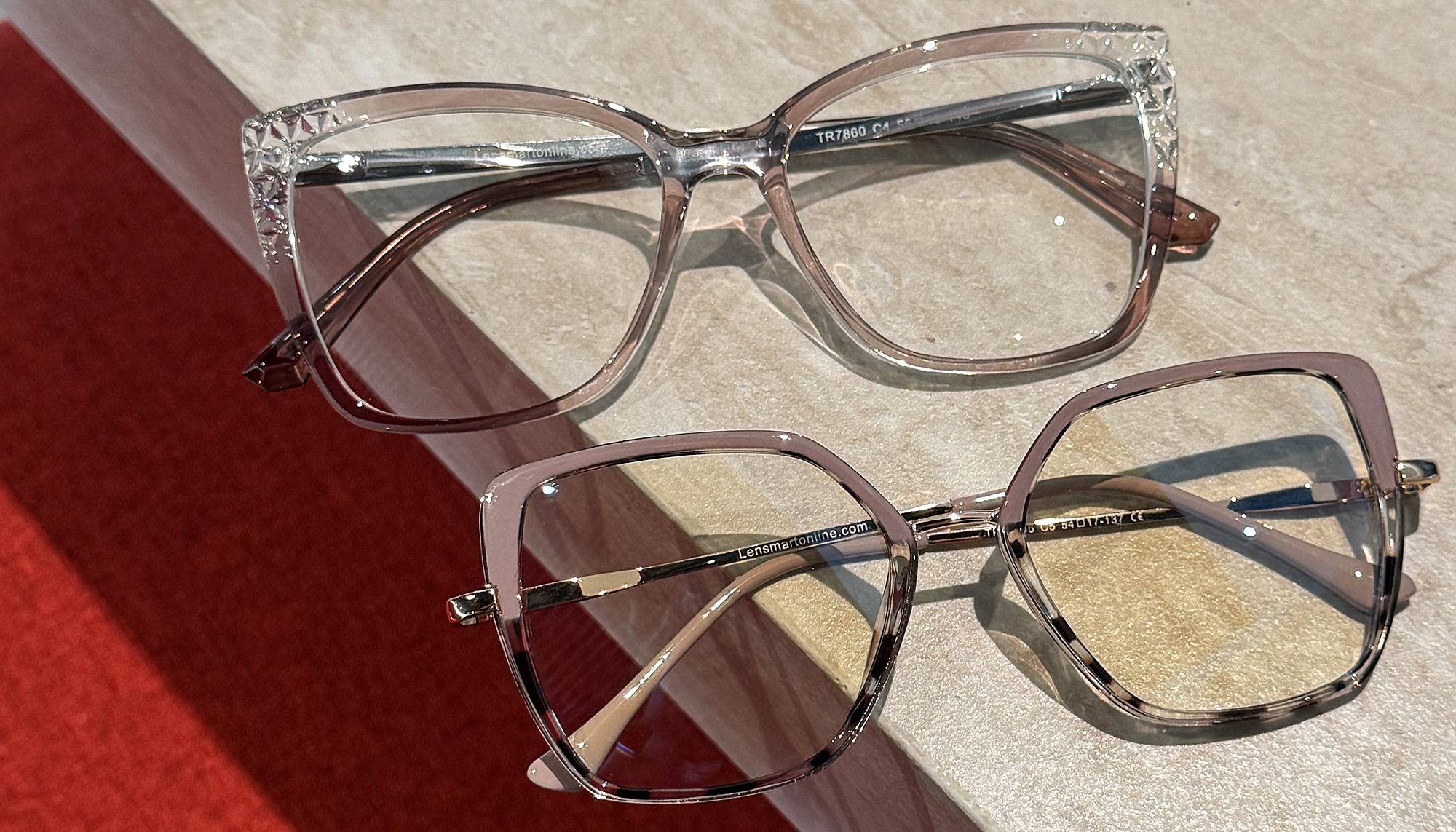
Your Prescription Doesn't Limit Your Options
High prescriptions narrow the field a little, but the right lens index opens most of it back up. Pairing 1.67 or 1.74 lenses with a well-chosen frame size removes most of the visual bulk that thick glasses are known for.
Lensmart offers 1.56, 1.61, 1.67, and 1.74 index lenses for prescriptions from -1.00 to +9.00 SPH, with anti-scratch and anti-reflective coatings included. Find your frames at Lensmart.
FAQs
Q1: What is the thinnest high index lens available?
The thinnest plastic high index lens available is 1.74 index, recommended for prescriptions above -8.00 or +4.00.
For prescriptions in the -4.00 to -8.00 range, 1.67 provides strong thinning at a lower price point.
Q2: Do high index lenses make your eyes look smaller?
High index lenses reduce but do not eliminate the eye-magnification effect. For nearsighted prescriptions, all corrective lenses make eyes appear slightly smaller through the lens.
High index aspheric designs minimize this because the flatter surface profile reduces distortion. The difference is noticeable, especially at -6 and stronger.
Q3: Can I get rimless frames if I have a high prescription?
Yes, but with conditions. Rimless frames expose the full lens edge, so any thickness shows. At -6, rimless frames work best with 1.74 lenses. At -8 or stronger, some edge may still be visible.
Full-rim or semi-rimless frames are more forgiving and give you more frame options overall.